A Complete Guide to Zenaida macroura
Few birds in North America evoke the same sense of peaceful countryside living as the mourning dove. With its soft, mournful cooing drifting across open fields at dawn and dusk, this graceful bird has become a familiar and cherished presence in backyards, farmlands, and wild spaces from coast to coast. Scientifically known as Zenaida macroura, the mourning dove is not only one of the most recognizable birds on the continent but also one of the most pursued game birds in North America, attracting millions of hunters each season.
In the state of Idaho — a rugged, landlocked jewel nestled in the Pacific Northwest and Mountain West — the mourning dove finds an ideal blend of open terrain, agricultural fields, and varied elevations that support healthy populations throughout the warmer months. Whether you are a wildlife enthusiast scanning the skies with binoculars or a hunter preparing for the fall season, understanding this remarkable bird is essential to fully appreciating its role in both the natural ecosystem and the sporting tradition.
This article dives deep into the biology, behavior, habitat preferences, and hunting heritage of the mourning dove, with a particular focus on what hunters and wildlife lovers can expect in Idaho and the broader western United States.
Biological Traits
The mourning dove (Zenaida macroura) belongs to the family Columbidae, which includes all pigeons and doves. It is one of the most abundant and widely distributed birds in North America, and its biology is as fascinating as it is elegant.
Physical Appearance
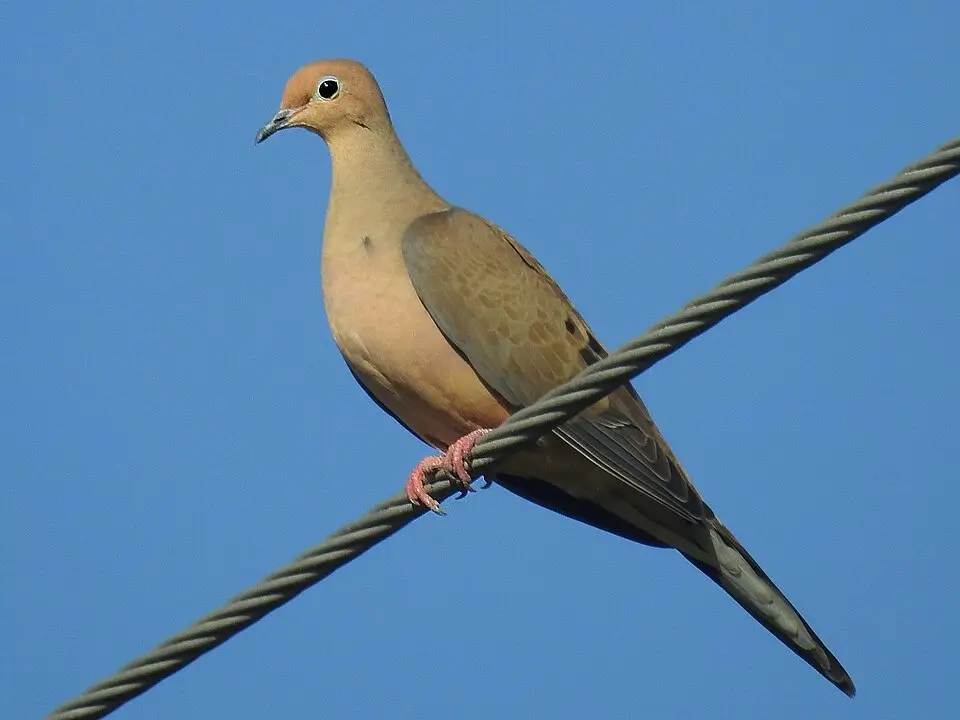
Mourning doves are slender, medium-sized birds with a distinctive long, tapered tail that sets them apart from most other dove species. Their plumage is a soft, buffy-tan to grayish-brown on the back and wings, with a pale pinkish-buff coloring on the breast. One of the most striking features is the iridescent patch of feathers on the side of the neck, which can shimmer with green or purple hues depending on the angle of light. The face is adorned with a small black spot just below and behind the eye, and the bill is slender and dark.
In flight, the mourning dove reveals its speed and agility. The wings produce a distinctive whistling sound upon takeoff — a trait caused by the unique shape of the primary feathers — which serves as an alarm signal to nearby birds. Their aerodynamic body shape allows them to fly at impressive speeds, making them a challenging and rewarding target for wing shooters.
Males and females are similar in appearance, though males tend to display slightly more vibrant iridescent coloring on the neck and a faint bluish-gray cap on the crown.
Behavior and Vocalizations
The mourning dove's name is derived from its haunting, owl-like call — a series of soft, drawn-out coos that carry a melancholy quality. This call, often described as "oah-woo-woo-woo," is one of the most recognizable sounds of the American countryside. The call is produced primarily by males and serves as both a territorial declaration and a mating advertisement.
These birds are highly social outside of the breeding season, often gathering in large flocks at feeding and watering sites. They are ground foragers, spending significant portions of their day searching for seeds among grasses, crop stubble, and open soil. Unlike many birds, mourning doves are capable of drinking water continuously by submerging their bills and sucking — a method called "continuous drinking" — rather than scooping and tilting the head back.
Reproduction
One of the most remarkable aspects of mourning dove biology is their prolific breeding capability. They are among the most productive bird species in North America, capable of raising multiple broods throughout a single breeding season. Nesting pairs typically raise two eggs per clutch, and a single pair may produce as many as five or six clutches in a single year under favorable conditions. This high reproductive rate helps sustain their abundant populations despite significant natural and hunting-related mortality.
The nest itself is a simple, loosely constructed platform of twigs, often placed in a tree, shrub, or even on the ground. Both parents share incubation duties, with the male typically sitting on the nest during the day and the female taking the night shift. Young doves, called squabs, are fed "crop milk" — a protein-rich secretion produced in the parent's crop — before transitioning to seeds.
Habitat & Range
The mourning dove is one of the most adaptable birds in North America, thriving across an extraordinary range of environments. From the deserts of the American Southwest to the agricultural heartland of the Midwest and the open forests of the East, this bird has demonstrated a remarkable ability to exploit human-altered landscapes.
Preferred Habitat
Mourning doves favor open and semi-open habitats. They are commonly found in agricultural fields, grasslands, open woodlands, forest edges, roadsides, and suburban areas with sparse vegetation. They require access to open ground for foraging, trees or shrubs for nesting and perching, and reliable sources of fresh water, particularly during the hot summer months.
Unlike forest-interior species, mourning doves actively seek out edge habitats where open areas meet wooded cover. Grain fields, sunflower plots, milo, and similar agricultural crops provide ideal foraging grounds, which is why dove hunting is often conducted near such areas.
Range in Idaho
Idaho's diverse geography makes it a compelling destination for mourning doves. The state's wide valleys, river corridors, agricultural plains, and high desert regions in the southern portions of the state provide excellent habitat. Mourning doves are primarily migratory in Idaho, arriving in spring and departing as temperatures cool in the fall. The Snake River Plain, with its agricultural fields and open terrain, is particularly noted as productive mourning dove country. Riparian corridors along rivers and streams also attract doves seeking water and roosting cover.
As a landlocked state bordered by Montana and Wyoming to the east, Nevada and Utah to the south, and Washington and Oregon to the west, Idaho sits along important migratory flyways. This geographic positioning means that dove populations in Idaho are augmented by birds moving through from further north as the season progresses into late summer and early fall.
Hunting Information
The mourning dove holds the distinction of being the most harvested game bird in the United States. Across the country, millions of hunters take to the field each year in pursuit of this fast-flying, challenging target. Dove hunting is deeply embedded in American sporting culture, particularly in the South and West, where dove season openers are celebrated as community social events and a beloved marker of the hunting year.
The Appeal of Dove Hunting
Part of what makes mourning dove hunting so popular is the combination of accessibility and challenge. Doves are fast and erratic in flight, with a deceptive quality to their wingbeats that regularly fools even experienced wing shooters. Their relatively small size and unpredictable flight paths demand quick reflexes and smooth gun-handling, making every successful shot a satisfying achievement.
Hunters typically pursue mourning doves over food sources such as harvested grain fields, sunflower patches, or water sources where doves congregate during their daily movement patterns. Pass shooting — positioning yourself along flight corridors and intercepting doves as they move between feeding, watering, and roosting areas — is a popular and productive method.
Hunting in Idaho
Idaho offers mourning dove hunting opportunities that reflect the broader western dove hunting experience. The state's agricultural regions, open sagebrush flats, and river valleys create natural gathering points for doves during the late summer and early fall. Hunters in southern Idaho, where agriculture is prevalent and dove populations tend to be concentrated, often find productive shooting opportunities.
As with all hunting in Idaho, prospective dove hunters should consult the Idaho Department of Fish and Game for current season dates, bag limits, licensing requirements, and any regulations that apply to a given year. Regulations can change from season to season, and it is always the hunter's responsibility to be current and compliant before heading afield. Idaho's hunting regulations are designed to ensure sustainable harvest while maintaining healthy dove populations for future generations of hunters and wildlife enthusiasts.
Gear and Approach
For those preparing to hunt mourning doves, a lightweight 12-gauge, 20-gauge, or even 28-gauge shotgun is a popular choice. Smaller shot sizes — commonly No. 7½, 8, or 9 — are well-suited to the size and typical range of dove shooting. Hunters should also be prepared for warm weather, as dove season typically opens during the heat of late summer, making hydration, sun protection, and appropriate clothing important considerations.
Decoys and spinning-wing dove decoys are commonly used to attract birds into shooting range. Calling is rarely employed for doves in the traditional sense, though some hunters use recorded dove calls to draw birds to a location.
Conservation
Despite being the most harvested game bird in North America, the mourning dove remains one of the most abundant bird species on the continent. Their extraordinary reproductive capacity — potentially producing several clutches of young each year — provides a significant natural buffer against population decline.
Conservation of mourning doves hinges on the preservation of their preferred habitats. Agricultural landscapes, open grasslands, and brushy edge habitats are all critical to supporting robust dove populations. Efforts to maintain native grasslands, manage water sources in arid regions, and support sustainable agricultural practices all contribute to long-term dove conservation.
Wildlife management agencies at the federal and state levels monitor dove populations carefully through breeding bird surveys, harvest data, and population modeling. These data-driven approaches allow managers to set appropriate bag limits and season structures that keep populations healthy and hunting opportunities sustainable year after year. In Idaho, the Department of Fish and Game works in concert with the U.S. Fish and Wildlife Service to manage migratory bird populations, including mourning doves, under the framework of the Migratory Bird Treaty Act.
Hunters themselves play an essential role in conservation through license fees, excise taxes on hunting equipment under the Federal Aid in Wildlife Restoration Act (commonly known as the Pittman-Robertson Act), and direct participation in habitat restoration projects. The hunting community's financial and volunteer contributions have been instrumental in sustaining the open lands and clean water sources that doves depend upon.
Conclusion
The mourning dove is far more than a backyard bird or a target on the shooting range. It is a symbol of the American outdoors — adaptable, abundant, and deeply connected to the rhythms of the land. From its hauntingly beautiful call echoing across an Idaho valley at sunrise to the thrilling blur of wings as a flock rockets overhead, the mourning dove offers something meaningful to everyone who takes the time to appreciate it.
Whether you are planning a dove hunt along the Snake River Plain or simply enjoying the sight and sound of these graceful birds at a backyard feeder, the mourning dove rewards attention and respect. Understanding its biology, respecting its habitat, and hunting it responsibly ensures that this treasured species will continue to grace North American skies for generations to come.