Overview
Tucked among the rocky outcroppings, sagebrush flats, and dense shrublands of the American West, the Mountain cottontail (Sylvilagus nuttallii) is one of the most recognizable and beloved small game animals in North America. Named in honor of the 19th-century explorer and naturalist Thomas Nuttall, this medium-sized rabbit has carved out a thriving existence across some of the continent's most rugged and beautiful terrain. For wildlife enthusiasts, naturalists, and hunters alike, the Mountain cottontail represents the quintessential western rabbit — adaptable, alert, and deeply woven into the ecology of the landscapes it calls home.
In Idaho specifically, the Mountain cottontail is a well-established resident, occupying a wide range of elevations and habitat types across the state's diverse geography. Idaho's vast, largely undeveloped wildlands — from the Snake River Plain to the foothills of the Rockies — provide ideal conditions for this species to flourish. Whether you are an avid small game hunter, a wildlife photographer, or simply someone who enjoys watching wildlife on a morning hike, understanding the Mountain cottontail's biology, behavior, and habitat requirements enriches the experience of encountering this remarkable animal.
Biological Traits
The Mountain cottontail, like all members of the genus Sylvilagus, is a true cottontail rabbit — distinguished from hares (genus Lepus) by several key biological features. Cottontails are born blind, hairless, and entirely dependent on their mothers, whereas hares are born fully furred and mobile. This distinction places the Mountain cottontail firmly in the category of animals that invest significant early parental care in the development of their young.
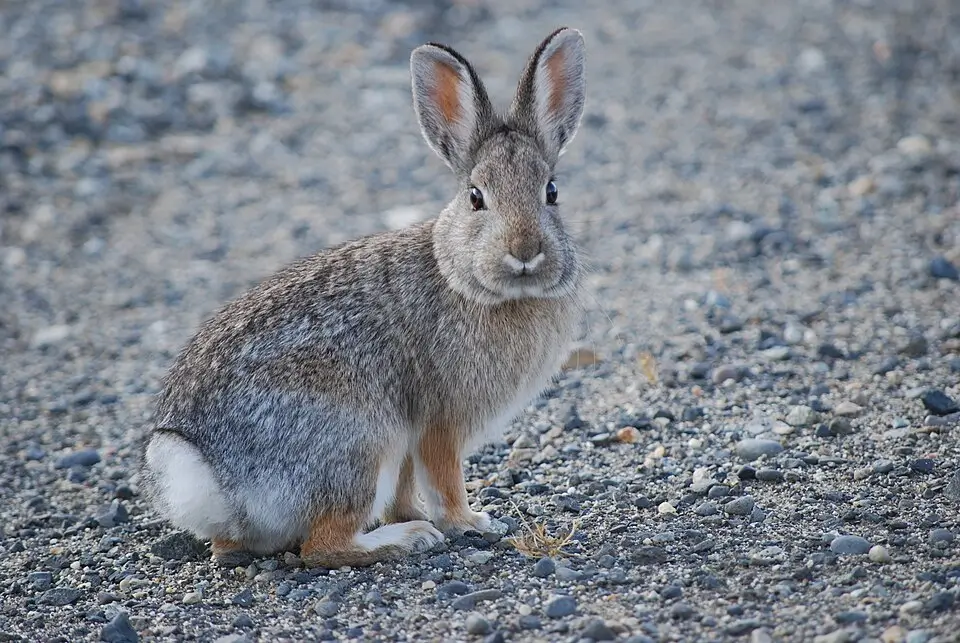
In terms of physical appearance, the Mountain cottontail is a medium-sized rabbit with the classic cottontail silhouette: a compact, rounded body, large hind legs built for explosive bursts of speed, and long, upright ears finely tuned to detect the approach of predators. Its coat is a mixture of gray, brown, and buff tones across the upper body, providing excellent camouflage among the rocks, grasses, and shrubs of its native environment. The underside is typically pale or white, and the short, fluffy tail — the hallmark of the cottontail — displays a bright white underside that flashes conspicuously when the animal bolts from cover.
As with all cottontails, the Mountain cottontail is a lagomorph, belonging to the order Lagomorpha and the family Leporidae. One fascinating biological trait shared by lagomorphs is cecotrophy — the practice of re-ingesting certain soft fecal pellets directly from the anus. This behavior, while unusual from a human perspective, allows rabbits to extract maximum nutritional value from their plant-based diet by passing food through the digestive system twice.
Mountain cottontails are herbivores, feeding on a wide variety of grasses, forbs, shrubs, and woody vegetation. Their diet shifts seasonally, taking advantage of whatever green vegetation is available during the warmer months and relying more heavily on woody browse, bark, and dried grasses during winter. Like other rabbits, they have continuously growing teeth that are kept in check by the constant wear of feeding on tough, fibrous plant material.
Reproduction in the Mountain cottontail follows the classic lagomorph model of high productivity. Females are capable of producing multiple litters per year, typically during the warmer spring and summer months. Litter sizes generally range from a few to several young, and the gestation period is short — a common adaptation in prey species that face significant predation pressure. This reproductive strategy allows populations to recover quickly from losses due to predation, disease, or hunting pressure.
The Mountain cottontail is primarily crepuscular and nocturnal, meaning it is most active during the low-light periods of dawn and dusk and during the night. During the heat of the day, individuals typically rest in shallow depressions called "forms," in dense brush, or under rocky outcroppings. This behavioral pattern helps them avoid both the peak temperatures of summer afternoons and the heightened activity periods of diurnal predators such as hawks and eagles.
Habitat and Range
The Mountain cottontail has a geographic range centered on the intermountain West and Great Plains of North America, extending from southern British Columbia and Alberta in Canada southward through the Rocky Mountain states and into portions of the Great Plains. The species is closely associated with the sagebrush-steppe ecosystem — one of the most extensive and ecologically important habitat types in the western United States — as well as with shrublands, riparian areas, rocky terrain, and the foothills and lower mountain slopes of the Rockies.
In Idaho, the Mountain cottontail is widely distributed, benefiting from the state's extraordinary landscape diversity. The Snake River Plain, with its vast sagebrush expanses and lava rock formations, provides particularly excellent habitat. The rocky terrain found throughout much of southern and central Idaho offers both food resources and protective cover. Riparian corridors lined with willows, cottonwoods, and dense shrubs also attract Mountain cottontails, which appreciate the combination of water proximity, abundant vegetation, and escape cover.
Elevation plays an important role in shaping Mountain cottontail distribution. As their name suggests, these rabbits are well-adapted to montane environments and can be found at moderate to fairly high elevations, occupying zones below the timberline where shrubby vegetation remains abundant. However, they are not restricted to high elevations and are equally at home in lower-elevation sagebrush and grassland habitats.
Cover is critically important to the Mountain cottontail's survival strategy. Dense shrubs, rock piles, brush piles, and tall grasses all provide refuge from the impressive array of predators that target this species. Hawks, owls, eagles, coyotes, foxes, bobcats, weasels, and even badgers all rely on cottontails as a significant food source. The Mountain cottontail's ability to remain motionless, blend into its surroundings, and execute sudden, erratic escape runs has made it a survivor in a landscape filled with capable hunters.
Hunting Information
The Mountain cottontail is one of the most popular small game animals in the western United States, and Idaho offers excellent opportunities for hunters interested in pursuing this species. Cottontail hunting is widely regarded as one of the most accessible and enjoyable forms of small game hunting — it requires minimal equipment, can be done on foot across a wide variety of public lands, and provides fast-paced action that is well-suited to both experienced hunters and those new to the sport.
Hunters pursuing Mountain cottontails in Idaho typically use small-caliber rifles, shotguns, or even traditional archery equipment. Shotguns, particularly those loaded with fine shot in sizes appropriate for small game, are a popular choice for the fast, unpredictable flushes that cottontails are known for. Small-caliber rifles such as the .22 LR are favored by hunters who prefer to spot and stalk, testing their marksmanship while moving quietly through promising habitat.
Beagling — the practice of hunting rabbits with specially trained beagle hounds — is a cherished tradition among cottontail hunters throughout North America, and this method translates beautifully to the open terrain of Idaho. Beagles use their keen sense of smell to track and push rabbits, often driving them in circles back toward waiting hunters. The sound of a beagle pack in full cry on a frosty autumn morning is one of the most evocative sounds in all of small game hunting.
Because the Mountain cottontail is a prey species with high natural reproductive rates, it is generally considered highly renewable as a game resource. Hunters are encouraged to check the most current regulations published by the Idaho Department of Fish and Game before heading afield, as season dates, bag limits, and licensing requirements are subject to change. Specific regulatory details were not available in the source data consulted for this article, so prospective hunters should verify current rules directly with Idaho Fish and Game.
Idaho's extensive public land network — encompassing national forests, Bureau of Land Management lands, and state endowment lands — provides tremendous access to Mountain cottontail habitat. Hunters willing to explore sagebrush-covered hillsides, rocky draws, and brushy riparian corridors will find no shortage of promising country.
Conservation
The Mountain cottontail is currently not considered a species of conservation concern, and its populations across the western United States are generally regarded as stable and healthy. The species' adaptability to a wide range of habitat conditions, combined with its remarkable reproductive capacity, makes it resilient in the face of many of the pressures that threaten less prolific wildlife species.
That said, the broader sagebrush-steppe ecosystem that the Mountain cottontail calls home is one of the most threatened habitat types in North America. Conversion of sagebrush lands to agriculture, energy development, invasive species such as cheatgrass, and changing fire regimes all pose long-term challenges to the integrity of this ecosystem. Conservation efforts aimed at protecting and restoring sagebrush habitat benefit a wide community of wildlife species, including the Mountain cottontail, the greater sage-grouse, pronghorn antelope, mule deer, and many others.
Hunters, as traditional stewards of wildlife resources, play a meaningful role in the conservation of species like the Mountain cottontail. Hunting license fees and excise taxes on firearms and ammunition — collected under the Federal Aid in Wildlife Restoration Act (commonly known as the Pittman-Robertson Act) — fund critical wildlife management and habitat conservation programs across the country. By participating in regulated small game hunting, cottontail hunters directly contribute to the conservation infrastructure that benefits all wildlife.
Conclusion
The Mountain cottontail is far more than a target species for small game hunters — it is a keystone prey animal, an ecological linchpin of the western sagebrush landscape, and a symbol of the wild, open spaces that define the American West. In Idaho, where mountains, rivers, and sagebrush plains converge in spectacular fashion, the Mountain cottontail thrives as a testament to the resilience and richness of western wildlife. Whether you encounter one on a quiet morning walk or pursue it with a beagle and a shotgun on a crisp autumn day, the Mountain cottontail rewards attention and respect in equal measure.