A Complete Guide to Anas platyrhynchos
Few birds are as universally recognized as the Mallard. Whether you are standing beside a quiet city pond, walking the banks of a winding river, or hunkered down in a blind before dawn on a cold autumn morning, the Mallard is almost certainly part of the scene. With its brilliant emerald-green head, chestnut-brown breast, and the signature curling tail feathers of the drake, this bird has become the very symbol of waterfowl hunting across North America and around the world.
The Mallard (Anas platyrhynchos) is the most abundant and widely distributed duck on the planet. It serves as the ancestor of nearly all domestic duck breeds and is the most harvested waterfowl species by hunters in North America year after year. Yet despite its familiarity, the Mallard is a creature of remarkable complexity — a highly adaptable, behaviourally sophisticated bird that thrives in environments ranging from Arctic tundra to tropical wetlands, from wilderness river systems to urban parks.
In Idaho, the Mallard holds a place of particular importance. The state's diverse landscape — encompassing high mountain lakes, sprawling river valleys, agricultural floodplains, and sagebrush wetlands — provides exceptional habitat for Mallards throughout the year. For Idaho's waterfowl hunters, the Mallard is the cornerstone species of every duck season, and pursuing it across the state's varied terrain is one of the great traditions of the outdoor life.
Biological Traits
The Mallard is a member of the family Anatidae and the genus Anas, which encompasses the dabbling ducks — a group of waterfowl that feed primarily at or near the water's surface rather than diving deeply. As a dabbler, the Mallard tips forward in shallow water to reach aquatic vegetation and invertebrates on the bottom, a posture that has become one of the most recognizable sights in any wetland environment.
Plumage and Physical Appearance
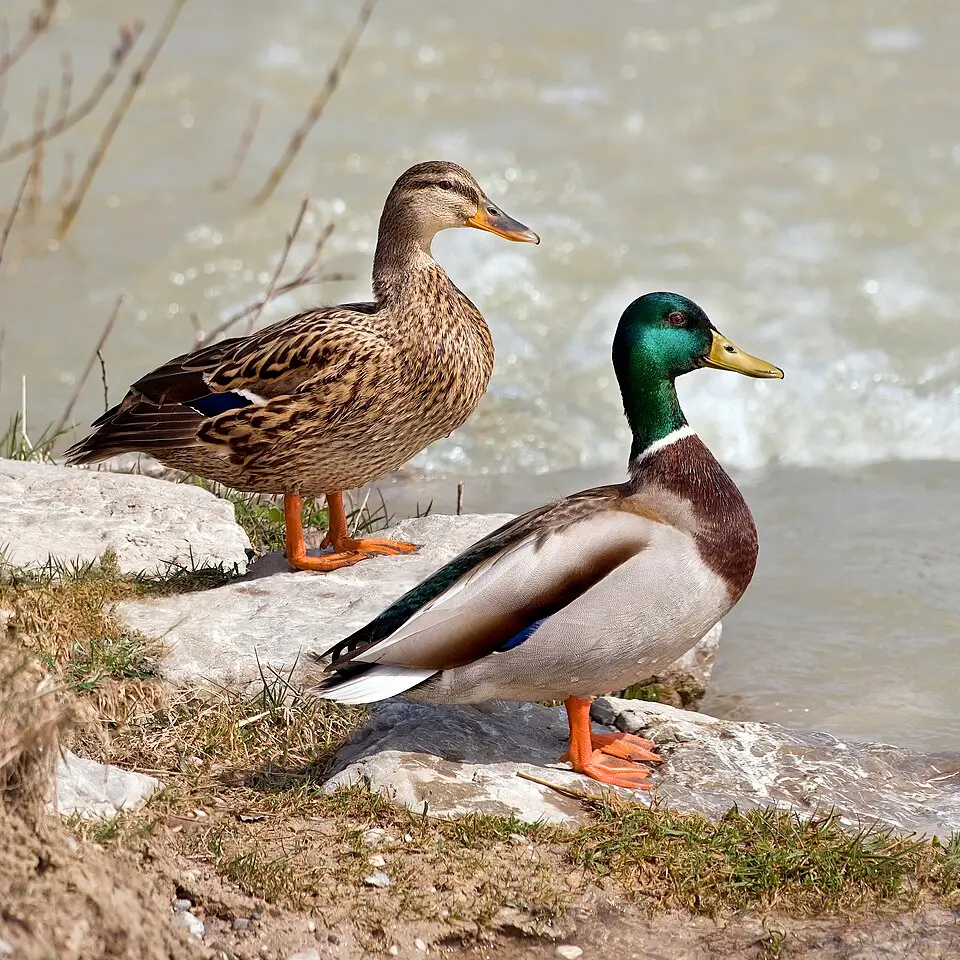
The sexual dimorphism of the Mallard is striking and well-known. The breeding drake (male) displays an iridescent green head separated from a rich chestnut-brown breast by a narrow white collar. The body feathers are predominantly gray, and the back is a warm brownish tone. Perhaps most distinctive is the pair of upward-curling black feathers at the tail, known as "drake feathers," which are a reliable field identification marker. The bill of the drake is a bright, waxy yellow, and the feet are orange.
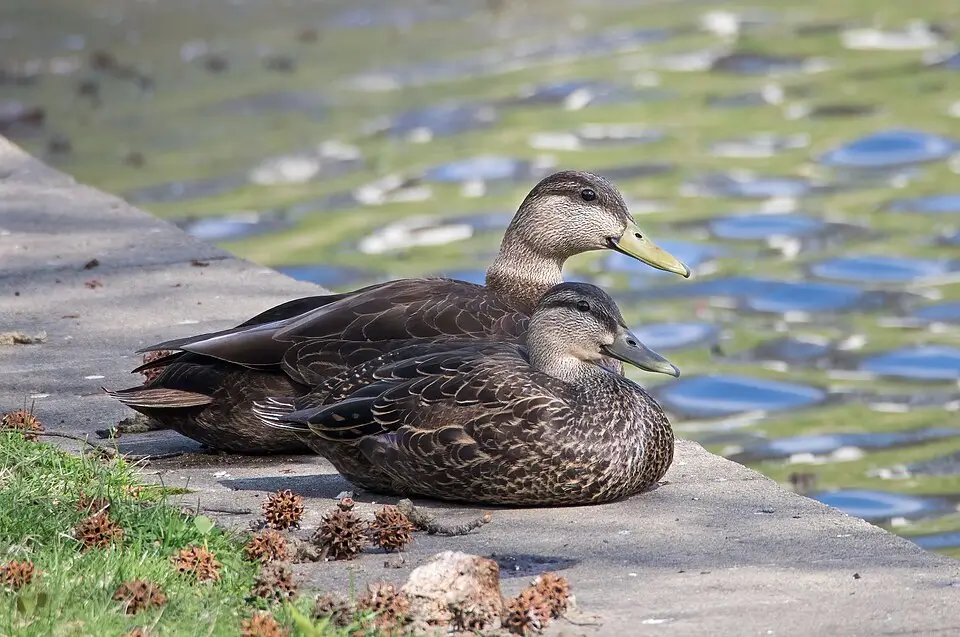
The hen (female) is a study in cryptic camouflage. Her plumage consists of mottled brown and buff tones that blend seamlessly with dried grasses, reeds, and muddy shorelines — a critical adaptation for a bird that incubates eggs on the ground. Her bill is orange with darker markings. Both sexes share a distinctive speculum — a patch of iridescent blue-purple feathers on the wing, bordered by white bars — which flashes brilliantly in flight.
Adult Mallards typically weigh between 2 and 3.5 pounds and measure approximately 20 to 26 inches in length, with a wingspan that can span up to 37 inches. They are robust, powerful fliers capable of reaching speeds of 40 to 60 miles per hour in level flight.
Voice
The Mallard's call is one of the most recognized sounds in nature. The hen produces the classic, loud, descending quacking call that most people associate generically with "ducks." The drake, by contrast, produces a softer, raspy, two-note call — a quieter sound that many casual observers overlook. Duck callers used by hunters are designed almost exclusively to replicate the hen's vocalizations, which are used to attract ducks during the hunting season.
Diet and Feeding Behavior
Mallards are omnivorous opportunists. Their diet includes aquatic vegetation, seeds, grains, insects, worms, small fish, crustaceans, and amphibians. In agricultural areas, they readily feed on waste grain in harvested fields — corn, wheat, barley, and rice are all highly attractive food sources. This dietary flexibility is a major reason for the species' extraordinary success across such a wide range of habitats.
Reproduction and Nesting
Mallards are seasonally monogamous, typically forming pair bonds during the winter months. Nesting generally begins in spring, with hens selecting nest sites on the ground, often near water but sometimes surprisingly far from it — even in suburban gardens and urban green spaces. The hen lays a clutch of 8 to 13 pale greenish-buff eggs and incubates them alone for approximately 27 to 28 days. Once the ducklings hatch, they are precocial — meaning they are covered in down, mobile, and able to feed themselves almost immediately. The hen leads her brood to water within hours of hatching, and the ducklings grow rapidly, reaching flight capability in approximately 50 to 60 days.
Molting and Eclipse Plumage
After breeding, drakes undergo a complete molt and enter what is known as "eclipse plumage" — a drab, hen-like appearance that makes them difficult to distinguish in late summer. This molting period renders them temporarily flightless, making them vulnerable to predators. By late autumn, drakes have regained their full breeding plumage, which is when they are most brilliant and most recognizable to hunters in the field.
Habitat & Range
The Mallard's range is essentially global. It breeds across the Northern Hemisphere — throughout North America from Alaska to Mexico, across Europe, and from Russia through Asia to the Pacific. In the Western Hemisphere, it is found year-round in temperate regions and migrates south during winter months, with large concentrations wintering along the Gulf Coast, in California's Central Valley, and throughout the Mississippi Alluvial Valley.
Mallards inhabit virtually every freshwater environment available to them. They are equally at home on vast prairie potholes, slow-moving lowland rivers, mountain lakes, coastal estuaries, and agricultural drainage canals. They favor areas with shallow, calm water and abundant emergent vegetation, which provides both food and cover for nesting and brooding.
Mallards in Idaho
Idaho's geography makes it an outstanding state for Mallard habitat. The Snake River Plain, which runs across much of southern Idaho, supports extensive wetlands, irrigation reservoirs, and agricultural fields that provide ideal conditions for both breeding and migrating birds. The Treasure Valley near Boise, the Magic Valley region, and the upper reaches of the Snake River drainage are particularly productive areas.
In northern Idaho, the panhandle region's lakes, ponds, and river systems provide important stopover habitat for Mallards moving along the Pacific Flyway — one of the four major North American waterfowl migration corridors. High mountain lakes and reservoirs in the central and eastern parts of the state also hold Mallards during the open-water season.
Because Idaho sits within the Pacific Flyway, it receives both locally breeding birds and significant numbers of migrant Mallards moving south from Canada and Alaska in autumn. This migration, typically peaking from October through December, creates the most exciting hunting opportunities of the season.
Hunting Information
The Mallard is the premier target species for waterfowl hunters across Idaho and the wider Pacific Flyway. Hunting Mallards is a pursuit that combines physical endurance, fieldcraft, marksmanship, and a deep understanding of bird behavior — qualities that make it one of the most rewarding forms of hunting available in the American West.
Seasons and Licensing
Waterfowl hunting in Idaho is regulated jointly by the Idaho Department of Fish and Game (IDFG) and the U.S. Fish and Wildlife Service (USFWS). Season dates, bag limits, and zone boundaries are set annually based on continental waterfowl population surveys conducted each summer. Hunters should always consult the current Idaho hunting regulations booklet — available through the IDFG website — for the most up-to-date season dates, daily bag limits, and license requirements before heading afield. Regulations can change from year to year, and compliance is essential.
All waterfowl hunters in Idaho are required to possess a valid Idaho hunting license, a federal Migratory Bird Hunting and Conservation Stamp (commonly known as the "Duck Stamp"), and in most cases a state waterfowl validation. The Duck Stamp, sold at post offices and through the USFWS website, directly funds the conservation of wetland habitats — making it one of the most impactful conservation tools in American history.
Hunting Methods and Tactics
Decoy spreads and calling are the foundation of Mallard hunting. A spread of floating Mallard decoys — arranged to simulate a relaxed group of feeding or loafing ducks — combined with skilled calling can bring birds from surprising distances into close range. The layout of a decoy spread, the positioning of the blind, and the timing and tone of calling all play critical roles in success.
Jump shooting — the practice of quietly walking stream banks or wetland edges and flushing birds at close range — is another productive and exciting method, particularly suited to Idaho's many smaller creeks, irrigation canals, and river backwaters. Field hunting over harvested grain, where Mallards congregate to feed in the morning and afternoon, is also highly effective during the hunting season.
Steel shot and other non-toxic shot types are federally mandated for all waterfowl hunting in the United States. Hunters should ensure they are using approved non-toxic ammunition when pursuing Mallards and all other waterfowl.
Idaho's Best Mallard Country
Some of Idaho's most productive Mallard hunting can be found along the Snake River corridor, in the wetlands and reservoirs of the Magic Valley, in the waterfowl management areas of the Treasure Valley, and along the Clearwater and St. Joe River drainages in northern Idaho. Many Wildlife Management Areas (WMAs) managed by the IDFG provide public access specifically for waterfowl hunters, making Idaho an accessible state for hunters of all backgrounds.
Conservation
The Mallard is currently listed as a species of Least Concern by the International Union for Conservation of Nature (IUCN), reflecting its large and stable global population. However, the long-term health of Mallard populations is closely tied to the health of wetland ecosystems, which have faced significant pressure from drainage, development, and agricultural conversion over the past century.
Conservation organizations such as Ducks Unlimited have invested billions of dollars in wetland habitat conservation across North America, protecting and restoring millions of acres of breeding, migration, and wintering habitat that Mallards and other waterfowl depend upon. The Federal Duck Stamp program has similarly conserved millions of acres of wetland habitat since its inception in 1934.
Hunter participation in waterfowl conservation is significant and well-documented. License fees, Duck Stamp purchases, and excise taxes on firearms and ammunition — distributed through the Federal Aid in Wildlife Restoration Act (Pittman-Robertson Act) — generate substantial funding for state and federal wildlife management programs. In Idaho, the IDFG uses these funds to manage and improve wetland habitats on public lands throughout the state.
Hunters, conservationists, and land managers share a common interest in maintaining healthy Mallard populations and the wetland systems they depend on. The Mallard's remarkable adaptability and fecundity give reason for optimism, but continued investment in habitat conservation remains essential for ensuring that future generations can enjoy the sight — and the pursuit — of this magnificent bird.