Overview
Few animals in North America enjoy the cultural recognition of the groundhog. From its celebrated role in weather folklore to its surprising reputation among hunters and wildlife enthusiasts, the groundhog — scientifically known as Marmota monax — is a fascinating creature that deserves a closer look beyond its Groundhog Day celebrity. This stocky, industrious member of the squirrel family is one of the most widespread and ecologically important burrowing mammals on the continent, playing a vital role in shaping the landscapes it inhabits.
Whether you know it as a groundhog, woodchuck, whistle-pig, or land beaver, this remarkable animal leads a life that is anything but ordinary. From its extraordinary ability to enter true hibernation to its surprising skill as an excavator capable of moving hundreds of pounds of soil, Marmota monax is a species that rewards careful study and observation. For hunters, wildlife managers, and outdoor enthusiasts across the United States and beyond, understanding the groundhog's biology, behavior, and habitat is the first step to appreciating just how remarkable this animal truly is.
Biological Traits
The groundhog belongs to the order Rodentia and the family Sciuridae, making it a close relative of squirrels, prairie dogs, and other marmots. As the largest member of the marmot group in eastern North America, Marmota monax is a robust, heavily built animal well adapted for life both above and below ground.
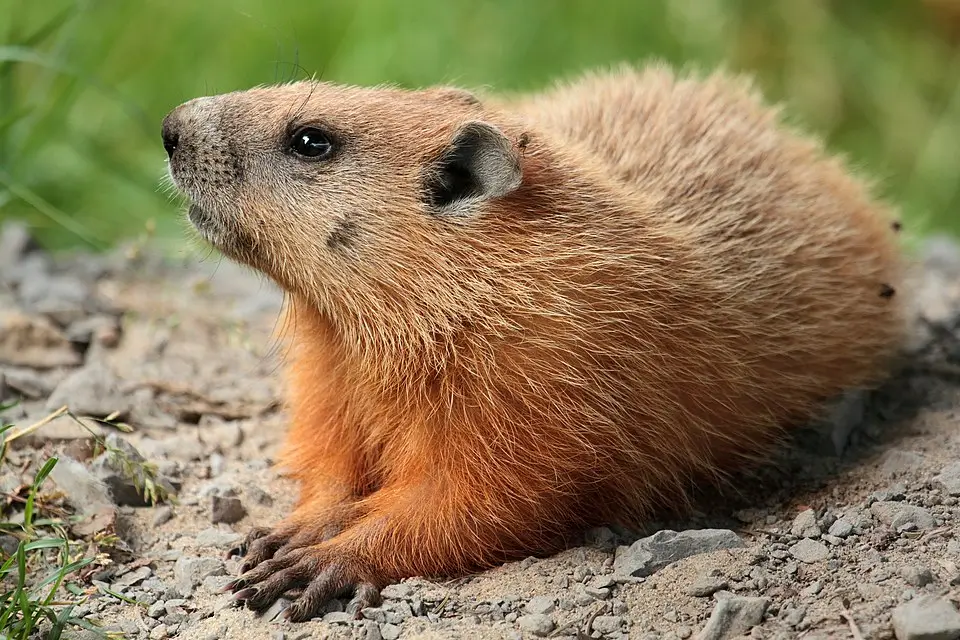
Groundhogs are characterized by their stout bodies, short but powerful legs, and a broad, flattened head. Their coat is typically a grizzled brown or reddish-brown, providing effective camouflage against the leaf litter and open fields they frequent. Their front feet are equipped with strong, curved claws that are perfectly designed for digging — the primary activity that defines much of a groundhog's existence. An adult groundhog's eyes, ears, and nose are positioned high on its head, giving it an excellent field of view while it remains partially concealed in tall grass or at the entrance to its burrow.
One of the most remarkable biological traits of the groundhog is its capacity for true hibernation — a physiological state that distinguishes it from many other mammals that merely enter a period of reduced activity during winter. During hibernation, a groundhog's body temperature drops dramatically, its heart rate slows to just a few beats per minute, and its breathing becomes shallow and infrequent. This state of torpor allows the animal to survive for months without eating, sustained entirely by the fat reserves it has built up during the late summer and fall feeding frenzy. Groundhogs typically enter their hibernation burrows in late fall and do not emerge until late winter or early spring — a biological event that became the cultural centerpiece of the famous Groundhog Day tradition celebrated each February 2nd.
Groundhogs are also known for their impressive burrowing capabilities. A single groundhog can excavate more than 700 pounds of soil when constructing a burrow system. These burrows can extend five feet deep and up to 25 feet in length, featuring multiple chambers for sleeping, raising young, and defecating. The network of tunnels a groundhog creates over its lifetime significantly aerates and loosens soil, providing indirect benefits to the surrounding ecosystem.
Breeding typically occurs shortly after the groundhog emerges from hibernation in late winter or early spring. After a gestation period of approximately 30 to 32 days, females give birth to a litter of typically two to six young. The young are born hairless, blind, and helpless, but develop quickly and are usually weaned and beginning to explore outside the burrow by early summer. Groundhogs are largely solitary animals outside of the breeding season, with adults maintaining and defending individual home ranges.
In terms of diet, groundhogs are primarily herbivores, feeding on a wide variety of wild grasses, clover, alfalfa, dandelions, fruits, and agricultural crops. Their voracious appetite during the active season — during which they consume enormous quantities of vegetation — is what allows them to accumulate the fat stores necessary to survive a full winter of hibernation. Occasionally, groundhogs will supplement their plant-based diet with insects, snails, or grubs, though plant material forms the overwhelming majority of their food intake.
Habitat and Range
The groundhog is native to North America and enjoys one of the broadest ranges of any marmot species on the continent. Its distribution spans from the eastern seaboard of the United States westward through the Midwest and northward across much of Canada, reaching as far as Alaska in isolated populations. The species is particularly abundant throughout the northeastern and midwestern United States, where a combination of agricultural land and forested edges provides ideal habitat.
Groundhogs are highly adaptable and thrive at the interface between open areas and woodland edges. They prefer habitats that offer a combination of open, grassy foraging areas — such as meadows, pastures, fields, and roadsides — and nearby woodland cover where they can retreat to safety from predators. This preference for edge habitat makes them a common sight along fence lines, in brushy field margins, and at the borders of forests and farmland.
Their burrow systems are central to their habitat requirements. Groundhogs need areas with well-drained soils suitable for digging, and they tend to avoid low-lying, waterlogged areas where flooding could compromise their underground homes. Rocky outcroppings and areas with heavy clay soils are similarly less attractive to groundhogs, though the animal's adaptability means it can be found in a surprisingly wide variety of landscapes.
In the context of western states such as Idaho, it is worth noting that the groundhog's range becomes more limited compared to its abundance in the eastern United States. Idaho sits on the western edge of the broader marmot family's territory, with related species such as the yellow-bellied marmot (Marmota flaviventris) being more characteristic of the state's mountainous and semi-arid landscapes. However, groundhogs have been documented in portions of the Pacific Northwest and surrounding regions, and Idaho's diverse geography — ranging from high mountain valleys to riparian meadows and agricultural lowlands — provides habitat that could support the species in certain areas.
Hunting Information
The groundhog holds a well-earned place in the hunting tradition of North America, particularly in the eastern United States where populations are most robust. Groundhog hunting — often called "woodchuck hunting" or "varmint hunting" — is a popular warm-weather pursuit that offers hunters a challenging and rewarding experience during the months when big game seasons are closed.
Groundhogs are typically hunted with centerfire rifles chambered in flat-shooting varmint cartridges, as the sport often involves making precise shots at varying distances across open fields and meadows. The groundhog's wariness, sharp senses, and habit of retreating rapidly to its burrow at the first sign of danger make it a genuinely challenging quarry that tests a hunter's marksmanship and field craft. Many hunters use groundhog season as an opportunity to hone their long-range shooting skills in preparation for fall big game hunts.
For hunters in Idaho specifically, it is important to consult the Idaho Department of Fish and Game for the most current regulations regarding groundhog hunting in the state. As of the time of this writing, specific season dates, licensing requirements, and bag limits for groundhogs in Idaho were not available in official published sources, and regulations can change from year to year. Hunters are always encouraged to check directly with state wildlife management authorities before heading afield to ensure full compliance with current rules. In many western states, unprotected nongame species can often be taken year-round on private land with landowner permission, but confirming this with Idaho Fish and Game is essential.
Conservation
From a conservation standpoint, the groundhog is currently listed as a species of least concern, reflecting its wide distribution, high reproductive rate, and strong adaptability to human-modified landscapes. Unlike many wildlife species that have struggled as North America's forests and grasslands have been converted to agricultural and suburban use, the groundhog has in many ways benefited from these changes. The creation of open fields, pastures, road corridors, and suburban green spaces has expanded the amount of suitable edge habitat available to the species, and populations remain healthy and stable across most of its range.
Despite this abundance, the groundhog still plays a meaningful ecological role that wildlife managers recognize and value. Its burrow systems provide shelter and nesting habitat for a wide variety of other species, including foxes, rabbits, skunks, and various reptiles and amphibians that take up residence in abandoned groundhog tunnels. The species also serves as an important prey item for a range of predators, including red foxes, coyotes, bobcats, birds of prey, and black bears, making it a significant link in the food chains of the ecosystems it inhabits.
The groundhog's role in aeration and loosening of soils through its digging activities also contributes to soil health and the cycling of nutrients, benefits that ripple outward to the plant communities and other wildlife sharing its habitat. In agricultural settings, while groundhogs can occasionally cause damage to crops or create hazards with their burrow entrances, responsible management through regulated hunting and other means can keep populations in balance with their surroundings.
As with all wildlife, a thoughtful and science-based approach to management ensures that groundhog populations remain healthy for future generations to enjoy — whether as a subject of wildlife observation, a participant in cultural tradition, or a worthy quarry for the dedicated varmint hunter.