Overview
Few birds capture the spirit of the American West quite like the Greater sage-grouse (Centrocercus urophasianus). With its dramatic plumage, remarkable courtship displays, and deep ecological ties to the sagebrush landscape, this bird has long fascinated naturalists, hunters, and wildlife enthusiasts alike. As the largest grouse species native to North America, the Greater sage-grouse stands as a symbol of the vast, open sagebrush seas that define so much of the interior West — including the rugged, beautiful terrain of Idaho.
Understanding this bird means understanding its landscape. The Greater sage-grouse is not merely a species that happens to live in sagebrush country; it is, in nearly every biological sense, a creature defined by sagebrush. From the food it eats to the cover it seeks and the stages upon which its spectacular breeding rituals unfold, the fate of the Greater sage-grouse and the fate of the sagebrush ecosystem are inextricably linked. That connection makes this bird one of the most closely watched and carefully studied species in North American wildlife management today.
Whether you are a hunter, a birder, a conservationist, or simply someone curious about the wild places of the West, the Greater sage-grouse offers a compelling story — one of ecological specialization, breathtaking behavior, and the ongoing effort to ensure this remarkable bird continues to thrive across its range.
Biological Traits
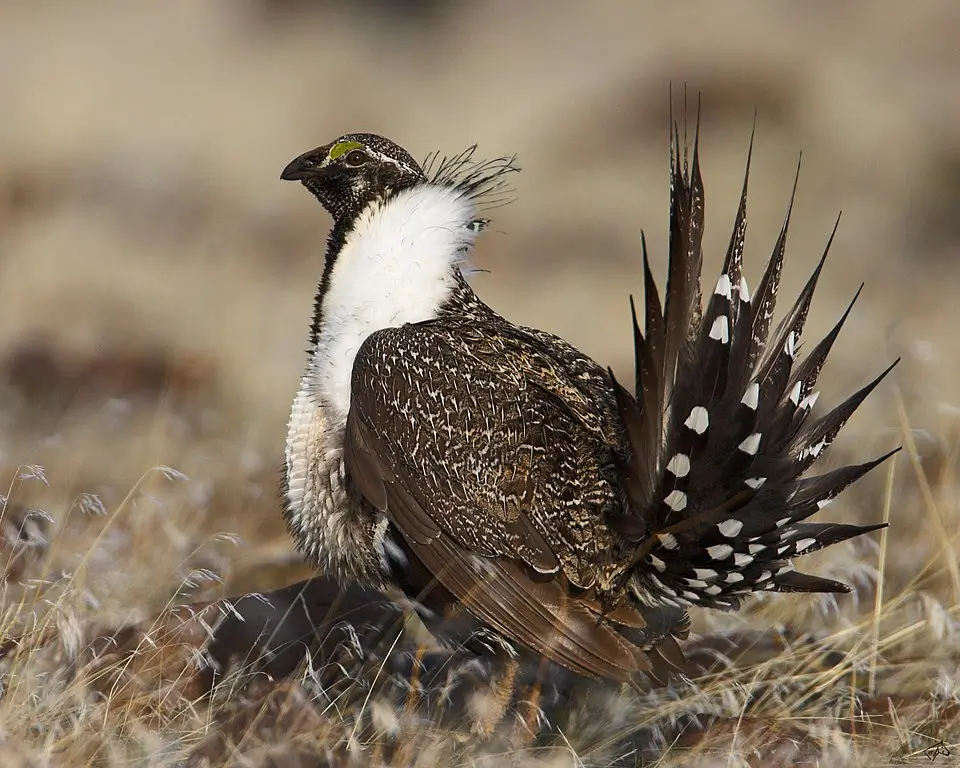
The Greater sage-grouse is the largest grouse species in North America, and males are noticeably larger than females — a characteristic known as sexual dimorphism. Adult males can be impressive birds, possessing a spiky, fan-shaped tail, a black belly patch, and a white ruff of feathers surrounding the breast. Perhaps most striking are the two large, yellowish-green air sacs on the male's chest, which play a central role in courtship displays.
One of the most celebrated spectacles in North American wildlife is the Greater sage-grouse's lekking behavior. Each spring, males gather at traditional communal display grounds known as "leks" — typically open, elevated areas within the sagebrush landscape — where they perform elaborate strutting displays to attract females. During these displays, males fan their spiky tail feathers outward, puff up their white chest feathers, and rapidly inflate and deflate their air sacs, producing a series of deep, resonant popping and bubbling sounds that carry across the open terrain. Females, known as hens, visit the lek to observe and ultimately select a mate. Dominant males, typically those holding central positions on the lek, earn the vast majority of matings — a classic example of a polygynous mating system.
After mating, hens take on all nesting and brood-rearing responsibilities without assistance from males. Nests are shallow depressions in the ground, typically concealed beneath sagebrush shrubs. Clutch sizes generally range from around six to eight eggs, and incubation lasts approximately 25 to 27 days. Chicks are precocial — meaning they are mobile and able to feed themselves shortly after hatching — though they remain with the hen for several weeks as they develop their flight capabilities.
The diet of the Greater sage-grouse reflects its deep dependence on the sagebrush ecosystem. Sagebrush leaves (Artemisia spp.) make up the overwhelming majority of the adult diet during fall and winter, when other food sources are scarce. In spring and summer, the birds supplement their diet with forbs (broad-leaved herbaceous plants) and insects, the latter being especially important for growing chicks, which require high levels of protein during their early weeks of life.
The Greater sage-grouse lacks a muscular gizzard — the organ that many other bird species use to grind hard seeds — which means it cannot effectively digest seeds. This biological limitation makes sagebrush not just a preferred food source but an essential one, particularly during the harsh winter months when forbs and insects are unavailable.
Habitat and Range
The Greater sage-grouse occupies one of North America's most distinctive ecosystems: the sagebrush steppe. This vast landscape stretches across much of the interior West, covering parts of eleven U.S. states and two Canadian provinces. The birds rely on large, contiguous areas of sagebrush habitat throughout the year, using different habitat components across the seasons.
During the breeding season, leks are typically situated in open, often slightly elevated areas with sparse vegetation that allow males to be seen and heard from a distance. Nesting habitat tends to consist of taller, denser sagebrush stands that provide concealment and thermal cover for incubating hens. As summer progresses and chicks develop, broods often move to areas with higher densities of forbs and insects, sometimes near wet meadows, riparian areas, or other mesic (moist) habitats. Winter habitat typically requires dense sagebrush with canopy cover deep enough to protrude above snow, ensuring that the birds can continue to access their primary food source even in severe weather.
Idaho sits squarely within the core range of the Greater sage-grouse. The state's vast sagebrush landscapes — particularly in the southern and central portions of the state — provide critical habitat for significant populations of this species. Idaho's wide open spaces, high desert plateaus, and mountain valleys covered in big sagebrush (Artemisia tridentata) are among the most important Greater sage-grouse habitats remaining in North America. The state's geography, which includes broad, relatively intact sagebrush ecosystems, makes Idaho one of the stronghold states for this species.
Hunting Information
The Greater sage-grouse has a long history as an upland game bird, and hunting has traditionally been an important part of the wildlife management framework for this species. Hunting seasons for Greater sage-grouse, where they exist, are managed carefully by state wildlife agencies in coordination with federal land management partners, reflecting the species' conservation status and population trends.
In Idaho, the Greater sage-grouse is managed by the Idaho Department of Fish and Game (IDFG). However, hunting regulations for Greater sage-grouse in Idaho — including season dates, bag limits, and open hunting units — are subject to change on an annual or even more frequent basis depending on population surveys, lek count data, and broader conservation planning efforts. Because sage-grouse populations can fluctuate based on drought, habitat conditions, and other environmental factors, wildlife managers regularly reassess hunting opportunities.
Hunters interested in pursuing Greater sage-grouse in Idaho should consult the current Idaho Department of Fish and Game regulations booklet or the IDFG website directly for the most up-to-date information on season dates, legal hunting areas, required licenses and tags, and any special restrictions that may be in effect. Licensing requirements and any special permits or controlled hunts specific to sage-grouse should be verified with the IDFG prior to any planned hunting activity, as specific details were not available in the current source data consulted for this article.
Traditionally, sage-grouse hunting is a classic Western upland experience. Hunters typically work open sagebrush flats and draws with pointing dogs or flushing breeds, covering ground in search of birds. Early mornings can be particularly productive, as birds often move from roosting areas to feeding locations during this period. Because Greater sage-grouse are the largest grouse in North America, they present a distinctive target, and many hunters find that open-choked shotguns with standard upland loads work well in the wide-open country these birds call home.
The cultural tradition of sage-grouse hunting runs deep in rural communities throughout the West. For many families in Idaho and neighboring states, opening day of sage-grouse season marks the beginning of the fall hunting calendar — a tradition passed down through generations and closely tied to the identity of sagebrush country communities.
Conservation
The Greater sage-grouse has become one of the most prominent conservation subjects in the American West over recent decades. Populations have declined across much of the species' historical range due to a variety of factors, including habitat loss, fragmentation of sagebrush landscapes, invasive plant species such as cheatgrass, wildfire, and energy development. These pressures have prompted significant conservation efforts at the federal, state, and private levels.
In 2015, the U.S. Fish and Wildlife Service determined that listing the Greater sage-grouse under the Endangered Species Act was "warranted but precluded," citing ongoing conservation efforts as a key factor in that decision. Subsequent years have seen continued debate and review regarding the species' status, making it one of the most closely monitored bird species in the country.
State wildlife agencies, including Idaho Department of Fish and Game, work in partnership with the Bureau of Land Management, U.S. Forest Service, Natural Resources Conservation Service, and private landowners to implement habitat improvement projects, manage invasive species, and develop land use plans that account for sage-grouse needs. Programs such as the USDA's Sage-Grouse Initiative have invested substantially in voluntary conservation practices on private lands, recognizing that much of the remaining sagebrush habitat exists outside of public land boundaries.
Hunters and the hunting community have historically played an important role in sage-grouse conservation through license and tag revenues, which fund state wildlife agencies and their management programs. Organizations dedicated to upland bird hunting and habitat conservation have also contributed to on-the-ground habitat work in sagebrush country.
The future of the Greater sage-grouse will depend on the continued health and connectivity of the sagebrush ecosystem. As one of the most ecologically specialized birds in North America, the sage-grouse serves as an indicator species for the broader sagebrush steppe — if the habitat remains healthy enough to sustain sage-grouse populations, it is likely sustaining hundreds of other species of plants and animals as well. Conservation of this single iconic bird, therefore, represents conservation of an entire ecosystem.