Overview
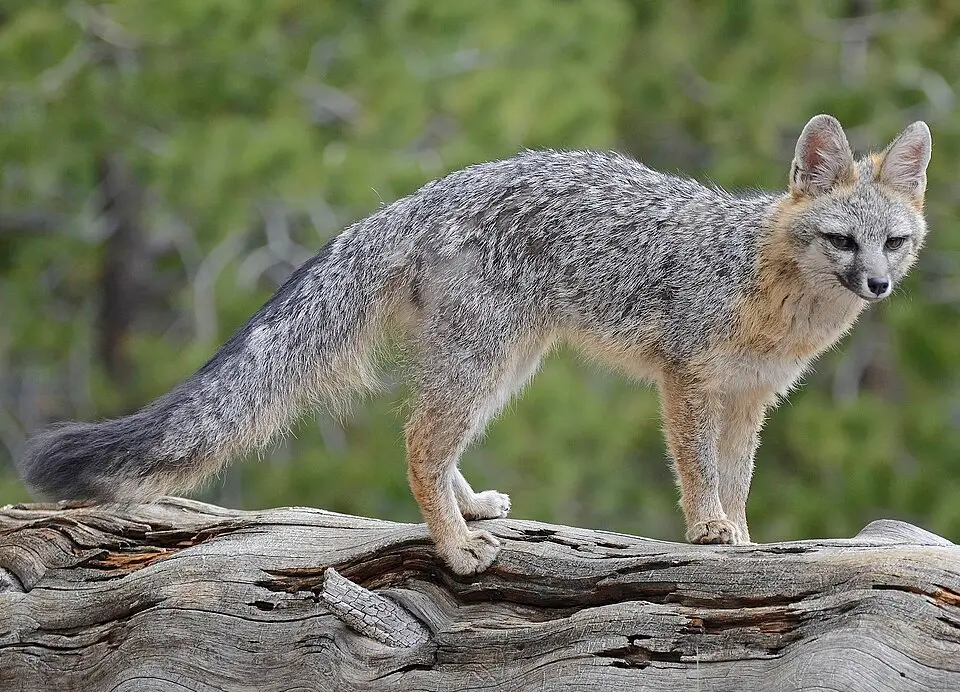
Among the many remarkable wild creatures that inhabit the landscapes of North America, the gray fox (Urocyon cinereoargenteus) stands out as one of the most distinctive and fascinating members of the canid family. Recognized by its salt-and-pepper coat, rusty-orange flanks, and a bold black stripe running the length of its tail, this medium-sized fox has captivated wildlife enthusiasts, hunters, and naturalists alike for generations. Unlike many of its canid relatives, the gray fox possesses a truly unique skill set — most notably, an extraordinary ability to climb trees — that sets it apart from virtually every other member of the dog family in North America.
From the dense hardwood forests of the eastern United States to the sun-baked brushlands of the Southwest, and from the rolling hills of Idaho to the tropical fringes of Central America, the gray fox has proven itself to be a supremely adaptable and resilient animal. It is an animal that thrives in the shadows, moving quietly through dense cover under the cloak of twilight and darkness, making it both elusive and endlessly intriguing. Whether you are a dedicated wildlife watcher, a small game hunter, or simply someone who appreciates the rich diversity of North American wildlife, the gray fox deserves a place of admiration and respect.
This article explores the biology, behavior, habitat, and hunting traditions associated with the gray fox, with a particular focus on what residents and visitors to Idaho might expect when encountering this remarkable canid in the wild.
Biological Traits
The gray fox, classified under the genus Urocyon, belongs to one of the oldest lineages of canids in North America. The genus name Urocyon is derived from the Greek words for "tailed dog," a fitting description for an animal whose bushy, black-tipped tail is one of its most recognizable features. The species name cinereoargenteus comes from Latin, meaning "ashy silver," a direct reference to the grizzled gray coloration that dominates the animal's upper coat.
In terms of size, the gray fox is a medium-small canid, typically smaller than the closely related red fox. Adults generally weigh between 7 and 13 pounds, with a body length ranging from roughly 31 to 44 inches including the tail. The animal's coat is a complex mosaic of colors: the back and sides are a grizzled gray produced by banded guard hairs, while the neck, sides, and legs are tinged with a warm russet or reddish-orange. The underside is typically a pale cream or white, and the face features a distinctive dark muzzle and a characteristic black stripe that runs from the inner corner of the eye downward toward the jaw — a marking that gives the gray fox a slightly masked appearance.
Perhaps the most extraordinary biological trait of the gray fox is its ability to climb trees. Unlike the red fox and most other canids, gray foxes possess semi-retractable, curved claws that allow them to grip bark and ascend trees with surprising agility. They use this skill not merely as a party trick but as a genuine survival strategy — retreating into the canopy to escape predators, accessing fruit and bird eggs in elevated locations, and even denning in hollow tree cavities. This arboreal ability is virtually unmatched among canids in North America and is one of the defining characteristics that make the gray fox such a fascinating study in evolutionary adaptation.
Gray foxes are primarily crepuscular and nocturnal, meaning they are most active during the hours around dawn, dusk, and throughout the night. They are omnivores with a broad and opportunistic diet that includes small mammals such as rabbits, mice, and voles; birds and their eggs; insects; and a wide variety of plant matter including fruits, berries, acorns, and corn. This dietary flexibility is a major contributor to the species' success across such a wide range of habitats and geographic regions.
Reproduction in gray foxes follows a seasonal pattern tied to the winter months. Mating typically occurs between January and March, with a gestation period of approximately 53 days. Litters generally consist of three to seven pups, which are born helpless and depend heavily on both parents for warmth, protection, and nourishment. Pups develop rapidly and are typically weaned by about three months of age, beginning to accompany their parents on foraging excursions before eventually dispersing to establish their own home ranges in the fall. The family unit remains cohesive through the summer, making gray foxes relatively devoted parents among the canids.
Unlike wolves and coyotes, gray foxes are largely solitary animals outside of the breeding season, each individual maintaining a home range that it marks and defends with scent. Communication between individuals relies on a combination of vocalizations, scent markings, and body language.
Habitat & Range
The gray fox boasts one of the broadest ranges of any North American canid, extending from southern Canada through the contiguous United States, Mexico, Central America, and into the northern portions of South America. Within this enormous range, the species occupies a remarkable diversity of habitat types, demonstrating its renowned ecological flexibility.
Across most of its range, the gray fox shows a strong preference for areas that provide dense cover and structural complexity. Mixed woodlands, shrubby thickets, chaparral, riparian corridors, and brushy hillsides are classic gray fox habitats. Unlike the red fox, which often thrives in open agricultural landscapes, the gray fox is fundamentally a creature of cover — it prefers places where it can move unseen, find denning sites in hollow logs or rocky outcroppings, and exploit the edges between different vegetation types.
In Idaho, the gray fox occupies a particular niche within the state's extraordinarily diverse landscape. Idaho is a landlocked state in the Pacific Northwest and Mountain West regions of the Western United States, bordering Montana, Wyoming, Nevada, Utah, Washington, and Oregon, with a small stretch of the Canadian border with British Columbia to the north. The state encompasses an area of 83,569 square miles, encompassing everything from high alpine terrain and dense conifer forests to arid desert shrublands and fertile river valleys. Gray foxes in Idaho tend to be found in the lower-elevation brushy and canyon habitats, particularly in areas with sagebrush, rocky outcroppings, and riparian vegetation that provide ideal cover and foraging opportunities. The Snake River Plain and associated canyon systems are among the habitat types where gray foxes may be encountered in the Gem State.
Because gray foxes are nocturnal and secretive by nature, many Idaho residents may share their landscape with these animals without ever realizing it. Their tracks — small, oval-shaped, and similar in appearance to those of a domestic cat but with visible claw marks — are one of the most reliable indicators of their presence in an area.
Hunting Information
The gray fox has a long and respected history as a quarry species for hunters and trappers across North America. Its beautiful pelt, once highly valued in the fur trade, continues to draw interest from both traditional trappers and sport hunters. Additionally, many hunters pursue gray foxes as part of predator calling, using rabbit distress calls or electronic game callers to lure curious foxes within range.
Gray fox hunting and trapping is regulated at the state level across the United States, and regulations vary considerably from one jurisdiction to another. In Idaho, hunters and trappers interested in pursuing gray foxes should consult the Idaho Department of Fish and Game for the most current and accurate season dates, bag limits, licensing requirements, and method-of-take regulations. As this article is based on available source data, specific season dates and license requirements for Idaho are not detailed here, and it is the responsibility of every hunter and trapper to verify current regulations directly with the state wildlife agency before heading afield.
Generally speaking, gray fox hunting in the western United States involves a combination of techniques. Predator calling — using mouth-blown or electronic calls that mimic the distress sounds of prey animals — is among the most popular and effective methods. Gray foxes are highly responsive to calling, often approaching quickly and boldly in response to the sounds of an injured rabbit or bird. Still hunting along brushy draws, canyon edges, and riparian corridors can also be productive, particularly during the early morning and late evening hours when foxes are most active.
Trappers have historically targeted gray foxes using a variety of set types, including dirt-hole sets, flat sets, and cubby sets baited with meat-based lures and attractants. The gray fox's relatively small size and predictable travel patterns along trails and waterways make it a rewarding quarry for experienced trappers.
For hunters in Idaho, the state's diverse terrain offers a variety of opportunities. The brushy canyons of southwestern Idaho, the riparian corridors along major river systems, and the shrubby foothills of the mountain ranges all represent promising areas to explore for gray fox. As always, securing proper permission to hunt on private land and adhering to all applicable state and federal regulations is essential.
Conservation
The gray fox is currently listed as a species of Least Concern by the International Union for Conservation of Nature (IUCN), reflecting its broad distribution, large population size, and adaptability to a wide variety of environmental conditions. While local populations may face pressure from habitat loss, fragmentation, and competition with coyotes and red foxes in some areas, the species as a whole remains widespread and relatively abundant across its range.
One of the primary threats to gray fox populations in certain regions is the ongoing conversion of brushy, structurally complex habitats to open agricultural or urban land. Because gray foxes depend so heavily on dense cover, the loss of woodland edges, riparian thickets, and brushy scrubland can reduce local population densities. Road mortality is another concern, particularly in areas where highway networks fragment otherwise suitable habitat.
Hunting and trapping, when regulated responsibly, have historically been compatible with healthy gray fox populations and continue to be managed as sustainable uses of the resource. State wildlife agencies across the country, including the Idaho Department of Fish and Game, play a vital role in monitoring gray fox populations and adjusting harvest regulations as needed to ensure long-term population health.
Conservation of the gray fox ultimately depends on the preservation of the varied, structurally complex habitats this species calls home. For residents and wildlife enthusiasts in Idaho, supporting habitat conservation efforts, responsible land stewardship, and science-based wildlife management represents the best path forward for ensuring that future generations will continue to catch a glimpse of this extraordinary tree-climbing fox moving through the brushy canyons and river bottoms of the American West.