Overview
Among the many fascinating mammals that inhabit the forests, woodlands, and open landscapes of North America, the fox squirrel (Sciurus niger) stands out as a particularly impressive and adaptable species. Known colloquially as the fox squirrel — a name that evokes both its size and its sometimes reddish-orange coloration — this remarkable rodent holds the distinction of being the largest tree squirrel native to North America. Whether you encounter one bounding across a sun-dappled forest floor, scaling a mighty oak in search of acorns, or chattering from a high branch in warning, the fox squirrel commands attention and respect from wildlife enthusiasts, naturalists, and hunters alike.
The fox squirrel is a species deeply woven into the fabric of North American outdoor tradition. For generations, hunters have pursued fox squirrels as one of the original small game quarry, and wildlife watchers have delighted in their bold, curious personalities. Understanding this animal — its biology, its habits, its habitat needs, and its place in broader ecosystems — enriches every encounter with it, whether you come armed with a rifle, a camera, or simply a pair of binoculars.
Biological Traits
The fox squirrel (Sciurus niger) belongs to the family Sciuridae, which encompasses all squirrels, chipmunks, marmots, and prairie dogs. Within this diverse family, the genus Sciurus includes the tree squirrels, and Sciurus niger is the largest member found in North America. The species name niger, Latin for "black," is somewhat misleading given the wide range of color variations found across different populations and geographic regions.
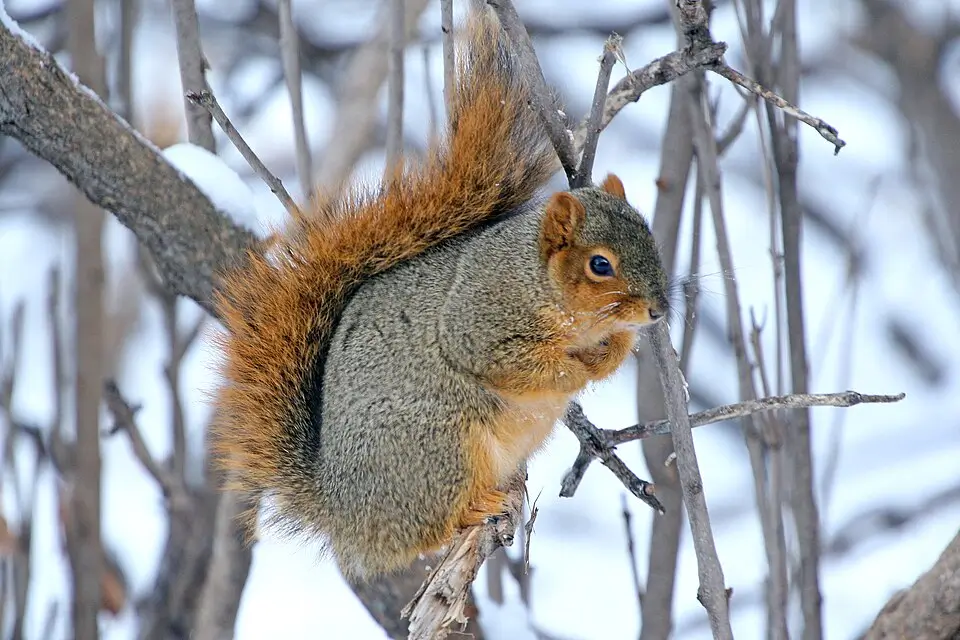
One of the most striking features of the fox squirrel is its remarkable coat color variability. Across its range, fox squirrels can appear in a spectrum of colors ranging from silvery-gray to rich rusty-orange and even dark brownish-black, depending largely on geographic location and local subspecies. In many parts of their range, individuals display a classic combination of an orange or tawny-orange underside paired with a grizzled gray or brownish-gray upper coat. Some populations in the southeastern United States exhibit predominantly black or melanistic individuals, while others show a more typical "fox-like" rusty-red coloration that likely gave the species its common name.
As the largest tree squirrel in North America, adult fox squirrels are noticeably bigger and heavier than the more commonly encountered eastern gray squirrel (Sciurus carolinensis). Adults typically possess a large, bushy tail that serves multiple functions: it helps with balance during arboreal movement, acts as a rudder during leaps between branches, provides warmth during cold weather, and serves as a visual communication tool during social interactions.
Fox squirrels are primarily diurnal, meaning they are most active during daylight hours, particularly in the morning and late afternoon. They are solitary animals for much of the year, coming together primarily during the breeding season. Like other members of the Sciurus genus, fox squirrels do not hibernate. Instead, they cache food — particularly hard mast like acorns, hickory nuts, and other seeds — in scattered underground caches throughout their home range, a behavior known as scatter hoarding. This food storage behavior plays an ecologically significant role, as many cached nuts that are never retrieved go on to germinate, contributing to forest regeneration and tree dispersal.
The diet of the fox squirrel is omnivorous and highly varied. While hard mast — particularly acorns and hickory nuts — forms the backbone of their diet, especially in autumn and winter, fox squirrels also consume soft mast including wild fruits and berries, corn, fungi, insects, bird eggs, and even the occasional small vertebrate. This dietary flexibility is a key factor in the species' ability to thrive across a wide variety of habitat types.
Reproduction in fox squirrels typically occurs twice yearly in most parts of their range, with breeding peaks in late winter and again in midsummer. Females give birth to litters typically ranging from two to four young after a gestation period of approximately 44 to 45 days. Young fox squirrels are born helpless and hairless in a nest — called a drey — constructed of leaves and twigs high in a tree or within a natural tree cavity. The young grow rapidly, weaning after a few months and eventually dispersing to establish their own territories.
Fox squirrels are known for their bold, less furtive behavior compared to species like the gray squirrel. They tend to spend more time on the ground foraging, which makes them somewhat more visible and accessible to observers and hunters. Their vocalizations include a range of barks, chatters, and tail-flagging signals used to communicate alarm, territorial claims, and social status.
Habitat and Range
The fox squirrel is native to a broad swath of North America, with its core range encompassing much of the eastern and central United States. The species is found from the Atlantic coastal states westward through the Great Plains, and from the Gulf Coast northward into southern Canada. They have also been introduced into various locations outside their native range, including parts of the western United States.
Fox squirrels are habitat generalists compared to some other tree squirrel species, but they show a pronounced preference for open woodland environments. They thrive particularly well in areas with a mix of large, mature hardwood trees — especially oaks, hickories, and walnuts — interspersed with open ground. Unlike gray squirrels, which tend to prefer dense, closed-canopy forests, fox squirrels favor woodland edges, open parklands, pine-oak woodlands, and agricultural areas adjacent to woodlots. They are frequently found along river corridors lined with hardwoods, in farm country where woodlots border crop fields, and in open pine savannas, particularly in the southeastern portion of their range.
Within Idaho and the broader Pacific Northwest and Mountain West, the fox squirrel is not a native species. Idaho's native squirrel fauna includes the western gray squirrel, various chipmunks, ground squirrels, and other sciurids well adapted to the state's diverse landscapes — which range from high mountain forests and rugged river canyons to sagebrush plains and fertile agricultural valleys. However, fox squirrels have been introduced into some western states and cities, where they have established localized populations, particularly in urban and suburban park settings.
Idaho is a landlocked state situated in the Pacific Northwest and Mountain West, sharing borders with Montana, Wyoming, Nevada, Utah, Washington, Oregon, and British Columbia, Canada. Its state capital, Boise, lies in the southwestern part of the state. Covering approximately 83,569 square miles, Idaho encompasses a tremendous variety of terrain and ecosystems, providing habitat for a rich diversity of wildlife — though the fox squirrel is not among the species for which Idaho is traditionally known as a hunting destination.
Hunting Information
Fox squirrel hunting is a beloved small game tradition throughout much of the animal's native range in the eastern and central United States. Squirrel hunting is widely considered one of the finest introductory hunting experiences, teaching woodsmanship, patience, and marksmanship in an accessible and rewarding context. Fox squirrels, given their larger size, bolder behavior, and tendency to forage on the ground, are highly regarded as a squirrel hunting quarry.
Traditional methods for hunting fox squirrels include still-hunting — sitting quietly near productive mast-producing trees and waiting for squirrels to emerge and feed — as well as spot-and-stalk approaches and hunting with well-trained squirrel dogs. Early morning and late afternoon hunts during autumn, when squirrels are actively caching food for winter, are generally considered the most productive times. Common firearms for squirrel hunting include .22 rimfire rifles and small-gauge shotguns, while some hunters pursue fox squirrels with archery equipment for an added challenge.
Regarding fox squirrel hunting specifically in Idaho, official state hunting regulations and season information were not available in the source data consulted for this article. Hunters interested in pursuing squirrels — including any fox squirrel populations that may exist in the state — should consult the Idaho Department of Fish and Game directly for the most current, accurate licensing requirements, season dates, and regulations. Regulations can change from year to year, and compliance with all applicable state and federal laws is both a legal obligation and an ethical responsibility for every hunter.
Conservation
The fox squirrel, as a species, is broadly considered to be of low conservation concern across much of its native range, thanks to its adaptability and wide distribution. However, several regional subspecies tell a more complex story. Certain subspecies of fox squirrel, particularly those with more restricted ranges in the southeastern United States, have experienced population declines and face conservation challenges related to habitat loss and fragmentation. The management of mature hardwood forests, preservation of woodland corridors, and restoration of open woodland habitats are important conservation priorities for supporting healthy fox squirrel populations.
Because fox squirrels rely heavily on mature, mast-producing hardwood trees, the long-term health of oak, hickory, and walnut forests is directly tied to the wellbeing of the species. Conservation-minded hunters and wildlife managers play an important role in advocating for sound forest management practices that benefit not only fox squirrels but the entire community of wildlife that depends on hardwood woodland ecosystems.