Overview
Few wildlife encounters are as universally familiar as the sight of an Eastern gray squirrel darting across a lawn, bounding through a forest canopy, or sitting upright on a fence post with a nut clutched between its forepaws. Sciurus carolinensis, the Eastern gray squirrel, is arguably the most recognizable small game animal in North America, and its presence spans an enormous swath of the continent — from dense eastern hardwood forests to urban parks and backyards across the country.
Despite its seemingly ordinary status in everyday American life, the Eastern gray squirrel is a remarkably sophisticated animal. It is a master forager, a surprisingly skilled navigator, and a keystone species in forest ecosystems. For hunters — particularly those new to the pursuit of small game — the Eastern gray squirrel offers an accessible, rewarding, and deeply traditional quarry. In a state like Idaho, where vast expanses of public land meet diverse forested ecosystems, understanding this species opens the door to a unique and satisfying hunting experience.
Whether you are a lifelong small game hunter, a naturalist exploring the wooded corridors of the Pacific Northwest and Mountain West, or simply someone who watches squirrels from a kitchen window, there is always more to learn about this endlessly fascinating creature.
Biological Traits
The Eastern gray squirrel (Sciurus carolinensis) belongs to the family Sciuridae, the broad family of squirrels, chipmunks, marmots, and prairie dogs. Within that family, it is a member of the genus Sciurus, a group of tree squirrels found across North America, Central America, and Eurasia.
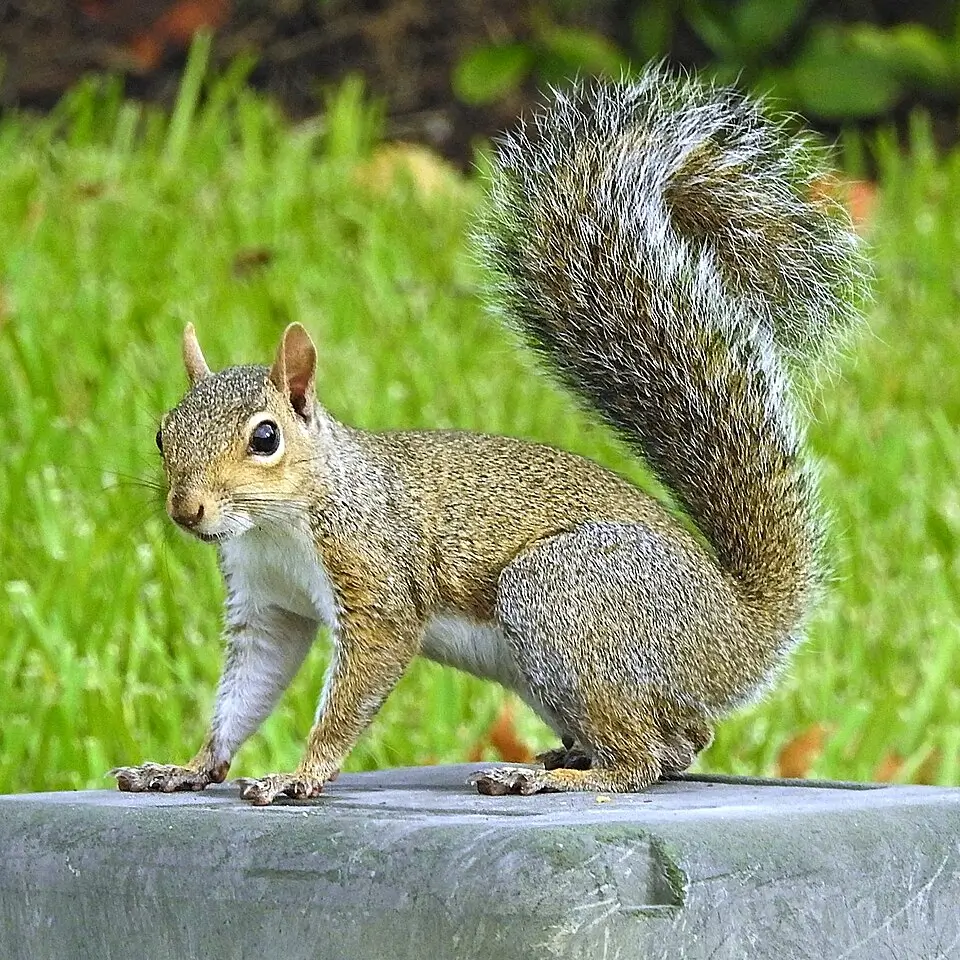
As the name suggests, the Eastern gray squirrel is predominantly gray in coloration — its dense, salt-and-pepper fur giving it excellent camouflage against the bark and shadows of deciduous trees. The underside is typically lighter, often white or pale gray. The tail, one of the species' most distinguishing features, is long, bushy, and fringed with silver-tipped hairs, giving it a distinctive halo-like appearance when backlit by sunlight. Some individuals exhibit a reddish or brownish tinge to their fur, particularly along the back and flanks, while a melanistic (all-black) color morph also exists in certain populations.
Adults are medium-sized tree squirrels, generally compact and agile in build, adapted for life in the forest canopy as well as on the ground. Their strong hind legs allow for impressive leaps between branches, and their sharp, curved claws are perfectly engineered for gripping tree bark. The Eastern gray squirrel's eyes are positioned on the sides of its head, giving it a wide field of vision — a critical adaptation for detecting aerial and terrestrial predators.
One of the species' most celebrated behaviors is mast caching, or scatter-hoarding. Eastern gray squirrels are famous for burying thousands of individual food items — primarily acorns, hickory nuts, beechnuts, and other hard mast — across their home range each autumn. Remarkably, they relocate a significant portion of these caches using a combination of spatial memory and, to some extent, smell. The nuts and seeds they fail to recover play a vital ecological role: many of these forgotten caches germinate and grow, making the Eastern gray squirrel one of the most important agents of tree regeneration in North American forests.
Breeding in Eastern gray squirrels typically occurs twice a year, in late winter and again in midsummer, though environmental conditions can influence this timing. Litters generally consist of two to four young, known as kittens, which are born blind, hairless, and entirely dependent on their mother. By around six to eight weeks of age, young squirrels begin venturing outside the nest, and by approximately three months they are largely independent. Nests, known as dreys, are constructed of leaves and twigs, typically situated in the forks of tree branches, though squirrels also readily use natural tree cavities for denning, particularly during cold weather.
The Eastern gray squirrel communicates through an expressive repertoire of vocalizations and tail movements. Their sharp, repetitive "kuk-kuk-kuk" alarm calls are a familiar sound in any woodland, signaling the presence of a predator — information that benefits not only other squirrels but the entire community of prey animals in the area.
Habitat & Range
The Eastern gray squirrel's native range is primarily the eastern half of North America, stretching from southern Canada down through the eastern United States, as far south as Florida and as far west as the Great Plains. However, through both intentional introduction and natural range expansion, the species has established itself across much of the western United States as well.
At its core, the Eastern gray squirrel is a forest-dependent species. It thrives in mature deciduous and mixed deciduous-coniferous woodlands, where the presence of mast-producing trees — particularly oaks, hickories, beeches, and walnuts — provides the nutritional foundation of its diet. The species adapts remarkably well to fragmented and edge habitats, including suburban neighborhoods, city parks, and agricultural woodlots, as long as sufficient tree cover and food resources are present.
In a western state like Idaho, the Eastern gray squirrel occupies a more limited but still notable presence. Idaho's diverse landscape — encompassing the forested mountains of the Panhandle region in the north, the river valleys of the Snake River Plain, and the rugged terrain of central Idaho — provides a mosaic of habitats that can support squirrel populations where suitable tree cover exists. The heavily forested northern reaches of Idaho, in particular, with their mixed conifer and hardwood stands, represent some of the more hospitable territory for this species in the state.
It is worth noting that Idaho is also home to several other squirrel species, including the Western gray squirrel, Fox squirrel, and various native species of ground squirrels and chipmunks. In forested areas, hunters and naturalists may encounter multiple squirrel species sharing overlapping habitat, making field identification a useful skill.
Hunting Information
Squirrel hunting is one of the oldest and most time-honored small game traditions in North America. Long before deer, turkey, and waterfowl hunting dominated the outdoor sporting culture, squirrels were a primary quarry for subsistence hunters and a critical source of protein for frontier families. Today, squirrel hunting enjoys a dedicated following and serves as an excellent entry point for new hunters learning woodsmanship, marksmanship, and patience.
The Eastern gray squirrel is a challenging and rewarding target. Despite its small size, it is a wary and observant animal, capable of detecting approaching hunters with its wide-angle vision and keen hearing. Successful squirrel hunters learn to move slowly and quietly through the woods, pausing frequently to listen and watch. The peak feeding periods — early morning and late afternoon — are generally the most productive times to be in the field.
Hunting techniques vary widely. Still hunting, in which the hunter moves slowly and methodically through suitable habitat, is a popular approach. Alternatively, many hunters practice what might be called "sit and wait" hunting — finding a productive-looking woodlot, sitting quietly against a tree, and allowing the forest to settle back into its natural rhythm after the hunter's arrival. Squirrels that initially alarm and hide will often resume activity within fifteen to twenty minutes if the hunter remains still and silent.
Common firearms for squirrel hunting include .22 LR rimfire rifles, which offer excellent accuracy and minimal meat damage, as well as shotguns in 20-gauge or .410 bore for hunters working dense cover where shots tend to be quick and close-range. Some hunters enjoy the additional challenge of pursuing squirrels with small-bore airguns or traditional archery equipment.
As for hunting regulations in Idaho specifically, hunters should consult the Idaho Department of Fish and Game for the most current licensing requirements, season dates, and bag limits applicable to Eastern gray squirrels and other small game species. Regulations can change from year to year, and it is always the hunter's responsibility to be fully informed before heading afield. Idaho's public lands — managed by agencies including the U.S. Forest Service and the Bureau of Land Management — provide extensive opportunities for small game hunters across the state.
Squirrel meat is mild, lean, and flavorful, and is considered a genuine delicacy by experienced small game cooks. It lends itself well to classic preparations such as braised squirrel, squirrel pot pie, and squirrel stew — dishes with deep roots in American culinary heritage.
Conservation
The Eastern gray squirrel is currently classified as a species of least concern by the International Union for Conservation of Nature (IUCN), reflecting its broad range, high adaptability, and stable population across most of its native territory. In many regions, it is among the most abundant medium-sized mammals in woodland habitats.
Ironically, the Eastern gray squirrel's greatest conservation concern in the modern era stems not from its scarcity but from its success as an introduced species outside its native range. In the United Kingdom, Ireland, and parts of continental Europe, introduced Eastern gray squirrel populations have had well-documented negative impacts on native red squirrel (Sciurus vulgaris) populations, primarily through competition and the transmission of squirrelpox virus, to which gray squirrels are largely immune but which is fatal to red squirrels.
Within its native North American range, the Eastern gray squirrel benefits from the same forest conservation efforts that protect broader woodland ecosystems. The preservation of mature hardwood forests, with their old-growth oaks and mast-producing trees, is directly beneficial to squirrel populations. Responsible hunting, regulated through state wildlife agencies, plays a role in maintaining healthy, sustainable squirrel populations and contributes funding to conservation programs through license fees and excise taxes under the Federal Aid in Wildlife Restoration Act (Pittman-Robertson Act).
For hunters and naturalists in Idaho and across the West, the Eastern gray squirrel represents both a connection to the deep traditions of American outdoor culture and a living reminder of the remarkable adaptability of wildlife in a changing landscape.