Overview
Few animals are as deeply woven into the fabric of American outdoor culture as the cottontail rabbit. With its distinctive powder-puff tail, alert brown eyes, and lightning-quick reflexes, the cottontail is a creature that nearly every American has encountered — whether in a backyard garden, a brushy field edge, or in the sights of a hunter's shotgun on a crisp autumn morning. Belonging to the genus Sylvilagus, cottontail rabbits represent one of the most widespread and ecologically significant groups of small mammals on the continent. From the sagebrush flats and river bottoms of Idaho to the dense thickets of the Appalachian foothills, the cottontail has carved out a remarkable niche in North American ecosystems, thriving in an extraordinary range of environments and playing a vital role in the food webs that sustain countless predators.
For hunters, the cottontail holds a place of honor as one of the most accessible and rewarding small game pursuits available. It requires minimal equipment, can be hunted across vast stretches of public land, and offers fast-paced action that sharpens shooting skills and deepens a hunter's understanding of the natural world. For naturalists and wildlife enthusiasts, the cottontail provides endless fascination — a testament to the power of adaptability, reproductive resilience, and evolutionary refinement. In this guide, we will explore the biology, habitat, hunting traditions, and conservation outlook of this remarkable animal, with a particular focus on opportunities in the rugged and diverse state of Idaho.
Biological Traits
The cottontail rabbit belongs to the genus Sylvilagus, which is a member of the family Leporidae and the order Lagomorpha — the same order that includes hares and pikas. The genus Sylvilagus encompasses more than a dozen recognized species across North and South America, with the Eastern cottontail (Sylvilagus floridanus), the Desert cottontail (Sylvilagus audubonii), and the Mountain cottontail (Sylvilagus nuttallii) being among the most commonly encountered species in the United States.
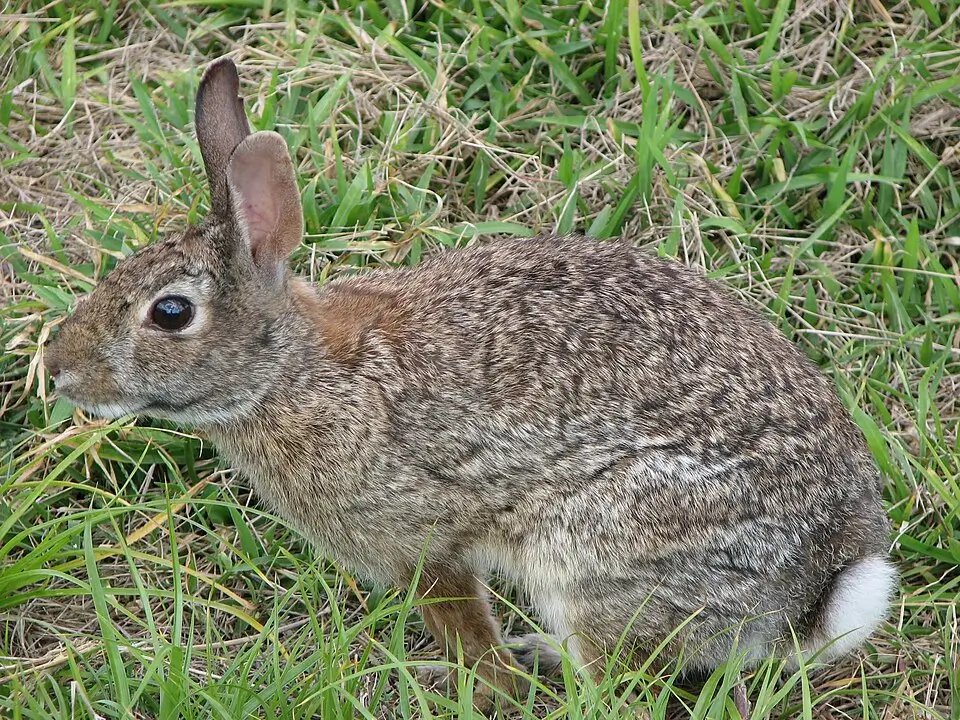
At first glance, cottontails appear deceptively simple — small, brown, and unassuming. But a closer look reveals an animal exquisitely engineered for survival in a world full of predators. The most iconic feature is, of course, the tail: a small, rounded puff of white fur that flashes conspicuously when the animal flees, possibly serving to confuse pursuing predators or signal alarm to nearby conspecifics. The coat is typically a rich blend of brown, gray, and buff tones on the dorsal surface, providing excellent camouflage among dead leaves, dry grasses, and shrubby undergrowth. The underside is pale or white, and the nape of the neck often features a rusty-orange patch.
Cottontails are small to medium-sized lagomorphs. Adult body weight typically ranges from roughly one to three pounds depending on the species, and body length generally falls between 14 and 19 inches. Their large, independently rotating ears serve a dual purpose: thermoregulation and acute hearing that can detect the faintest rustle of an approaching predator. Their large, laterally placed eyes provide an almost panoramic field of vision, allowing them to detect movement from nearly any direction without turning their heads.
Like all lagomorphs, cottontails practice a fascinating digestive behavior known as cecotrophy — the consumption of specialized soft fecal pellets called cecotropes. This allows them to extract maximum nutrition from fibrous plant material by essentially digesting it twice. Their diet is predominantly herbivorous, consisting of grasses, forbs, bark, twigs, and agricultural crops depending on the season.
Reproduction is perhaps the cottontail's most celebrated biological trait. These animals are capable of producing multiple litters per year, with litter sizes typically ranging from three to eight young. The gestation period is remarkably short — approximately 26 to 28 days — and females can become pregnant again almost immediately after giving birth. Young cottontails, called kittens, are born in shallow, fur-lined nests called forms. They are born with their eyes closed and are relatively helpless at birth, but develop rapidly and can fend for themselves within just a few weeks. This extraordinary reproductive capacity is a direct evolutionary response to the relentless predation pressure that cottontails face from hawks, owls, foxes, coyotes, bobcats, and a host of other predators.
Habitat & Range
The genus Sylvilagus is native to the Americas and exhibits an impressive range that stretches from southern Canada through the continental United States, Mexico, Central America, and into parts of South America. Within the United States, various species of cottontail have adapted to an enormous diversity of habitats, from sea-level coastal marshes to high-elevation mountain meadows.
In Idaho — a state characterized by dramatic geographic diversity, encompassing the deep canyon country of the Snake River Plain, the volcanic plateaus of the south, the dense conifer forests of the north, and the rugged peaks of the Sawtooth and Clearwater mountain ranges — cottontail rabbits find suitable habitat in many regions. The Desert cottontail (Sylvilagus audubonii) is particularly well-suited to the arid and semi-arid shrublands of southern and western Idaho, where sagebrush, bitterbrush, and rabbitbrush provide both food and shelter. The Mountain cottontail (Sylvilagus nuttallii), also known as Nuttall's cottontail, occupies higher-elevation zones and is commonly associated with sagebrush steppes, rocky outcroppings, and the brushy margins of conifer forests.
Regardless of species, cottontails share a general preference for what wildlife biologists call "edge habitat" — the transitional zones between open areas and dense cover. Field edges, brushy fence lines, overgrown irrigation ditches, riparian corridors choked with willows and cottonwood saplings, and the margins of agricultural fields all represent prime cottontail habitat. These ecotones provide the twin essentials of cottontail survival: open foraging areas and nearby dense cover for escape and shelter.
Home ranges are typically small, often covering only a few acres, and cottontails tend to be creatures of habit — using the same trails, feeding areas, and resting spots repeatedly. This behavioral predictability is something that experienced hunters learn to exploit effectively.
Hunting Information
Cottontail rabbit hunting is one of the oldest and most democratically accessible hunting traditions in North America. It requires relatively modest investment in equipment — a small-gauge shotgun or a .22 caliber rimfire rifle, a hunting license, and a pair of comfortable boots are often all that is needed — and it can be practiced across a wide range of public and private lands. For many hunters, pursuing cottontails was their introduction to the sport, and the lessons learned in the field — reading habitat, moving quietly, maintaining patience — form the foundation of a lifetime of hunting skills.
In Idaho, the vast and varied public land base provides enormous opportunity for cottontail hunters. The state encompasses millions of acres managed by the Bureau of Land Management, the U.S. Forest Service, and the Idaho Department of Fish and Game, much of which supports healthy cottontail populations. The sagebrush country of the Snake River Plain, the rocky draws of the Owyhee Uplands, and the brushy riparian corridors along Idaho's many rivers and streams are all productive areas to explore.
Hunters pursuing cottontails in Idaho should always consult the Idaho Department of Fish and Game for current season dates, licensing requirements, and any applicable regulations, as these details can change from year to year. Carrying a valid Idaho hunting license is a legal requirement for all hunters pursuing game species in the state.
The most traditional method for hunting cottontails is walking and flushing — moving slowly through likely habitat, stepping into dense brush, and being prepared for the sudden burst of a fleeing rabbit. A well-trained beagle or other rabbit dog can transform the experience, as the hound's musical baying and the circling chase of a jumped rabbit create one of small game hunting's most thrilling and time-honored experiences. Still hunting — sitting quietly near active feeding areas at dawn or dusk — can also be highly productive, particularly during periods of cold weather when rabbits are less inclined to range widely.
Shotgun hunters typically favor loads of No. 4, 5, or 6 shot, which provide adequate pattern density for clean kills at typical ranges without excessive meat damage. Rimfire rifle hunters using a .22 LR can achieve excellent results with careful shot placement, and the challenge of making precise shots on alert, fast-moving quarry is deeply satisfying.
Conservation
From a conservation perspective, cottontail rabbits are in a generally favorable position across most of their range. Their exceptional reproductive capacity, broad dietary flexibility, and adaptability to human-modified landscapes have allowed them to maintain robust populations even as land use patterns have changed dramatically over the past century. Cottontails are not listed as threatened or endangered at the federal level, and most state wildlife agencies, including those in Idaho, manage them as a sustainable game resource.
That said, local populations can be sensitive to habitat loss — particularly the destruction of brushy cover and edge habitat through aggressive land clearing, overgrazing, and urban development. Preserving and enhancing brush piles, native shrub communities, and riparian vegetation benefits not only cottontails but the entire suite of wildlife species that depend on similar structural habitat features.
Regulated hunting plays a constructive role in cottontail conservation by providing funding for wildlife management programs through license sales and excise taxes on firearms and ammunition under the Federal Aid in Wildlife Restoration Act (Pittman-Robertson Act). Hunter-gathered harvest data also provides wildlife managers with valuable population trend information.
Cottontail rabbits remain a cornerstone of healthy ecosystems — serving as a critical prey base for raptors, carnivorous mammals, and even large snakes — and their continued abundance is a positive indicator of landscape health across much of the American West, including Idaho's diverse and spectacular terrain.