Overview
Few birds capture the imagination of hunters and wildlife enthusiasts quite like the common pheasant. With its iridescent plumage, explosive flush, and challenging pursuit across open fields and brushy cover, Phasianus colchicus has earned a place of honor in the hearts of upland bird hunters across North America and around the world. In a state like Idaho — with its sweeping agricultural valleys, river bottoms, and vast swaths of mixed habitat — the common pheasant is more than just a game bird. It is a symbol of the upland hunting tradition itself.
Whether you are a seasoned wingshooter who has tracked roosters through frosty corn stubble for decades, or a newcomer to upland hunting eager to experience one of the most exciting flushes in the field, the common pheasant offers an unmatched combination of beauty, wildness, and sporting challenge. This article takes a comprehensive look at this remarkable bird — its biology, behavior, habitat preferences, hunting traditions, and conservation — with a special focus on what the species means to hunters and wildlife lovers in the great state of Idaho.
Biological Traits
The common pheasant, Phasianus colchicus, belongs to the family Phasianidae, which also includes turkeys, quail, grouse, and peacocks. It is one of the world's most widely recognized game birds and arguably the most successful introduced game species in history.
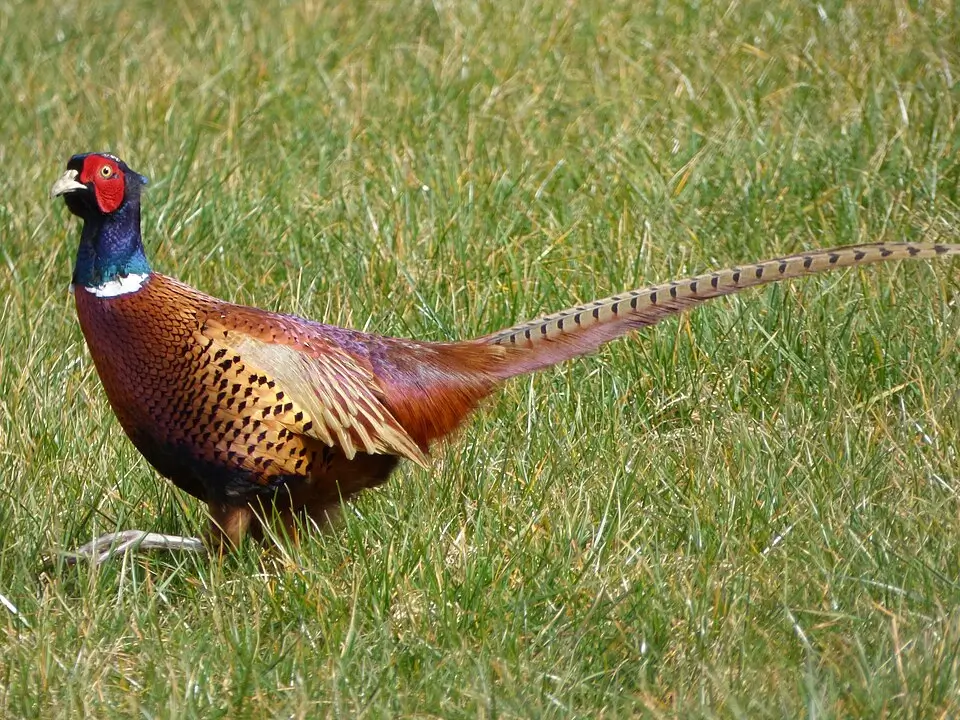
Perhaps the most striking feature of the common pheasant is its dramatic sexual dimorphism — the stark physical difference between males and females. The male, commonly called a rooster or cock, is one of the most visually spectacular birds in North America. His plumage is an extravagant tapestry of copper, gold, russet, and green, accented by a vivid red facial wattle and, in many populations, a distinctive white neck ring. His long, barred tail feathers can account for a significant portion of his total body length, making him instantly recognizable in the field. When a rooster explodes from cover with a thunderous clucking cackle and a burst of wingbeats, it is a moment that never loses its thrill no matter how many times a hunter experiences it.
The female, known as a hen, presents a very different appearance. Her plumage is a mottled blend of tans, browns, and buff — a masterpiece of camouflage that allows her to blend seamlessly into grassy and brushy environments. This cryptic coloration is essential for a bird that nests on the ground and relies on concealment to protect herself and her eggs from predators.
Common pheasants are robust, ground-dwelling birds. They are strong runners and prefer to escape danger on foot rather than by flight when possible, which is a behavioral trait that any hunter quickly comes to appreciate. When flushed, however, they are capable of impressive bursts of speed and can reach significant altitudes. Their powerful wings, combined with the unpredictable angles of their flight, make them a challenging target for even experienced wingshooters.
Pheasants are omnivores with a broad diet that shifts with the seasons. They consume seeds, grains, insects, berries, and various plant materials. This dietary flexibility is one of the reasons they have adapted so successfully to agricultural landscapes. During the warmer months, insects and invertebrates provide important protein, particularly for chicks in their first weeks of life. As fall and winter arrive, pheasants shift heavily toward seeds and waste grain, making agricultural fields a critical food source.
The breeding behavior of common pheasants is polygynous — a single dominant rooster will typically mate with multiple hens. Males establish territories in spring and engage in dramatic displays to attract females and deter rival males. Their loud, two-note crowing call is a familiar and welcome sound across pheasant country in late winter and early spring. Hens nest on the ground, typically laying clutches of around 8 to 15 eggs, and are solely responsible for incubation and brood rearing.
Habitat & Range
The common pheasant is native to Asia, with its original range stretching from the Caucasus region — reflected in its species name colchicus, referring to the ancient region of Colchis on the eastern Black Sea coast — eastward through Central Asia, China, and into Korea and Taiwan. The species has been introduced and successfully established across an extraordinary geographic range, including Europe, North America, Australia, New Zealand, and beyond. This makes it one of the most widely distributed birds in the world.
In North America, pheasants were introduced in the late 19th century and quickly found a suitable home across the agricultural heartland of the continent. They thrive in landscapes that offer a mosaic of habitats — row crops and grain fields for food, grassy meadows and brushy draws for nesting cover, and dense vegetation such as cattail marshes, shelterbelts, and hedgerows for winter shelter and escape cover.
Idaho presents a compelling mix of these habitat types. The state's lower elevation agricultural valleys — including the Snake River Plain, the Magic Valley, and various river corridors — provide the kind of mixed farming and grassland habitat that pheasants favor. Irrigated agriculture, particularly grain crops like corn, wheat, and barley, supplies abundant food resources. Adjacent riparian areas, canal banks, and CRP (Conservation Reserve Program) lands provide critical nesting and loafing cover.
Pheasants are not birds of deep wilderness. They are a species of the rural landscape, closely tied to the edges where agriculture meets natural cover. In Idaho, that means the species is most commonly found in the lower valleys and foothills rather than the rugged mountain terrain that defines much of the state's northern and central regions.
Hunting Information
Pheasant hunting is one of the most beloved upland traditions in North America, and Idaho offers hunters the opportunity to pursue roosters in a variety of productive settings. The classic pheasant hunt involves working through agricultural fields, weedy ditches, brushy draws, and grassy margins with a flushing or pointing dog, waiting for the explosive moment when a cackling rooster takes to the air.
Hunters in Idaho should always consult the Idaho Department of Fish and Game for the most current and accurate season dates, bag limits, and licensing requirements before heading afield. Regulations can change from year to year, and staying informed ensures both legal compliance and responsible participation in wildlife management. Because specific season dates and license details were not available in the source data consulted for this article, hunters are strongly encouraged to visit the Idaho Department of Fish and Game's official website or contact their regional office directly.
In general terms, pheasant hunting in Idaho — as in most states — typically takes place in the fall, following the close of the breeding season and the maturation of the year's young birds. Walk-up hunting with dogs is the most traditional and widely practiced method. Pointing breeds such as German shorthaired pointers, Brittanys, and English setters are popular choices, as are flushing breeds like Labrador retrievers and springer spaniels. A well-trained hunting dog is not just a convenience in pheasant country — it is often essential for locating and recovering birds in dense cover.
Shot selection is important for ethical and effective pheasant hunting. Roosters are large, strong birds with dense feathering, and hunters typically use 12 or 20 gauge shotguns loaded with appropriately sized shot. Lead-free ammunition options are increasingly available and may be required in certain areas, so hunters should check local regulations.
Public land hunting opportunities exist in Idaho through a variety of programs and designations, and access to private agricultural lands — where pheasant populations are often concentrated — can sometimes be arranged through respectful landowner relationships or formal access programs. The Idaho Department of Fish and Game administers several hunter access initiatives worth exploring.
Conservation
The long-term health of pheasant populations depends on the availability of suitable habitat, and habitat is perhaps the most significant challenge facing pheasants across North America today. Changes in agricultural practices over the decades — including the removal of hedgerows, drainage of wetlands, earlier and more intensive mowing, and reduced availability of idle grassland — have reduced the quality and quantity of nesting and brood-rearing cover in many areas.
Conservation programs such as the federal Conservation Reserve Program (CRP) have played a meaningful role in maintaining and restoring pheasant habitat by incentivizing landowners to take marginal cropland out of production and establish perennial grass and native plant cover. These enrolled acres provide critical nesting habitat and winter cover for pheasants and a host of other wildlife species.
Organizations dedicated to pheasant conservation, such as Pheasants Forever, work across the country to restore habitat, engage landowners, support research, and advocate for policies that benefit upland bird populations. In Idaho, cooperation between state wildlife agencies, federal programs, conservation organizations, and private landowners is essential to sustaining healthy pheasant numbers for future generations of hunters and wildlife observers.
Severe winters pose a significant challenge for pheasant populations in northern states like Idaho. Deep snow and prolonged cold can limit access to food and cover, leading to substantial mortality. This is one reason why providing and maintaining quality winter cover — such as dense cattail marshes, shelterbelts, and brushy draws — is such a priority for pheasant conservationists.
The common pheasant's adaptability and productivity give reason for optimism. Under good habitat conditions, pheasant populations can recover remarkably quickly from difficult years. With thoughtful management, habitat investment, and the continued passion of hunters and wildlife stewards, the rooster's ringing cackle will remain a defining sound of the Idaho countryside for generations to come.