Overview
Few animals capture the rugged spirit of the American West quite like the bighorn sheep (Ovis canadensis). With their massive, curling horns and uncanny ability to navigate near-vertical cliff faces, these animals have long been symbols of wilderness, strength, and resilience. Whether observed from a mountain overlook or glimpsed during a backcountry expedition, encountering a bighorn sheep is an experience that stays with a person for a lifetime.
In Idaho — a state defined by its dramatic mountain ranges, deep river canyons, and sprawling high desert terrain — bighorn sheep occupy some of the most spectacular landscapes in the continental United States. From the jagged peaks of the Sawtooth Mountains to the sheer walls of Hells Canyon, one of the deepest river gorges in North America, Idaho's geography provides exactly the kind of wild, open country that bighorn sheep have called home for thousands of years.
This article takes a deep dive into the world of the bighorn sheep: who they are biologically, where they live, how they behave, and what their presence means for hunters, wildlife enthusiasts, and conservationists alike.
Biological Traits
The bighorn sheep (Ovis canadensis) is a large North American ungulate belonging to the family Bovidae. The species name canadensis refers to Canada, where early specimens used for the original scientific description were collected. They are closely related to other wild sheep found across Asia and Europe, reflecting ancient migration patterns across the Bering land bridge.
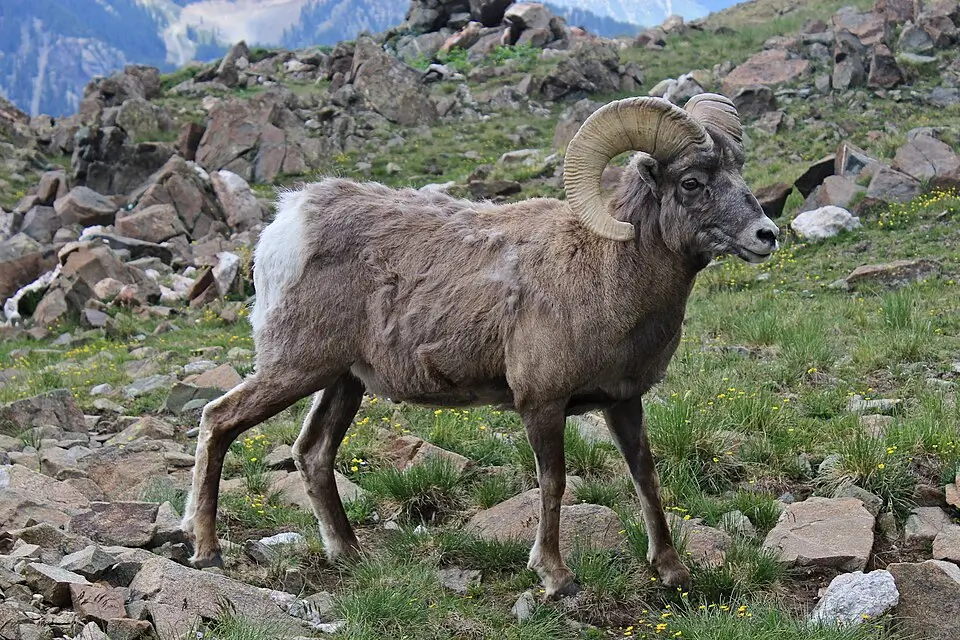
One of the most immediately recognizable features of the bighorn sheep is, unsurprisingly, its horns. In males, known as rams, these horns are massive, curling structures that can weigh as much as 30 pounds on their own — more than all the bones in the ram's body combined, according to well-established biological literature. The horns grow throughout the ram's life and can curl into a full curl or even beyond, often used as a rough indicator of age and maturity. Females, called ewes, also have horns, though theirs are shorter, thinner, and only slightly curved.
Bighorn sheep are sexually dimorphic, meaning males and females differ significantly in size and appearance. Rams are considerably larger than ewes, a common characteristic among polygynous ungulates where males compete for mating access. Body coloration is typically a rich brown to grayish-brown coat with a distinctive white rump patch and muzzle. This coloration provides effective camouflage against the rocky, arid environments they favor.
Perhaps the most awe-inspiring behavioral trait of bighorn sheep is their ability to traverse extraordinarily steep and rocky terrain. Their hooves are specially adapted for this purpose. The outer edges of the hooves are hard and sharp, providing grip on rocky surfaces, while the inner pads are soft and provide traction — functioning almost like the cleats of an athletic shoe. This adaptation allows bighorn sheep to move with surprising speed and agility across terrain that would be impassable for most other large mammals.
During the rut, or breeding season, which typically takes place in the late fall and early winter, rams engage in dramatic head-to-head combat. Two rams will charge each other from a distance, colliding with a resounding crack that can be heard from a considerable distance. These clashes can be repeated many times in succession. Rams are biologically equipped to withstand this repeated impact, with thick skulls, reinforced neck musculature, and a specialized honeycomb bone structure that absorbs the shock of collision.
Bighorn sheep are also ruminants, meaning they have a multi-chambered digestive system that allows them to break down tough, fibrous plant material efficiently. Their diet consists primarily of grasses, sedges, and forbs during summer months, shifting to drier and coarser vegetation such as shrubs and dried grasses during winter when fresh forage is scarce.
Lifespan in the wild is generally estimated at around 10 to 15 years, though this can vary depending on environmental conditions, predator pressure, and disease. Predators of bighorn sheep include mountain lions, wolves, coyotes, and golden eagles, which are known to prey on lambs.
Habitat & Range
Bighorn sheep are found throughout the mountainous regions of western North America. Their historical range once extended broadly from southern Canada through the Rocky Mountains, the Great Basin, the Sierra Nevada, and into northern Mexico. While that range has contracted from its historical extent due to human settlement, land use change, and disease, robust populations persist across many parts of the West.
The species is generally divided into three recognized subspecies: the Rocky Mountain bighorn (Ovis canadensis canadensis), the Sierra Nevada bighorn (Ovis canadensis sierrae), and the desert bighorn (Ovis canadensis nelsoni). The Rocky Mountain subspecies is the largest and most widespread, and it is the subspecies found in Idaho.
Bighorn sheep demonstrate a strong preference for steep, rocky terrain — a habitat preference that serves as both a foraging strategy and a predator avoidance mechanism. Open sightlines are critical; bighorn sheep rely on their exceptional eyesight to detect predators at great distances. When threatened, their instinct is typically to move uphill into broken, rocky terrain where their superior climbing ability gives them a decisive advantage over most predators.
In Idaho, bighorn sheep inhabit a range of environments. The state's diverse geography — encompassing portions of the Northern Rocky Mountains, the Snake River Plain, and the Columbia Plateau — supports multiple herds distributed across the state. Hells Canyon along the Idaho-Oregon border is particularly well known as bighorn sheep habitat, with its dramatic basalt cliffs and grassy benches providing ideal conditions for these animals. The Salmon River country, the Owyhee Mountains, and various ranges in central and eastern Idaho also support populations.
Seasonal movement patterns in bighorn sheep are driven primarily by snow depth and forage availability. During winter, sheep often move to lower elevations or south-facing slopes where wind and solar exposure keep snow depths manageable. In spring and summer, they migrate to higher elevations to take advantage of the flush of nutritious vegetation that follows snowmelt.
Hunting Information
Bighorn sheep hunting is widely regarded as one of the most prestigious and challenging pursuits in North American hunting. The combination of extreme terrain, limited tag availability, and the physical demands of pursuing sheep in the high country makes a bighorn tag one of the most coveted in the hunting world.
In Idaho, bighorn sheep hunting is managed by the Idaho Department of Fish and Game. Because bighorn sheep populations are carefully managed and limited in number relative to deer or elk, tags are allocated through a controlled draw system. This means that hunters must apply for a limited number of available tags, and successful applicants are selected through a lottery. It is not uncommon for dedicated hunters to apply for bighorn sheep tags for many years — sometimes decades — before drawing a successful tag.
Because specific season dates, license fees, tag numbers, and unit-by-unit regulations change from year to year, prospective hunters are strongly encouraged to consult the Idaho Department of Fish and Game's official website and current hunting regulations for the most accurate and up-to-date information. Regulations can vary significantly by unit and by sheep population, and staying current is both a legal and ethical responsibility for any hunter.
Physically, a bighorn sheep hunt in Idaho is a serious undertaking. The terrain these animals occupy demands excellent physical conditioning, proficiency with a firearm or archery equipment at various distances, and the ability to navigate backcountry environments safely. Many successful bighorn hunters spend years preparing for the physical demands of a sheep hunt, and many choose to hire professional outfitters with experience in the specific drainages and ranges where sheep are found.
The reward for this effort, however, is profound. A mature Rocky Mountain bighorn ram, taken legally and ethically in the wild country of Idaho, represents not just a trophy but a milestone achievement — one that connects the hunter to a long tradition of conservation-funded wildlife management and the deep wilderness of the American West.
Conservation
The story of bighorn sheep in North America is, in many ways, a story of conservation in action. Prior to European settlement, bighorn sheep were estimated to number in the millions across the West. By the early twentieth century, however, populations had collapsed dramatically due to market hunting, habitat loss, livestock competition, and — perhaps most significantly — disease transmission from domestic sheep and goats.
Today, through the combined efforts of state wildlife agencies, the federal government, tribal nations, and conservation organizations such as the Foundation for North American Wild Sheep (FNAWS), bighorn populations have made a meaningful recovery in many parts of their range. Translocation programs — in which sheep from healthy populations are captured and relocated to restore populations in areas where they had been extirpated — have been a particularly important tool in recovery efforts.
In Idaho, bighorn sheep management reflects this broader conservation commitment. The state has invested significantly in habitat protection, disease monitoring, and population surveys to ensure that herds remain healthy and viable for future generations. Hunter-generated funds through tag fees and Pittman-Robertson excise taxes on firearms and ammunition play a direct and critical role in financing these conservation efforts.
Bighorn sheep continue to face challenges, particularly from respiratory disease outbreaks that can devastate local herds with alarming speed. Ongoing research into disease dynamics, vaccination strategies, and the management of domestic livestock near wild sheep habitat is essential to the long-term health of bighorn populations across the West.
For wildlife watchers and hunters alike, the bighorn sheep stands as both a conservation success story and a reminder of the ongoing work required to maintain wild populations in a rapidly changing landscape. Idaho's rugged backcountry remains one of the finest places in North America to see these magnificent animals in their element.