Overview
Few animals capture the imagination of hunters and wildlife enthusiasts quite like the wild boar. Known scientifically as Sus scrofa, the wild boar is one of the most widespread and adaptable large mammals on the planet. With a history intertwined with human civilization stretching back thousands of years, this remarkable creature occupies a unique space in the natural world — simultaneously revered as a game animal, studied as an ecological force, and managed as an invasive species across much of North America.
In Georgia, the wild boar — often referred to as feral hog, wild pig, or razorback depending on local tradition — has established a significant and growing presence. The state's lush forests, agricultural landscapes, river bottoms, and swamplands provide ideal conditions for these highly adaptable animals to thrive. For hunters, Georgia represents one of the most exciting wild boar destinations in the entire southeastern United States. Whether you are a seasoned big game hunter or a newcomer looking to experience your first hunt, understanding the biology, behavior, and habitat requirements of Sus scrofa is essential to success in the field.
This guide provides a comprehensive look at the wild boar — from its biological traits and natural history to its habitat preferences, hunting opportunities in Georgia, and conservation considerations. Whether you're planning a hunt or simply want to learn more about one of North America's most fascinating wild animals, read on for everything you need to know.
Biological Traits
The wild boar, Sus scrofa, belongs to the family Suidae within the order Artiodactyla — the even-toed ungulates. It is the wild ancestor of the domestic pig and is considered one of the most biologically successful large mammals in the world, owing in large part to its remarkable adaptability and reproductive capacity.
Physical Characteristics
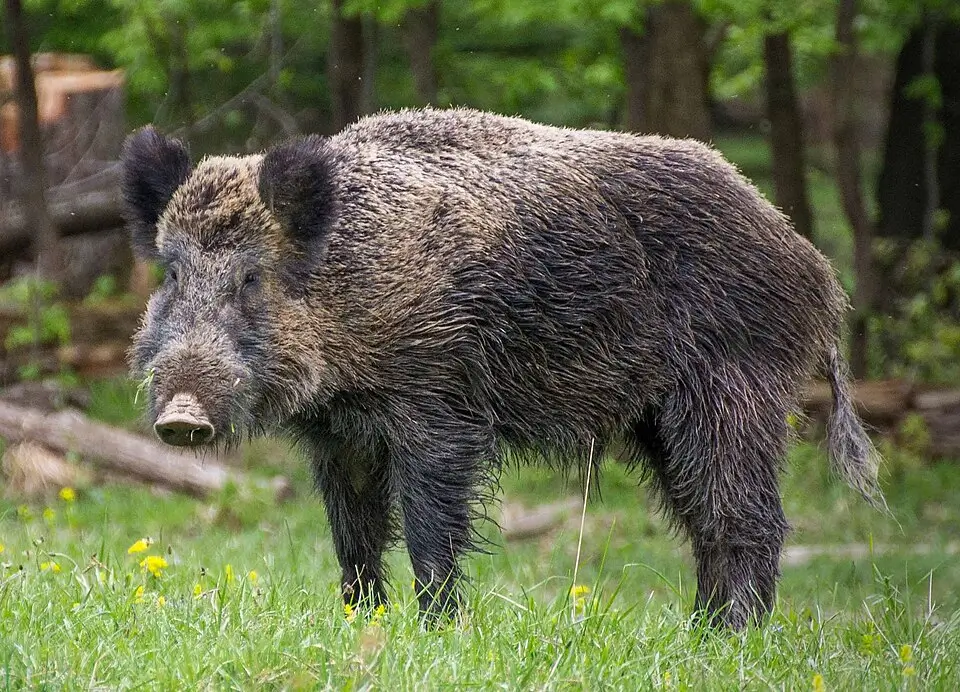
Wild boars are powerfully built animals with a characteristic stocky, muscular body, a large wedge-shaped head, and a tough, bristly coat that can range in color from dark brown and gray to black. Adults typically display coarse, stiff outer hairs over a softer undercoat. Males, known as boars, are generally larger than females, called sows. In the wild, adults commonly weigh anywhere from 100 to over 400 pounds, with particularly large individuals occasionally exceeding those benchmarks in ideal conditions.
One of the most distinctive features of the wild boar is its tusks. Both males and females possess canine teeth that grow continuously, but in males these tusks are especially pronounced — curving upward and outward in a manner that makes them formidable weapons for defense, competition with other males, and foraging. A mature boar's lower tusks can reach impressive lengths and are capable of inflicting serious wounds on predators or other boars during competitive encounters.
The wild boar's snout is another defining feature. Tipped with a tough, cartilaginous disc, it functions as a highly sensitive and powerful digging instrument. Boars use their snouts to root through soil, leaf litter, and debris in search of food, a behavior that has significant ecological implications.
Senses and Behavior
Wild boars possess an extraordinary sense of smell, widely considered their most acute sense. They are capable of detecting scents from remarkable distances and rely heavily on olfaction for locating food, detecting predators, and social communication. Their hearing is also quite sharp, while their eyesight is relatively poor compared to many other large mammals.
These animals are largely crepuscular or nocturnal, meaning they are most active during dawn, dusk, and nighttime hours — particularly in areas where they are subject to hunting pressure. However, in undisturbed environments, they can be active throughout the day.
Wild boars are highly social animals. Females and their young typically live in groups called sounders, which may consist of several related sows and their offspring. Adult males are more solitary, joining groups primarily during the breeding season, known as the rut.
Reproduction
One of the most ecologically significant aspects of the wild boar is its remarkable reproductive capacity. Sows reach sexual maturity early — often within their first year of life under favorable conditions. Gestation lasts approximately 115 days, and a single sow can produce multiple litters per year under good nutritional conditions, with litter sizes averaging four to six piglets but sometimes reaching eight or more. This reproductive potential is a key reason why feral hog populations have expanded so dramatically across the United States.
Diet
Wild boars are opportunistic omnivores with an extraordinarily broad diet. They consume roots, tubers, bulbs, fruits, nuts (particularly acorns, which are a critical food source in the fall), grasses, insects, worms, small vertebrates, carrion, and agricultural crops. This dietary flexibility allows them to thrive in a wide variety of ecosystems.
Habitat & Range
Sus scrofa is native to much of Europe, Asia, and North Africa, making it one of the most geographically widespread mammals in the world. Wild boars were introduced to North America through multiple pathways — first by early European explorers and settlers who brought domestic pigs that subsequently escaped and went feral, and later through deliberate introductions of Eurasian wild boar for sport hunting purposes. The two populations have interbred extensively over generations, producing the feral hog populations common across the American South today.
In terms of habitat preference, wild boars are remarkably versatile. They favor areas with dense cover for bedding and security, access to water sources, and abundant food. In the southeastern United States, this translates to bottomland hardwood forests, pine flatwoods, agricultural edges, river swamps, and mixed forest-grassland environments — all of which are found in abundance throughout Georgia.
Georgia's geography, which spans from the Blue Ridge Mountains in the north to the coastal marshes and barrier islands in the south, provides diverse habitats capable of supporting wild boar populations. The Piedmont region, coastal plain, and river corridor systems are particularly notable hotspots. Wild boars are present in a large number of Georgia's counties and are found on both public and private land throughout the state.
These animals tend to gravitate toward areas near water, as they are fond of wallowing in mud — a behavior that helps regulate body temperature and provides protection against parasites and insects. Agricultural areas are particularly attractive, as crops such as corn, peanuts, and other row crops provide high-calorie food sources that can support robust population growth.
Hunting Information
Wild boar hunting in Georgia is widely regarded as one of the most exciting and challenging hunting experiences the state has to offer. The combination of the animal's intelligence, its acute senses, and its potential for aggressive behavior when cornered makes it a quarry that demands respect and preparation.
Hunters pursuing wild boar in Georgia should always verify current regulations with the Georgia Department of Natural Resources (DNR) prior to any hunt, as season dates, licensing requirements, and land access rules can change. Because feral hogs are considered a nuisance species in Georgia, regulations have historically been more permissive than for many other game species, but hunters should confirm the most current official rules before heading afield.
A variety of hunting methods are employed for wild boar. Still hunting and spot-and-stalk approaches are popular, as are hunting over bait (where permitted), using trained dogs, and hunting at night with thermal or night-vision optics (subject to applicable regulations). Wild boars are also commonly taken as an incidental harvest during deer and turkey seasons, as they share much of the same habitat.
In terms of firearms, wild boars are tough, resilient animals that can absorb significant punishment before going down. Many experienced hunters recommend using calibers of at least .243 or larger, with popular choices including .308 Winchester, .30-06 Springfield, and various rifle and pistol calibers suited to close-range and dense-cover hunting. Shot placement is critical — aiming for the heart and lung zone, just behind the front shoulder, is the standard recommendation.
Archery equipment is also used effectively for wild boar, and the close-range encounters made possible by archery hunting add an extra element of excitement and challenge. Dog hunting, a long-standing tradition in the Deep South, remains a popular and effective method in Georgia.
Hunters should be aware that wild boars can be dangerous animals. A cornered or wounded boar is capable of charging and inflicting serious injury. Hunting with a partner, carrying a reliable sidearm as a backup, and exercising caution when approaching downed animals are all sound practices.
Conservation
The conservation status of the wild boar globally is listed as Least Concern by the International Union for Conservation of Nature (IUCN), reflecting the species' vast range, high reproductive rate, and demonstrated ability to adapt to human-modified landscapes.
In the United States, and particularly in Georgia, the conservation conversation around feral hogs is somewhat different from that of native wildlife species. Feral hogs are widely considered an invasive species, and their impacts on native ecosystems can be substantial. Their rooting behavior disturbs soil, damages native plant communities, and can negatively affect the habitat quality for native species. They also compete with native wildlife for food resources, particularly during hard mast (acorn) years.
For these reasons, wildlife management agencies in Georgia and across the Southeast actively encourage hunting and trapping of feral hogs as a population management tool. Hunter harvest plays a meaningful role in helping keep populations in check, though given the species' reproductive capacity, hunting alone is rarely sufficient to reduce populations at a landscape scale.
From a sportsman's perspective, the wild boar represents a valuable and enduring hunting resource in Georgia. Responsible hunting, combined with science-based management efforts by wildlife agencies, landowners, and conservation organizations, helps balance the ecological concerns associated with feral hogs while preserving the hunting heritage that generations of Georgians have enjoyed.