Overview
Few animals embody the spirit of the American wilderness quite like the white-tailed deer (Odocoileus virginianus). Graceful, elusive, and remarkably adaptable, this species has captured the imagination of naturalists, wildlife photographers, and hunters alike for generations. Found from the forests of Canada to the savannas of South America, the white-tailed deer is the most widely distributed wild ungulate in the Western Hemisphere — and arguably the most beloved. In states like Georgia, where rich hardwood forests meet sprawling agricultural lands and coastal marshes, the white-tailed deer holds a place of special significance in the outdoor culture and wildlife heritage of the region.
Whether you encounter one bounding through a mist-covered meadow at dawn or spot a trophy buck standing motionless in a pine thicket, there is something undeniably captivating about Odocoileus virginianus. This article explores the biology, habitat, hunting traditions, and conservation story of one of North America's most celebrated wild animals.
Biological Traits
The white-tailed deer belongs to the family Cervidae, the deer family, which also includes elk, moose, caribou, and mule deer. The species name virginianus is a nod to Virginia, where early European naturalists first formally documented the animal. Within the species, biologists recognize numerous subspecies spread across North America, Central America, and parts of South America, each adapted to the specific conditions of its local environment.
One of the most recognizable features of this species is the large, white underside of the tail — raised like a flag when the deer is alarmed and fleeing from a perceived threat. This behavior, known as "flagging," serves as a visual warning signal to other members of the herd and is one of the most distinctive behaviors in the animal kingdom.
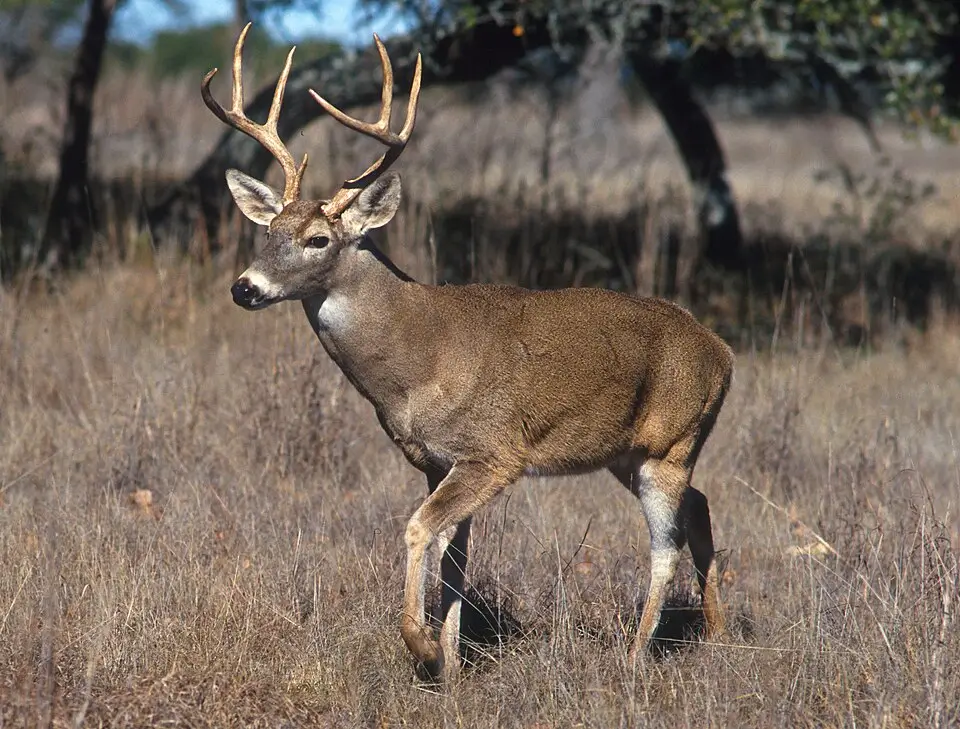
White-tailed deer are sexually dimorphic, meaning males and females differ noticeably in size and appearance. Bucks (males) are typically larger than does (females) and, perhaps most famously, grow antlers. Antlers are composed of bone and are among the fastest-growing tissues in the animal kingdom. They begin developing in spring under a soft, blood-vessel-rich covering called velvet, which is shed in late summer or early fall as the breeding season approaches. Unlike horns, which are permanent structures made of keratin found in animals like bison and cattle, antlers are shed and regrown each year.
The size and configuration of a buck's antlers are influenced by a combination of genetics, age, and nutrition. Mature bucks with access to high-quality forage and mineral-rich soils can develop impressive, multi-tined racks that are highly prized by hunters and wildlife enthusiasts. The antler cycle is driven by photoperiod — changes in day length — which trigger hormonal shifts that regulate both antler growth and the breeding season, known as the rut.
Does typically give birth to one or two fawns in late spring or early summer, though triplets are occasionally recorded. Fawns are born with a distinctive spotted coat that provides excellent camouflage in the dappled light of forest floors. The spots fade as the fawn matures, usually disappearing by late summer or fall. Does are attentive mothers and will hide their fawns in dense vegetation while they forage, returning several times a day to nurse.
White-tailed deer are crepuscular by nature, meaning they are most active at dawn and dusk. They are herbivores with a wide-ranging diet that shifts seasonally to take advantage of available food sources. In spring and summer, they favor tender green vegetation, clover, and agricultural crops. In fall, hard mast — particularly acorns — becomes a critical food source, providing the high-calorie nutrition needed to build fat reserves for winter. In winter, deer rely more heavily on woody browse such as twigs, bark, and evergreen leaves.
Communication among white-tailed deer is remarkably complex and involves a combination of vocalizations, body language, and scent marking. Deer possess several glands — including tarsal, metatarsal, and preorbital glands — that play important roles in chemical communication, particularly during the rut. Bucks also create "scrapes" (cleared patches of ground) and "rubs" (areas where bark is scraped from trees with their antlers) to deposit scent and signal their presence to does and rival bucks.
Habitat & Range
The white-tailed deer's success as a species is in large part due to its extraordinary adaptability to diverse habitats. From the boreal forests of southern Canada to the tropical lowlands of Panama and northern South America, Odocoileus virginianus thrives wherever it can find adequate food, water, and cover. In the United States, the species occupies virtually every state in the contiguous 48 and has shown a remarkable capacity to coexist with human development, often thriving in suburban and agricultural landscapes where natural predators are absent.
In Georgia — the eighth-most populous state in the nation, situated in the southeastern United States — white-tailed deer are found throughout the state in a variety of habitats. Georgia's diverse landscape, which encompasses the Appalachian ridges and valleys of the northwest, the rolling Piedmont plateau at the center of the state, the coastal plain in the south, and the Atlantic barrier islands to the east, provides a mosaic of habitat types ideally suited to deer. Hardwood bottomlands, mixed pine-hardwood forests, agricultural fields, and river corridors all support healthy populations.
Edge habitat — the transitional zones between different vegetation types, such as where a forest meets an open field — is particularly valuable to white-tailed deer. These areas offer the combination of dense cover for bedding and security, along with open areas where deer can feed. Georgia's patchwork of forests, farmlands, and wetlands creates abundant edge habitat, contributing to the state's robust deer population.
Hunting Information
White-tailed deer hunting is one of the most popular and deeply rooted outdoor traditions in the United States, and Georgia is no exception. The state's long hunting heritage, diverse habitat, and healthy deer populations make it a premier destination for deer hunters of all experience levels. Hunting plays a vital ecological and management role, helping to maintain deer populations at sustainable levels that are in balance with the carrying capacity of the habitat.
Hunters pursuing white-tailed deer in Georgia typically employ a variety of methods, including hunting from elevated tree stands, ground blinds, and still-hunting through the woods. Food plots — intentionally planted areas of high-value vegetation such as clover, brassicas, and small grains — are commonly used by hunters and landowners to attract and hold deer on their properties, providing nutritional benefits to the deer while creating productive hunting opportunities.
Scouting is an essential skill for deer hunters. Understanding deer movement patterns, identifying trails, locating scrapes and rubs, and finding feeding and bedding areas can make the difference between a successful hunt and a quiet morning in the woods. Trail cameras have become an invaluable tool for modern deer hunters, allowing them to monitor deer activity and inventory bucks on a property without disturbing the area.
The rut is generally considered the most exciting time to pursue white-tailed deer. During this breeding period, bucks throw caution to the wind as they seek out does, making them more active during daylight hours and more susceptible to calling and rattling techniques. Hunters can use grunt calls, bleat calls, and antler rattling to simulate the sounds of deer interactions and draw curious or competitive bucks within range.
For the most current and accurate information on Georgia's deer hunting seasons, bag limits, licensing requirements, and regulations, hunters should consult the Georgia Department of Natural Resources (DNR), Wildlife Resources Division directly. Regulations can change from year to year, and it is always the hunter's responsibility to be familiar with and comply with current state laws.
Conservation
The conservation story of the white-tailed deer in North America is one of the most remarkable wildlife recovery narratives in history. By the late 19th and early 20th centuries, unregulated market hunting and widespread habitat loss had decimated deer populations across much of the continent. In many areas, the species had been nearly extirpated.
The recovery of white-tailed deer populations through the 20th century stands as a testament to the power of science-based wildlife management. Through regulated hunting seasons, bag limits, restocking programs, and habitat conservation efforts — largely funded by hunters through mechanisms like the Federal Aid in Wildlife Restoration Act (Pittman-Robertson Act) of 1937 — deer populations rebounded dramatically. Today, white-tailed deer are one of the most abundant large mammals in North America, a success story that continues to inspire wildlife managers worldwide.
In Georgia and across the Southeast, state wildlife agencies, conservation organizations, and private landowners work collaboratively to manage deer habitat and populations. Practices such as timber management, prescribed burning, water management, and native plant restoration all contribute to maintaining high-quality deer habitat. Quality Deer Management (QDM) practices, which emphasize selective harvest and habitat stewardship, have gained widespread adoption among hunters and landowners seeking to improve the age structure and overall health of deer herds.
The white-tailed deer also holds significant economic importance. Deer hunting generates billions of dollars in economic activity across the United States each year, supporting local economies, outdoor recreation industries, and conservation funding. In Georgia alone, deer hunting contributes substantially to the state's outdoor recreation economy, benefiting rural communities and supporting jobs in the outdoor industry.
Conclusion
The white-tailed deer is far more than a game animal — it is an ecological keystone, a cultural icon, and a living symbol of successful wildlife conservation. Its adaptability, biological complexity, and the deep human connections it inspires make Odocoileus virginianus one of the most studied and celebrated wild animals on the planet. Whether you are a seasoned hunter, a wildlife watcher, or simply someone who appreciates the natural world, the white-tailed deer offers something truly special — a reminder that with thoughtful stewardship, wild things can flourish alongside us.
In Georgia's rich and varied landscapes, from the mountain hollows of the Blue Ridge to the longleaf pine savannas of the Coastal Plain, the white-tailed deer remains a vital thread in the fabric of the natural world. Its future, like its past, will be shaped by the choices of those who value and care for the land.