Overview
When most people picture a rabbit, they imagine a fluffy creature bounding across open meadows or darting through brush piles on dry upland ground. The swamp rabbit (Sylvilagus aquaticus) shatters that stereotype entirely. This remarkable lagomorph is one of North America's most unique and fascinating members of the rabbit family, carving out an ecological niche that few of its relatives would dare to occupy — the murky, water-laden world of swamps, marshes, and bottomland hardwood forests. Often called the "cane-cutter" by hunters and outdoorsmen throughout the American South, the swamp rabbit is a big, bold, water-loving creature that has earned a devoted following among small game hunters and wildlife enthusiasts alike.
In the state of Georgia, the swamp rabbit represents a cherished piece of the natural heritage of the Deep South. As one of the eight most populous states in the nation, Georgia's wild landscapes range from the Blue Ridge Mountains in the north to the coastal marshes in the south and east, and it is within the fertile river bottoms and swampy lowlands of the state's western and southwestern regions that the swamp rabbit finds some of its most productive habitat. Understanding this animal — its biology, its behaviors, and its relationship to the land — is essential for anyone who wants to appreciate or pursue one of the South's most distinctive game animals.
Biological Traits
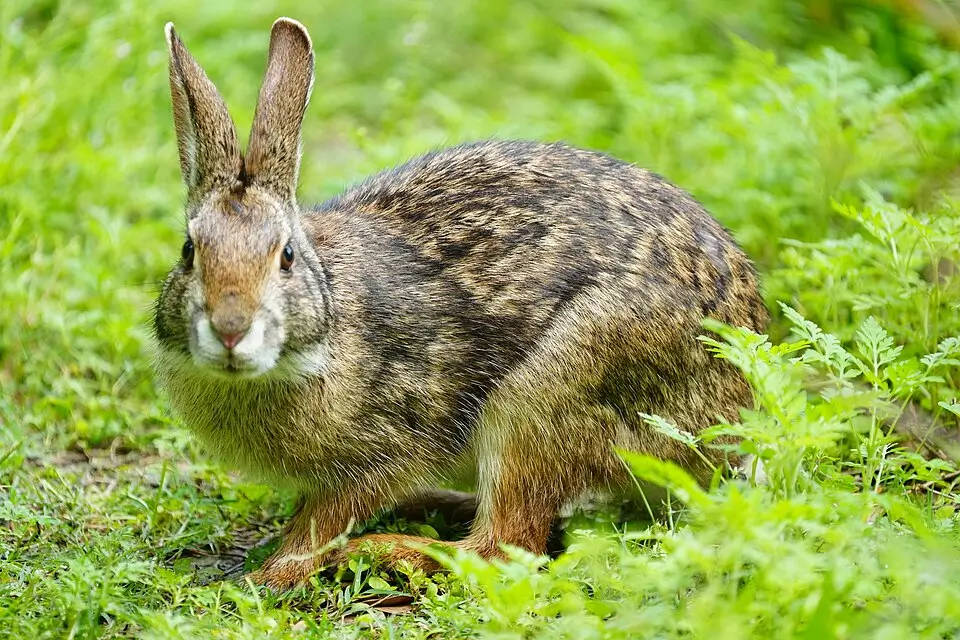
The swamp rabbit, Sylvilagus aquaticus, belongs to the family Leporidae, which includes all rabbits and hares. It is the largest member of the cottontail genus Sylvilagus, noticeably bigger and heavier than its close cousin, the eastern cottontail (Sylvilagus floridanus), which is far more commonly encountered across the Eastern United States. An adult swamp rabbit can weigh anywhere from roughly three to six pounds, with a stocky, muscular build that reflects its life in demanding, often soggy terrain.
The coat of the swamp rabbit is coarse and somewhat darker than that of the eastern cottontail. Its upperparts are typically a rich, dark brown or blackish-brown, giving it excellent camouflage among the trunks of cypress trees, tangles of cane, and dense brush that characterize its swampy home. The underparts are lighter, and like its cottontail relatives, it sports the distinctive white or pale puff of a tail that gives the cottontails their collective name. The feet of the swamp rabbit are notably large and well-suited to navigating soft, muddy ground and moving through water.
One of the most extraordinary behavioral traits of the swamp rabbit is its willingness — indeed, its eagerness — to enter the water. Unlike virtually every other rabbit species in North America, the swamp rabbit is a capable and willing swimmer. When threatened by a predator or a pursuing hunter and their dogs, a swamp rabbit will not hesitate to plunge into a creek, slough, or swamp pool and swim strongly to safety or to a new patch of cover. Hunters who pursue swamp rabbits with dogs have long marveled at this behavior, watching as a hard-pressed rabbit slips quietly into a dark backwater, sometimes holding with only its nose above the surface among floating debris or duck moss, waiting patiently for danger to pass before slipping away.
Swamp rabbits are generally solitary animals outside of the breeding season. Like other cottontails, they are prolific breeders, capable of producing multiple litters per year, with each litter typically containing several young. The young are altricial at birth — born in a well-concealed nest, relatively helpless, and dependent on their mother's care in the early weeks of life. They grow rapidly, however, and young swamp rabbits become increasingly independent as the weeks pass.
Their diet is broadly herbivorous, consisting of a wide range of grasses, sedges, aquatic vegetation, woody browse, and cane — the latter being so important to them that "cane-cutter" has long been their regional nickname throughout the South. They are primarily crepuscular and nocturnal feeders, becoming most active at dawn and dusk, though they may feed at any hour in areas where disturbance is low.
Habitat & Range
The swamp rabbit's range is centered on the Gulf Coastal Plain and the lower Mississippi River Valley, extending from eastern Texas and Oklahoma through Louisiana, Mississippi, Alabama, Georgia, Tennessee, and northward into parts of Missouri, Illinois, Indiana, and Kansas. It is a species intimately tied to the presence of water and the low-lying, flood-prone forests that border rivers, creeks, lakes, and swamps across this region.
Prime swamp rabbit habitat consists of bottomland hardwood forests dominated by species such as water oak, willow oak, overcup oak, green ash, and sweetgum, along with dense understories of cane (Arundinaria species), briars, and other thick cover. Cypress swamps, beaver ponds, oxbow lakes, and the brushy fringes of river systems all provide important habitat. The species is notably dependent on areas that experience periodic flooding, as these conditions create the open, dense, herbaceous cover and aquatic vegetation that swamp rabbits favor.
In Georgia, swamp rabbits are found primarily in the western and southwestern portions of the state, particularly in the bottomlands along major river systems. The coastal plain region of Georgia provides substantial areas of suitable habitat, and the species can be locally common where its favored combination of dense cane, bottomland forest, and accessible water occurs together. Georgia's position in the Southeastern United States — bordered by Florida to the south, Alabama to the west, and the Atlantic coast to the east — places it within the heart of the swamp rabbit's Southeastern range.
Habitat quality for swamp rabbits has been affected in many areas by the drainage, clearing, and development of bottomland hardwood forests and wetlands. These habitats are among the most productive and biologically diverse ecosystems in North America, providing critical services not just for swamp rabbits but for a rich community of wildlife including waterfowl, wading birds, white-tailed deer, wild turkey, and numerous reptile and amphibian species.
Hunting Information
The swamp rabbit holds a special place in the hunting traditions of the American South. Pursuing these animals through thick swamp cover — often in hip boots or waders, accompanied by a pack of eager beagles — is one of the most exciting and physically demanding forms of small game hunting available. The combination of challenging terrain, the music of hounds working a line, and the unpredictable, water-crossing behavior of the quarry makes swamp rabbit hunting an experience unlike any other.
Hunters typically pursue swamp rabbits with small hounds, most commonly beagles, which are well-suited to following the scent trail of a rabbit through even the most tangled and flooded cover. The dogs push the rabbit in wide or tight circles — a characteristic cottontail behavior — giving hunters positioned along likely escape routes the opportunity for a shot as the animal works back past them.
In Georgia, hunters interested in pursuing swamp rabbits should consult the Georgia Department of Natural Resources (DNR) Wildlife Resources Division for current, up-to-date information regarding seasons, bag limits, and any applicable licensing requirements. Regulations can change from year to year, and it is always the responsibility of the individual hunter to verify current rules before heading afield. While specific season dates and license requirements were not available in the source data consulted for this article, Georgia does have an established tradition of small game hunting, and rabbit hunting is generally a legal and celebrated activity across much of the state.
For equipment, most swamp rabbit hunters favor a lightweight shotgun — typically a 20-gauge or 12-gauge — loaded with small shot such as No. 6 or No. 7½. Appropriate clothing for swamp conditions is critical: waterproof boots, moisture-wicking layers, and thorny-cover-resistant pants will make a long day in the swamp far more enjoyable and productive. Hunters should always be aware of their surroundings in swampy terrain, which can harbor venomous snakes, deep water, and unstable footing.
Conservation
The swamp rabbit is currently listed as a species of least concern by wildlife authorities, reflecting the fact that healthy populations persist across much of its range. However, the species is not without conservation challenges. The ongoing loss and degradation of bottomland hardwood forests and freshwater wetlands across the Gulf Coastal Plain and Mississippi Valley represents the most significant long-term threat to swamp rabbit populations.
Conservation efforts that benefit swamp rabbits include wetland preservation and restoration programs, conservation easements on bottomland properties, and sustainable forestry practices that maintain dense understory cover. Programs such as the USDA's Natural Resources Conservation Service (NRCS) wetland reserve programs and various state wildlife management area acquisitions have helped protect important blocks of swamp rabbit habitat.
Hunters also play an important role in swamp rabbit conservation. Through license fees, excise taxes on sporting equipment, and direct habitat improvement work on private and public lands, the hunting community contributes substantially to the funding and energy that drives wildlife management in Georgia and across the species' range. The Pittman-Robertson Federal Aid in Wildlife Restoration Act, funded by excise taxes on firearms and ammunition, has channeled billions of dollars into wildlife habitat and management over the decades, benefiting species like the swamp rabbit along with countless others.
For wildlife enthusiasts who may not hunt, the swamp rabbit is a rewarding species to observe and appreciate. Quiet canoe trips or kayak paddles along slow-moving blackwater streams in Georgia's bottomland country can occasionally yield sightings of these animals at dawn or dusk, feeding along the water's edge before retreating into the cane and brush. Their presence is a reliable indicator of a healthy, functioning bottomland ecosystem — a living signal that the swamp is doing what swamps are meant to do.