Overview
Few animals in North America command as much immediate recognition — and respectful distance — as the striped skunk (Mephitis mephitis). With its bold black-and-white coloration, unhurried gait, and legendary chemical defense, the striped skunk occupies a unique place in the continent's wildlife tapestry. Whether glimpsed crossing a rural road at dusk, snuffling along the edge of a suburban backyard, or referenced in countless pieces of American folklore and popular culture, this resilient and fascinating creature is far more than just a punchline. It is a highly adapted, ecologically important mammal that thrives across an extraordinary range of environments — including the diverse landscapes of Georgia.
This article takes an in-depth look at the striped skunk: its biology, behavior, habitat preferences, role in the ecosystem, and what hunters and wildlife enthusiasts in Georgia should know about encountering this iconic animal.
Biological Traits
The striped skunk (Mephitis mephitis) belongs to the family Mephitidae, a group of mustelid-like carnivores commonly known as skunks. The genus name Mephitis is derived from the Latin word for a noxious or foul smell, a fitting tribute to the animal's most famous defensive adaptation.
Physical Appearance
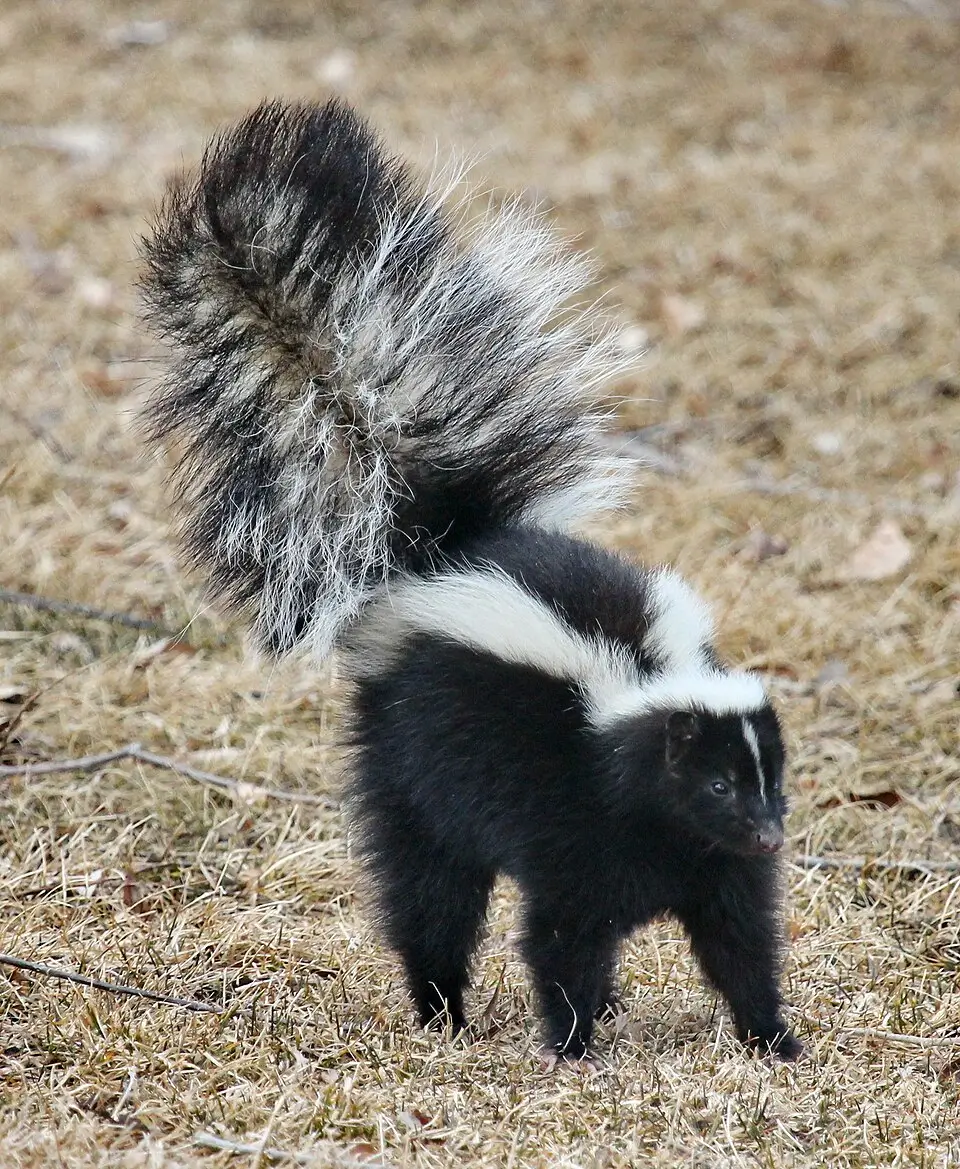
The striped skunk is perhaps the most visually distinctive mammal in North America. Its glossy black fur is broken by a prominent white stripe that begins at the top of the head, splits into two stripes along the back, and typically converges toward the base of the bushy tail. Considerable variation exists between individuals — some skunks display wide, bold white markings, while others may show narrower or even nearly absent stripes. The white coloration serves as a form of aposematic warning, signaling to potential predators that this animal carries a potent defense.
Adult striped skunks are roughly the size of a domestic cat, typically weighing between 2.5 and 6.3 kilograms (approximately 5.5 to 14 pounds), with males generally being larger than females. Their bodies are compact and muscular, with short, sturdy legs well-suited for digging. Their claws are notably long and strong, adaptations that reflect their digging lifestyle and foraging habits.
The Famous Defense Mechanism
The striped skunk's sulfur-containing chemical compounds — specifically thiols and thioacetates — are produced in a pair of anal scent glands and can be sprayed with remarkable accuracy at distances of up to 3 to 4 meters (roughly 10 to 13 feet), with the mist carrying considerably farther. Before spraying, a skunk will typically give clear warning signals: stamping its front feet, arching its back, raising its tail, and sometimes performing a short charge. These warning behaviors are worth heeding, as the oily, pungent spray can cause temporary irritation to the eyes and is extraordinarily difficult to remove from fur, skin, or clothing.
Interestingly, skunks have a limited supply of their defensive spray and can take up to ten days to fully replenish it. As a result, they are generally reluctant to deploy it unless genuinely threatened.
Diet and Foraging
Striped skunks are opportunistic omnivores with a highly varied diet. They consume insects (particularly beetles, grasshoppers, and grubs), small rodents, bird eggs, amphibians, berries, nuts, and plant matter. Their strong foraging instincts and adaptability make them effective at exploiting a wide range of food sources depending on the season and what is locally available. In agricultural areas, they are known to be valuable natural pest controllers, consuming large quantities of insects and rodents that might otherwise damage crops.
Activity Patterns and Denning
Striped skunks are primarily nocturnal, emerging after dark to forage and returning to their dens before sunrise. They are not true hibernators but do enter periods of torpor during cold winter months, relying on stored fat reserves and occasionally sharing communal dens to conserve warmth. Den sites vary widely and may include hollow logs, rock crevices, under porches and buildings, or burrows excavated by other animals.
Reproduction
Mating typically occurs in late winter, and females give birth to litters of four to seven kits in late spring. The young are born blind and helpless but develop rapidly, and by late summer they are capable of independent foraging. Female striped skunks are devoted mothers, and family groups may remain together through the first autumn.
Lifespan and Predators
In the wild, striped skunks typically live two to four years, though captive individuals have been known to live considerably longer. Their primary natural predators include great horned owls — one of the few predators with a relatively poor sense of smell — as well as coyotes, foxes, and bobcats, which may occasionally prey upon them despite the risk of being sprayed.
Habitat and Range
The striped skunk is one of the most geographically widespread mammals in North America. Its range extends from southern Canada through most of the continental United States and into northern Mexico. It is notably absent from desert regions in the American Southwest and from higher mountain elevations, but it thrives across virtually every other habitat type the continent offers.
Preferred Habitats
Striped skunks are classic edge-habitat specialists. They favor areas where different habitat types meet — the borders of forests and meadows, agricultural land adjacent to woodlands, brushy creek banks, and the semi-wild margins of suburban and rural development. They are not animals of deep, unbroken forest or wide-open agricultural expanses, but rather the transitional zones in between.
They have adapted exceptionally well to human-modified landscapes. Suburban and rural neighborhoods, farms, parks, and even urban fringe areas provide abundant food resources and denning opportunities, making the striped skunk one of the more commonly encountered wild mammals in settled areas.
In Georgia
Georgia's varied landscape makes it ideal striped skunk habitat. The state's mix of Piedmont forests, river bottomlands, agricultural fields, coastal plain ecosystems, and rapidly growing suburban areas all provide the kind of edge habitat and food diversity that striped skunks favor. From the Blue Ridge mountains in the north to the Okefenokee Swamp in the south, striped skunks are a consistent component of Georgia's native fauna. The state's mild winters — particularly in the central and southern regions — mean that skunks in Georgia may remain active for a greater portion of the year than their counterparts farther north.
Hunting Information
Striped skunks occupy an interesting and sometimes nuanced place in the world of hunting and wildlife management. Historically, they were trapped and hunted for their fur, which was once commercially valuable and sold under trade names like "Alaska sable." While the commercial fur trade has changed dramatically over the decades, striped skunks remain a legal and legitimate small game quarry in various parts of their range.
In Georgia
For hunters and trappers in Georgia, it is important to consult the most current regulations published by the Georgia Department of Natural Resources (DNR) Wildlife Resources Division before pursuing any wildlife activity involving striped skunks. As of the time of this writing, specific season dates, license requirements, and bag limits for striped skunk in Georgia were not available in the source data reviewed for this article. Regulations can and do change from year to year, and the Georgia DNR website is always the authoritative source for up-to-date information.
Generally speaking, striped skunks in many states are classified as furbearers or nuisance wildlife, and both trapping and hunting opportunities may exist under appropriate licenses. Trappers have traditionally been the primary harvesters of skunks, using body-grip traps, cage traps, or foothold traps set near known travel corridors, den entrances, and foraging areas. Anyone pursuing skunks through trapping should be fully aware of the practical realities of handling and dispatching this species and should be prepared with appropriate protective measures.
Practical Considerations
For anyone engaging with striped skunks in a hunting or trapping context, patience and knowledge of skunk behavior are essential. Skunks are creatures of habit and tend to follow consistent travel routes between dens and foraging areas. Setting traps along fence lines, near agricultural areas, and at the edges of woodlands can be productive. Early morning and late evening are prime observation times for those scouting skunk activity.
Conservation
The striped skunk is currently classified as a species of Least Concern by the International Union for Conservation of Nature (IUCN), reflecting its wide distribution, adaptability, and stable populations across most of its range. Unlike many wildlife species that have suffered significant declines due to habitat loss or over-harvest, the striped skunk has largely benefited from the expansion of edge habitats created by agricultural and suburban development.
That said, striped skunks do face several ongoing challenges. They are highly susceptible to rabies and are one of the primary wildlife reservoirs for the disease in North America, which can cause localized population fluctuations. Road mortality is a significant source of skunk deaths, particularly in suburban and rural areas where they frequently cross roads during nocturnal foraging.
From a broader ecosystem perspective, striped skunks play an important role in the environments they inhabit. Their insectivorous habits help regulate populations of harmful insects, and their digging activities contribute to soil aeration. They also serve as prey for several predator species, linking them into the broader food web.
Responsible wildlife management — including regulated trapping seasons, rabies surveillance programs, and thoughtful land management that preserves edge habitats — helps ensure that striped skunk populations remain healthy and that this iconic animal continues to be a part of North American wildlife for generations to come.