Overview
Few animals in North America capture the imagination quite like the snowshoe hare. Known for its remarkable ability to seemingly disappear into its surroundings, this medium-sized member of the family Leporidae has fascinated wildlife enthusiasts, hunters, and scientists alike for generations. The snowshoe hare (Lepus americanus) is one of nature's most compelling examples of evolutionary adaptation — a creature so finely tuned to its environment that it can transform its very appearance with the changing of the seasons.
From the boreal forests of Canada to the mountain ranges of the American West and the dense thickets of the northern United States, the snowshoe hare occupies a critical ecological niche. It serves as a foundational prey species for an impressive array of predators, including the Canada lynx, great horned owl, red fox, coyote, and many others. Its population cycles, which rise and fall dramatically over roughly decade-long periods, are among the most well-documented ecological phenomena in wildlife biology and have been studied by researchers for well over a century.
Whether you're a wildlife observer hoping to spot one on a winter hike, a hunter pursuing small game in the northern woods, or simply a curious nature lover, understanding the snowshoe hare offers a window into the complex, interconnected web of life that defines North America's wild landscapes.
Biological Traits
The snowshoe hare belongs to the order Lagomorpha and the family Leporidae, placing it in the same broad taxonomic family as rabbits and other hares. Its scientific name, Lepus americanus, reflects its status as a true hare — a distinction that sets it apart from the cottontail rabbits more commonly encountered across the eastern and southern United States.
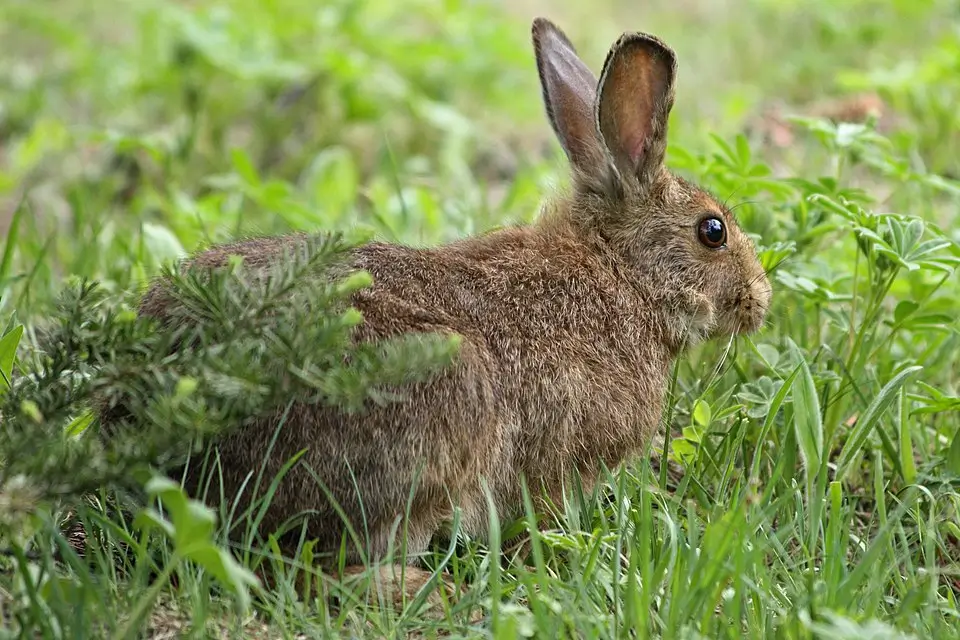
One of the most striking biological features of the snowshoe hare is its seasonal coat change, a process known as molting. During the warmer months of spring and summer, the snowshoe hare sports a coat of brownish-gray fur that blends seamlessly with the forest floor, leaf litter, and underbrush. As autumn progresses and daylight hours shorten, the hare undergoes a dramatic transformation: its fur gradually shifts to a brilliant white, providing excellent camouflage against the snow-covered landscapes of winter. In spring, the reverse occurs, and the brown coat returns. This remarkable adaptation is triggered by changes in photoperiod — the length of daylight — rather than temperature itself, making it an incredibly reliable seasonal response.
The common name "snowshoe hare" derives from another of the animal's most distinctive physical features: its oversized hind feet. These large, well-furred feet function much like natural snowshoes, distributing the hare's weight across the surface of the snow and allowing it to move with surprising speed and agility in deep winter conditions. This foot structure gives the hare a significant survival advantage over many of its predators, which may struggle to navigate the same terrain as efficiently.
Snowshoe hares are herbivores, feeding on a wide variety of plant material depending on the season. During summer, their diet is diverse, including grasses, forbs, and leafy vegetation. In winter, they rely more heavily on the twigs, bark, and buds of woody shrubs and trees, including willows, aspens, and birches. Like other lagomorphs, snowshoe hares practice cecotrophy — consuming certain soft fecal pellets directly from the anus — a behavior that allows them to extract maximum nutrition from their fibrous plant diet.
The population dynamics of the snowshoe hare are legendary in ecological science. Across much of their range — particularly in Canada — hare populations undergo dramatic boom-and-bust cycles roughly every 8 to 11 years. During peak years, hare densities can be extraordinarily high, only to crash sharply in the years that follow. These cycles have cascading effects throughout the ecosystem, profoundly influencing the populations of the predators that depend on them. The relationship between the snowshoe hare and the Canada lynx is perhaps the most famous predator-prey cycle in all of ecological literature.
Habitat and Range
The snowshoe hare is quintessentially a creature of the north. Its range spans the boreal forests of Canada from coast to coast, extends across Alaska, and reaches south into portions of the northern contiguous United States, particularly in the Great Lakes region, New England, and the Rocky Mountain chain. In mountainous areas, snowshoe hares can be found at higher elevations where boreal forest conditions persist even at lower latitudes.
The species shows a strong preference for dense coniferous and mixed forests, particularly areas with abundant understory cover. Thickets of young spruce, fir, and pine, as well as dense shrubby vegetation, provide both food and critical protection from aerial and terrestrial predators. Riparian zones — the vegetated areas along streams and rivers — are also important habitat features, offering diverse plant growth and additional cover.
Because the snowshoe hare is so tightly linked to cold-weather, northern ecosystems, it is generally not found in the southeastern United States. States like Georgia, which lie well to the south of the hare's primary range, do not support wild snowshoe hare populations under natural conditions. The warm, humid climate and the character of Georgia's forests — which include longleaf pine savannas, hardwood bottomlands, and Piedmont woodlands — simply do not replicate the boreal and subarctic conditions the snowshoe hare requires. Georgia's small game hunters instead pursue species far better suited to the region's landscape, including the eastern cottontail (Sylvilagus floridanus) and the swamp rabbit (Sylvilagus aquaticus).
Hunting Information
Snowshoe hare hunting is a deeply traditional pursuit across much of Canada and the northern United States, where the species is abundant and well-regarded as both a sporting quarry and a source of excellent table fare. The hunt has a long history among rural and Indigenous communities across the boreal zone, where the hare has long been an important source of sustenance.
Hunters typically pursue snowshoe hares using one of several methods. Still-hunting — slowly moving through dense cover and watching carefully for movement — can be effective, particularly in areas with fresh snow that allows trackers to follow the hare's distinctive large-footed prints. Beagling, the use of scent hounds (typically beagles) to push hares in looping circles back toward waiting hunters, is an especially popular and traditional method that adds a musical, social dimension to the pursuit. Snowshoe hares, like cottontails, tend to circle back toward familiar territory when pushed by dogs, giving hunters excellent shooting opportunities.
Shotguns chambered in 12 or 20 gauge loaded with small shot sizes are the most commonly used tools for snowshoe hare hunting. The .22 rimfire rifle is also a popular choice, particularly for hunters who prefer a more deliberate, stalking approach. In deep snow conditions, hunters on snowshoes or cross-country skis can cover significant ground and access prime habitat that would be difficult to reach otherwise.
Snowshoe Hare Hunting in Georgia: It is important for Georgia hunters to understand that the snowshoe hare does not naturally occur within the state. Official Georgia hunting information for this species is not available, as the snowshoe hare is not a managed game species in the state. Hunters in Georgia interested in pursuing hare or rabbit should consult the Georgia Department of Natural Resources for current regulations regarding the eastern cottontail and swamp rabbit, which are the native lagomorph species present in the state. Those wishing to hunt snowshoe hares specifically would need to travel to northern states or Canadian provinces where the species is present and regulated hunting seasons are in place. Always check local and state regulations before any hunting excursion, as seasons, bag limits, and licensing requirements vary by jurisdiction.
Conservation
The snowshoe hare is currently classified as a species of least concern by major wildlife conservation organizations, reflecting its wide distribution and large overall population across its North American range. While local populations may fluctuate dramatically due to the natural population cycles described above, the species as a whole is not considered threatened or endangered.
That said, wildlife researchers and conservationists are paying close attention to potential long-term challenges facing the snowshoe hare. Climate change represents one of the most significant emerging concerns. As winters shorten and snowfall becomes less predictable in portions of the hare's range, the seasonal coat change — which is driven by photoperiod rather than actual snow conditions — may increasingly leave hares in white winter coats against snow-free ground, or in brown summer coats against lingering snow. This "coat mismatch" can significantly increase predation rates and represents a compelling example of climate change's potential to disrupt finely evolved biological adaptations.
Habitat management also plays an important role in supporting healthy snowshoe hare populations. The species benefits from active forest management practices that create and maintain the young, dense forest growth it prefers. In many managed forests across its range, timber harvesting and prescribed burning can actually enhance hare habitat by promoting the growth of shrubby understory vegetation.
Hunters, naturalists, and conservation organizations across Canada and the northern United States continue to be important advocates for the habitats that snowshoe hares and the broader boreal ecosystem depend upon. Through licensing fees, conservation organizations, and voluntary habitat programs, sportsmen and women contribute meaningfully to the long-term health of snowshoe hare populations and the landscapes they call home.