Overview
Few sights in the natural world are as stirring as a flock of Sandhill Cranes drifting across an open sky, their prehistoric calls echoing across marshes and fields below. These remarkable birds, known scientifically as Grus canadensis, are among the most recognizable and beloved large birds in North America. Standing tall with slate-gray plumage and a vivid red crown patch, Sandhill Cranes carry an air of dignity and wildness that has captivated human observers for thousands of years. Archaeological and fossil evidence suggests that cranes similar to modern Sandhill Cranes have existed for millions of years, making them one of the oldest living bird lineages on the planet.
For hunters, wildlife enthusiasts, birdwatchers, and conservationists alike, the Sandhill Crane holds a special place. In states across the country — including parts of the southeastern United States like Georgia — these birds are a seasonal presence that signals the turning of seasons and the movement of wild things across a vast continent. Understanding the biology, behavior, habitat needs, and conservation status of the Sandhill Crane enriches every encounter with these spectacular animals, whether you're watching them from a blind, photographing them in a field, or simply listening to their resonant, bugling calls roll across a winter landscape.
Biological Traits
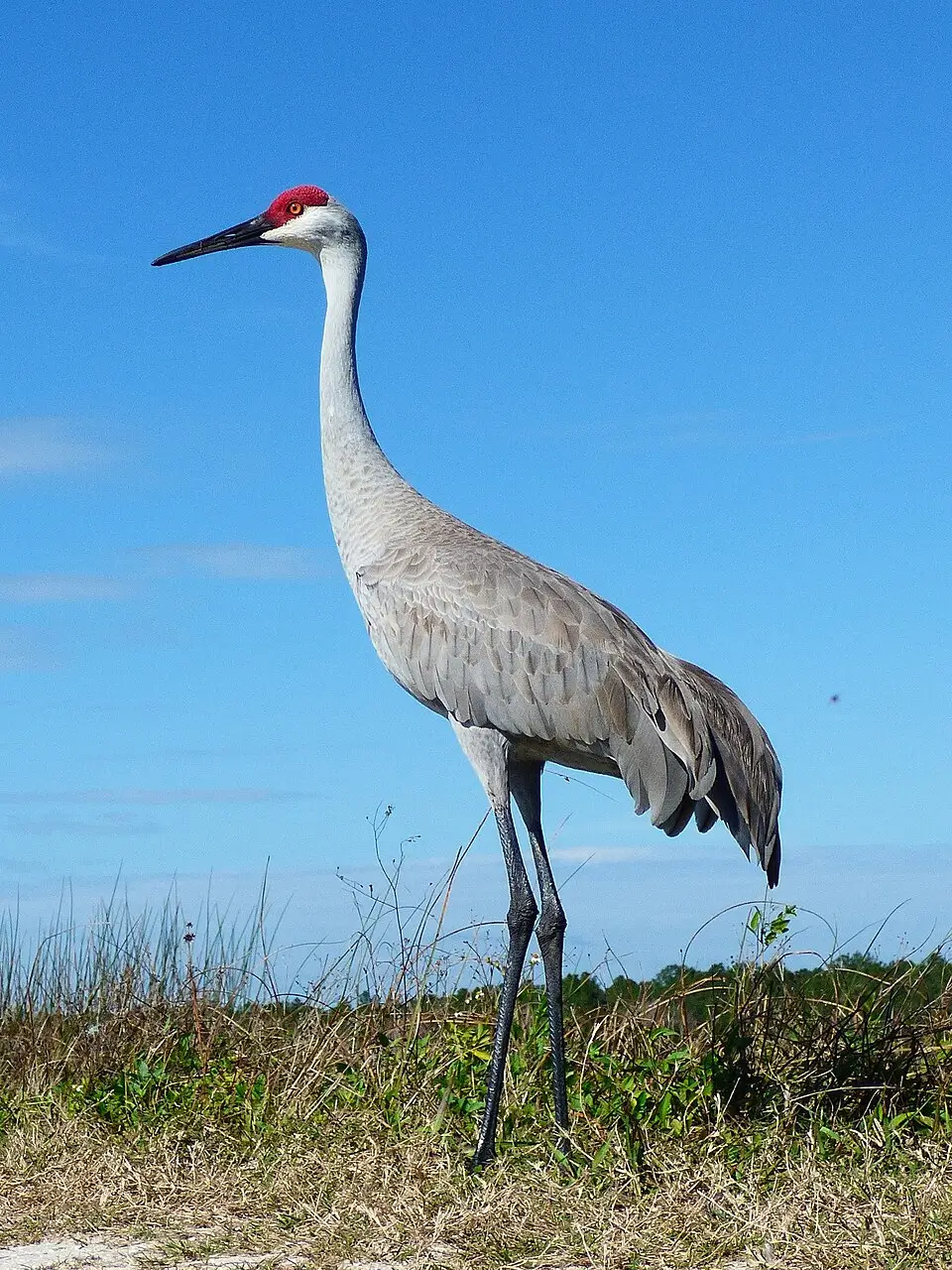
The Sandhill Crane (Grus canadensis) is a member of the family Gruidae, the true cranes, and is one of two crane species native to North America — the other being the critically endangered Whooping Crane. Sandhill Cranes are large, long-legged, long-necked birds built for life in open environments. Adults typically stand roughly three to four feet tall and display an impressive wingspan that can stretch from approximately five to nearly six feet or more, making them one of the larger birds a person is likely to encounter in the field.
The plumage of an adult Sandhill Crane is predominantly gray, though birds often appear rusty or brown during much of the year. This coloration is not entirely genetic — Sandhill Cranes engage in a behavior known as "preening with iron-rich mud," where they apply mud containing ferrous oxide to their feathers, giving them a warm reddish-brown tint during the breeding season. Once molting occurs in late summer and fall, birds return to their cleaner gray appearance. The most distinctive physical feature of the adult is the bare red patch of skin on the forehead and crown, which becomes brighter and more engorged during displays and moments of excitement.
Juvenile Sandhill Cranes lack the red crown and display a more mottled brown and rusty-gray plumage. They gradually transition into adult coloration over their first year of life. Both sexes look alike in terms of plumage, making field sexing difficult without behavioral cues or close observation of size differences, as males are generally slightly larger than females.
Sandhill Cranes are highly social birds and are famous for their elaborate courtship dances, which involve bowing, leaping, wing-spreading, and loud vocalizations. These dances are not limited to breeding season — cranes of all ages engage in dancing behavior throughout the year, and it appears to serve multiple social functions beyond simple mate attraction. Pairs form long-term bonds and typically remain together for many years, often for life. A mated pair raises one or two chicks per season, called "colts," and the young birds stay with their parents through their first winter migration.
The diet of the Sandhill Crane is remarkably omnivorous. These birds will consume plant matter including grains, berries, and tubers as well as a wide variety of animal prey such as insects, worms, small reptiles, amphibians, rodents, and even the eggs and chicks of ground-nesting birds when the opportunity arises. This dietary flexibility makes them highly adaptable to a wide range of environments and is part of what has made them so successful across a broad geographic range.
Sandhill Cranes are also known for their remarkable vocal power. Their calls — a loud, rolling, bugling sound — are produced with the help of an unusually elongated trachea that coils within the sternum, amplifying the sound. These calls can carry for miles across open terrain and are one of the most distinctive sounds of North American wilderness.
Habitat and Range
Sandhill Cranes occupy a diverse range of habitats across North America, from the Arctic tundra of Alaska and Canada to the marshes and agricultural fields of the southern United States, Mexico, and even Cuba. The species is divided into several recognized subspecies, which vary in size and migratory behavior. The larger, migratory subspecies — such as the Lesser Sandhill Crane and Greater Sandhill Crane — undertake some of the most spectacular migrations in the bird world, staging by the hundreds of thousands along the Platte River in Nebraska each spring before dispersing to breeding grounds in the north.
Other subspecies, known as "resident" or "non-migratory" populations, live year-round in parts of Florida, Mississippi, and surrounding southeastern states. The Florida Sandhill Crane (Grus canadensis pratensis) is perhaps the best-known of these, thriving in a variety of wetland and upland habitats throughout the Florida peninsula and into neighboring states.
In Georgia, Sandhill Cranes are present during winter months, with migratory birds moving into the state from northern breeding grounds as temperatures drop. Georgia's diverse landscape — encompassing coastal marshes along the Atlantic coast, the agricultural fields of the Coastal Plain, and the wetland habitats of the Okefenokee Swamp region in the south — provides excellent wintering habitat. The Okefenokee National Wildlife Refuge is particularly well-known as a crane viewing destination, offering opportunities to observe these birds in a spectacular wild setting.
Sandhill Cranes favor open habitats — wetlands, prairies, agricultural fields, and open grasslands — where their height and sharp eyesight give them a natural advantage in detecting predators. They roost in shallow water at night, standing in ponds, lakes, or slow-moving rivers where the presence of water provides a barrier against terrestrial predators.
Hunting Information
Sandhill Crane hunting has grown in popularity across North America in recent decades, and these birds are sometimes referred to as the "ribeye of the sky" by hunters who prize the dark, flavorful breast meat. Hunting seasons for Sandhill Cranes are managed by individual states and the U.S. Fish and Wildlife Service, with regulations varying considerably from region to region.
It is important for hunters in Georgia and across the Southeast to closely consult the Georgia Department of Natural Resources (DNR) and current federal migratory bird hunting regulations before pursuing Sandhill Cranes. As with all migratory birds, Sandhill Crane hunting is governed by the Migratory Bird Treaty Act, requiring hunters to obtain both a state hunting license and a federal Migratory Bird Hunting and Conservation Stamp (commonly known as the Duck Stamp), along with any additional permits that may be required.
Because the specific season dates, bag limits, zones, and license requirements for Georgia were not available in the source data consulted for this article, hunters are strongly encouraged to visit the Georgia DNR Wildlife Resources Division website directly for the most current and accurate information. Regulations can change from year to year, and compliance with all applicable state and federal rules is essential.
Hunters pursuing Sandhill Cranes typically use tactics similar to those employed for other large waterfowl — including decoys, blinds, and calling. The birds' large size and wariness make them a challenging and rewarding quarry, and ethical hunters take care to positively identify their target, as Sandhill Cranes can occasionally be confused with the rare and federally protected Whooping Crane in areas where both species occur.
Conservation
The conservation story of the Sandhill Crane is one of North America's great wildlife success narratives. During the 19th and early 20th centuries, populations of Sandhill Cranes declined sharply due to habitat loss, market hunting, and human disturbance. Several of the resident, non-migratory subspecies became particularly vulnerable, with some populations reduced to very small numbers.
Thanks to the passage of the Migratory Bird Treaty Act of 1918, habitat protection efforts, and sustained conservation work by federal and state wildlife agencies, Sandhill Crane populations have rebounded dramatically. Today, the species as a whole is considered to be of Least Concern by the International Union for Conservation of Nature (IUCN), with large migratory populations numbering in the hundreds of thousands. However, some of the smaller resident subspecies — including the Mississippi Sandhill Crane — remain endangered and are the focus of active recovery programs.
Conservation of wetland habitats remains the cornerstone of Sandhill Crane management. Organizations such as the U.S. Fish and Wildlife Service, state wildlife agencies, and private conservation groups work together to protect and restore the marshes, wet prairies, and agricultural areas that cranes depend upon throughout their annual cycle. In Georgia, state and federal lands including the Okefenokee National Wildlife Refuge provide critical protected habitat for these and many other species.
The story of the Sandhill Crane is a reminder that with thoughtful management and genuine commitment to conservation, wildlife populations can recover and thrive alongside human civilization.