Overview
Few birds in North America command the reverence of hunters, birdwatchers, and wildlife enthusiasts quite like the ruffed grouse. Known scientifically as Bonasa umbellus, this remarkable upland game bird has earned legendary status in the world of wing shooting. Whether you hear the thunderous flush of its wings bursting from a thicket or the otherworldly drumming of a displaying male echoing through a forest in early spring, the ruffed grouse is a bird that leaves a lasting impression on anyone fortunate enough to encounter it.
Often called the "king of game birds" by devoted hunters across the northeastern United States and Canada, the ruffed grouse occupies a unique and treasured place in American outdoor culture. It is a bird of wild, forested places — a creature perfectly adapted to the dense, tangled woodland edges and young forest habitats that define much of its range. To pursue ruffed grouse is to walk through some of the most beautiful forest landscapes North America has to offer, often accompanied by a flushing dog and the crisp air of autumn.
This guide explores everything you need to know about Bonasa umbellus — from its fascinating biology and habitat preferences to its conservation status and hunting traditions, including what hunters in the state of Georgia should know about pursuing this extraordinary bird.
Biological Traits
The ruffed grouse is a medium-sized bird belonging to the family Phasianidae, which also includes pheasants, turkeys, and quail. It is the only member of the genus Bonasa found in North America, making it a biologically distinct and scientifically interesting species.
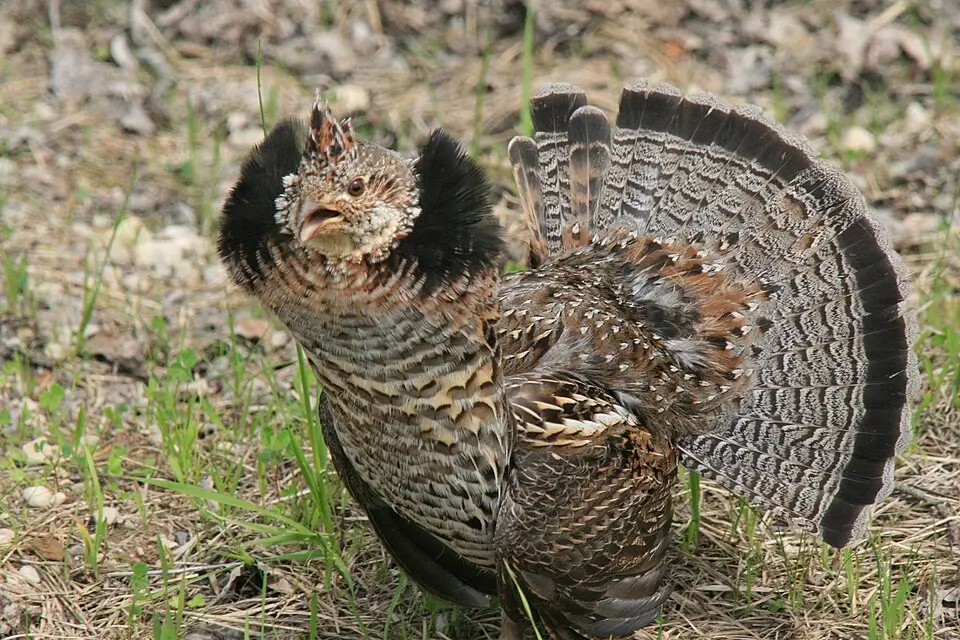
One of the most striking features of the ruffed grouse is its plumage, which comes in two primary color morphs: gray and brown (sometimes called "red"). The gray morph tends to be more prevalent in northern populations, while the brown morph is more commonly observed in the southern portions of the bird's range. Regardless of color phase, both morphs display a beautifully cryptic, mottled pattern of browns, blacks, grays, and whites that provides exceptional camouflage against the leaf litter and woody debris of the forest floor. This natural concealment is one of the bird's most effective survival tools.
The "ruff" in the bird's name refers to the distinctive black or dark brown feathers located on the sides of the neck. During courtship displays, the male fans these feathers out dramatically, creating an impressive ruff that is central to its breeding behavior. Males also possess a fan-shaped tail that is spread wide during display, often featuring a dark subterminal band near the tip.
Perhaps the most iconic behavior associated with the ruffed grouse is the drumming display of the male. Unlike most birds that produce courtship sounds vocally, the male ruffed grouse creates a deep, resonant thumping sound by beating his wings rapidly while perched on a log or other elevated surface. This drumming starts slowly and accelerates into a rapid blur of sound that can carry surprisingly far through forest cover. The drumming serves both to attract females and to establish territorial boundaries with other males. Hearing this sound in a spring or autumn woodland is one of the great sensory experiences the American outdoors has to offer.
Ruffed grouse are also known for their remarkable feet. In winter, they grow comb-like projections called pectinations along the sides of their toes, which effectively act as snowshoes, allowing the birds to walk across soft snow with much greater ease. This biological adaptation is a testament to how thoroughly the species has evolved for life in cold, northern forest environments.
The diet of the ruffed grouse shifts considerably with the seasons. In warmer months, birds feed heavily on insects, berries, fruits, and green plant material. As winter approaches and these food sources become scarce, ruffed grouse transition to a diet dominated by buds, catkins, and the twigs of trees such as aspen, birch, and alder. This dietary flexibility is a key factor in the species' ability to survive harsh northern winters.
Habitat & Range
The ruffed grouse is primarily a bird of the northern and eastern forested regions of North America. Its range extends from Alaska and northern Canada southward through the Great Lakes states, the Appalachian Mountain chain, and into the higher elevations of the southeastern United States. The species also occupies portions of the Rocky Mountain West, particularly in areas with suitable forest cover.
The ruffed grouse's preferred habitat is young, mixed deciduous and coniferous forest, particularly areas with abundant early successional growth. Dense stands of young aspen are considered prime grouse habitat across much of the northern range, as aspens provide both food and cover throughout the year. Forest edges, alder runs, brushy clearcuts, and areas with a mix of dense understory shrubs and overhead canopy are all attractive to grouse.
The species is closely associated with disturbance-dependent habitats — places where timber harvesting, fire, or other natural disturbances have created a patchwork of young forest at different stages of succession. This reliance on young forest habitat is a critical factor in both the conservation and management of the species.
In the southeastern United States, including Georgia, ruffed grouse are found primarily in the higher elevations of the Blue Ridge Mountains and the Appalachian Plateau. The mountainous counties of northern Georgia represent the southernmost fringes of the species' natural range in the eastern United States. Here, the birds occupy cool, north-facing slopes and mixed hardwood forests at higher elevations, where temperatures and habitat conditions more closely resemble those found farther north in the Appalachians.
Hunting Information
The ruffed grouse holds an almost mythological status among American upland bird hunters. Pursuing grouse through thick cover with a pointing or flushing dog is considered by many to be the pinnacle of upland hunting — demanding, unpredictable, and deeply satisfying. The bird's explosive flush and lightning-fast flight through dense timber make it a true challenge for even experienced wing shooters.
Traditionally, ruffed grouse hunting is conducted with lightweight shotguns, often smaller gauges such as 20-gauge or even 28-gauge, loaded with smaller shot sizes suitable for close-range shots in heavy cover. Dogs — particularly English setters, Brittanys, and springer spaniels — are prized companions in the grouse woods, helping hunters locate and flush birds that would otherwise sit tight and rely on their camouflage to avoid detection.
For hunters in Georgia, ruffed grouse present a unique and challenging opportunity. Because the species occupies only the northernmost mountain counties of the state, pursuing them requires venturing into Georgia's scenic Blue Ridge region. It is important to note that specific season dates, bag limits, and licensing requirements for ruffed grouse in Georgia were not available in the source data used for this article. Hunters interested in pursuing ruffed grouse in Georgia are strongly encouraged to consult the Georgia Department of Natural Resources Wildlife Resources Division directly for the most current and accurate regulations before heading afield. Regulations can change from year to year, and compliance with all state and federal wildlife laws is both a legal requirement and an ethical obligation.
What hunters can expect in Georgia's grouse country is some of the most rugged, beautiful terrain in the eastern United States. The forests of the North Georgia mountains are stunning in autumn, with hardwood foliage painting the hillsides in vivid color. Hunting grouse here demands physical fitness, as the best habitat often requires significant elevation gain and navigation through steep, dense terrain.
Conservation
The ruffed grouse has experienced population declines across portions of its range in recent decades, a trend that has drawn significant attention from wildlife biologists, conservation organizations, and hunting groups. The primary driver of these declines is broadly understood to be the maturation and aging of forest habitats across the eastern United States. As forests grow older and denser, they lose the young, shrubby early successional structure that ruffed grouse depend upon for food and cover.
Active forest management — including timber harvesting, prescribed burns, and the creation of forest openings — is widely recognized as one of the most effective tools for maintaining and improving ruffed grouse habitat. Organizations such as the Ruffed Grouse Society have long championed habitat management efforts across the species' range, working with landowners, state agencies, and federal land managers to create and maintain quality grouse habitat.
In the southern Appalachians, including Georgia's mountain counties, ruffed grouse populations face additional pressures related to their geographic isolation at the southern edge of the species' range. Small, fragmented populations at range margins can be particularly vulnerable to local extirpation, making habitat quality and connectivity especially important in these areas.
For hunters and wildlife enthusiasts in Georgia and throughout the Southeast, supporting conservation organizations focused on forest health and early successional habitat is a meaningful way to contribute to the long-term future of the ruffed grouse and the many other wildlife species that depend on similar habitats.