Overview
Few animals in the natural world command as much admiration, folklore, and hunter interest as the red fox. Known scientifically as Vulpes vulpes, the red fox is among the most widely distributed and ecologically versatile carnivores on the planet. With its iconic russet coat, bushy tail, and razor-sharp intelligence, this remarkable canid has captured the human imagination for centuries — appearing in fables, legends, and hunting traditions across virtually every culture on Earth.
In Georgia and throughout the Southeastern United States, the red fox is a familiar and beloved part of the landscape. Whether glimpsed darting across a frost-covered field at dawn, heard calling through a winter forest, or pursued across open countryside on horseback with hounds, the red fox represents a living thread connecting wildlife enthusiasts, hunters, and naturalists alike. Understanding this species — its biology, behavior, habitat preferences, and role in the ecosystem — deepens our appreciation for one of nature's most extraordinary survivors.
Biological Traits
The red fox (Vulpes vulpes) belongs to the family Canidae, which also includes wolves, coyotes, and domestic dogs. It is the largest of the true foxes and one of the most successful members of the order Carnivora. Several physical and behavioral characteristics set the red fox apart from other wildlife species in North America.
Appearance
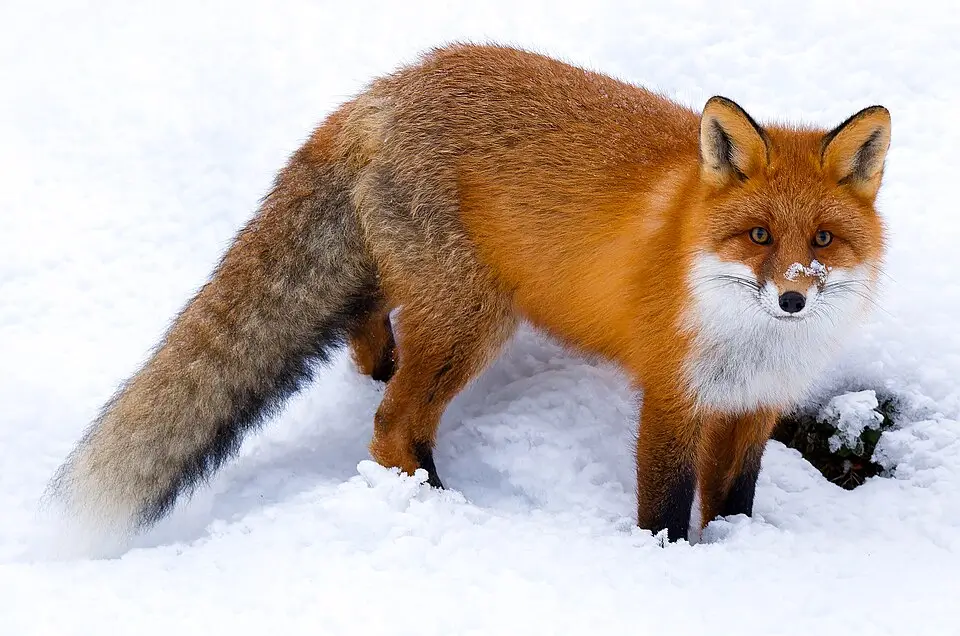
The red fox is most easily recognized by its vivid reddish-orange fur, though color morphs — including silver, cross, and melanistic individuals — are not uncommon in wild populations. The underbelly is typically white or pale, and the legs and ears are usually marked with black. The tail, often called a "brush," is long and bushy, frequently tipped with white. This luxurious tail serves multiple functions: it helps the fox maintain balance during high-speed pursuits, acts as a signal for communication with other foxes, and provides insulation during cold weather when the animal curls up to sleep.
Adult red foxes are notably slender and athletic. They possess large, upright ears that are exquisitely sensitive to sound — capable of detecting the faint rustling of prey beneath snow or dense vegetation. Their eyes feature vertically slit pupils adapted for low-light conditions, making them highly effective hunters during dawn, dusk, and nighttime hours.
Diet and Hunting Behavior
The red fox is an opportunistic omnivore with a diet that shifts dramatically depending on season, geography, and prey availability. Small mammals such as mice, voles, rabbits, and squirrels form the backbone of their diet, but red foxes will also consume birds, eggs, insects, earthworms, berries, fruits, and carrion. This dietary flexibility is one of the key reasons Vulpes vulpes has thrived in such a wide range of environments.
Red foxes employ a distinctive hunting technique when pursuing small mammals in fields or beneath snow. They use their sensitive ears to precisely locate hidden prey, then leap into the air in a high arcing pounce — landing front-paws-first directly on the target. This behavior, sometimes called "mousing," is a joy to observe and a testament to the fox's finely tuned senses and athleticism.
Reproduction and Family Life
Red foxes are monogamous during the breeding season, which typically occurs in winter. Gestation lasts approximately 52 days, after which a litter of kits — usually ranging from four to six pups — is born in an underground den. Both parents participate in raising the young, with the male bringing food to the nursing female and later to the growing pups. By late summer, juvenile foxes begin to disperse and establish their own territories. Red foxes can live up to ten years in the wild, though most individuals in the wild have shorter lifespans due to predation, disease, and human activities.
Senses and Intelligence
Perhaps no trait defines the red fox more than its intelligence. Foxes have long been celebrated in human culture as symbols of cunning and adaptability, and these qualities are well-earned. They are known for complex problem-solving, the ability to exploit human-modified landscapes, and sophisticated social communication that includes a variety of vocalizations ranging from sharp barks and screams to softer, more intimate calls used between mated pairs and family groups.
Habitat and Range
Vulpes vulpes holds the distinction of having one of the largest natural ranges of any terrestrial mammal. The species is native to much of the Northern Hemisphere, including Europe, Asia, and North America, and has been introduced to Australia. In North America, red foxes are found from Alaska and Canada southward through the continental United States, adapting to an impressive variety of habitats along the way.
Red foxes are quintessential edge-habitat specialists. They thrive in areas where forests meet open fields, farmland borders woodlots, and suburban development creates a patchwork of cover and open ground. This preference for "edge" environments is especially relevant in Georgia, where the rolling Piedmont landscape, mixed pine-hardwood forests, and agricultural fields of the Coastal Plain provide ideal conditions.
In Georgia specifically, red foxes can be found throughout the state, from the mountain counties in the north to the flatlands near the Florida border. They are equally at home in rural farmland and suburban greenbelts, often establishing dens in brushy fence rows, abandoned burrows, or beneath outbuildings. Georgia's mild climate and diverse land cover make it particularly well-suited to sustaining healthy red fox populations year-round.
While the red fox is often associated with open countryside, it demonstrates remarkable adaptability. It can adjust its activity patterns, den sites, and diet to accommodate the pressures of human development, making it one of the few wild carnivores that has genuinely benefited from habitat changes brought about by agriculture and suburban expansion.
Hunting Information
The red fox has a storied and celebrated history as a game animal. Fox hunting in its various forms is one of the oldest organized hunting traditions in the world, with roots stretching back centuries in Europe before being carried to North America by early colonists. In the American South and in Georgia in particular, both mounted fox hunting with hounds and recreational calling and trapping of red foxes remain cherished outdoor traditions that connect participants to the landscape and to a rich cultural heritage.
For those interested in pursuing red foxes in Georgia, it is important to consult the Georgia Department of Natural Resources (DNR) directly for the most current and accurate regulations, season dates, licensing requirements, and any special rules that may apply. Hunting regulations can change from year to year, and the official Georgia DNR Wildlife Resources Division is the authoritative source for this information. Regulations may address seasons, bag limits, legal methods of take, and any county-specific rules. Checking the official Georgia DNR website before heading afield is always the right first step for any hunter.
Fox hunting with hounds is a particularly deep-rooted tradition in Georgia and throughout the South. Many hunters pursue foxes not for the harvest but for the sport of running hounds — listening to the music of the pack as it works a track across the countryside in the early-morning hours. This form of fox hunting emphasizes the partnership between hunter and dog, the knowledge of terrain and animal behavior, and a deep respect for the quarry being pursued.
Predator calling is another popular method used to bring red foxes within range. Electronic calls and mouth-blown calls that mimic the distress sounds of rabbits or other prey animals can be highly effective, particularly during winter months when foxes are most active and responsive. Patience, scent control, and knowledge of local fox territories significantly improve calling success.
Conservation
The red fox is currently listed by the International Union for Conservation of Nature (IUCN) as a species of Least Concern, reflecting its wide distribution, large population size, and adaptability to human-modified environments. Unlike many carnivore species that have declined in response to habitat loss and persecution, Vulpes vulpes has in many ways flourished alongside human civilization.
In Georgia and across the United States, red fox populations are managed as a game species in many states, with regulated hunting seasons helping to ensure sustainable populations. Responsible hunting and trapping, combined with habitat conservation efforts that maintain the mix of forests, fields, and edge cover that foxes depend upon, are the cornerstones of sound fox management.
Wildlife enthusiasts and hunters alike can contribute to red fox conservation by supporting land conservation initiatives, participating in citizen science programs that track wildlife populations, and practicing ethical and legal hunting methods. Preserving the mosaic of agricultural and forested habitats that define Georgia's countryside is ultimately the best thing we can do for the red fox — and for the entire community of wildlife that shares that landscape.