Overview
Few sounds define the American countryside quite like the clear, whistled call of the Northern bobwhite. Rising from brushy fields, overgrown pastures, and woodland edges, the distinctive "bob-WHITE!" cry has echoed across the Eastern United States for centuries, becoming as much a part of the rural soundscape as the rustle of wind through tall grass or the creak of a farm gate in the morning breeze. For hunters, naturalists, and wildlife enthusiasts alike, the Northern bobwhite (Colinus virginianus) occupies a special place in the cultural and ecological identity of America's outdoors.
Known simply as "bobwhite" to most who pursue or admire them, these small, charismatic birds have inspired generations of hunters, earned the admiration of birders from coast to coast, and served as an important ecological indicator species. Their presence on a landscape signals a healthy patchwork of habitat — a mosaic of open fields, brushy cover, and woodland edges that supports an extraordinary diversity of wildlife beyond the bobwhite itself. Understanding this bird, from its biology and behavior to its habitat needs and hunting traditions, is essential for anyone who values the American upland hunting heritage.
Biological Traits
The Northern bobwhite is a member of the New World quail family, Odontophoridae, and represents one of the most recognizable upland game birds in North America. Its scientific name, Colinus virginianus, reflects both its genus and its deep historical association with the Virginia colony — one of the earliest regions where European settlers documented and described the bird.
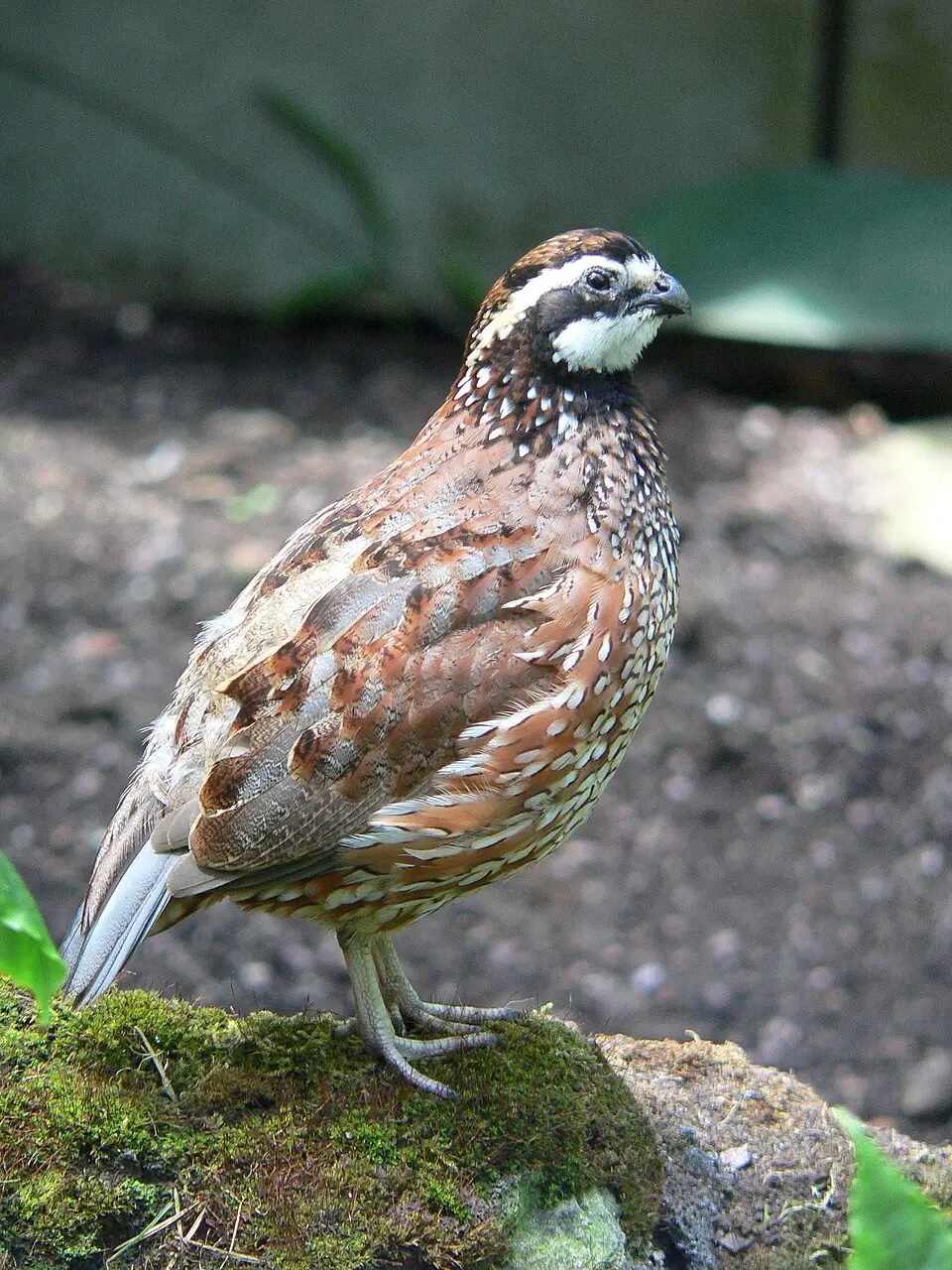
In terms of size, bobwhites are compact, round-bodied birds, fitting comfortably in the palm of an outstretched hand. They are generally stocky in build, with relatively short tails and wings adapted for explosive, short-distance flight — a survival strategy that allows them to burst from cover in a burst of rapid wingbeats when threatened by predators or flushed by hunters and their dogs.
Male bobwhites display a striking facial pattern, with a bright white throat and a bold white supercilium (eyebrow stripe) that contrasts sharply against a rich rufous-brown body. Females are similarly patterned but replace the white facial markings with buff or yellowish tones, providing slightly better camouflage during nesting. Both sexes feature intricately streaked and barred plumage that blends beautifully with dry grasses, leaf litter, and brushy undergrowth.
One of the most endearing and ecologically important aspects of bobwhite biology is their social structure. Outside of the breeding season, bobwhites gather into family groups known as coveys, typically ranging from a handful of birds to as many as thirty individuals. Covey members roost together in a tight circular formation on the ground — tails inward, heads outward — a behavior that simultaneously conserves body heat and allows each bird to face outward for predator detection. This tight-knit social unit is a critical survival mechanism, and coveys that are heavily reduced often face dramatically lower survival rates through winter.
Breeding season typically begins in late spring and extends well into summer, with bobwhites being notably persistent nesters — capable of re-nesting multiple times following failed attempts. Both males and females share incubation duties, an unusual trait among North American game birds. Males are particularly active parents, often taking sole responsibility for brooding and raising a clutch of chicks while the female moves on to nest again. Clutch sizes are generally large, often exceeding a dozen eggs, reflecting the species' evolutionary strategy of producing high numbers of offspring to offset significant annual mortality from predators and harsh weather.
The distinctive two-note call — often rendered as "bob-WHITE!" or occasionally a three-note "poor-bob-WHITE!" — is produced primarily by males during the breeding season and serves as both a territorial announcement and an attraction call for unpaired females. It is one of the most iconic and immediately recognizable bird vocalizations in all of North America.
Habitat & Range
The Northern bobwhite's range spans a broad swath of the Eastern and Central United States, extending from southern New England and the Great Lakes region southward through the Gulf Coast states, and westward into parts of Kansas, Oklahoma, and Texas. The species also occurs in portions of Mexico and Cuba. Within this range, however, populations have become increasingly fragmented and reduced over the past several decades.
Bobwhites thrive in early successional habitats — landscapes in transition between open ground and mature forest. They favor a mosaic of habitats that includes open grasslands or agricultural fields for foraging, brushy edges and shrubby areas for escape cover and nesting, and woodland margins for thermal cover and protection from aerial predators. The presence of broom sedge, native warm-season grasses, briar patches, and hedgerows is often a reliable indicator of good bobwhite habitat.
Georgia, situated in the heart of the Southeastern United States, historically represented some of the finest bobwhite habitat in the country. The state's agricultural landscapes, longleaf pine savannas, and farm country provided ideal conditions for large, healthy coveys. The Georgia Coastal Plain, in particular, became world-renowned for its quail hunting culture, with plantation-style hunting operations representing the pinnacle of the upland hunting tradition. The combination of warm climate, diverse land cover types, and traditional land management practices made Georgia synonymous with quality bobwhite quail hunting for generations of hunters.
Today, Georgia's landscape still offers suitable bobwhite habitat in many areas, particularly where landowners maintain brushy field edges, practice prescribed burning in pine forests, or manage agricultural land with wildlife in mind. The state's rural counties in the south and west continue to support bobwhite populations, making Georgia an important state for both wild quail hunting and conservation-focused land management.
Hunting Information
The Northern bobwhite holds a revered position in American hunting culture. Quail hunting over pointing dogs — whether classic English pointers, setters, or versatile breeds — is widely considered one of the most elegant and traditional forms of upland hunting. The sight of a well-trained pointer locking up on a covey, the anticipation of the flush, and the rapid shooting challenge presented by a rising covey of bobwhites combine to create an experience that is as much about tradition and companionship as it is about harvesting birds.
In Georgia, quail hunting carries deep historical and cultural roots. The state's south Georgia plantation belt has long been associated with formal quail hunts conducted from mule-drawn wagons, with hunters on horseback following wide-ranging bird dogs across open pine forests and broomsedge fields. This tradition remains alive today, particularly on managed hunting plantations that invest heavily in habitat management and bird conservation.
For hunters interested in pursuing bobwhites in Georgia, it is strongly recommended to consult the Georgia Department of Natural Resources (DNR) directly for the most current and accurate season dates, bag limits, license requirements, and any applicable regulations. Hunting regulations are subject to change from year to year, and ensuring compliance with all state requirements is both a legal obligation and a reflection of the ethical standards expected of all responsible hunters. Public Wildlife Management Areas (WMAs) in Georgia may also offer bobwhite hunting opportunities, and the DNR website is the definitive source for maps, access rules, and current population data.
Dog work is central to the bobwhite hunting experience. A well-trained pointing dog not only increases hunting success but also contributes to ethical hunting by reducing crippling losses and ensuring that downed birds are retrieved. Many hunters consider the dog work itself to be the primary pleasure of quail hunting, with the shooting being almost secondary.
Conservation
The Northern bobwhite has experienced significant population declines across much of its range over the past half-century. These declines are widely attributed to large-scale changes in land use, including the conversion of agricultural lands to row crops, the suppression of fire in pine forests, the elimination of brushy field margins, and the intensification of modern farming practices that reduce the weedy, diverse edges that bobwhites depend upon.
Conservation efforts on behalf of the bobwhite are robust and ongoing. Organizations including the National Bobwhite Conservation Initiative (NBCI) and Quail Forever work alongside state wildlife agencies, private landowners, and federal partners to restore and enhance bobwhite habitat at landscape scales. In Georgia, conservation programs that promote prescribed burning, native grass restoration, and farm bill habitat incentives have shown meaningful results in areas where they have been implemented consistently.
Landowner engagement is widely recognized as the cornerstone of bobwhite recovery. Because the vast majority of bobwhite habitat exists on private land, the willingness of farmers, ranchers, and forest landowners to manage their properties with quail in mind is essential. Georgia's hunting tradition and its cultural connection to quail provide a powerful motivation for private land conservation, with many landowners investing significant resources in habitat improvement programs.
For anyone who values the early morning call drifting across a dew-covered field, the sight of a hard-working dog on point, or the flush of a covey rising against a blue Southern sky, the Northern bobwhite is worth every conservation effort. It is, in every sense, an American original.