Overview
Few birds are as universally recognized across the American landscape as the mourning dove (Zenaida macroura). With its soft, mournful cooing that seems to echo through neighborhoods, farmlands, and forests alike, this graceful bird has become one of the most iconic species in North America. Whether you are an avid hunter, a casual birdwatcher, or simply someone who enjoys the natural world, the mourning dove holds a special place in the tapestry of American wildlife. Its plaintive call, from which it derives its evocative name, is one of the most familiar sounds of the outdoors — a gentle reminder that nature is never far away, even in the most developed corners of our country.
The mourning dove is arguably the most hunted migratory bird in North America, with millions of hunters taking to fields and woodlands each season in pursuit of this swift and agile flier. At the same time, it is beloved by non-hunters as a symbol of peace and tranquility. This dual identity makes the mourning dove one of the most culturally significant wildlife species in the United States. In a state like Georgia — with its rich hunting traditions, diverse landscapes, and warm Southern climate — the mourning dove plays an especially prominent role in both the natural ecosystem and the outdoor sporting culture.
Biological Traits
The mourning dove belongs to the family Columbidae, the large and diverse family of pigeons and doves found across the globe. Its scientific name, Zenaida macroura, honors Princess Zénaïde Bonaparte, a niece of Napoleon Bonaparte, while the species epithet macroura is derived from Greek, meaning "long-tailed" — a fitting descriptor for this bird's distinctive elongated tail feathers.
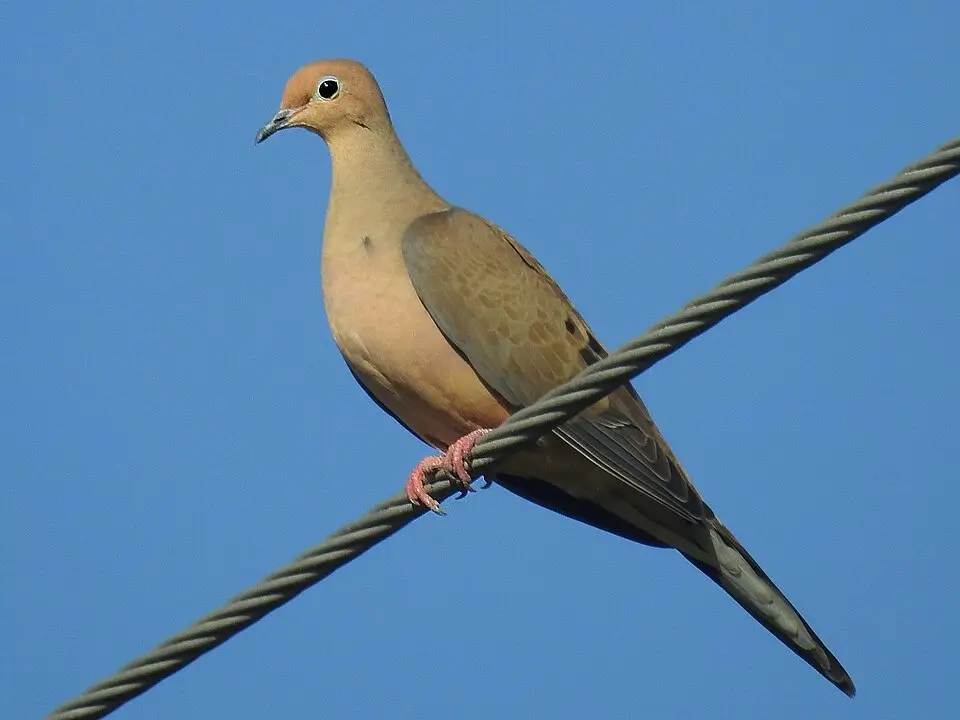
In terms of physical appearance, the mourning dove is a slender, medium-sized bird with a small rounded head that seems slightly too delicate for its body. Its plumage is a soft blend of grayish-brown tones on the upper parts, transitioning to a warm pinkish-buff on the breast. The bird's wings are marked with distinctive dark spots, and when it takes flight, its pointed tail feathers — bordered in white — fan out beautifully against the sky. The mourning dove's eyes are dark and expressive, ringed with a thin line of light blue or turquoise bare skin that adds a subtle elegance to its appearance.
One of the mourning dove's most remarkable biological features is its speed and agility in flight. When startled, a dove can launch itself skyward with a characteristic whistling sound produced by its wings, climbing and banking with impressive speed and unpredictability. This makes it a challenging and rewarding target for hunters, who must sharpen their shooting skills to consistently connect with these fast-moving birds.
The mourning dove is also known for its unique reproductive strategy among North American birds. Pairs are largely monogamous and can raise multiple broods per year — sometimes as many as five or six in warmer climates where the breeding season is extended. Both parents share incubation duties, and chicks are initially fed "crop milk," a protein-rich secretion produced in the adults' crops. This highly efficient reproductive strategy contributes to the species' remarkable population resilience.
As a granivore, the mourning dove feeds almost exclusively on seeds, consuming a wide variety of agricultural grains, wild grasses, and weed seeds. A dove may consume close to its own body weight in seeds each day, playing an important ecological role in seed dispersal across the landscape. They are often observed feeding on the ground in open areas, sometimes in large flocks that can number in the hundreds.
Habitat & Range
The mourning dove is one of the most widespread bird species in North America, ranging from southern Canada all the way through the continental United States, Mexico, Central America, and into parts of the Caribbean. Within the United States, the mourning dove is a year-round resident throughout much of its range, though northern populations are migratory, moving south in autumn in search of milder climates and more abundant food sources.
The species demonstrates a remarkable ability to thrive in a wide variety of habitats. Mourning doves are commonly found in open and semi-open environments, including agricultural fields, grasslands, open woodlands, forest edges, suburban parks, and even urban gardens. They show a strong preference for areas that combine open ground for feeding with nearby elevated perches — such as utility lines, fence posts, or tree branches — where they can rest and survey their surroundings. Water sources are also important to doves, which must drink regularly, particularly during warmer months.
In Georgia, the mourning dove finds an exceptionally welcoming environment. The state's diverse landscape — which includes coastal plains, rolling piedmont hills, agricultural fields, pine forests, and bottomland hardwoods — provides abundant food sources and nesting habitat throughout the year. Georgia's warm climate means that dove populations remain robust even through the winter months, and the state's extensive agricultural lands, particularly those planted in sunflowers, millet, wheat, and corn, attract large concentrations of doves during the late summer and fall hunting season.
Hunting Information
The mourning dove holds a storied place in American hunting tradition, and Georgia is no exception. Dove hunting in the American South is deeply woven into the cultural fabric of the region, representing not just a sporting pursuit but a social occasion that brings families and communities together. September dove field openings are eagerly anticipated events across Georgia, with hunters of all ages gathering at cultivated fields and food plots to enjoy one of the season's most exciting hunts.
Mourning dove hunting is a migratory bird activity, which means it is regulated at the federal level by the U.S. Fish and Wildlife Service under the Migratory Bird Treaty Act, with individual states setting season dates, bag limits, and licensing requirements within federal frameworks. Hunters interested in pursuing mourning doves in Georgia should always consult the Georgia Department of Natural Resources (DNR) for the most current season dates, bag limits, and licensing requirements, as regulations can change from year to year. In general, dove hunters in Georgia are required to possess a valid Georgia hunting license and a federal Harvest Information Program (HIP) registration, which is used to gather data on migratory bird harvests across the country.
Hunting mourning doves is as much about strategy as it is about shooting skill. Successful dove hunters understand the birds' daily movement patterns — typically flying from roost areas to feeding fields in the morning, then returning to water sources and roosts throughout the day. Setting up near active food sources, particularly harvested grain fields, sunflower plots, or areas planted specifically to attract doves, significantly increases the chances of a successful hunt. Hunters typically use lightweight shotguns in gauges ranging from 12 to 20, with loads of small shot — commonly No. 7½ or No. 8 — well-suited for these fast-flying birds at typical engagement distances.
Beyond the shooting itself, dove hunting in Georgia offers some of the finest social experiences the sporting world has to offer. It is common to see multi-generational groups sharing a field edge, with experienced hunters passing down skills and traditions to younger generations. The relatively low physical demand of dove hunting makes it particularly accessible for beginners and youth hunters, and the action-packed nature of the sport — when birds are flying well — provides an exciting introduction to wing shooting.
Conservation
Despite being heavily hunted, the mourning dove remains one of the most abundant birds in North America, a testament to its remarkable adaptability and reproductive capacity. Conservation efforts for mourning doves are closely tied to habitat management, particularly the preservation and creation of open agricultural lands, grasslands, and early successional habitats that provide essential food and nesting resources.
Federal and state wildlife agencies work in cooperation with landowners, hunting organizations, and conservation groups to ensure that mourning dove populations remain healthy and sustainable. The Migratory Bird Treaty Act provides a critical regulatory framework that governs the harvest of mourning doves across their range, ensuring that hunting pressure remains within sustainable limits. Annual population surveys conducted by agencies such as the U.S. Fish and Wildlife Service provide important data on population trends and help managers make informed decisions about harvest regulations.
Habitat conservation programs, such as the Conservation Reserve Program (CRP), have also played a meaningful role in supporting dove populations by encouraging landowners to plant native grasses, forbs, and grain crops that benefit a wide variety of wildlife, including mourning doves. In Georgia, conservation-minded landowners and hunting clubs frequently manage their properties with wildlife in mind, planting food plots and maintaining open habitat that supports healthy dove populations for seasons to come.
The mourning dove stands as a powerful example of how thoughtful management, science-based harvest regulations, and a conservation-minded hunting community can work together to sustain a beloved wildlife species for future generations. It is a bird that connects us to the land, to each other, and to a rich outdoor heritage that stretches back generations.