Overview
Few animals in North America enjoy the kind of cultural celebrity that the groundhog has earned over centuries of human coexistence. Known affectionately as the "woodchuck," the "whistle-pig," or the "land beaver," the groundhog (Marmota monax) is one of the continent's most recognizable and behaviorally fascinating mammals. Every February, millions of Americans tune in to watch a groundhog emerge from its burrow to supposedly predict the arrival of spring — a tradition that has cemented this stocky, burrowing rodent firmly in the national consciousness. But beyond the folklore and the holiday festivities, the groundhog is a genuinely remarkable creature whose biology, ecological role, and interactions with human landscapes make it one of the most compelling subjects in North American wildlife study.
Whether you are a curious naturalist, a landowner dealing with a garden-digging visitor, or an outdoorsman looking for a challenging small-game quarry, the groundhog deserves serious attention. This guide explores the groundhog's biological traits, its preferred habitats and range across the continent, its relationship with hunters and farming communities, and its overall conservation standing in the modern era.
Biological Traits
The groundhog is a member of the order Rodentia and belongs to the squirrel family, Sciuridae. More specifically, it is classified within the tribe Marmotini, making it a true marmot and a close relative of species such as the yellow-bellied marmot of the American West and various Eurasian marmot species. Among the marmots found in North America, Marmota monax is one of the most widely distributed and adaptable.
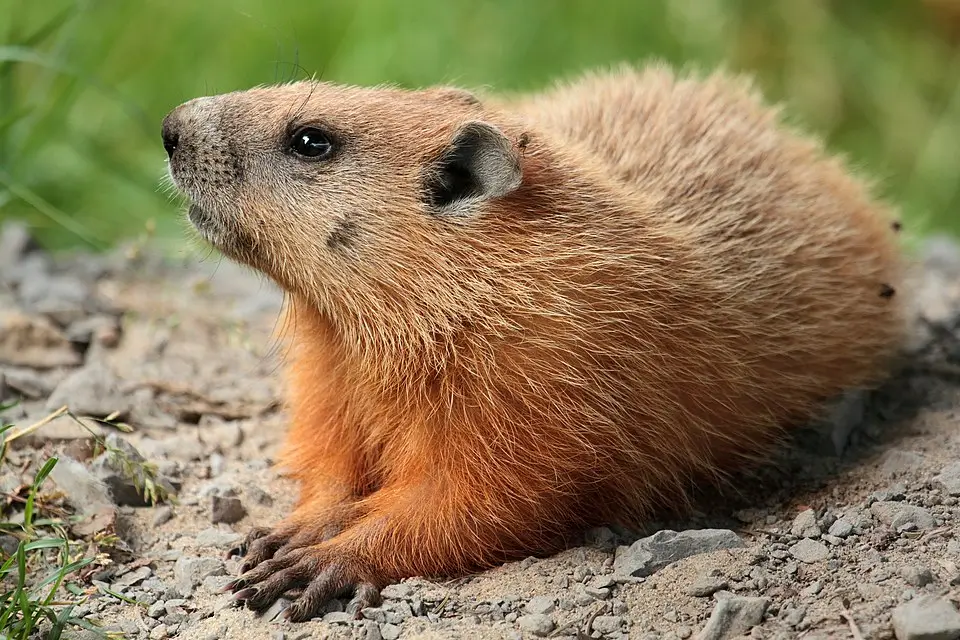
Physically, the groundhog is a robust, heavily built animal. Adults typically display a broad, flattened head, short but powerful legs, and a moderately bushy tail. Their coat is coarse and grizzled, typically appearing in shades of brown and gray with a slightly frosted appearance owing to the banded coloration of individual guard hairs. The underparts are often a paler buffy or cinnamon color. Groundhogs have strong, curved claws that are purpose-built for digging, and their incisors — like those of all rodents — grow continuously throughout their lives, requiring constant wear to remain functional.
One of the groundhog's most celebrated biological attributes is its capacity for true hibernation. Unlike many animals that enter a state of torpor during cold months, the groundhog undergoes a dramatic physiological transformation as winter approaches. Its heart rate drops significantly, its body temperature falls to near-ambient levels, and its breathing slows to just a few breaths per minute. This deep hibernation typically begins in late autumn and lasts until late winter or early spring, depending on geographic location and local weather conditions. It is this emergence from hibernation that gave birth to the Groundhog Day tradition observed every February 2nd.
Groundhogs are primarily herbivores. Their diet consists largely of grasses, clover, alfalfa, wildflowers, and a wide variety of garden vegetables and agricultural crops. This dietary preference makes them both a valuable component of local ecosystems and, at times, a source of frustration for farmers and gardeners. They are generally solitary animals outside of the brief breeding season, which occurs shortly after they emerge from hibernation in early spring. Females typically give birth to litters of two to six young after a gestation period of roughly 31 to 32 days. The young are born hairless and helpless but develop rapidly, usually dispersing to establish their own territories by midsummer.
One behavioral trait that earns the groundhog particular respect among wildlife observers is its alertness and communication. Groundhogs are highly vigilant animals that regularly stand upright on their hind legs to survey their surroundings for threats. When danger is detected, they emit a sharp, high-pitched whistle — the behavior that gives rise to the common nickname "whistle-pig." This alarm call alerts other groundhogs in the vicinity and sends the caller sprinting for the nearest burrow entrance.
The burrows themselves are engineering marvels of the small-mammal world. A single groundhog may excavate a burrow system with multiple entrances and chambers, including dedicated sleeping areas and even latrine chambers. These burrows can extend many feet underground and are regularly expanded and renovated throughout the animal's life. Interestingly, abandoned groundhog burrows provide critical shelter for numerous other species, including foxes, rabbits, skunks, and a wide variety of reptiles and invertebrates, making the groundhog an important ecosystem engineer.
Habitat and Range
The groundhog is one of the most range-flexible mammals in eastern North America. Its distribution extends from the eastern seaboard of the United States westward through much of the Midwest and northward into Canada, ranging across much of Ontario, Quebec, and even into parts of Alaska and the Yukon. In the United States, it is commonly found from the Deep South northward through New England and into the Great Lakes region.
In terms of preferred habitat, groundhogs show a distinct affinity for edge environments — the transitional zones where open fields or meadows meet wooded areas, hedgerows, or forest margins. This preference for edges gives them access to their preferred food sources in open areas while keeping them close to the woodland cover that provides escape routes and additional foraging opportunities. Roadsides, agricultural field margins, pastures, orchards, and suburban backyards are all classic groundhog habitats, and the species has shown a remarkable ability to thrive in human-modified landscapes.
In Georgia specifically, groundhogs are present throughout much of the state, particularly in the northern and piedmont regions where open agricultural lands, pastures, and forest edges provide ideal conditions. Georgia sits at the southern edge of the groundhog's primary range, and while populations here may be somewhat less dense than those found further north, the species is nonetheless a familiar sight to residents of rural and semi-rural areas across the state. Georgia's diverse landscapes — from the Blue Ridge Mountains in the north to the broad piedmont plateau — offer suitable habitat for groundhogs in many localities.
Hunting Information
The groundhog holds a well-earned reputation among hunters as one of the most challenging and rewarding small-game targets available in North America. Varmint hunting for groundhogs has a long and respected tradition, particularly among rifle enthusiasts and precision shooters. The combination of the groundhog's wariness, its habit of sitting motionless at burrow entrances to scan for danger, and the open terrain in which it is often found makes it an ideal target for hunters who want to refine their long-range marksmanship skills.
Groundhog hunting is popular throughout much of the eastern United States, and landowners — particularly farmers — have historically welcomed hunters who help control groundhog populations on agricultural land. Groundhog burrows can pose a hazard to farm equipment and livestock, and their consumption of crops, gardens, and hay fields can cause meaningful economic losses. For this reason, hunters targeting groundhogs on private agricultural land often find willing and appreciative hosts.
In Georgia, specific regulatory information regarding groundhog hunting seasons, licensing requirements, and bag limits was not available in the sources consulted for this article. Hunters interested in pursuing groundhogs in Georgia are strongly encouraged to consult the Georgia Department of Natural Resources (DNR) Wildlife Resources Division directly for the most current and accurate regulations. As groundhogs are generally classified as a non-game or nuisance species in many states, regulations may differ significantly from those governing game species like deer or turkey, and it is always the hunter's responsibility to verify local rules before heading afield.
For those pursuing groundhogs with a rifle, a flat-shooting caliber capable of accuracy at longer ranges is the traditional choice, with many dedicated varmint hunters favoring calibers in the .22 centerfire family or similar flat-trajectory cartridges. Patience, careful field craft, and a good quality optic are the hallmarks of a successful groundhog hunting outing. Early morning and late afternoon tend to be the most productive times, when groundhogs are most actively foraging near their burrow entrances.
Conservation
From a conservation standpoint, the groundhog is a species in excellent overall standing. It is currently listed as a species of Least Concern on the International Union for Conservation of Nature (IUCN) Red List, reflecting its wide distribution, adaptability to human-modified landscapes, and robust population numbers across its range. Unlike many wildlife species that have struggled in the face of habitat loss and urban development, the groundhog has in many respects benefited from human alteration of the landscape. The clearing of forests for agriculture and the creation of edge habitats have expanded suitable groundhog territory rather than diminishing it.
The species faces no significant conservation threats at present. Natural predators including foxes, coyotes, hawks, eagles, bobcats, and weasels help regulate groundhog populations in the wild, and the species' high reproductive rate ensures that local populations recover quickly from any reductions. In states where they are managed as a huntable or controllable species, regulated hunting further helps balance populations in areas where conflicts with agriculture arise.
The groundhog also plays a genuinely positive ecological role beyond serving as prey for larger predators. As noted earlier, its burrow systems provide refuge for dozens of other species, contributing meaningfully to local biodiversity. Its herbivory influences plant community composition on a small scale, and its burrowing activity aerates and turns over soil in ways that can benefit the wider ecosystem.
For wildlife enthusiasts, the groundhog remains one of the most accessible and entertaining mammals to observe in the eastern United States. Its bold personality, dramatic alarm behaviors, and willingness to live in close proximity to human activity make it a rewarding subject for wildlife photography, naturalist study, and casual backyard observation alike.