A Comprehensive Guide to Urocyon cinereoargenteus
Among the many fascinating wildlife species that roam the forests, brushlands, and rural landscapes of North America, the gray fox (Urocyon cinereoargenteus) stands out as one of the most uniquely capable and often underappreciated members of the canid family. While the red fox tends to capture more popular attention with its vivid coloration and bold personality, the gray fox quietly occupies a remarkable ecological niche across a vast swath of the continent — including throughout the diverse landscapes of Georgia and the broader southeastern United States.
The gray fox is a species defined by adaptability. It thrives in dense woodland habitats, mixed forests, and brushy terrain where many other predators struggle to navigate effectively. What truly sets this animal apart from nearly every other member of the dog family in North America, however, is its extraordinary ability to climb trees — a skill so unusual among canids that it has earned the gray fox a well-deserved reputation as one of nature's most surprising and versatile hunters.
Whether you are a wildlife enthusiast, a hunter, a naturalist, or simply someone curious about the animals that share our landscapes, the gray fox offers a compelling story worth exploring. This article dives deep into the biology, behavior, habitat, and conservation status of this remarkable native species, with a particular focus on what makes it such an important and interesting part of Georgia's rich wildlife tapestry.
Biological Traits
The gray fox belongs to the genus Urocyon, which is considered one of the most ancient lineages within the family Canidae. Unlike the red fox (Vulpes vulpes), which belongs to a different genus, the gray fox is more closely related to the earliest ancestral forms of North American canids. This ancient lineage is reflected in several of the gray fox's distinctive physical and behavioral characteristics.
Physical Appearance
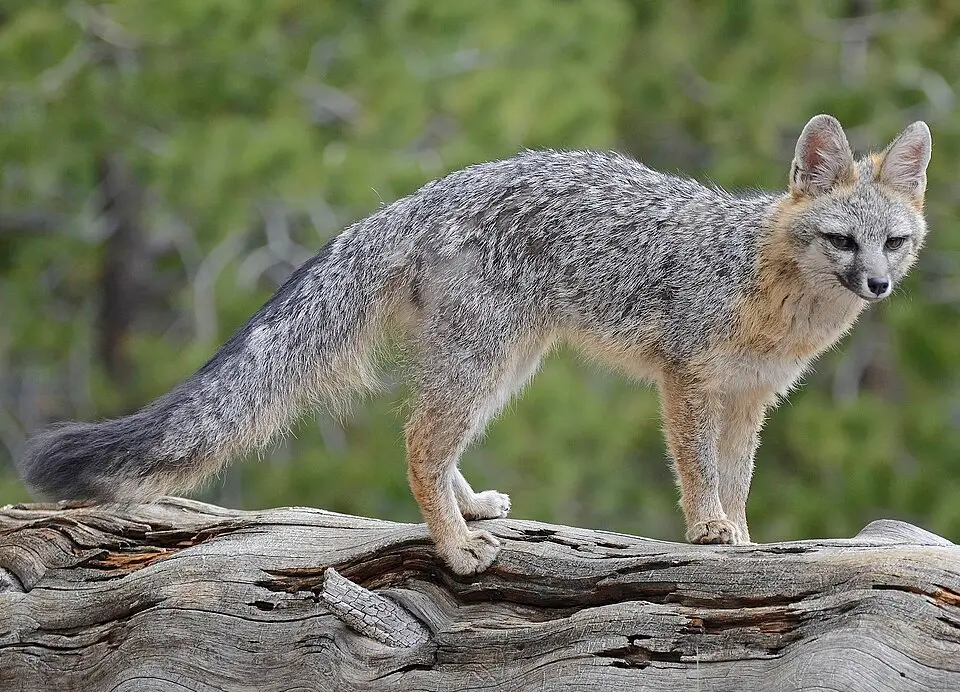
The gray fox is a medium-sized carnivore with a grizzled salt-and-pepper gray coat along its back and upper sides — the feature that gives the species its common name. This gray coloration is produced by banded guard hairs that create a distinctively textured, multi-toned appearance. The flanks, neck, and legs of the gray fox are typically tinged with warm rufous or reddish-brown tones, while the underside is often pale or whitish. One of the most diagnostic physical features is a distinctive black stripe that runs along the top of the tail and ends in a black tip — a feature that helps distinguish the gray fox from the red fox, which has a white-tipped tail.
The face of the gray fox is relatively narrow and pointed, with large, alert eyes and upright, somewhat rounded ears well-suited for detecting prey and predators alike. A dark "mane" line runs along the mid-dorsal surface, and there is often a reddish patch behind the ears and on the throat area.
Adult gray foxes are relatively compact animals. They are generally smaller than many people expect, with a slender, agile build that suits their lifestyle as opportunistic predators in dense vegetation.
The Tree-Climbing Ability
Perhaps the most extraordinary biological trait of the gray fox is its ability to climb trees — a capability that is virtually unique among North American canids. The gray fox possesses strong, hooked claws and rotating wrist joints that allow it to grip bark and ascend tree trunks with surprising ease. It can climb to considerable heights to escape predators, access food sources such as fruit and bird nests, or simply rest in elevated positions that offer a sense of security. This arboreal tendency is so well-developed that gray foxes have been documented resting and even denning in elevated tree cavities, hollow logs, or the forks of large branches.
This climbing ability reflects the gray fox's evolutionary adaptation to dense forested environments, where vertical space becomes an additional dimension of the habitat to exploit. It is a behavior that separates the gray fox from the red fox, which is far more of an open-country species.
Diet and Feeding Behavior
The gray fox is an omnivore with a highly flexible diet that shifts with the seasons and local food availability. Small mammals such as mice, voles, and cottontail rabbits form a significant portion of the diet, but the gray fox is equally comfortable foraging for insects, birds, eggs, and a wide variety of plant matter including berries, fruits, nuts, and corn. This dietary flexibility is one of the reasons the species is so broadly distributed and ecologically successful.
The gray fox is primarily nocturnal and crepuscular, meaning it is most active during the hours around dawn and dusk, though it can be encountered at other times as well. Its acute senses of smell and hearing make it an effective hunter across a range of conditions and terrain types.
Reproduction and Life Cycle
Gray foxes are monogamous and typically form pair bonds during the breeding season. Mating generally occurs in late winter, and after a gestation period of roughly 53 days, females give birth to litters that typically range from two to seven pups. The young are born blind and helpless but develop rapidly, with both parents participating in raising the offspring. By late summer, young foxes begin to disperse and establish their own territories.
Gray foxes are generally solitary outside of the breeding season, maintaining home ranges that vary in size depending on habitat quality and food availability. They communicate through a variety of vocalizations, scent markings, and body language.
Habitat & Range
The gray fox enjoys one of the broadest distributions of any fox species in the Western Hemisphere. Its range extends from southern Canada through most of the continental United States and deep into Central America, with isolated populations extending into parts of South America. Within this vast range, the gray fox demonstrates a clear preference for wooded and brushy habitats — a distinction from the open-country preferences of the red fox.
In the eastern United States, gray foxes are strongly associated with mature deciduous and mixed forests, forest edges, riparian corridors, and areas of dense shrub cover. They are frequently found in river bottomlands, swampy woodland margins, and upland hardwood forests — habitats that Georgia has in rich abundance.
Georgia's Landscape and the Gray Fox
Georgia, as one of the most ecologically diverse states in the southeastern United States, provides exceptional habitat for the gray fox. The state's varied topography — ranging from the Blue Ridge Mountains in the north to the coastal plain and maritime forests along the Atlantic coast — supports gray fox populations across virtually every county. Georgia's warm climate, abundant hardwood forests, and productive agricultural-woodland interfaces create ideal conditions for this adaptable species.
The Piedmont region, which covers a broad swath of central Georgia, is characterized by rolling terrain, mixed pine-hardwood forests, and numerous creek drainages — all habitat types that gray foxes exploit effectively. The coastal plain to the south offers a different but equally suitable landscape of longleaf pine savanna remnants, swamp forest edges, and scrubby uplands. Even in suburban and exurban areas where natural cover remains intact, gray foxes have demonstrated the ability to persist and even thrive in proximity to human development.
Hunting Information
The gray fox has a long tradition as a quarry species in North American hunting culture, particularly in the southeastern United States where it has been pursued both for sport and as part of broader wildlife management programs. Fox hunting — in both the mounted and predator-calling traditions — has deep roots in Southern culture, and the gray fox has played a central role in that heritage.
Hunters pursuing gray fox in Georgia and elsewhere in the Southeast typically employ a variety of methods. Predator calling, using electronic or mouth-blown calls that mimic the distress sounds of rabbits or other prey animals, can be an effective technique for drawing gray foxes into range, particularly during the cooler months of fall and winter. Hunting with trained hounds — a time-honored tradition — is another method historically associated with fox hunting in the region.
Because the gray fox is primarily nocturnal, hunters often venture out during low-light hours when the animals are naturally active. Patience, knowledge of local habitat, and an understanding of the species' movement patterns are all essential components of a successful and ethical gray fox hunting experience.
Prospective hunters in Georgia are always encouraged to consult the Georgia Department of Natural Resources (DNR) Wildlife Resources Division for current regulations, season dates, and licensing requirements before pursuing any furbearing species. Regulations can change from year to year, and compliance with all applicable state and federal wildlife laws is essential. At the time of this writing, specific season dates and license requirements for gray fox in Georgia were not available in the source data consulted for this article, and hunters should verify current rules directly with the Georgia DNR.
Conservation
The gray fox is currently classified as a species of Least Concern by the International Union for Conservation of Nature (IUCN), reflecting its broad distribution and generally stable populations across most of its range. The species has demonstrated considerable resilience in the face of habitat change and human activity, owing largely to its dietary flexibility, adaptability to a variety of habitat types, and its ability to persist in fragmented landscapes.
That said, like all wildlife species, gray fox populations can face localized pressures from habitat loss, urban development, road mortality, and disease. Canine distemper and mange are among the diseases known to affect gray fox populations, and can periodically cause significant localized mortality. Hunting and trapping, when conducted within regulated frameworks, are generally considered sustainable and are an important component of the overall management picture for furbearing species like the gray fox.
In Georgia and across the Southeast, wildlife managers work to ensure that gray fox populations remain healthy through habitat conservation, regulated harvest programs, and ongoing population monitoring. The species also benefits indirectly from conservation programs targeting broader forest and wetland habitats, as these landscapes provide the foundational resources the gray fox depends upon.
For wildlife enthusiasts and hunters alike, the gray fox represents something worth protecting and celebrating — a native species that has called North America home for millions of years and continues to play a vital role in healthy, functioning ecosystems. As a predator of small mammals and insects and as an important prey species for larger carnivores and raptors, the gray fox occupies a meaningful position in the food web of Georgia's forests and beyond.
The remarkable combination of ancient lineage, unique climbing ability, dietary versatility, and quiet adaptability makes the gray fox one of the most genuinely interesting animals in North American wildlife. For those fortunate enough to encounter one slipping through the early morning woods or scaling a moss-covered oak at the edge of a Georgia creek bottom, the experience is one that is not easily forgotten.