Overview
Few animals capture the imagination of wildlife enthusiasts and hunters quite like the elk. Known scientifically as Cervus canadensis, the elk — also called wapiti, a name derived from the Shawnee and Cree word meaning "white rump" — stands as one of the most iconic and awe-inspiring members of the deer family (Cervidae) in North America. With its towering antlers, resonant bugling call, and commanding physical presence, the elk is a symbol of wild, untamed landscapes and represents some of the most spectacular wildlife viewing and hunting opportunities on the continent.
Elk are among the largest members of the deer family in the world. Only the moose (Alces alces) surpasses the elk in size among deer species native to North America. Historically, elk roamed across an enormous swath of the North American continent — from the Atlantic coast all the way to the Pacific, and from the northern reaches of Canada down into Mexico. Over centuries of European settlement, habitat loss, and unregulated hunting, elk populations were drastically reduced and confined primarily to the western United States and Canada. However, through decades of concerted conservation and reintroduction efforts, elk have made a remarkable comeback across many parts of their historical range.
For hunters, wildlife photographers, and outdoor enthusiasts alike, the elk represents a pinnacle experience. The animal's sheer size, intelligence, and elusive nature make it a challenging and deeply rewarding quarry. Whether you are an experienced big-game hunter, a beginning naturalist, or simply someone who appreciates the grandeur of North American wildlife, learning about elk is time well spent.
Biological Traits
The elk (Cervus canadensis) belongs to the order Artiodactyla (even-toed ungulates) and the family Cervidae. It is closely related to the red deer (Cervus elaphus) of Europe and Asia, and the two species were at one time considered the same species. Modern taxonomic work, however, has established elk and red deer as distinct species, though they remain genetically very similar.
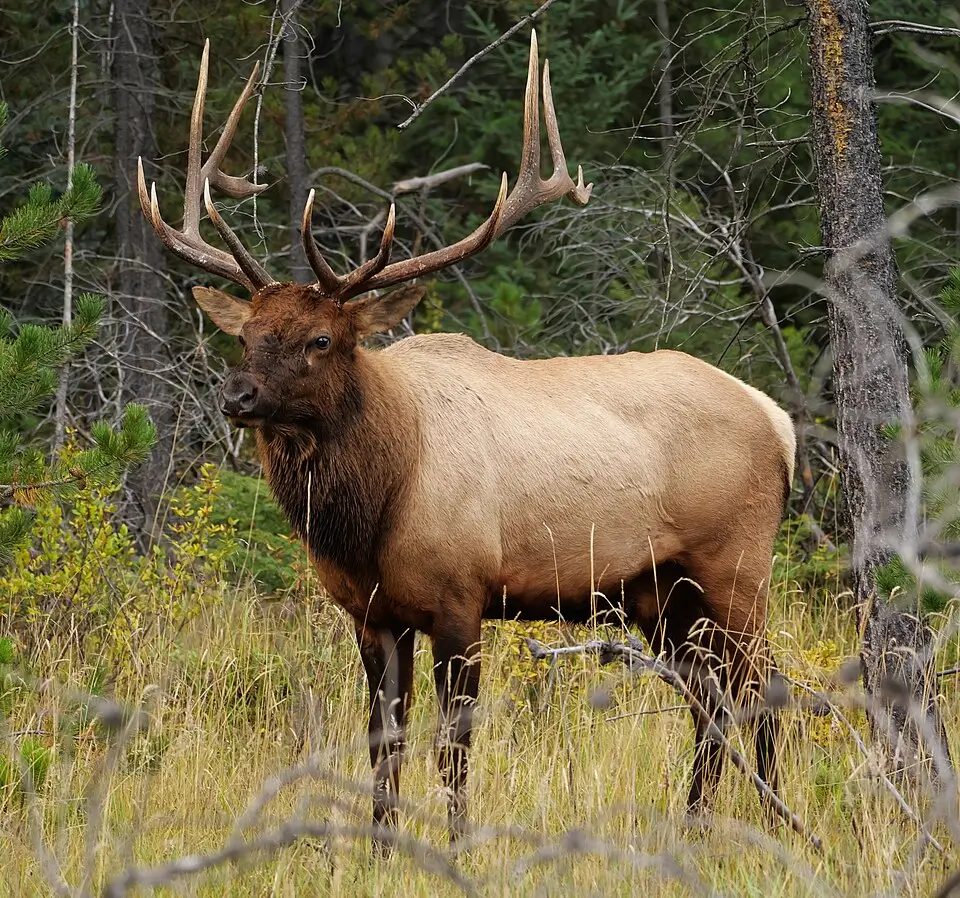
Elk are large-bodied animals with a well-muscled frame built for both speed and endurance. Adult bulls (males) are considerably larger than cows (females). Bulls typically stand around 4.5 to 5 feet at the shoulder and can weigh anywhere from 700 to over 1,000 pounds in prime condition, with some exceptional individuals exceeding that range. Cows are more slender and lighter, generally weighing between 450 and 650 pounds.
One of the most striking features of the elk is the bull's antlers. These magnificent structures are shed and regrown every year, making them one of the fastest-growing tissues in the animal kingdom. A mature bull's antlers can span 4 feet or more in width and may weigh upwards of 40 pounds. Antlers are covered in velvet — a soft, blood-vessel-rich skin — during the growing season, and bulls shed their velvet in late summer as the breeding season, known as the rut, approaches.
Elk are covered in a thick coat that varies by season. Their summer coat is reddish-brown, while the winter coat is thicker, coarser, and more tan or grayish-brown in coloration. The elk's most recognizable marking is its pale yellowish or cream-colored rump patch, which contrasts sharply with its darker body. This rump patch likely serves as a visual signal to other elk and may help herd members stay together in low-light conditions.
The rut is one of the most dramatic events in the North American wildlife calendar. Beginning in late summer and peaking in September and October, bull elk engage in fierce competition for mating rights. During this period, bulls bugle — a hauntingly beautiful, multi-note vocalization that carries for miles — to attract cows and challenge rival bulls. Bulls will also spar with their antlers, sometimes engaging in prolonged and physically demanding battles. The bugling of elk during the rut is considered one of the most evocative sounds in all of nature and draws visitors from around the world to places like Yellowstone National Park and Rocky Mountain National Park.
Elk are primarily grazers and browsers, consuming a wide variety of grasses, sedges, forbs, shrubs, and tree bark depending on the season. They are highly adaptable in their feeding habits, which has contributed to their success in reintroduction programs. Elk are also highly social animals. Cows and calves typically live in large herds, while bulls may form smaller bachelor groups outside the rut. After the rut, herds often grow larger as animals congregate in areas with adequate winter forage.
Calves are born in late May to early June after a gestation period of approximately 240 to 262 days. Newborn calves are spotted — a common trait among deer species — which helps camouflage them during their earliest and most vulnerable weeks of life. Calves grow rapidly and are typically weaned by late summer or early fall.
Habitat & Range
Historically, elk occupied an extraordinarily broad range across North America, including much of the eastern United States. Their range once extended into states like Pennsylvania, Virginia, Tennessee, and the Carolinas. Today, wild elk populations are most concentrated in the Rocky Mountain states, including Colorado, Wyoming, Montana, Idaho, and New Mexico. Significant populations also exist in the Pacific Northwest, in parts of the Great Lakes region, and in portions of the East, thanks to reintroduction programs.
Elk are highly adaptable animals capable of thriving in a wide variety of habitat types, including mountain meadows, subalpine forests, grasslands, river bottoms, and shrublands. They tend to move seasonally, spending summers at higher elevations where cool temperatures and lush vegetation are available, then descending to lower elevations in winter to find forage when deep snow covers the high country.
In the eastern United States, elk reintroductions have had notable success in states such as Kentucky, Tennessee, Pennsylvania, North Carolina, Arkansas, and Wisconsin. These programs, largely spearheaded by state wildlife agencies in partnership with organizations like the Rocky Mountain Elk Foundation, have restored elk to parts of their ancestral range where they had been absent for more than a century. Some southeastern states have witnessed growing elk populations that offer new opportunities for wildlife watching and hunting.
For residents of Georgia, elk are not currently a resident wild population, though the broader southeastern region has seen growing elk activity in neighboring states. Georgia's varied landscape — which includes mountains in the northern part of the state, rolling Piedmont terrain in the center, and coastal plains in the south — does contain suitable habitat types in certain areas. Georgia's proximity to states with active elk populations in the Appalachian region makes the prospect of future presence and management an interesting topic for wildlife managers and outdoor enthusiasts in the state.
Hunting Information
Elk hunting is regarded by many experienced big-game hunters as one of the most demanding and rewarding pursuits in North America. The combination of the animal's size, sensory acuity, and the challenging terrain it typically inhabits makes a successful elk hunt a true test of physical conditioning, woodsmanship, and patience.
Elk hunting seasons, licensing structures, and regulations vary considerably by state and jurisdiction. In western states where elk populations are most abundant — such as Colorado, Wyoming, Montana, and Idaho — hunting seasons are carefully managed by state wildlife agencies based on population surveys and habitat assessments. Many western states use a license or tag draw system for elk, meaning hunters must apply for limited hunting licenses and may wait multiple years before drawing a tag in certain high-demand units.
In eastern states where elk have been reintroduced, hunting opportunities are often more limited and strictly regulated in order to allow populations to grow and stabilize. States like Kentucky and Pennsylvania have implemented carefully controlled elk hunting seasons that are accessible through application processes.
For hunters in Georgia, there is currently no established resident elk hunting season, as wild elk populations have not been established in the state. Hunters from Georgia who wish to pursue elk typically do so by traveling to states in the Rocky Mountain West or to states with established reintroduction programs in the eastern United States. Outfitted and guided elk hunts are widely available across the West, offering hunters of all experience levels the chance to pursue this magnificent animal.
Methods of elk hunting include archery, muzzleloader, and modern firearm hunts, each offering its own unique set of challenges and satisfactions. Calling elk during the rut — using bugle calls and cow calls to lure curious or aggressive bulls into close range — is considered one of the most exciting and skill-intensive approaches in all of big-game hunting. For those who prefer a spot-and-stalk approach, elk hunting in open mountain terrain can be equally demanding and thrilling.
Prospective elk hunters are always encouraged to consult the official regulations and licensing information from the wildlife agency of the state or jurisdiction where they intend to hunt, as rules and season dates change from year to year.
Conservation
The story of elk conservation in North America is one of the great wildlife success stories of the modern era. By the late 19th and early 20th centuries, unregulated market hunting and widespread habitat loss had reduced elk populations to a fraction of their historical numbers. Once found across most of the continent, elk had been eliminated from large portions of their range and survived primarily in isolated pockets in the Rocky Mountains and a few other areas.
The establishment of federal wildlife refuges, national parks, and state game management programs in the early 20th century provided the foundation for elk recovery. The creation of Yellowstone National Park in 1872 — and the subsequent protection of wildlife within it — gave elk a critical stronghold from which populations could grow and expand. National forests, Bureau of Land Management lands, and state wildlife management areas across the West provided additional protected habitat.
The Rocky Mountain Elk Foundation (RMEF), founded in 1984, has played a pivotal role in elk conservation, working to protect, restore, and enhance elk habitat across North America. Through partnerships with state and federal agencies, the RMEF has helped secure millions of acres of habitat and has supported elk reintroduction efforts in states throughout the country.
Today, North America's elk population is estimated to number in the hundreds of thousands, representing a remarkable recovery from the lows of the past. Regulated hunting has been a central component of this conservation success, generating hundreds of millions of dollars through license fees and excise taxes under the Federal Aid in Wildlife Restoration Act (also known as the Pittman-Robertson Act). These funds are distributed to state wildlife agencies to support habitat work, population management, and wildlife research.
As elk populations continue to expand into parts of their historical eastern range, including areas of the southern Appalachians near Georgia, wildlife managers, conservationists, and hunting organizations remain committed to ensuring that this iconic species continues to thrive for generations to come.