Overview
Few animals are as instantly recognizable or as deeply woven into the fabric of American outdoor life as the Eastern gray squirrel (Sciurus carolinensis). From the leaf-strewn forest floors of the Appalachian foothills to the sprawling hardwood bottomlands of the Georgia Piedmont, this nimble, sharp-eyed creature has captured the imagination of naturalists, wildlife watchers, and hunters for generations. Whether you spot one darting across a suburban lawn, leaping acrobatically between towering oaks, or chattering indignantly from a high branch, the Eastern gray squirrel is one of the most dynamic and fascinating small mammals in North America.
In the state of Georgia — a place of remarkable ecological diversity spanning mountain ridges, rolling piedmont forests, coastal plains, and Atlantic marshlands — the Eastern gray squirrel thrives in abundance. Georgia's rich landscape, shaped by warm summers, mild winters, and an extraordinary diversity of hardwood and mixed forest ecosystems, provides ideal conditions for this species to flourish year-round. For hunters, wildlife enthusiasts, and curious nature lovers alike, understanding the biology, behavior, and ecology of Sciurus carolinensis deepens the appreciation for this remarkable animal and for the wild spaces it calls home.
Biological Traits
The Eastern gray squirrel belongs to the family Sciuridae, which includes tree squirrels, ground squirrels, chipmunks, marmots, and flying squirrels. Within this family, Sciurus carolinensis is one of the most successful and widespread tree squirrels in North America, a testament to its adaptability and behavioral intelligence.
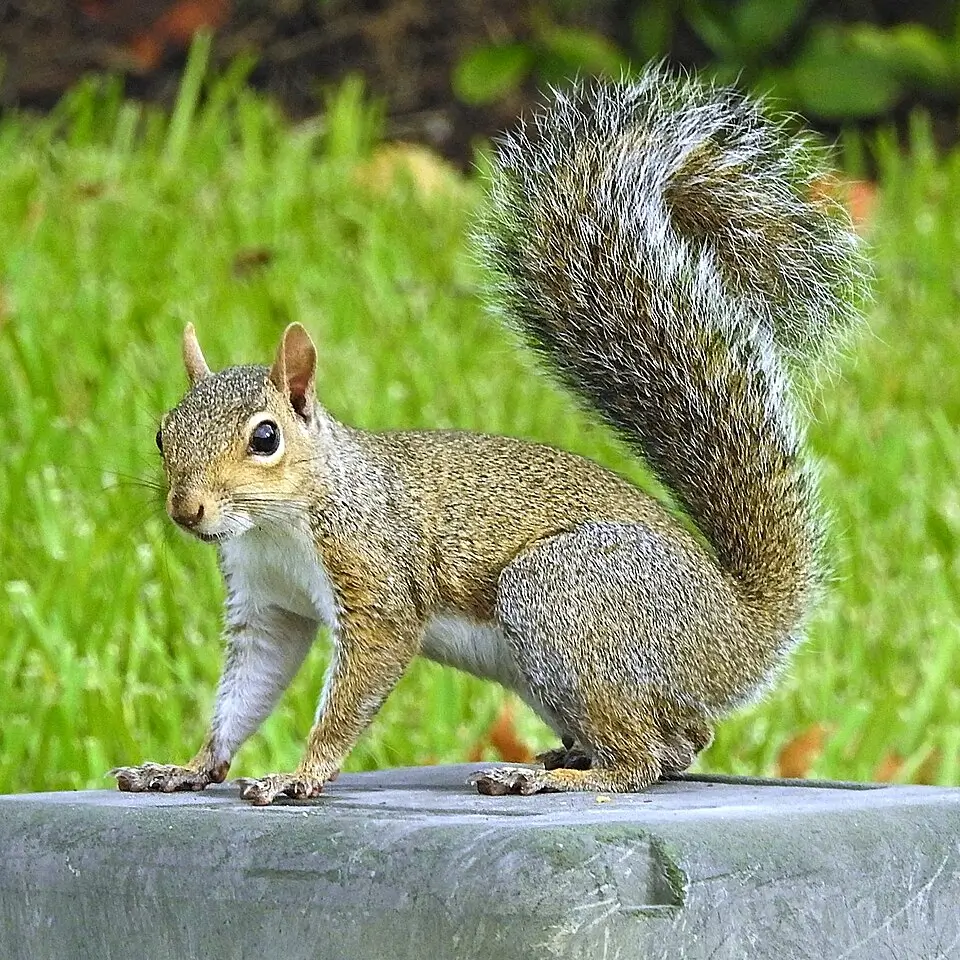
As the common name suggests, the Eastern gray squirrel typically displays a coat of salt-and-pepper gray fur across most of its body, often with warm rusty or brownish tones along the back and sides, particularly during certain seasons. The underside is generally white or pale gray, and the characteristic bushy tail — perhaps the animal's most iconic feature — is fringed with silver-tipped hairs that give it a halo-like appearance in bright light. Some individuals display melanistic (black) color phases, which are more common in certain regions and populations. Albino individuals, while rare, are also documented.
Adult Eastern gray squirrels are medium-sized tree squirrels. Their bodies are compact and muscular, built for an arboreal lifestyle that demands agility, balance, and explosive bursts of speed. Their strong hind legs allow them to make impressive leaps between branches, and their curved, sharp claws give them an exceptional grip on bark and wood. The squirrel's large, expressive eyes are positioned on the sides of its head, providing a wide field of vision that helps detect predators approaching from almost any angle.
One of the most celebrated aspects of Eastern gray squirrel biology is its relationship with food storage, a behavior known as scatter hoarding. Unlike some animals that store food in a single central cache, gray squirrels bury thousands of individual food items — primarily nuts and seeds — in scattered locations across their home range. They rely on a surprisingly sophisticated spatial memory to recover these caches during winter months when food is scarce. Research has shown that gray squirrels use memory, spatial landmarks, and even the smell of buried food to relocate their caches with impressive accuracy. Importantly, not all buried nuts are recovered, and this "accidental" planting behavior makes the Eastern gray squirrel a significant contributor to forest regeneration and seed dispersal, particularly for oak, hickory, and beech trees.
Gray squirrels are diurnal animals, meaning they are most active during daylight hours. Activity peaks typically occur in the early morning and again in the late afternoon, with a midday rest period especially common during the hot summer months. Their diet is broadly omnivorous but heavily plant-based, consisting primarily of hard mast (acorns, hickory nuts, walnuts, and beechnuts), soft mast (berries and fruits), fungi, buds, bark, and seeds. They will occasionally consume insects, bird eggs, or other protein sources when available.
Reproduction in the Eastern gray squirrel typically occurs twice per year, with breeding seasons generally falling in late winter and again in midsummer. After a gestation period of roughly 44 days, females give birth to litters typically ranging from two to four young, called kittens or pups. The young are born blind, hairless, and entirely dependent on their mother. They develop rapidly, opening their eyes at around four weeks of age and beginning to venture outside the nest by six to eight weeks. By fall, young squirrels from the summer litter are largely independent and must fend for themselves as they prepare for their first winter.
Nests, called dreys, are constructed from leaves, twigs, and bark, typically in the forks of tree branches high above the ground. In addition to dreys, gray squirrels readily use natural tree cavities for shelter, particularly during cold weather and for raising young. These cavity dens are especially prized and may be used by multiple generations of squirrels over the years.
Habitat & Range
The Eastern gray squirrel is native to the eastern half of North America, ranging from southern Canada southward through the eastern United States as far as Florida, and westward to the Great Plains. Its scientific name, carolinensis, literally means "of Carolina," reflecting the fact that early naturalists frequently observed and documented the species in the Carolinas — a region directly adjacent to Georgia.
Within its range, the Eastern gray squirrel is strongly associated with deciduous and mixed forests, particularly those dominated by mast-producing hardwood trees such as oaks (Quercus spp.), hickories (Carya spp.), and beeches (Fagus spp.). These trees provide the reliable, calorie-rich food supply that the species depends upon, especially heading into winter. However, gray squirrels are notably adaptable and have successfully colonized suburban parks, urban green spaces, and fragmented forest patches, making them one of the most commonly encountered wild mammals in human-modified landscapes.
Georgia, as both a southeastern state and a place of remarkable natural diversity, supports strong gray squirrel populations across much of its landscape. The mountainous northern counties of the state, covered by Appalachian hardwood and mixed forests, offer prime squirrel habitat with abundant oaks and hickories. The Piedmont region, with its rolling terrain and mix of second-growth hardwoods and pine-hardwood forests, supports healthy populations as well. Even the coastal plain and river bottomlands of southern Georgia, dominated by bottomland hardwood forests featuring water oaks, overcup oaks, and various hickory species, provide excellent habitat. Essentially, wherever mature hardwood trees produce reliable mast crops in Georgia, Eastern gray squirrels are likely to be found.
Hunting Information
The Eastern gray squirrel holds a cherished place in American hunting tradition, and Georgia is no exception. Squirrel hunting is often considered a gateway hunting experience — a pursuit that teaches woodsmanship, patience, marksmanship, and a deep respect for the natural world. For many experienced hunters across the South, memories of squirrel hunting with parents or grandparents in oak-studded woodlots represent the very foundation of their lifelong connection to the outdoors.
In Georgia, the Eastern gray squirrel is a game species managed by the Georgia Department of Natural Resources (DNR). Hunters pursuing squirrels in Georgia should always consult the Georgia DNR's current hunting regulations for up-to-date information on season dates, bag limits, and applicable licensing requirements. Hunting regulations can change from year to year, and it is every hunter's responsibility to be aware of and comply with current state rules before heading into the field.
Popular methods for hunting gray squirrels include still hunting (quietly moving through hardwood forests and waiting for movement), stand hunting near productive mast trees, and hunting with small-caliber firearms such as .22 rimfire rifles or shotguns. Many hunters also enjoy pursuing squirrels with well-trained squirrel dogs, a time-honored southern tradition that adds another layer of enjoyment and skill to the experience. The best squirrel hunting in Georgia typically coincides with the hardwood mast season, when squirrels are highly active gathering and caching food. Early mornings in oak and hickory forests, particularly after the first cool fronts of autumn push temperatures down, can produce exceptional squirrel activity and exciting hunting opportunities.
From a culinary standpoint, squirrel has a long and respected history on the Southern table. Squirrel meat is lean, flavorful, and versatile, lending itself well to traditional preparations such as squirrel and dumplings, Brunswick stew — a classic Georgia dish with deep historical roots — and pan-fried preparations. Squirrel hunting, like all forms of ethical hunting, encourages a direct, meaningful connection to the food we eat and the land that produces it.
Conservation
The Eastern gray squirrel is currently classified as a species of Least Concern by the International Union for Conservation of Nature (IUCN), reflecting the fact that its populations are large, widespread, and generally stable across its native range. In many areas, including Georgia, gray squirrel populations are considered healthy and self-sustaining under current conditions.
The long-term health of gray squirrel populations is closely tied to the health and abundance of mature hardwood forests. Conservation efforts that protect and restore native hardwood forests — including oaks, hickories, and beeches — directly benefit gray squirrel populations by ensuring reliable mast production year after year. Forest management practices that maintain a diversity of tree species and age classes, preserve natural tree cavities, and limit excessive fragmentation of forest habitat all contribute to strong, resilient squirrel populations.
In Georgia, land conservation programs, state wildlife management areas, and responsible private land stewardship all play important roles in maintaining the forest habitat that gray squirrels and countless other species depend upon. Hunters, wildlife watchers, and conservation organizations alike share a common interest in protecting these landscapes for future generations.
The Eastern gray squirrel's role as a seed disperser also gives it ecological significance that extends far beyond its own population. By burying and occasionally failing to recover millions of acorns and nuts each year, gray squirrels contribute meaningfully to forest regeneration across eastern North America. In this sense, protecting healthy squirrel populations is also an investment in the future of the forests themselves.
Conclusion
The Eastern gray squirrel (Sciurus carolinensis) is far more than a common backyard visitor. It is an ecologically vital species, a beloved subject of wildlife observation, and a cornerstone of small-game hunting tradition across Georgia and the broader American South. Its intelligence, adaptability, and tireless energy make it one of nature's most engaging creatures, equally at home in wild forests and neighborhood parks. Whether you encounter a gray squirrel while walking a trail in the North Georgia mountains, sitting in a deer stand in a river bottom hardwood, or watching from your own backyard, taking a moment to appreciate this remarkable animal is always time well spent.