Overview
Few animals embody the spirit of adaptability quite like the coyote. Known scientifically as Canis latrans — a Latin phrase meaning "barking dog" — the coyote is one of North America's most recognizable and resilient wild canids. From the open prairies of the American West to the suburban neighborhoods of the Eastern Seaboard, this resourceful predator has demonstrated an extraordinary ability to thrive in virtually every environment it encounters. In Georgia, the coyote has become a firmly established part of the natural landscape, occupying a unique ecological role that makes it both a fascinating subject for wildlife enthusiasts and a notable quarry for hunters across the Peach State.
Georgia's diverse geography — stretching from the Blue Ridge Mountains in the north, through the rolling Piedmont, and down into the coastal plains and barrier islands — provides a patchwork of habitats ideally suited to the coyote's versatile lifestyle. As one of the eighth most populous states in the nation, with an estimated population of over 11 million people as of 2025, Georgia presents an interesting case study in how wildlife and human communities coexist and interact. The coyote, perhaps more than any other wild animal, has proven itself to be a master of navigating these shared spaces.
Whether you are a landowner curious about the animals moving through your property at night, a hunter interested in pursuing this challenging predator, or simply a nature enthusiast eager to learn more about Georgia's wildlife, understanding the biology, behavior, and management of the coyote is well worth the effort. This guide aims to provide a thorough and engaging overview of Canis latrans in the context of Georgia's landscapes and outdoor traditions.
Biological Traits
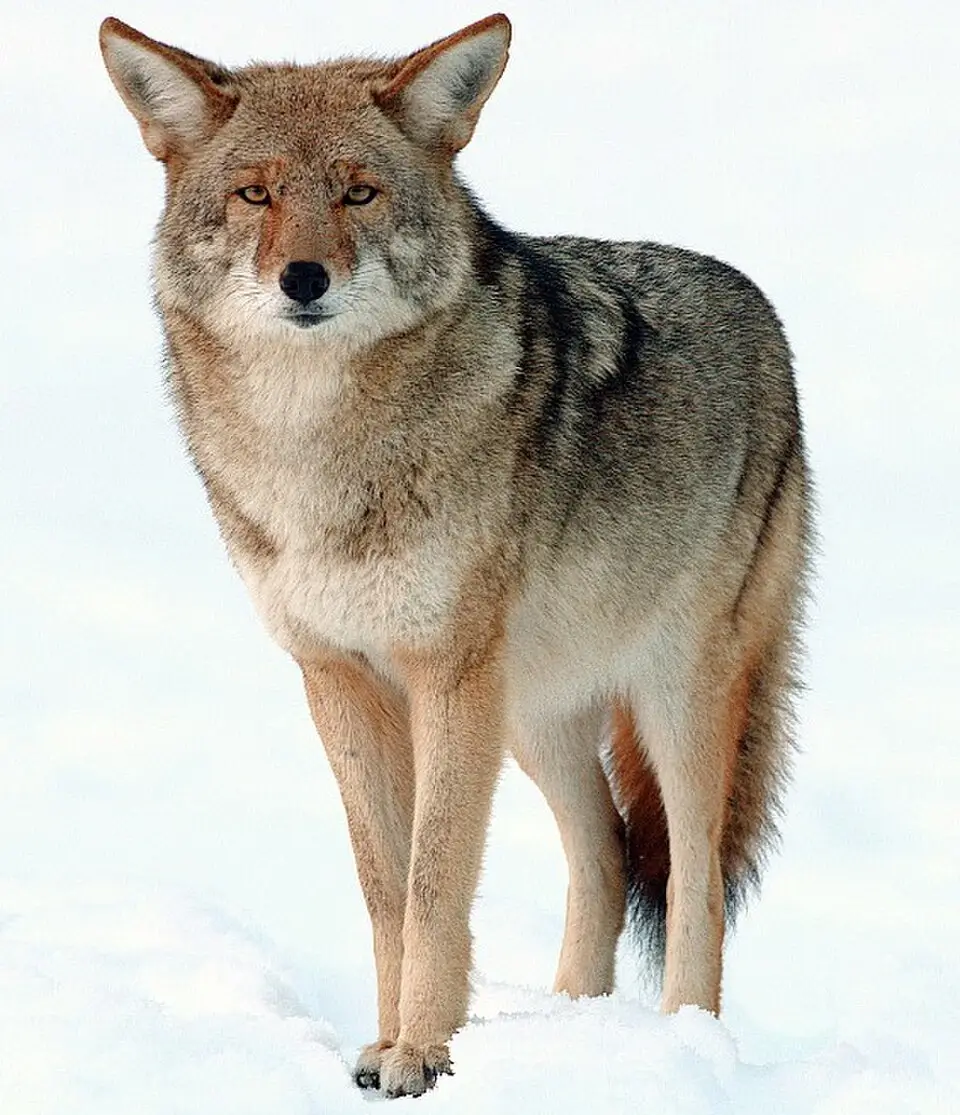
The coyote is a medium-sized member of the family Canidae, closely related to wolves, domestic dogs, and foxes. Adult coyotes typically present a lean, athletic build that speaks to their lives as active hunters and opportunistic foragers. Their coat coloration is highly variable but generally consists of a mix of gray, brown, and tawny hues, often with a lighter cream or white underside. The bushy tail, usually held low when the animal is running — a key distinguishing feature from the domestic dog — and the pointed muzzle give the coyote a distinctive silhouette that experienced observers quickly learn to recognize.
One of the most remarkable aspects of coyote biology is the animal's intelligence and behavioral flexibility. Canis latrans is widely regarded by wildlife biologists as one of the most cognitively sophisticated predators in North America. Coyotes are highly social animals capable of operating as solitary individuals, mated pairs, or loosely organized family groups depending on environmental conditions and prey availability. This social plasticity allows them to optimize their hunting strategies — working alone to pursue small mammals like rabbits and rodents, or occasionally cooperating in pairs or small groups when targeting larger prey.
Coyotes are well known for their varied and opportunistic diet, which includes small mammals, birds, reptiles, insects, fruits, berries, and carrion. This omnivorous feeding strategy is a key reason for the species' remarkable success across such a wide range of environments. In agricultural areas, coyotes may prey upon livestock, particularly young animals, which is a legitimate concern for farmers and ranchers. However, their diet of rodents and rabbits also provides measurable benefits to agricultural ecosystems by keeping pest populations in check.
Reproduction in coyotes follows a seasonal pattern typical of wild canids. Mating generally occurs in late winter, with pups born in spring after a gestation period of approximately 63 days. Litters typically range from four to seven pups, though larger litters are possible. Both parents participate in raising the young, with the male providing food for the nursing female and, later, for the developing pups. Interestingly, coyote populations have a well-documented ability to increase reproductive output in response to population pressure — when coyote numbers are reduced in an area, surviving females tend to produce larger litters, which helps maintain population levels. This biological mechanism is an important consideration for wildlife managers and hunters alike.
The coyote's senses are exceptionally well developed. Their hearing is acute enough to detect the movements of small rodents beneath snow or ground cover, and their sense of smell rivals that of many scent hounds. These sensory capabilities, combined with their natural wariness of humans, make coyotes a genuinely challenging and rewarding quarry for hunters.
Habitat & Range
Originally native to the open grasslands and desert regions of western North America, the coyote has undergone one of the most dramatic range expansions of any North American mammal over the past century and a half. As forests were cleared for agriculture and development, and as top predators like wolves were removed from much of the eastern United States, coyotes seized the opportunity and expanded eastward with remarkable speed. Today, Canis latrans occupies every U.S. state except Hawaii, as well as much of Canada and Central America.
In Georgia, coyotes are found statewide, from the mountain counties bordering Tennessee, North Carolina, and South Carolina in the north, to the swampy lowlands and coastal areas in the south. The state's varied terrain — encompassing mountains, hardwood forests, pine plantations, agricultural fields, river bottomlands, and suburban green spaces — offers coyotes an abundant and diverse range of habitat types to exploit.
Coyotes are particularly fond of edge habitats, where different vegetation types meet, such as the transition zone between open farmland and forested woodlands. These areas tend to support high densities of the small mammals and birds that form the core of the coyote's diet. However, true to their adaptable nature, coyotes are equally at home in dense forest interiors, open fields, or even urban and suburban environments. Reports of coyotes in and around Georgia's cities and towns, including the greater Atlanta metropolitan area, have become increasingly common in recent decades.
The coyote's ability to thrive in close proximity to human development reflects both its dietary flexibility and its behavioral adaptability. Urban and suburban coyotes often shift their activity patterns to become more nocturnal, reducing direct encounters with people while still taking advantage of the food resources — including fruit, garbage, small pets, and abundant small mammals — that human-modified landscapes provide.
Hunting Information
The coyote holds a special place in Georgia's hunting community. As a year-round hunting opportunity on private lands, coyote hunting offers outdoor enthusiasts a way to stay active in the field outside of traditional deer, turkey, and small game seasons. The pursuit of coyotes is widely regarded as one of the most challenging and skill-intensive forms of predator hunting, demanding a thorough understanding of animal behavior, patience, and proficiency with both firearms and calling techniques.
Hunters pursuing coyotes in Georgia typically employ a range of methods. Electronic and mouth-blown calls that mimic the distress sounds of rabbits, rodents, or birds are among the most popular and effective techniques for bringing coyotes within range. Coyotes are naturally curious and responsive to these sounds, making calling a highly engaging style of hunting that rewards hunters who take the time to master it. Ambush hunting near agricultural fields, food plots, and known travel corridors is another productive approach, particularly during early morning and late evening hours when coyotes are most active.
Hunters interested in pursuing coyotes in Georgia should always consult the Georgia Department of Natural Resources (DNR) and the Georgia Wildlife Resources Division for the most current and complete regulations, including any licensing requirements, season dates, and applicable rules for public versus private lands. Regulations can change from year to year, and it is the responsibility of every hunter to be fully informed before taking to the field.
As with all hunting activities, ethical and responsible practices are paramount. This includes safe firearm handling, positive identification of the target, and respect for property boundaries and landowner relationships. Many Georgia landowners actively welcome coyote hunters on their properties, recognizing the value of regulated predator management to the health of game populations and livestock.
Conservation
Despite being one of the most hunted and managed predators in North America, the coyote remains abundant and ecologically significant across its range, including throughout Georgia. From a conservation standpoint, Canis latrans is currently classified as a species of least concern, reflecting its robust and expanding populations.
The coyote's role in the ecosystem is multifaceted. As a mesopredator — occupying a middle position in the food chain — coyotes help regulate populations of rodents, rabbits, and other small animals, which in turn influences plant communities and the broader ecological balance. In regions where larger apex predators are absent, coyotes partially fill this regulatory role, contributing to what ecologists call a trophic cascade.
In Georgia, as in other southeastern states, the relationship between coyotes, white-tailed deer, and ground-nesting birds such as wild turkey and northern bobwhite quail is of particular interest to hunters and wildlife managers. Research across the Southeast has examined the extent to which coyote predation on fawns and nesting birds may affect game populations, and wildlife managers continue to gather data to inform best management practices.
It is worth noting that Georgia's landscape supports a rich and diverse array of wildlife, and the coyote is simply one part of that complex natural tapestry. Thoughtful management, informed by science and guided by the expertise of wildlife professionals, remains the foundation of Georgia's approach to balancing predator and prey populations. Hunters, landowners, and conservationists all play important roles in this ongoing stewardship of Georgia's outdoor heritage.
Ultimately, the coyote is a testament to nature's resilience and adaptability. Its success across the diverse environments of Georgia — and across the continent — speaks to the enduring vitality of wildlife in even the most human-altered landscapes. For hunters, naturalists, and anyone who spends time outdoors in the Peach State, the coyote is a compelling and ever-present reminder of the wild world that surrounds us.