Overview
Gliding silently through the reeds of a freshwater marsh or picking its way deliberately along the muddy edge of a quiet pond, the Common gallinule is one of North America's most recognizable and fascinating wetland birds. With its bold scarlet facial shield, bright yellow-tipped bill, and slate-gray plumage, this medium-sized waterbird cuts a striking figure against the lush green backdrop of Georgia's abundant wetland ecosystems. Whether you are a seasoned waterfowl hunter, a dedicated birdwatcher, or simply a nature enthusiast exploring the Peach State's marshes and swamps, the Common gallinule offers a compelling subject worthy of deeper understanding.
Known scientifically as Gallinula galeata, the Common gallinule belongs to the family Rallidae — a diverse and widespread group of birds commonly referred to as rails, crakes, and coots. Though it shares a family with the more frequently discussed American coot, the Common gallinule possesses its own unique set of behaviors, physical characteristics, and ecological roles that set it apart. It is a bird that rewards patient observation, and in the right wetland habitat across the southeastern United States — including right here in Georgia — encounters with this species are entirely within reach for the dedicated outdoor explorer.
This guide provides a thorough look at the Common gallinule, covering its biological traits, preferred habitats, geographic range, and relevance to hunters and conservationists in Georgia and beyond.
Biological Traits
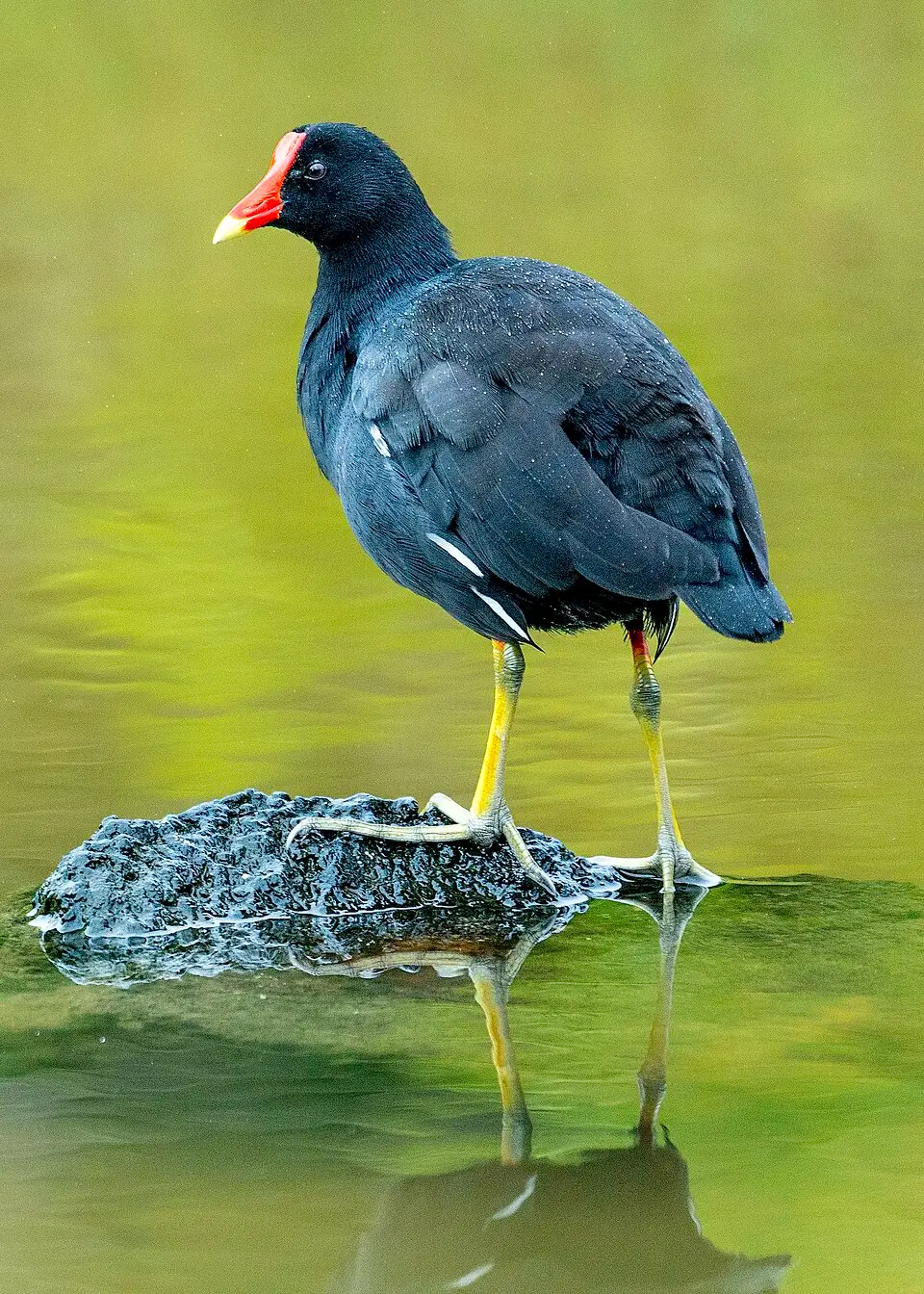
The Common gallinule is a medium-sized bird, roughly comparable in size to a small duck, though it is not closely related to waterfowl at all. Its most immediately striking physical feature is the bright red frontal shield — a bare, fleshy plate that extends from the base of the bill up onto the forehead — combined with a vivid red bill tipped in yellow. This colorful facial arrangement makes the species unmistakable in the field and serves important social functions, including mate recognition and signaling dominance within group hierarchies.
The body plumage of the Common gallinule is predominantly dark slate-gray to sooty black across the head, neck, and underparts, transitioning to a brownish-olive tone along the back and wings. A distinctive white lateral stripe runs along the flanks, and there are white undertail coverts that flash conspicuously when the bird raises its short tail — a behavior observed frequently during foraging and social interactions. The legs and feet are yellow-green, long, and equipped with elongated, unwebbed toes that allow the bird to walk across floating vegetation with surprising ease and agility.
Unlike many waterbirds, the Common gallinule does not possess webbed feet, yet it is a competent and confident swimmer. It propels itself through the water with a characteristic pumping motion of the head, nodding forward and back with each stroke — a behavior that is both endearing and highly distinctive. This head-bobbing is a reliable identification feature when observing the species from a distance.
Juveniles and immature birds lack the brilliant red facial shield of adults and instead present a more subdued brownish-gray coloration overall, with paler underparts and a duller bill. This can make younger birds somewhat more challenging to identify in the field, though the characteristic body shape and white flank stripe remain present as useful field marks.
Vocally, the Common gallinule is surprisingly loud and expressive for a bird that often hides among dense wetland vegetation. Its calls include a range of clucking, squawking, and cackling notes that carry well across open water. These vocalizations are particularly common during the breeding season and at dusk and dawn, when the birds are most actively communicating. Experienced birders often hear the Common gallinule well before they see it.
The species is omnivorous, feeding on a broad diet that includes aquatic plants, seeds, algae, insects, snails, worms, and small vertebrates. This dietary flexibility is one of the reasons the Common gallinule thrives in such a wide variety of wetland environments. It forages both in the water and on land, often venturing onto grassy banks or floating mats of vegetation in search of food.
Habitat & Range
The Common gallinule is a bird of freshwater wetlands. It shows a strong preference for marshes, ponds, lakes, slow-moving rivers, and swamps that support dense stands of emergent vegetation such as cattails, bulrushes, reeds, and water hyacinth. This vegetation provides the cover the species requires for nesting, foraging, and shelter from predators. Open water adjacent to vegetated edges is also important, as gallinules regularly swim out into these areas to feed and socialize.
The species has a broad distribution across the Americas, ranging from the southern portions of Canada through the United States, Central America, the Caribbean, and into South America. In the United States, it is found across much of the eastern half of the country during the breeding season, with year-round populations established in the southernmost states, including Florida and the Gulf Coast region.
In Georgia, the Common gallinule is present throughout much of the year. The state's diverse wetland landscape — encompassing the Okefenokee Swamp, the Altamaha River basin, the coastal marshes of the Golden Isles, numerous farm ponds, and a wealth of inland freshwater wetlands — provides ideal conditions for this species. Georgia's warm climate and abundant aquatic vegetation support resident populations as well as migratory individuals passing through during spring and fall movements.
The southeastern United States, broadly speaking, represents a stronghold for the Common gallinule within North America. The combination of mild winters, extensive wetland acreage, and productive aquatic plant communities makes this region particularly well-suited to the species' needs year-round. Georgia, situated squarely within this favorable zone, offers wildlife enthusiasts excellent opportunities to observe Common gallinules in a variety of natural settings across all seasons.
Hunting Information
The Common gallinule is classified as a migratory game bird under federal jurisdiction in the United States, managed cooperatively by the U.S. Fish and Wildlife Service and individual state wildlife agencies. This classification places it within the same regulatory framework as other migratory birds such as ducks, doves, and woodcock.
Hunting for Common gallinule, where permitted, typically involves wading through shallow marshes or working the vegetated edges of wetlands — a style of hunting that shares much in common with rail hunting. The birds can be challenging to flush and require hunters to move through dense cover, making it an active and physically engaging pursuit quite different from more passive forms of waterfowl hunting.
Based on the source data available for this article, specific season dates, bag limits, and licensing requirements for Common gallinule hunting in Georgia are not confirmed at this time. Regulations for migratory game birds are set annually and can change from season to season. Any hunter interested in pursuing Common gallinule in Georgia is strongly encouraged to consult the Georgia Department of Natural Resources (DNR) Wildlife Resources Division and the U.S. Fish and Wildlife Service directly for the most current and accurate regulatory information before heading afield. Compliance with all applicable state and federal regulations is essential, and obtaining the proper licenses and permits is a legal requirement for hunting migratory birds.
What can be said with confidence is that Georgia's wetland-rich landscape provides the kind of habitat where Common gallinules thrive, making the state a potentially productive destination for those interested in exploring this lesser-known aspect of migratory bird hunting.
Conservation
The Common gallinule is currently listed as a species of Least Concern by the International Union for Conservation of Nature (IUCN), reflecting its broad distribution and generally stable population across its range. This is an encouraging status, though it does not mean the species is immune to pressures that affect wetland-dependent wildlife more broadly.
Like all birds that depend on freshwater wetland ecosystems, the Common gallinule is sensitive to habitat loss and degradation. The draining of marshes for agriculture and development, the alteration of natural water flow patterns, and the degradation of water quality through pollution and runoff all represent ongoing concerns for wetland species across North America. Maintaining and restoring healthy freshwater wetland habitats is therefore essential not only for the Common gallinule but for the entire community of plants, animals, and other organisms that depend on these ecosystems.
Conservation efforts that benefit wetlands broadly — including programs that protect existing marshes, restore degraded wetland areas, and support sustainable water management practices — directly benefit the Common gallinule and its continued presence across the landscape. Organizations such as Ducks Unlimited, the Nature Conservancy, and various state and federal agencies have invested significantly in wetland conservation across the southeastern United States, including in Georgia, with positive outcomes for many wetland-dependent species.
Hunters and birdwatchers alike play an important role in wetland conservation. The revenue generated through hunting licenses, federal duck stamps, and excise taxes on sporting equipment under the Pittman-Robertson Act has funded enormous amounts of habitat conservation work across the country. By participating in regulated hunting and supporting conservation organizations, outdoor enthusiasts contribute meaningfully to the long-term health of the wetland ecosystems that species like the Common gallinule call home.
For those interested in contributing to the understanding of Common gallinule populations, participating in citizen science programs such as the Cornell Lab of Ornithology's eBird project is a simple and effective way to add valuable data to ongoing population monitoring efforts. Every observation recorded helps researchers and wildlife managers make better-informed decisions about the species and its habitat needs.
Conclusion
The Common gallinule (Gallinula galeata) is a remarkable and often underappreciated component of Georgia's rich wetland wildlife community. From its vivid scarlet facial shield to its confident swimming style and expressive vocalizations, this bird brings a unique energy to the freshwater marshes and ponds it inhabits. Whether encountered on a quiet morning paddle through the Okefenokee, spotted from a hunting blind at the edge of a coastal marsh, or heard calling across a farm pond at dusk, the Common gallinule is a species that leaves a lasting impression.
Understanding the biology, habitat needs, and conservation status of this species deepens our appreciation for the wetland ecosystems of Georgia and underscores the importance of protecting these vital natural areas for future generations of wildlife and wildlife enthusiasts alike.