Overview
Few animals embody the spirit of North America's wild wetlands quite like the American mink. Agile, tenacious, and perpetually curious, this semi-aquatic mammal has long captured the imagination of naturalists, trappers, and wildlife enthusiasts alike. Known scientifically as Neogale vison, the American mink is a member of the family Mustelidae — a diverse and fascinating group that also includes otters, weasels, badgers, and wolverines. With its lustrous, water-resistant coat, streamlined body, and remarkable adaptability, the American mink stands as one of the most recognizable and ecologically significant small predators on the continent.
Whether gliding silently along the bank of a Georgia creek, diving beneath the surface of a midwestern lake, or navigating the dense marshlands of the Pacific Northwest, the American mink is a creature perfectly engineered for life at the water's edge. Its story is one of evolutionary elegance, ecological importance, and enduring appeal to those who spend time in the outdoors.
Biological Traits
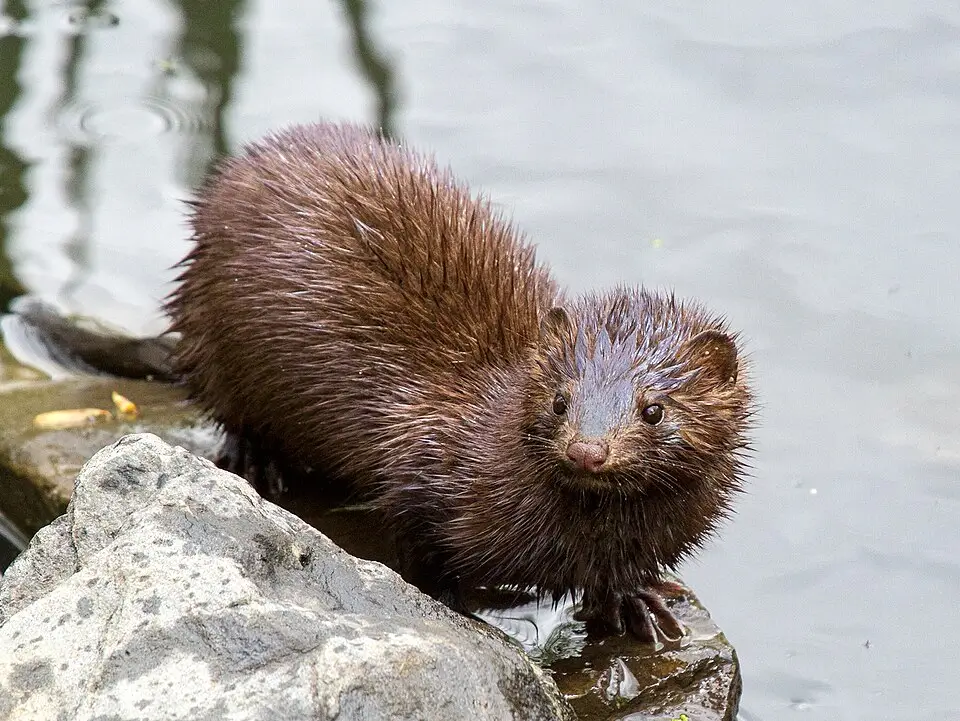
The American mink (Neogale vison) is a relatively small but powerfully built carnivore. Like all mustelids, it possesses an elongated, flexible body that allows it to pursue prey into tight burrows, beneath logs, and through dense aquatic vegetation. Its legs are short and sturdy, and its feet are partially webbed — a clear adaptation for swimming and hunting in and around water.
The mink's coat is one of its most celebrated features. Dense, soft, and naturally water-resistant, the fur ranges in color from rich dark brown to nearly black across much of the body, often with small patches of white on the chin and throat. This thick, layered pelage — consisting of both a dense underfur and longer guard hairs — provides exceptional insulation in cold water and harsh winter conditions. It is this remarkable fur that has historically made the American mink one of the most commercially valuable furbearing animals in North America.
Sexual dimorphism is pronounced in the species. Males are significantly larger than females, a characteristic common among mustelids. Adult males can weigh considerably more than females and are notably longer from nose to tail. The tail itself is moderately bushy and tapers toward the tip, adding to the animal's sleek, streamlined silhouette.
Like other members of the weasel family, American mink possess well-developed anal scent glands that produce a pungent musk. This secretion is used for communication, territory marking, and as a defense mechanism when the animal feels threatened. While not as potent or famous as that of the skunk, mink musk is nonetheless distinctive and immediately recognizable to anyone who has spent time trapping or handling these animals.
American mink are obligate carnivores with broad, opportunistic diets. They prey upon a wide variety of animals, including fish, frogs, crayfish, small mammals such as voles and muskrats, birds, and eggs. Their hunting strategy blends patience, speed, and athleticism — they are equally capable of pursuing prey in the water, on land, or in underground burrows. This dietary flexibility makes them highly successful predators across a wide range of habitats and seasons.
Reproduction in American mink follows a fascinating biological pattern. Mating typically occurs in late winter, and females experience a phenomenon known as delayed implantation, in which the fertilized egg does not immediately implant in the uterine wall. This adaptation allows the female to time the birth of her young — called kits — to coincide with favorable environmental conditions in spring. Litter sizes can vary, and the young are born helpless and entirely dependent on their mother. Kits grow rapidly and are typically weaned and beginning to hunt by late summer.
Mink are generally solitary animals outside of the breeding season. Adults maintain individual home ranges, which they patrol and defend with characteristic mustelid energy. Males typically maintain larger ranges than females, and these territories often overlap with those of several females.
Habitat & Range
The American mink is a broadly distributed species, found across much of North America from Alaska and Canada southward through the contiguous United States. Its range encompasses an impressive diversity of environments, though it is consistently associated with aquatic or semi-aquatic habitats. Rivers, streams, lakes, ponds, marshes, swamps, and coastal wetlands all serve as prime mink territory, provided there is adequate prey, cover, and denning sites.
Mink are particularly fond of riparian corridors — the lush, vegetated strips of land that border rivers and streams. These areas provide everything the mink needs: abundant prey, dense cover from predators, and easy access to water for hunting and escape. Hollow logs, root tangles, abandoned burrows of other animals, and dense vegetation along streambanks all serve as denning and resting sites.
In the southeastern United States, including the state of Georgia, American mink occupy a range of wetland habitats. Georgia's landscape is richly varied, encompassing the Blue Ridge Mountains to the north, rolling piedmont to the center, and the vast coastal plain to the south and east, where extensive river systems, blackwater swamps, and coastal marshes provide ideal mink habitat. The Okefenokee Swamp, one of the largest intact freshwater ecosystems in North America, along with the Altamaha, Savannah, and Oconee river systems, represents the kind of productive, water-rich environment where mink can thrive.
Georgia's position in the southeastern region means it sits near the southern edge of the American mink's natural range. While mink may not reach the population densities found in the colder, more northerly portions of their range, they are nonetheless a present and ecologically relevant part of Georgia's native wildlife community.
Hunting and Trapping Information
The American mink has a long and storied history as a furbearing animal in North America. Indigenous peoples valued mink pelts long before European contact, and the fur trade that developed during the colonial and frontier eras placed the mink among the most commercially significant animals on the continent. Today, both trapping and, in some regions, hunting of mink remain legal and regulated activities in many U.S. states and Canadian provinces.
Trapping is the most traditional and effective method for harvesting mink. Skilled trappers typically work along waterways, setting traps near runs, slides, or travel corridors that mink use regularly. Reading the landscape — identifying tracks, scats, and other sign — is an essential skill for successful mink trapping. Because mink are inquisitive and bold, they can be effectively attracted to well-placed sets using fish-based or glandular lures.
For those interested in pursuing mink in Georgia, it is important to consult the Georgia Department of Natural Resources (DNR) for the most current and accurate information regarding trapping and hunting regulations, licensing requirements, and season dates. Wildlife regulations are subject to change, and adhering to current guidelines is both a legal responsibility and an expression of respect for the resource. As of the time of this writing, specific season dates and license requirements for mink in Georgia were not available in our source data, and prospective trappers and hunters are strongly encouraged to verify current rules directly with the Georgia DNR before heading afield.
Across North America more broadly, mink seasons are typically held during the fall and winter months, when fur primeness is at its peak — meaning the underfur has fully developed and the guard hairs are at their longest and most lustrous. This seasonal timing aligns with the natural biology of the animal and ensures that harvested pelts are of the highest quality.
Whether pursued for the value of the pelt, the challenge of the hunt, or simply the deep satisfaction of engaging with a wild landscape in an age-old tradition, the American mink offers a rewarding pursuit for those willing to learn its ways.
Conservation
From a conservation standpoint, the American mink is currently considered a species of least concern by wildlife authorities. Its adaptability, broad range, and generalist diet have allowed it to maintain healthy populations across much of North America, even as other wildlife species have faced significant pressures from habitat loss and environmental change.
That said, mink populations — like all wildlife — are not immune to the broader forces shaping North American ecosystems. Wetland loss and degradation pose the most significant long-term threat to mink, as these animals are intimately tied to healthy aquatic habitats. Agricultural runoff, water pollution, and the draining or development of wetlands all reduce the quality and quantity of habitat available to mink and the prey species they depend upon.
Regulated trapping, when properly managed, has historically served as a complement to conservation rather than a threat to it. Wildlife managers use harvest data gathered from trappers to monitor population trends, assess habitat quality, and make informed management decisions. In this way, the trapping community plays an important and often underappreciated role in the broader conservation enterprise.
In Georgia, the state's extensive network of wildlife management areas, state parks, and conservation lands helps protect the wetland habitats that mink and many other species depend upon. Organizations dedicated to wetland conservation, clean water advocacy, and wildlife habitat enhancement all contribute to a landscape where the American mink can continue to thrive.
The American mink is, in many ways, an indicator species — a reflection of the health of the waterways and wetlands it calls home. When mink populations are robust and active, it is a sign that a watershed is clean, productive, and biologically rich. Protecting those waterways is not only good for mink, but for the full tapestry of life that depends on them.
Conclusion
The American mink is a remarkable animal — a small but formidable predator that has shaped ecosystems, cultures, and economies across the North American continent for centuries. From the cold rivers of Canada to the swampy lowlands of Georgia, Neogale vison continues to prowl the water's edge with the same boundless energy and predatory precision that has defined its kind for millennia. For wildlife enthusiasts, trappers, and conservationists alike, the American mink represents both a fascinating subject of study and a compelling reason to protect the wild, watery places that make North American landscapes so extraordinary.