Wild Turkey in Florida: A Hunter's and Naturalist's Complete Guide to Meleagris gallopavo
Few birds capture the imagination of American hunters and wildlife enthusiasts quite like the wild turkey. Bold, wary, and unmistakably North American, the wild turkey (Meleagris gallopavo) stands as one of the continent's most iconic game birds — a creature whose story weaves together natural history, cultural heritage, and the enduring tradition of fair-chase hunting. In Florida, this magnificent bird finds a welcoming home across a diverse and dynamic landscape, from sprawling pine flatwoods to ancient hardwood hammocks draped in Spanish moss.
The wild turkey holds a special place in American history. Benjamin Franklin famously — though in a private letter — expressed admiration for the turkey as a symbol of the new nation, calling it "a bird of courage." Whether or not one agrees with his sentiment, there is no denying that the wild turkey is a creature worthy of deep respect. It is sharp-eyed, quick-footed, and surprisingly cunning — traits that have made it both a challenging quarry for hunters and a fascinating subject for wildlife biologists. For Florida residents and visitors alike, the opportunity to observe or pursue wild turkeys across the Sunshine State represents one of the great outdoor privileges that this remarkable region has to offer.
Biological Traits
The wild turkey, Meleagris gallopavo, is the largest game bird native to North America and a member of the family Phasianidae, which also includes pheasants, grouse, and peacocks. It is one of only two turkey species in the world, the other being the ocellated turkey (Meleagris ocellata) of the Yucatán Peninsula.
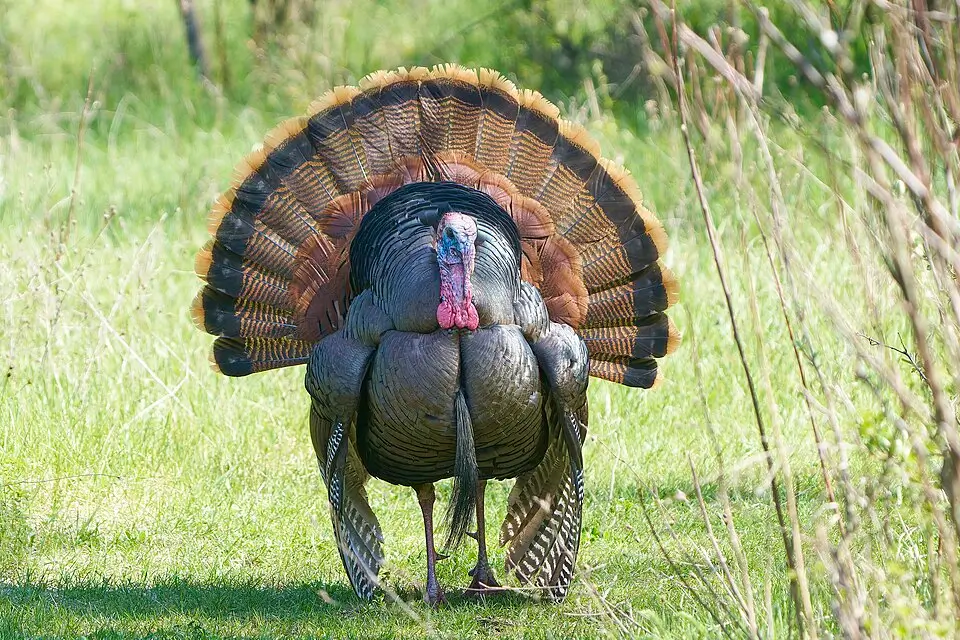
Adult wild turkeys are strikingly large birds. Males, called toms or gobblers, are significantly larger than females, known as hens — a pronounced sexual dimorphism that is common across many game bird species. Toms are adorned with iridescent plumage that shimmers with bronze, green, copper, and gold tones depending on the angle of light, making them among the most visually spectacular birds in North America. One of the gobbler's most distinctive features is the "beard" — a tuft of modified, hair-like feathers that projects from the breast. Toms also sport sharp, bony spurs on their legs, which they use during confrontations with rivals. Their bare heads and necks, which can flush brilliant red, white, and blue during displays of excitement or arousal, are equally iconic.
Hens, by contrast, are more subtly colored in mottled browns and tans — a natural adaptation that provides excellent camouflage during the critical nesting period. Both sexes have strong legs built for running, as wild turkeys are remarkably fleet-footed despite their bulk. Though they spend most of their time on the ground foraging, turkeys are capable fliers, particularly over short distances, and roost in trees at night to avoid ground predators.
Wild turkeys are highly social animals. Outside of the breeding season, they typically travel in flocks segregated by sex and age. The spring breeding season is perhaps the most dramatic time in the turkey's annual cycle. Dominant toms strut, fan their tail feathers, drum, and gobble loudly to attract hens and warn rival males. The gobble of a mature tom can carry over a mile under the right conditions, a sound that any turkey hunter or woodland wanderer is unlikely to forget once heard.
After mating, hens nest alone on the ground, laying a clutch of eggs that they incubate for approximately 28 days. The precocial poults — young turkeys — are mobile almost immediately after hatching and begin foraging alongside their mother within days. The early weeks of life are particularly hazardous for poults, and survival rates can vary considerably based on weather conditions and predator pressure. Survivors grow rapidly, and by autumn, young birds are approaching adult size.
Wild turkeys are opportunistic omnivores with a broad diet. They forage actively throughout the day, consuming acorns, seeds, berries, insects, small reptiles, and a wide variety of other plant and animal matter. Their diet shifts seasonally based on availability, and mast crops — particularly acorns — are critically important food sources in autumn and winter. This dietary flexibility is one of the key reasons that wild turkeys have proven so adaptable and have thrived across such a wide geographic range.
There are six recognized subspecies of wild turkey in North America. Florida is home to the Osceola wild turkey (Meleagris gallopavo osceola), a subspecies found exclusively on the Florida peninsula and named in honor of the famous Seminole leader. The Osceola is slightly smaller and darker than the Eastern wild turkey, with distinctive wing feathers that feature less prominent white barring. For hunters, harvesting an Osceola is a coveted achievement, as it is one of the rarest subspecies and exists only within the borders of the Sunshine State.
Habitat & Range
The wild turkey is native to North America and has one of the most extensive ranges of any large game bird on the continent. Historically, turkeys were found across much of the eastern United States, parts of the West and Southwest, and into Mexico. Following significant population declines due to habitat loss and unregulated hunting in the late 19th and early 20th centuries, robust conservation and restocking programs successfully restored wild turkey populations across much of their historic range and even expanded them into new territories.
In Florida, the wild turkey inhabits a rich mosaic of ecosystems. The state's diverse geography — encompassing pine flatwoods, cypress swamps, hardwood hammocks, oak scrub, agricultural lands, and river bottomlands — provides turkeys with a varied and productive landscape throughout the year. Florida's relatively mild climate means that turkeys do not face the extreme winter conditions that challenge populations in more northern states, allowing them to maintain good body condition year-round and potentially produce strong annual recruitment.
The Osceola wild turkey is confined to the Florida peninsula, making the state the exclusive home of this unique subspecies. This geographic restriction adds considerable significance to Florida's turkey populations from both a biological and a sporting perspective. The management of Florida's wild turkey habitat is therefore not just a matter of maintaining a popular game species — it is a matter of preserving a subspecies found nowhere else on Earth.
Turkeys thrive in areas where open foraging habitat is interspersed with mature forest for roosting and cover. Edge habitats, where forests meet fields or wetlands, are particularly productive. In Florida, working cattle ranches, planted pine forests managed with prescribed fire, and conservation lands all contribute to the habitat mosaic that supports healthy turkey populations.
Hunting Information
Wild turkey hunting is a beloved tradition in Florida and across the United States, enjoyed by hundreds of thousands of hunters each year. The pursuit of wild turkeys — particularly in the spring when gobblers are actively responding to calls — is widely regarded as one of the most engaging and skill-intensive forms of hunting available to North American sportsmen and sportswomen.
Florida's wild turkey hunting is managed by the Florida Fish and Wildlife Conservation Commission (FWC), which oversees all hunting regulations in the state. The FWC publishes a comprehensive Hunting Handbook that summarizes hunting regulations for both public and private lands, and hunters are encouraged to consult this resource carefully before heading afield. The Commission also manages hunting on Wildlife Management Areas (WMAs) across the state, with current open and closed status available through the FWC's online resources at MyFWC.com.
Florida is known for offering hunters the chance to pursue the Osceola wild turkey, one of the most sought-after trophies among those chasing the "Grand Slam" of wild turkey hunting — a feat that requires harvesting all four major North American subspecies. For many turkey hunters, the Osceola represents the most challenging and geographically exclusive of the four, making a successful Florida hunt a particularly memorable achievement.
For specific season dates, bag limits, and license requirements, hunters should consult the current Florida Hunting Handbook or visit the FWC's official website. Regulations can change from year to year as the FWC adjusts management strategies based on the latest population data and biological surveys. Staying current with regulations not only ensures legal compliance but also contributes to the long-term sustainability of Florida's turkey resource.
Conservation
The conservation story of the wild turkey is one of the most remarkable wildlife success stories in American history. By the early 20th century, unregulated hunting and widespread habitat destruction had reduced wild turkey populations to dangerously low levels across much of their range. Coordinated efforts by wildlife agencies, conservation organizations, and hunters gradually reversed this decline through regulated hunting seasons, trap-and-transfer restocking programs, and habitat restoration initiatives.
Today, wild turkey populations are healthy across much of North America, a testament to the effectiveness of science-based wildlife management. In Florida, the FWC actively monitors and manages turkey populations, utilizing tools such as regulated hunting seasons, quota hunts on specific management areas, and habitat management practices that maintain and improve the forest and grassland ecosystems turkeys depend on.
The National Wild Turkey Federation (NWTF), a nonprofit conservation organization, has played a central role in turkey conservation efforts nationwide, working alongside state agencies to restore habitat and fund research. Hunter-generated funding through license sales and excise taxes on sporting equipment — directed through the Federal Aid in Wildlife Restoration Act (Pittman-Robertson Act) — has been instrumental in supporting turkey conservation and management programs.
Habitat management remains central to the long-term health of Florida's Osceola turkey population. Practices such as prescribed burning, which maintains open understory conditions favored by turkeys, are particularly important in the pine flatwood and wiregrass ecosystems of the Florida peninsula. Private landowners, conservation organizations, and state and federal agencies all contribute to a landscape-level approach to habitat management that benefits turkeys and a broad array of other native wildlife species.
Conclusion
The wild turkey is a bird that rewards patience, skill, and respect — qualities that define the best traditions of both hunting and wildlife stewardship. In Florida, the exclusive presence of the Osceola wild turkey gives the state a unique and irreplaceable role in the broader story of this iconic North American species. Whether you are a hunter pursuing the challenge of a spring gobbler, a birder hoping for a glimpse of a strutting tom at dawn, or simply an admirer of the natural world, the wild turkey offers something truly special. Florida's forests, flatwoods, and hammocks are richer for their presence.