The American Mink: A Fierce and Fascinating Predator of North America's Waterways
Few animals embody the spirit of North America's wild wetlands quite like the American mink. Sleek, agile, and perpetually curious, this small but formidable predator has captivated hunters, trappers, naturalists, and wildlife enthusiasts for centuries. Whether slipping silently beneath the surface of a woodland stream or darting through the reeds of a marsh at dusk, the American mink (Neogale vison) is a creature of remarkable adaptability and predatory skill. Its lustrous fur, once among the most prized in the North American fur trade, made it a cornerstone of trapping culture and helped shape the economic history of an entire continent. Today, the American mink remains a fascinating subject of study for biologists and a valued quarry for trappers who appreciate its ecological role and the challenge it presents in the field.
This article takes a comprehensive look at the American mink — its biology, its preferred habitats, its range across North America including the southeastern United States, and what wildlife enthusiasts and hunters should know about engaging responsibly with this iconic species.
Biological Traits
The American mink is a member of the family Mustelidae, a diverse and successful family of carnivorous mammals that also includes weasels, otters, badgers, wolverines, and ferrets. Classified under the genus Neogale, the species was previously grouped under the genus Mustela but was reclassified based on genetic and morphological research. Its scientific name, Neogale vison, reflects its standing as a truly New World mustelid.
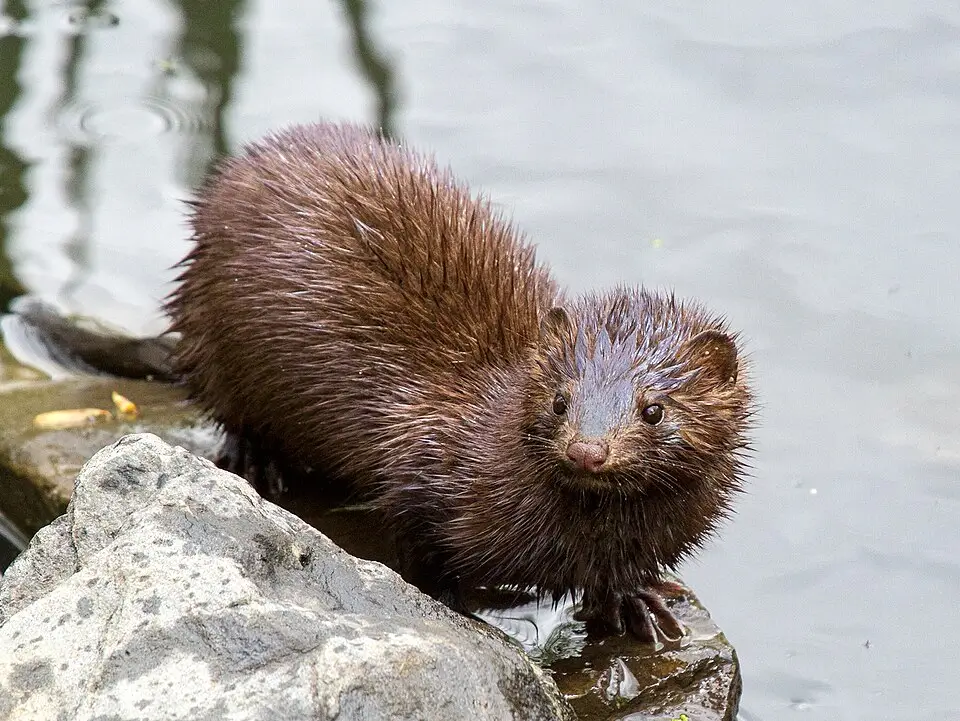
In terms of physical appearance, the American mink is immediately recognizable to those familiar with North American wildlife. It possesses a long, sinuous body, short legs, a somewhat flattened head, and a bushy tail — the classic silhouette of the mustelid family. The fur is typically a rich, dark brown to nearly black across most of the body, often with white patches on the chin and occasionally on the chest and belly. This dense, water-resistant double coat — comprising a soft, insulating underfur and a glossy outer layer of guard hairs — is perfectly engineered for life in and around water. It is precisely this coat that made the American mink one of the most commercially valuable fur-bearing animals in history.
Males are noticeably larger than females, a trait known as sexual dimorphism that is common among mustelids. Males can weigh roughly twice as much as females, and their longer bodies give them a decidedly more robust appearance. Despite their small stature relative to many game animals, mink are extraordinarily powerful for their size. They are known to take prey much larger than themselves, including rabbits, muskrats, and waterfowl, relying on explosive speed, sharp teeth, and a tenacious grip to subdue their quarry.
The American mink is a solitary and largely nocturnal or crepuscular animal, most active around dawn and dusk. Males are especially territorial and will patrol and defend substantial home ranges along waterways. Communication between individuals occurs through scent marking, using musk glands near the base of the tail to deposit a potent, musky odor — a characteristic trait of the mustelid family.
Reproduction in American mink typically occurs in late winter to early spring. After mating, females give birth to litters of kits, which are born helpless and depend entirely on their mother for the first weeks of life. By late summer, juvenile mink begin to disperse and establish their own territories. Their lifespan in the wild is relatively short, typically a few years, though individuals in captivity can live considerably longer.
As carnivores, American mink are opportunistic and highly effective hunters. Their diet is broad and varies by season and habitat, commonly including fish, crayfish, frogs, small mammals such as mice and muskrats, birds, and eggs. Their semi-aquatic lifestyle means they are equally at home hunting in the water or on land, making them among the most versatile predators in the ecosystems they inhabit.
Habitat & Range
The American mink is native to North America and is found across a vast range that encompasses most of the continent, from Canada and Alaska southward through the contiguous United States. The species is closely associated with aquatic environments and is rarely found far from a water source. Rivers, streams, lakes, ponds, marshes, swamps, and coastal wetlands are all prime mink habitat. The presence of dense riparian vegetation — shrubs, grasses, and woody debris along water margins — provides the cover and denning sites that mink require.
In the southeastern United States, mink can be found in a variety of wetland habitats. Florida, with its extraordinary abundance of wetlands, swamps, river systems, and coastal marshes, provides suitable habitat for mink in portions of the state. The Florida peninsula is one of the most ecologically diverse regions in North America, encompassing everything from freshwater river bottoms and cypress swamps to brackish tidal marshes. Such environments, rich in fish, amphibians, and small mammals, can support mink populations where conditions are right.
Florida's unique geography — bordered by the Gulf of Mexico to the west and the Atlantic Ocean to the east, with a lengthy coastline spanning approximately 1,350 miles through the contiguous United States — means the state is home to an extraordinary diversity of wetland types. While the American mink is more commonly associated with northern latitudes, the species does extend into the southeastern states, and Florida's northern and central wetland corridors can provide viable habitat.
Mink are also notably adaptable. While they prefer undisturbed, natural waterways with abundant riparian cover, they have demonstrated an ability to persist in areas near human activity, provided water quality remains adequate and prey is available. They are excellent swimmers, capable of diving and pursuing fish underwater, and their semi-webbed feet make them highly maneuverable in aquatic environments.
Hunting and Trapping Information
The American mink has a long and storied history as a valued target of the North American trapping tradition. The fur trade, which was central to the European exploration and settlement of much of the continent, placed enormous commercial value on mink pelts. Today, mink remain a sought-after species for licensed trappers who value both the challenge of pursuing this elusive animal and the quality of its fur.
In Florida, all hunting and trapping activities are regulated by the Florida Fish and Wildlife Conservation Commission (FWC), which oversees wildlife management across the state. The FWC publishes detailed regulations through its annual Hunting Handbook, which summarizes the rules for both private and public lands throughout Florida. Anyone interested in pursuing mink or any other furbearing species in Florida should consult the most current FWC regulations directly, as season dates, licensing requirements, and specific rules can vary and are updated periodically.
Because the source data available for this article does not include specific season dates or licensing requirements for mink in Florida, readers are strongly encouraged to visit the Florida Fish and Wildlife Conservation Commission's official website at MyFWC.com for the most accurate and up-to-date information. The FWC provides comprehensive resources including quota hunt dashboards, information on Wildlife Management Area (WMA) closures and updates, and public shooting range locators to support the hunting and trapping community.
For trappers targeting mink, waterways with healthy populations of fish and small mammals are the most productive areas to focus efforts. Mink are often caught using bodygrip traps or foothold traps set near water's edge, along runs, or near den sites. Like all trapping, pursuing mink requires patience, skill, and a thorough understanding of the animal's habits and habitat. Those new to mink trapping are encouraged to seek guidance from experienced trappers or local trapping associations.
Conservation
The American mink is currently listed as a species of Least Concern by the International Union for Conservation of Nature (IUCN), reflecting its broad range and generally stable populations across much of North America. The species has demonstrated considerable resilience and adaptability in the face of habitat changes, and regulated trapping has not been shown to negatively impact wild populations at a broad scale when properly managed.
Wildlife agencies such as the Florida Fish and Wildlife Conservation Commission play a vital role in monitoring furbearer populations and adjusting regulations as needed to ensure sustainable harvest levels. The FWC's science-based approach to wildlife management helps ensure that species like the American mink continue to thrive in Florida's diverse wetland ecosystems for generations to come.
It is worth noting that while the American mink is thriving in its native range, introduced mink populations in Europe and parts of South America have raised conservation concerns in those regions, where escaped or released farmed mink have become invasive. In North America, however, the species is a native and integral component of healthy riparian and wetland food webs, playing an important role as a mid-level predator that helps regulate populations of fish, amphibians, and small mammals.
Habitat conservation is ultimately the most important factor in sustaining healthy mink populations. Protecting wetlands, maintaining water quality, and preserving the riparian corridors that mink depend upon are essential priorities for wildlife managers and conservation-minded sportsmen alike.
Conclusion
The American mink is one of North America's most captivating wild animals — a sleek, powerful predator perfectly adapted to life along the water's edge. From the boreal forests of Canada to the swamps and marshes of Florida, Neogale vison occupies a vital niche in the ecosystems it calls home. For trappers, naturalists, and wildlife enthusiasts, the American mink represents both a challenging pursuit and a reminder of the richness of North America's native fauna. By supporting sound wildlife management, respecting regulations, and advocating for wetland conservation, sportsmen and women can help ensure that this remarkable animal continues to thrive across its range.