Wild Boar in Florida: A Complete Guide to Sus scrofa
Few animals capture the imagination of hunters and wildlife enthusiasts quite like the wild boar. Powerful, intelligent, and remarkably adaptable, the wild boar (Sus scrofa) is one of the most widely distributed large mammals on Earth. In Florida, these impressive animals have established a thriving presence, making the Sunshine State one of the premier destinations in the United States for pursuing this challenging and rewarding quarry. Whether you are an experienced hunter looking for your next adventure or simply a wildlife lover curious about the natural world, the wild boar's story is one well worth exploring.
The wild boar has a history intertwined with human civilization stretching back thousands of years. As the wild ancestor of the domestic pig, Sus scrofa has roamed forests, wetlands, and grasslands across Europe, Asia, and Africa since long before recorded history. In North America, including Florida, wild boar populations are a combination of escaped domestic pigs, deliberately introduced Eurasian wild boar, and hybrids of the two. Over generations, feral populations have reverted to many of the physical characteristics of their wild ancestors, developing coarser coats, longer snouts, and the muscular, wedge-shaped build that makes them so recognizable in the field.
Biological Traits
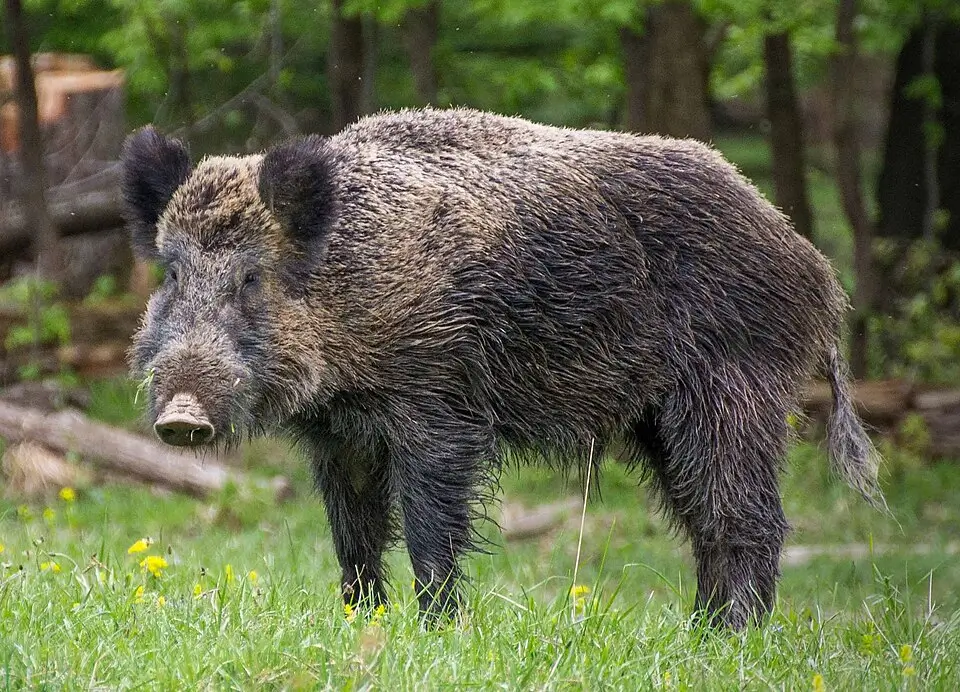
The wild boar is a member of the family Suidae, within the order Artiodactyla — the even-toed ungulates. Adult wild boar are robust, heavily built animals with a distinctively powerful front end that tapers toward the hindquarters, creating the classic wedge-shaped profile. Their heads are large and elongated, built for rooting through soil and vegetation in search of food. Both males and females possess tusks, though those of mature males — called boars — are significantly larger and more curved, sometimes growing several inches in length. These tusks are not merely decorative; they serve as serious weapons in competition with rival males and as defense against predators.
Wild boar are covered in coarse, bristly hair that can range in color from dark brown to gray and black, often with a grizzled appearance due to lighter banding on individual hairs. Young piglets are born with distinctive reddish-brown coats marked with lighter longitudinal stripes, a pattern that provides excellent camouflage in the dappled light of their natural habitat. These stripes fade as the animals mature, typically disappearing within the first few months of life.
In terms of size, wild boar exhibit significant variation depending on habitat quality, geographic location, and available food resources. Adult males are generally larger than females, a phenomenon known as sexual dimorphism. Males can reach impressive body weights, and their muscular build, combined with a thick layer of cartilaginous tissue over the shoulders known as the "shield," provides protection during combat with other males.
Wild boar are omnivores with a remarkably broad diet. They use their tough, mobile snouts and powerful neck muscles to root through soil, consuming roots, tubers, bulbs, fungi, invertebrates, small vertebrates, carrion, and a wide variety of plant matter including fruits, nuts, and agricultural crops. This dietary flexibility is one of the key reasons for the species' extraordinary success as an invasive species across much of the world. In Florida, the abundance of roots, tubers, insects, and mast from native trees provides year-round food resources.
Reproduction in wild boar is prolific, which contributes significantly to the challenge of managing their populations. Females, known as sows, typically reach sexual maturity within their first year of life under favorable conditions. Gestation lasts approximately 115 days, and sows can produce multiple litters per year, with each litter containing anywhere from four to twelve piglets. This high reproductive rate means that wild boar populations can rebound quickly even after significant hunting pressure, making sustained management efforts essential.
Wild boar are primarily crepuscular and nocturnal animals, meaning they are most active during the hours around dawn and dusk and throughout the night. During the heat of the day, particularly in Florida's warm climate, they tend to seek shade and cooler areas near water. They are highly social animals, typically living in groups called sounders, which generally consist of one or more adult sows and their offspring. Mature boars tend to be more solitary outside of the breeding season.
Habitat & Range
Sus scrofa is arguably the most widely distributed wild ungulate on the planet. The species' native range encompasses a vast swath of territory from Western Europe and North Africa through Central Asia to the Russian Far East, Japan, and the Indonesian island of Sumatra. Through human introduction — both intentional and accidental — wild boar have established feral populations on every continent except Antarctica.
In Florida, wild boar thrive across a diverse range of habitats, which is a testament to their extraordinary adaptability. The state's varied landscape — encompassing pine flatwoods, cypress swamps, hardwood hammocks, oak scrub, coastal marshes, and agricultural lands — provides ample opportunity for wild boar to find food, water, and shelter throughout the year. Florida's subtropical climate, with its mild winters and abundant rainfall, supports lush vegetation and diverse food resources that allow boar populations to remain active and productive year-round.
Water is a particularly important habitat feature for wild boar. Like domestic pigs, wild boar do not have functional sweat glands and rely on wallowing in mud and water to regulate their body temperature. Florida's abundant rivers, lakes, swamps, and seasonal wetlands provide ideal wallowing sites and serve as reliable water sources, particularly during the hot summer months. Areas near water sources are often productive locations for hunters and wildlife observers alike.
The broader southeastern United States context is significant here. Florida sits within the Southeastern region, bordered by Alabama, Georgia, the Gulf of Mexico, and the Atlantic Ocean. This geographic position means the state shares ecological characteristics — and wild boar populations — with neighboring states, as these animals roam freely across state lines. The peninsula of Florida, with approximately 1,350 miles of coastline and a diverse interior landscape, offers some of the most varied wild boar habitat in the eastern United States.
Hunting Information
Wild boar hunting in Florida is governed by the Florida Fish and Wildlife Conservation Commission (FWC), which provides comprehensive regulations through its annual Hunting Handbook. Hunters interested in pursuing wild boar in Florida should consult the FWC's official resources at MyFWC.com for the most current and accurate regulatory information, including any updates to season dates, licensing requirements, and Wildlife Management Area (WMA) statuses.
The FWC maintains an active and detailed system for managing public hunting lands across Florida. The agency's WMA Closures and Updates system allows hunters to find the open or closed status of FWC-managed areas, offices, and facilities in real time — an invaluable tool for planning any hunting trip. The FWC also offers Quota Hunt Dashboards, designed to help hunters plan their next quota hunt with up-to-date information on available opportunities across the state.
Wild boar hunting in Florida is widely regarded as one of the most accessible and exciting large-game experiences available to hunters. The animals are present in high numbers across much of the state, and on many private lands, hunting can take place year-round. The combination of Florida's warm weather, diverse terrain, and abundant boar populations makes the state a destination for hunters from across the country and around the world.
Hunting methods for wild boar are varied and suited to different preferences and skill levels. Still hunting and spot-and-stalk approaches can be highly effective in open habitats and agricultural areas. Stand hunting near water sources, food plots, or well-used game trails is a popular and productive method. Dogs are a traditional and widely practiced method of hunting wild boar in the South, with well-trained hounds locating and baying the animal until the hunter can move in for a shot or a close-range knife harvest. Bowhunters also pursue wild boar with considerable success.
Hunters are encouraged to always verify current regulations with the FWC before heading afield, as rules regarding licensing, permitted methods, and specific area closures are subject to change. Public shooting ranges managed by the FWC are available across the state and serve as excellent resources for hunters looking to practice and prepare before the season.
Conservation
The wild boar presents an interesting and nuanced conservation picture. On one hand, the species itself is abundant and in no danger of extinction globally, with the International Union for Conservation of Nature (IUCN) classifying Sus scrofa as a species of Least Concern. On the other hand, feral wild boar populations in Florida and across the United States are recognized as a significant ecological challenge.
Wild boar rooting behavior, while natural and essential to the animal's survival, can cause substantial disruption to native plant communities and soil structure. Their omnivorous diet can impact ground-nesting birds, native reptiles, and small mammals. In agricultural settings, crop damage from foraging boar can be considerable.
Regulated hunting plays a meaningful and positive role in managing wild boar populations and reducing their ecological footprint. By participating in legal, regulated hunting programs administered by agencies like the FWC, hunters contribute directly to the sustainable management of this species in Florida. Hunting also generates revenue through license and permit fees that fund broader wildlife conservation programs benefiting a wide range of native species.
The FWC's approach to wild boar management reflects a commitment to balancing the interests of hunters, landowners, agricultural producers, and native ecosystems. Through tools like WMA management, quota hunts, and up-to-date regulations, the Commission works to ensure that wild boar hunting remains a sustainable, enjoyable, and ecologically responsible activity in the state of Florida.
Wild boar hunting is, at its core, a tradition that connects people to the land and to one of the most remarkable wild animals in North America. In Florida, that tradition is alive and well — and the opportunities have never been better.