White-Tailed Deer in Florida: A Complete Guide to Odocoileus virginianus
Few animals capture the spirit of American wildlife quite like the white-tailed deer. Graceful, adaptable, and deeply woven into the cultural fabric of hunting traditions across the continent, the white-tailed deer (Odocoileus virginianus) is one of the most recognized and celebrated game animals in North America. From the hardwood forests of the Northeast to the palmetto flatlands of the Deep South, this remarkable species has demonstrated an extraordinary ability to thrive in diverse environments — and nowhere is that adaptability more on display than in the state of Florida.
Florida, with its unique blend of subtropical climate, expansive wetlands, longleaf pine forests, and coastal marshes, provides a rich and varied landscape for white-tailed deer populations. Whether you are a seasoned hunter, a wildlife enthusiast, or simply someone who has caught a glimpse of a white flag disappearing into the brush at dawn, understanding this species more deeply only deepens the appreciation for what is truly one of North America's most iconic wild animals.
This article explores the biology, habitat, hunting traditions, and conservation status of the white-tailed deer, with particular attention to its presence and significance in the state of Florida.
Biological Traits
The white-tailed deer, Odocoileus virginianus, belongs to the family Cervidae — the same family that includes elk, moose, and caribou. The species name virginianus reflects the fact that early scientific specimens were collected from the Virginia region of North America, though the species ranges far beyond that original description.
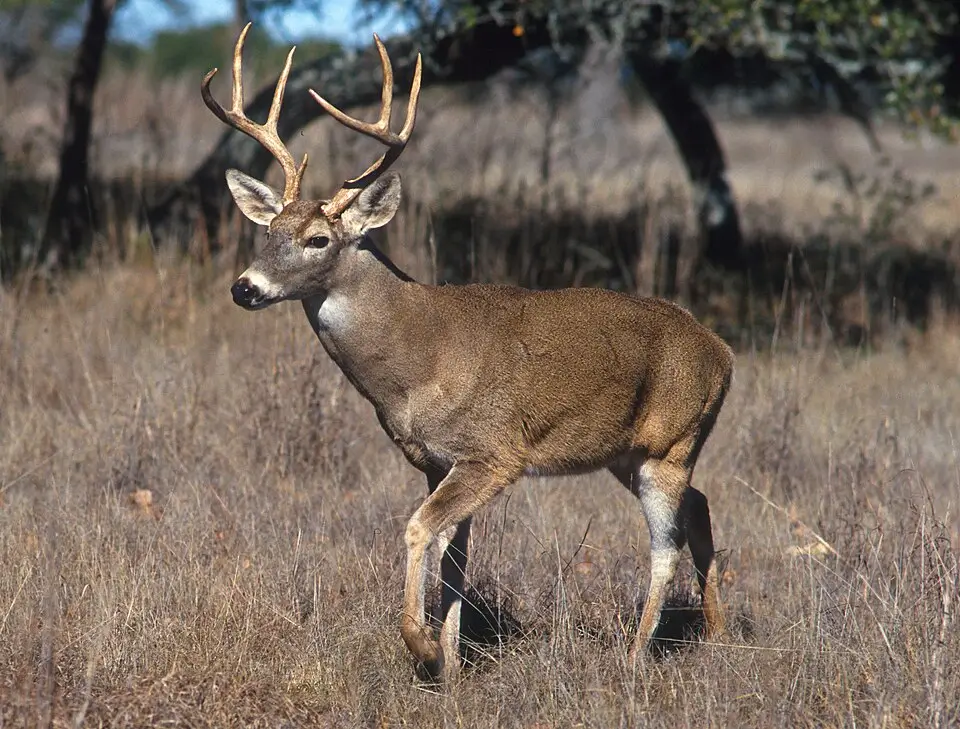
One of the most distinctive features of this animal is, of course, its namesake tail. When startled or alarmed, white-tailed deer raise their tails to expose the bright white underside, a behavior believed to serve as both a warning signal to other deer and a means of confusing predators during flight. This "flagging" behavior is one of the most recognizable sights in North American wildlife.
White-tailed deer are medium to large-sized ungulates, with body size varying considerably across their range. As a general rule, deer in northern climates tend to be larger than those found in southern states like Florida, a phenomenon consistent with Bergmann's Rule, which holds that animals in colder climates tend to have larger body mass to conserve heat. Florida white-tailed deer, particularly those found in the southern portions of the state, are often notably smaller in frame compared to their northern counterparts, though they are no less impressive as wild animals.
The coat of a white-tailed deer changes with the seasons. During warmer months, their fur takes on a reddish-brown hue, while in cooler months it transitions to a thicker, grayer coat that provides better insulation. Fawns are born with a spotted coat — a natural camouflage that helps them blend into dappled forest floors during their most vulnerable early weeks of life.
Antlers are perhaps the most celebrated physical feature of male deer, known as bucks. Antlers are true bone, grown and shed annually, and their development is strongly influenced by age, nutrition, and genetics. Bucks typically begin growing antlers in spring, with the growth stimulated by increasing daylight hours. During the growing phase, antlers are covered in a soft, vascular tissue called velvet, which supplies the blood flow necessary for rapid bone development. By late summer or early fall, the velvet dries and is shed — often rubbed off against trees or brush — revealing the hardened, polished antlers that bucks carry through the breeding season.
White-tailed deer are herbivores with a highly varied diet. They are browsers rather than grazers, meaning they prefer to feed on leaves, twigs, shrubs, acorns, fruits, and forbs rather than grasses alone. In Florida's diverse landscape, deer have access to an impressive variety of food sources throughout the year, including saw palmetto berries, mushrooms, and agricultural crops where available.
The breeding season, known as the rut, is one of the most dramatic periods in a white-tailed deer's annual cycle. During the rut, bucks become highly active, traveling widely in search of receptive does, engaging in sparring matches with rival males, and making scrapes and rubs to mark their territory and communicate their presence. The timing of the rut varies across the country, and in Florida, the peak breeding activity tends to occur later than in northern states due to the subtropical climate and its influence on photoperiod cues.
Does typically give birth to one or two fawns after a gestation period of approximately 200 days. Fawns are able to stand and walk within hours of birth, though they spend their first weeks hidden in dense vegetation while their mothers feed nearby, returning periodically to nurse.
Habitat & Range
The white-tailed deer holds the distinction of being the most widely distributed wild ungulate in the Western Hemisphere. Its range extends from southern Canada through the United States, into Mexico, Central America, and parts of South America. This extraordinary range is a testament to the species' remarkable adaptability.
In Florida, white-tailed deer occupy a wide variety of habitat types that reflect the state's ecological diversity. Florida is a geographically unique state, occupying a long peninsula bordered by the Gulf of Mexico to the west and the Atlantic Ocean to the east, with approximately 1,350 miles of coastline in the contiguous United States — the longest of any state. This peninsular geography creates a wide gradient of habitats, from the temperate hardwood forests of the Panhandle to the subtropical prairies and swamps of South Florida.
White-tailed deer in Florida can be found in longleaf pine and wiregrass ecosystems, cypress swamps, oak hammocks, flatwoods, scrublands, and agricultural edge habitats. The diversity of these environments supports healthy deer populations across much of the state, with deer demonstrating a consistent preference for areas that offer a combination of dense cover for security and open areas or forest edges rich in food resources.
The presence of water is rarely a limiting factor in Florida, given the state's abundance of lakes, rivers, wetlands, and seasonal ponds. This availability of water, combined with the mild climate that allows year-round food availability, contributes to stable deer populations throughout Florida's landscape.
Hunting Information
White-tailed deer hunting is one of the most popular outdoor traditions in Florida, drawing hunters from across the state and beyond each season. The Florida Fish and Wildlife Conservation Commission (FWC) oversees hunting regulations in the state, publishing guidelines through the official Hunting Handbook, which summarizes regulations for both private and public lands.
Hunters in Florida have access to hunting opportunities on Wildlife Management Areas (WMAs) managed by the FWC, as well as private lands. The FWC also administers a quota hunt program, which allows hunters to plan and participate in managed hunts on specific public lands. The FWC has developed quota hunt dashboards to assist hunters in planning their next quota hunt experience.
It is important for all hunters to stay informed about current season dates, licensing requirements, and any WMA closures or updates. The FWC maintains up-to-date information on open and closed statuses of managed areas through its official online resources. New season dates for the 2026–2027 hunting season have been announced, and hunters are encouraged to consult the FWC's official resources for the most current and accurate information.
Florida also offers access to FWC-managed public shooting ranges, providing hunters and sport shooters with convenient locations to practice their marksmanship skills before heading into the field. Preparation and ethical marksmanship are cornerstones of the responsible hunting tradition that Florida's wildlife managers actively promote.
Deer hunting in Florida is more than a recreational activity — it is a deeply rooted cultural tradition that connects generations of families to the land, promotes wildlife stewardship, and plays an important role in managing deer populations to sustainable levels.
Conservation
The white-tailed deer is, by any measure, a conservation success story. In the early twentieth century, market hunting and habitat loss had reduced deer populations across much of North America to alarmingly low numbers. Through the efforts of conservation-minded hunters, wildlife managers, and state and federal agencies, populations were carefully rebuilt through regulated hunting seasons, habitat restoration, and science-based management practices.
Today, the white-tailed deer is thriving across its range, including throughout Florida. The North American Model of Wildlife Conservation — a set of principles that treats wildlife as a public resource managed for the benefit of all citizens — has been central to this recovery. Hunting license fees and excise taxes on firearms and ammunition, collected through programs like the Federal Aid in Wildlife Restoration Act (also known as the Pittman-Robertson Act), have generated billions of dollars for wildlife conservation and habitat management across the country.
In Florida, the FWC plays a central role in monitoring and managing white-tailed deer populations. Through ongoing research, population surveys, and adaptive management of hunting seasons and bag limits, Florida's wildlife managers work to ensure that deer populations remain healthy and sustainable for future generations of both wildlife and hunters.
Conservation of white-tailed deer habitat in Florida also benefits a wide array of other species. The pine flatwoods, oak hammocks, and wetland corridors that deer call home are shared by a rich community of Florida wildlife, including wild turkey, black bear, gopher tortoises, and numerous bird species. Managing these landscapes for deer inherently supports broader biodiversity across the state's ecosystems.
The white-tailed deer's ability to inspire public interest in the outdoors, generate conservation funding through regulated hunting, and serve as a flagship species for habitat management makes it one of the most ecologically and culturally valuable animals in Florida's natural heritage.
Conclusion
The white-tailed deer is far more than a game animal — it is a symbol of resilience, natural beauty, and the enduring relationship between people and the wild places they cherish. In Florida, a state renowned for its extraordinary biodiversity and unique landscapes, the white-tailed deer occupies a special place in the hearts of hunters, wildlife observers, and conservationists alike. Understanding and appreciating this remarkable species is the first step toward ensuring that it continues to thrive for generations to come.