The Striped Skunk (Mephitis mephitis): A Complete Guide for Wildlife Enthusiasts and Hunters in Florida
Few animals in North America are as instantly recognizable — or as universally respected — as the striped skunk (Mephitis mephitis). With its bold black-and-white coloration and legendary chemical defense, this remarkable mammal has carved out a unique place in both the natural world and human culture. Found across much of the continent, including throughout the state of Florida, the striped skunk is far more than just a punchline in popular culture. It is a fascinating, ecologically valuable species that plays a meaningful role in the environments it inhabits.
For outdoor enthusiasts, hunters, and wildlife watchers in Florida, understanding the striped skunk offers a deeper appreciation for the Sunshine State's surprisingly diverse mammalian fauna. Florida, with its remarkable mix of subtropical wetlands, upland pine forests, coastal scrub, and agricultural landscapes, provides a rich and varied environment where this adaptable creature thrives. Whether you are tracking game through a Wildlife Management Area, managing land for wildlife, or simply curious about the animals living in your backyard, the striped skunk deserves your attention and respect.
This guide covers the biology, habitat preferences, behavior, and general hunting and wildlife management context for the striped skunk in Florida, drawing on available scientific knowledge to give you a thorough understanding of this iconic North American mammal.
Biological Traits
The striped skunk, Mephitis mephitis, belongs to the family Mephitidae — the skunk family — and is the most widely distributed and commonly encountered skunk species in North America. Its scientific name, Mephitis, is derived from Latin, meaning "noxious exhalation" or "bad odor," a fitting nod to the animal's most famous defensive trait.
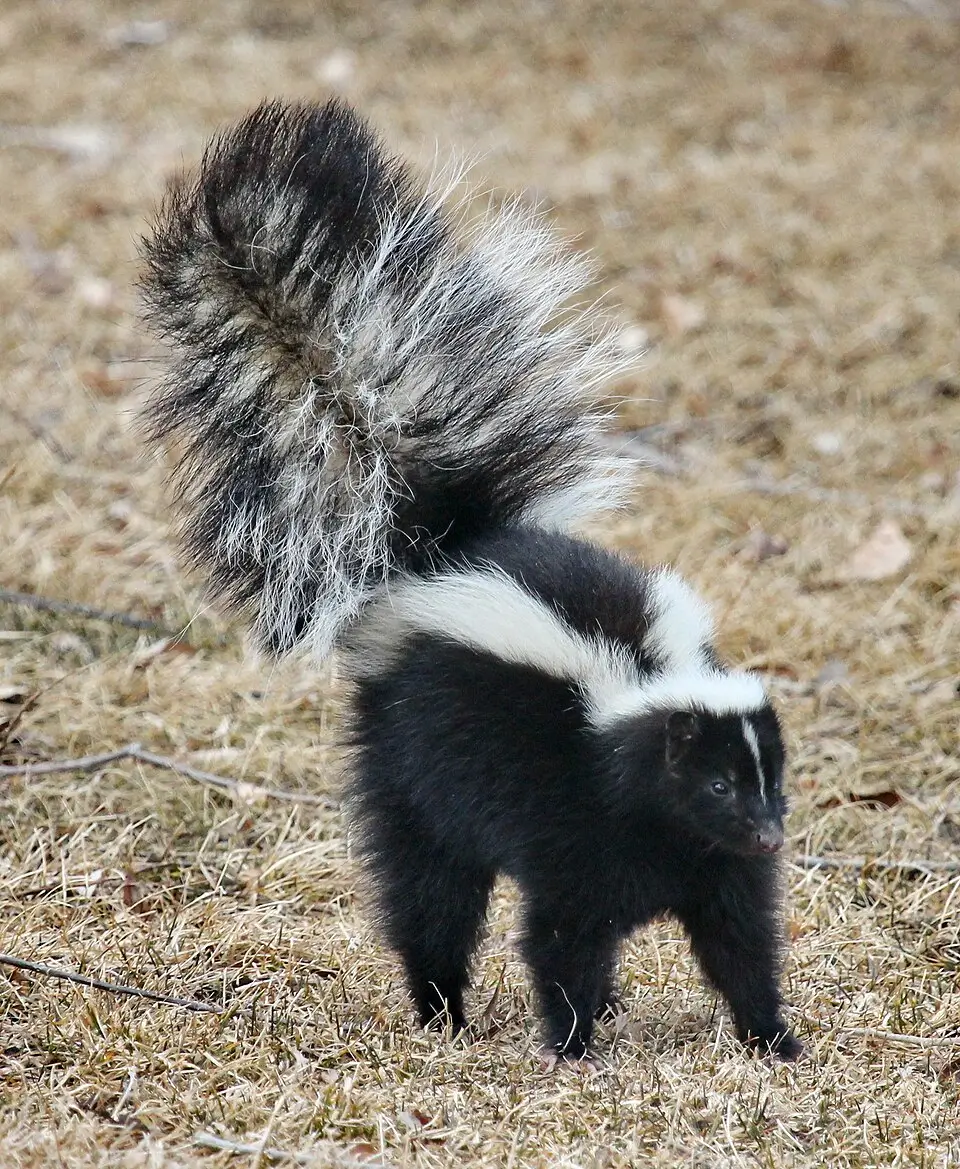
In terms of physical appearance, the striped skunk is a medium-sized mammal with a robust, stocky body. It features a predominantly glossy black coat with a prominent white stripe that typically runs from the top of the head down the back, often splitting into two stripes along the body toward the tail. The large, bushy tail is also often tipped or interspersed with white fur. Individual stripe patterns can vary considerably from one animal to the next, making each skunk's markings subtly unique.
Adult striped skunks generally weigh between 2.5 and 14 pounds, though the average falls somewhere in the middle of that range. Males tend to be somewhat larger than females. Their bodies are well-suited to a life of digging and foraging — they have strong, compact forelimbs equipped with long claws that are ideal for rooting through soil and debris in search of food.
The striped skunk is an omnivore with a highly varied diet. It readily consumes insects, grubs, earthworms, small mammals, eggs, berries, seeds, carrion, and even garbage when living near human settlements. This dietary flexibility is one of the key reasons the species is so successful across such a wide range of environments. In Florida, the warm climate and long growing season mean that food sources remain available year-round, which likely contributes to the species' stable presence in the state.
One of the most distinctive and well-known features of the striped skunk is, of course, its chemical defense system. Skunks possess a pair of highly developed anal scent glands capable of spraying a sulfur-containing chemical compound — primarily composed of thiols — that produces an intensely pungent odor. Before spraying, a skunk will typically give clear warning signals, including stamping its front feet, arching its back, raising its tail, and hissing. These warnings are well worth heeding, as the spray can reach distances of up to 10 feet or more and cause significant temporary discomfort, including eye irritation.
Despite their famous defense, skunks are generally docile animals that prefer to avoid conflict. Their bold coloration serves as an aposematic signal — a visual warning to potential predators that communicates the risk of engaging with them. Predators that have learned this lesson, such as experienced foxes or coyotes, typically give skunks a wide berth. The great horned owl (Bubo virginianus) is one of the few natural predators known to regularly prey on skunks, likely because birds have a comparatively limited sense of smell.
Striped skunks are primarily nocturnal, emerging after dusk to forage and returning to their dens before dawn. They are generally solitary animals, though females may share communal dens, particularly during colder months. While striped skunks do not truly hibernate, they can enter periods of torpor during cold weather, relying on accumulated fat reserves to survive. In Florida's mild climate, however, this behavior is much less pronounced than in northern populations, and skunks in the state remain active throughout most or all of the year.
Reproduction in striped skunks follows a relatively consistent annual pattern. Mating typically occurs in late winter or early spring, and after a gestation period of approximately 59 to 77 days, females give birth to litters that can range from two to ten kits. Young skunks are born blind and helpless but develop quickly, opening their eyes within a few weeks and beginning to follow their mother on foraging trips not long after. By late summer or early fall, the young skunks are typically independent and dispersing to establish their own home ranges.
Striped skunks have relatively small home ranges and are not known for long-distance movements. They tend to be creatures of habit, returning to the same dens and foraging areas repeatedly. Dens may be located in burrows dug by other animals, beneath structures such as porches and outbuildings, in hollow logs, or in dense vegetation.
Habitat & Range
The striped skunk boasts one of the most extensive ranges of any North American mammal, occurring across virtually all of the contiguous United States, much of Canada, and into northern Mexico. Within this enormous range, the species demonstrates remarkable habitat adaptability. It is found in grasslands, forests, agricultural areas, suburban neighborhoods, wetland edges, and semi-arid scrublands.
In Florida specifically, the striped skunk occupies a wide variety of natural and human-modified habitats. The state's geographic diversity — stretching from the temperate uplands of the Panhandle to the subtropical tip of the peninsula — provides the skunk with numerous ecological niches to exploit. Florida's extensive network of pine flatwoods, oak hammocks, wetland margins, and rural agricultural areas all provide suitable skunk habitat. The species is also regularly encountered in suburban and even urban settings, where it takes advantage of the food resources and shelter opportunities that human development inadvertently provides.
Florida's position in the southeastern United States means that it hosts populations of striped skunks that are year-round residents, not subject to the same seasonal pressures that affect populations further north. The state's long coastline, expansive interior, and network of public lands managed by the Florida Fish and Wildlife Conservation Commission (FWC) all contribute to a landscape where skunks can thrive alongside a rich diversity of other wildlife.
Hunting Information
In Florida, hunting regulations are developed and enforced by the Florida Fish and Wildlife Conservation Commission (FWC), which manages the state's wildlife resources and oversees hunting seasons, licensing requirements, and access to Wildlife Management Areas (WMAs) across the state. Florida offers a wealth of public hunting opportunities through its extensive WMA system, and hunters are encouraged to consult the FWC's annual Hunting Handbook for the most current and complete regulatory information.
Regarding the striped skunk specifically, prospective hunters and trappers in Florida should consult directly with the FWC for any applicable season dates, licensing requirements, and legal take methods, as specific regulations can vary and are subject to change. The FWC's official hunting resources, including the Hunting Handbook and the MyFWC.com website, are the authoritative sources for this information. Florida hunters should always verify current regulations before pursuing any game or furbearer species.
It is worth noting that skunks are classified as furbearers in many states, and their management reflects both their ecological role and their historical value in the fur trade. In practical hunting and trapping contexts, skunks are generally taken as part of broader furbearer management programs rather than as a primary target species. Landowners dealing with nuisance skunks should also consult with the FWC regarding appropriate management options.
Conservation
The striped skunk is currently listed as a species of Least Concern by the International Union for Conservation of Nature (IUCN), reflecting its wide distribution and stable population status across North America. Its adaptability to a broad range of habitats, combined with its reproductive capacity and dietary flexibility, make it a resilient species that has generally fared well even in the face of habitat modification and human development.
That said, skunks do face certain pressures that wildlife managers and enthusiasts should be aware of. Vehicle strikes are one of the most significant sources of mortality for skunks, particularly in areas where development has fragmented natural habitats and increased road density. Additionally, striped skunks are among the primary wildlife reservoirs for rabies in North America, which makes them an important species in public health monitoring and wildlife disease management programs. Responsible wildlife managers and the public alike should be aware of the risks associated with handling or closely approaching wild skunks.
In Florida, the FWC plays a central role in monitoring and managing furbearer populations, including the striped skunk. Ongoing habitat conservation efforts, including the protection and management of WMAs and other public lands, support healthy skunk populations alongside the many other species that share Florida's diverse landscapes. Responsible hunting and trapping, conducted in accordance with FWC regulations, contributes to the sustainable management of furbearer populations and helps maintain ecological balance.
For wildlife enthusiasts, the striped skunk serves as a reminder of nature's creativity and resilience. A species that has turned an unusual chemical defense into one of the most effective survival strategies in the animal kingdom, the striped skunk earns its place as one of Florida's most interesting and ecologically important mammals.