Snowshoe Hare (Lepus americanus): A Complete Guide to North America's Seasonal Chameleon
Few animals in North America capture the imagination quite like the snowshoe hare (Lepus americanus). Known for its remarkable ability to transform its coat from rich brown to brilliant white as winter sets in, this medium-sized lagomorph is one of the continent's most fascinating and ecologically significant mammals. Whether you are a seasoned hunter, a wildlife enthusiast, or simply someone curious about the natural world, the snowshoe hare offers an endlessly compelling subject for study and pursuit.
The snowshoe hare earns its common name from two distinctive physical features: its oversized hind feet, which function like natural snowshoes by distributing the animal's weight across soft snow, and its seasonal white winter coat, which provides exceptional camouflage against snowy landscapes. These adaptations are not merely cosmetic — they are the product of millions of years of evolutionary pressure, fine-tuned to help this species survive in some of North America's most demanding environments.
Beyond its physical appeal, the snowshoe hare plays a pivotal role in northern ecosystems. It sits at the heart of one of the most well-documented predator-prey cycles in ecological science, a relationship with the Canada lynx that has been studied for well over a century. Understanding the snowshoe hare is, in many ways, understanding the pulse of the boreal forest itself.
Biological Traits
The snowshoe hare belongs to the family Leporidae and the order Lagomorpha, placing it in the company of rabbits, pikas, and other hares. As a member of the genus Lepus, it shares characteristics with other true hares, including being born fully furred with open eyes — a trait that distinguishes hares from rabbits, whose young are born hairless and helpless.
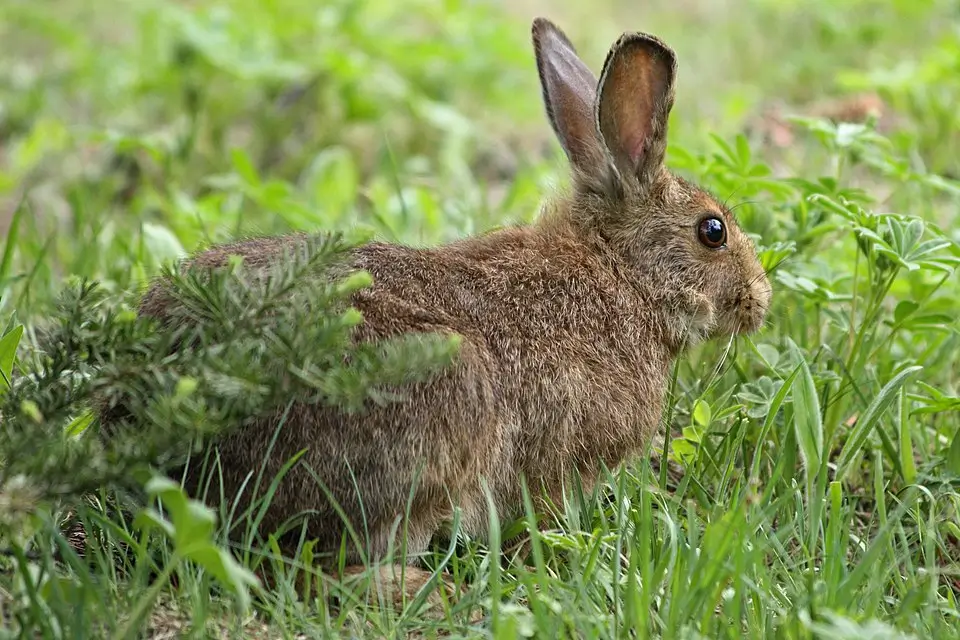
One of the most celebrated biological traits of the snowshoe hare is its seasonal coat change, known as molting or seasonal pelage transition. Driven primarily by changes in photoperiod — the length of daylight — rather than temperature alone, the hare's coat shifts twice a year. During the warmer months, its fur is a tawny, grayish-brown that blends seamlessly with the forest floor, leaf litter, and undergrowth. As days grow shorter in autumn, specialized pigment cells in the hair follicles respond to hormonal cues, gradually replacing the brown fur with white winter coat that provides near-perfect camouflage against snow. Come spring, the process reverses, restoring the brown summer pelage.
The hare's enlarged hind feet are another defining biological feature. The feet are heavily furred on the undersides, providing both insulation against frozen ground and increased surface area that allows the animal to move with surprising speed and agility across deep, soft snow — terrain that would slow or trap many of its predators. This adaptation gives the snowshoe hare a genuine survival edge during the long northern winters.
Snowshoe hares are herbivores, feeding on a wide variety of plant material. During summer months, their diet consists of grasses, forbs, clover, and leafy vegetation. In winter, when such food sources are buried or dormant, hares shift to a diet of woody browse — the twigs, buds, and bark of shrubs and trees such as willows, aspens, and birches. This dietary flexibility is essential to winter survival.
Like all lagomorphs, snowshoe hares practice a digestive behavior known as cecotrophy, in which they re-ingest soft, nutrient-rich fecal pellets directly from the anus. This allows them to extract maximum nutrition from their fibrous plant diet — a critical advantage when food quality is low during winter months.
Reproduction in snowshoe hares is prolific. Females, called does, typically produce multiple litters per year. The young, called leverets, are precocial — born with fur, open eyes, and the ability to move about shortly after birth. This reproductive strategy helps sustain population numbers even under significant predation pressure.
Habitat & Range
The snowshoe hare is primarily a creature of northern and montane North America. Its range extends across the boreal forests of Canada and Alaska, dipping southward along the Rocky Mountains, the Appalachians, and other mountain ranges where suitable habitat exists at higher elevations. The species thrives wherever dense coniferous and mixed forests provide both cover and adequate food supply.
Ideal snowshoe hare habitat typically features dense thickets of shrubs and young trees that offer both protection from predators and reliable food sources. Forest edges, wetland margins, brushy clearings, and regenerating cut-over areas are all classic snowshoe hare haunts. The species prefers areas where overhead canopy provides some protection from aerial predators, while dense lateral cover allows quick escape from ground-based threats.
Because the snowshoe hare is so tightly adapted to snowy, northern climates, its natural range does not extend into the southeastern United States. Florida, with its subtropical climate, sandy soils, palmetto scrubs, and coastal wetlands, lies well outside the natural habitat of Lepus americanus. The warm, essentially snow-free environment of Florida simply does not provide the ecological conditions that snowshoe hares require. Hunters and wildlife observers in Florida will not encounter snowshoe hares in the wild, as the species is not native to or naturalized in that state.
Florida does, of course, have its own rich hunting traditions and a remarkable diversity of native wildlife, all managed by the Florida Fish and Wildlife Conservation Commission (FWC). The FWC oversees hunting seasons, licensing requirements, and wildlife management areas across the state, offering Florida residents and visitors a wide range of hunting opportunities for species that are genuinely at home in the Sunshine State's unique ecosystems.
Hunting Information
The snowshoe hare is a beloved quarry for small game hunters across its northern range, valued for the challenge it presents, the skill it demands, and the table fare it provides. Hunters pursuing snowshoe hares typically operate in boreal forests, spruce thickets, alder runs, and willow patches — the dense, brushy terrain that hares favor throughout their range in Canada and the northern United States.
Traditional methods of hunting snowshoe hares include still hunting — slowly and quietly moving through likely habitat — as well as the use of beagles or other small hounds that push hares in wide circles back toward waiting hunters. Hares have a natural tendency to circle back to familiar territory when pursued, making the combination of hounds and patient hunters a time-honored and effective strategy.
Because snowshoe hares turn white in winter, spot-and-stalk hunting can be productive during those transitional periods in autumn and spring when the hare's coat does not perfectly match its surroundings — when a white hare stands against brown leaves, or a brown hare contrasts with fresh snow. Hunters who learn to read these seasonal mismatches gain a real advantage in the field.
Snowshoe hare meat is lean, mild, and flavorful, and has long been a valued food source for Indigenous peoples and settlers across northern North America. The meat is versatile in the kitchen, lending itself well to stews, braises, and roasts.
Specific season dates, bag limits, licensing requirements, and regulations for snowshoe hare hunting vary by province, territory, and state. Hunters should always consult the wildlife management authority in their target jurisdiction before heading afield. As noted above, snowshoe hares are not present in Florida, and Florida hunting regulations through the FWC do not apply to this species. Hunters interested in pursuing snowshoe hares should look to the northern states and Canadian provinces where the species is abundant and hunting is actively managed.
Conservation
The snowshoe hare is perhaps best known in the scientific community for its dramatic population cycles. Hare populations across the boreal forest undergo well-documented boom-and-bust cycles, typically peaking roughly every eight to eleven years before crashing sharply. These cycles have profound effects on the entire ecosystem, as predators such as the Canada lynx, great horned owl, red fox, coyote, and others depend heavily on hares for food. When hare numbers crash, predator populations follow; when hares rebound, predators recover in turn.
These population dynamics are driven by a complex interplay of food availability, predation pressure, and stress-related physiological changes in the hares themselves. The cyclical nature of snowshoe hare populations has made them a cornerstone of ecological research and a subject of ongoing scientific fascination.
From a conservation standpoint, the snowshoe hare is currently classified as a species of Least Concern on conservation assessments, reflecting its wide distribution and generally robust populations across its core northern range. However, researchers have noted that climate change poses potential long-term challenges for the species. As winters become shorter and less predictable, there is growing concern that the timing of the hare's seasonal coat change — governed by photoperiod rather than actual snow conditions — may become increasingly mismatched with actual environmental conditions. A white hare on snow-free brown ground is far more visible to predators, a phenomenon known as "coat color mismatch," which could affect survival rates over time.
Habitat management, responsible hunting practices, and continued scientific monitoring all play important roles in ensuring that snowshoe hare populations remain healthy and abundant for future generations of wildlife enthusiasts and hunters to appreciate.
Conclusion
The snowshoe hare is far more than a simple prey animal. It is an ecological linchpin, a biological marvel, and a worthy quarry for hunters who appreciate the challenge of pursuing a quick-witted, well-camouflaged species in demanding northern terrain. From its snowshoe-like feet to its twice-yearly coat change, every aspect of this animal's biology speaks to the power of natural selection operating over vast stretches of time. Whether you encounter the snowshoe hare in the pages of a field guide, through the lens of a wildlife camera, or at the end of a crisp winter hunt in the northern forest, it is an animal that rewards attention and respect in equal measure.