Northern Bobwhite: A Complete Guide to Colinus virginianus
Few sounds in the American countryside are as instantly recognizable — or as deeply nostalgic — as the clear, whistled bob-WHITE! call ringing out from a hedgerow on a warm summer morning. That unmistakable two-note announcement belongs to the Northern bobwhite (Colinus virginianus), one of North America's most beloved upland game birds and an enduring symbol of the rural South. From the brushy pastures of the Midwest to the longleaf pine savannas of Florida, the Northern bobwhite has captured the hearts of hunters, birdwatchers, and conservationists alike for generations.
The Northern bobwhite occupies a special place in American outdoor culture. It is simultaneously a quarry pursued with great passion by wingshooters, a subject of intense scientific study by wildlife biologists, and a cherished indicator species whose presence or absence speaks volumes about the health of the surrounding landscape. Understanding this bird — its biology, its habits, its habitat requirements, and the conservation challenges it faces — enriches every encounter with it, whether you are listening to its call from a front porch, observing it through binoculars, or hunting it across open fields with a pointing dog at your side.
In a state like Florida, which sits in the heart of the bobwhite's native range, the Northern bobwhite holds particular cultural and ecological significance. Florida's diverse landscapes — from its vast flatwoods and longleaf pine uplands to its agricultural fields and scrub edges — have historically supported robust bobwhite populations, making the Sunshine State an important stronghold for this iconic quail.
Biological Traits
The Northern bobwhite is a small, rotund member of the New World quail family Odontophoridae. Adults are compact birds, generally measuring between 9.5 and 10.5 inches in length with a wingspan ranging from approximately 13 to 15 inches. Their relatively short, rounded wings are perfectly adapted for the explosive, close-range flush that makes them both challenging targets for hunters and effective escape artists in the wild.
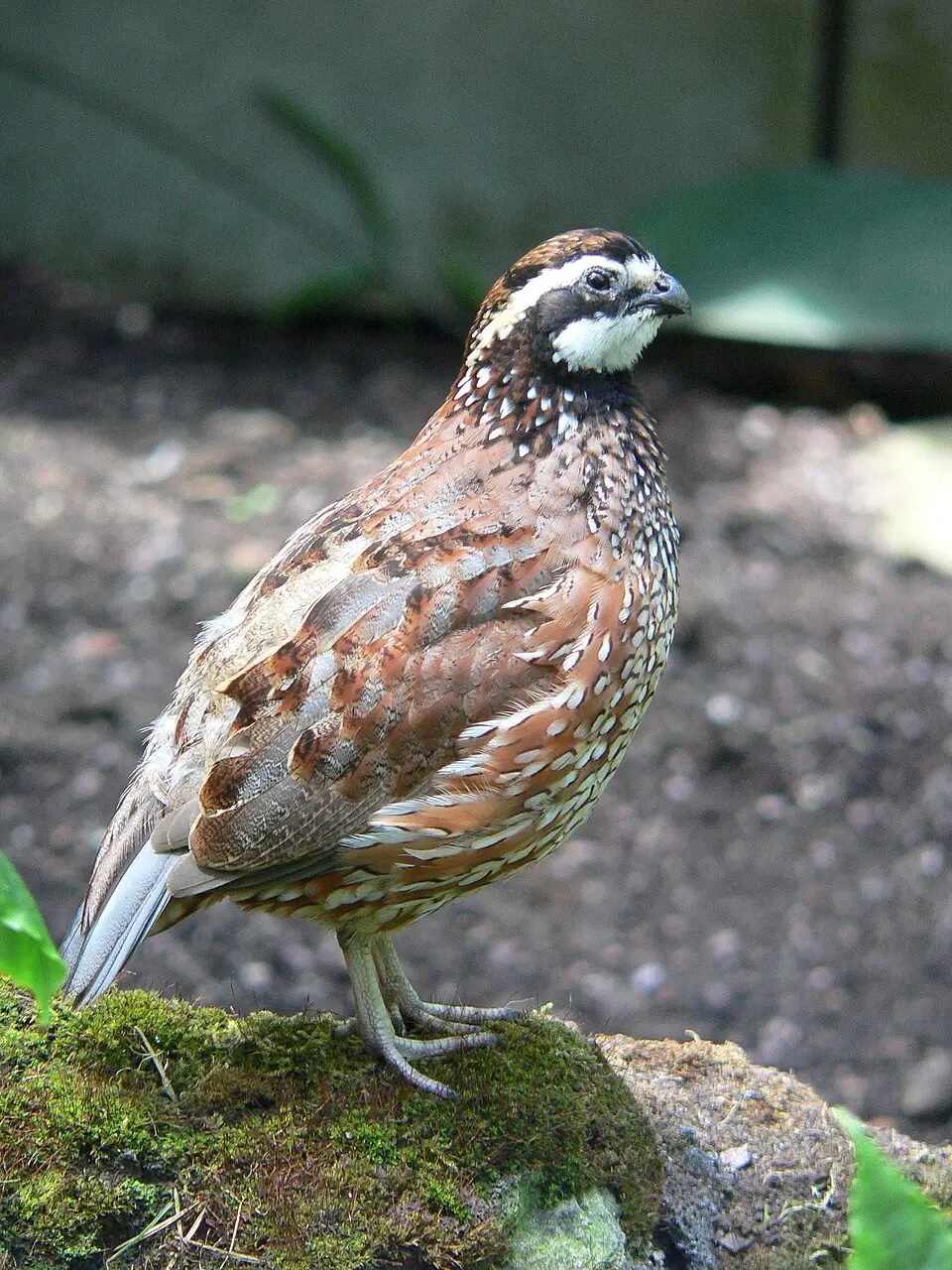
One of the bobwhite's most distinctive features is its bold facial patterning. Male birds display a striking white throat patch and a bright white eyebrow stripe that contrasts sharply against their dark brown and rufous-streaked plumage. Females exhibit similar patterning but with buff or pale brown coloration replacing the white of the male — a classic example of sexual dimorphism that makes field identification straightforward once you know what to look for.
Both sexes share a richly mottled back and flanks patterned in shades of chestnut, black, and buff, providing remarkably effective camouflage among the leaf litter and dry grasses that make up much of their preferred habitat. This cryptic coloration allows bobwhites to virtually disappear into their surroundings, making them easy to walk past even when they are only a few feet away.
The bobwhite's social structure is centered around the covey — a tight-knit group that typically consists of a dozen or more birds, though coveys can range considerably in size. During the fall and winter months, coveys roost together in a tight circular formation on the ground, all birds facing outward with tails touching at the center. This ingenious arrangement conserves body heat and allows every bird to watch for approaching predators simultaneously. When danger strikes, the covey explodes outward in all directions, a disorienting and highly effective predator-avoidance strategy.
Breeding season begins in late spring and can extend well into the summer months, with males establishing territories and advertising their presence with the iconic bob-WHITE! call. The Northern bobwhite is notable among game birds for its flexible mating system; both males and females may participate in incubation and chick-rearing duties. Nests are shallow ground scrapes lined with grasses and plant material, often concealed beneath overhanging vegetation. A typical clutch contains between 12 and 16 eggs, which hatch after an incubation period of roughly 23 days. The precocial chicks are mobile and able to follow their parents almost immediately after hatching, feeding on insects in their early weeks before transitioning to a more seed-based diet as they mature.
The Northern bobwhite's diet is diverse and highly seasonal. Seeds form the backbone of their nutrition, with a strong preference for legume seeds such as partridge pea, beggar's lice, and various native clovers. Insects are critically important, especially during the breeding season and for growing chicks, as the protein and nutrients they provide are essential for reproduction and rapid growth.
Habitat & Range
The Northern bobwhite's range spans a broad swath of the eastern and central United States, extending from southern New England south through the entire Atlantic seaboard, across the Gulf States, and west through the Great Plains into parts of the Southwest. The species is also native to portions of Mexico and Cuba. Within this expansive range, bobwhites show a strong affinity for early successional habitats — landscapes in transition between open ground and closed forest canopy.
Ideal bobwhite habitat is often described as a mosaic: a patchwork of open areas, brushy edges, native bunch grasses, and shrubby thickets interspersed with bare ground for movement and feeding. Historically, this type of habitat was maintained across much of the South by frequent, low-intensity fire — either naturally ignited or set by Indigenous peoples and later by farmers — which prevented forest encroachment and encouraged the growth of the native grasses and forbs that bobwhites depend on.
In Florida, the Northern bobwhite is associated with several characteristic habitat types. The longleaf pine-wiregrass ecosystem — once the dominant landscape across much of the Southeast — is considered prime bobwhite country. When these savannas are maintained through regular prescribed burning, they produce a ground-level plant community rich in the native grasses, legumes, and shrubby cover that bobwhites need to thrive. Florida's flatwoods, open pastures with brushy borders, and agricultural edges also provide suitable habitat, particularly where land management practices maintain open ground and early successional plant communities.
Water is generally not a limiting factor for bobwhites in Florida's relatively humid climate, though like all wildlife, they benefit from access to clean water sources, particularly during hot, dry periods.
Hunting Information
The Northern bobwhite is arguably the most storied upland game bird in the American South, and quail hunting has deep cultural roots throughout Florida and across the broader Southeast. The traditional image of quail hunting — a pair of hunters walking behind statuesque pointing dogs through open pine country on a cool December morning — remains one of the most evocative scenes in American sporting culture.
Hunters pursuing bobwhites in Florida should consult the Florida Fish and Wildlife Conservation Commission (FWC) for the most current and complete information on hunting seasons, bag limits, licensing requirements, and any applicable regulations for Wildlife Management Areas (WMAs) or other public lands. The FWC's Hunting Handbook, which is updated regularly, summarizes hunting regulations for both private and public lands across the state and is the authoritative resource for legal, ethical quail hunting in Florida.
The FWC also manages quota hunt programs on many WMAs, which require advance applications and provide hunters with controlled access to some of Florida's finest public hunting lands. Prospective hunters are encouraged to use the FWC's quota hunt dashboards and online resources to plan their hunts well in advance of the season. Shooting ranges managed by the FWC are also available across the state and can be valuable preparation tools for wingshooters looking to sharpen their skills before the season opens.
Traditionally, pointing breeds such as English pointers and setters have been the dogs of choice for bobwhite hunting, their keen noses and stylish points adding an irreplaceable dimension to the pursuit. Flushing breeds and retrievers are also used effectively. Regardless of method, safe firearm handling and adherence to all applicable regulations are paramount, and ethical hunters always respect property boundaries, bag limits, and the principles of fair chase.
Conservation
The Northern bobwhite has experienced significant population declines across much of its range over the past several decades, making it one of the most closely monitored upland game birds in North America. Habitat loss and degradation are widely recognized as the primary drivers of these declines, as the early successional landscapes and open pine savannas that bobwhites depend on have been reduced by agricultural intensification, urban development, fire suppression, and the conversion of native grasslands to monoculture crops or improved pastures.
Conservation efforts on behalf of the bobwhite are extensive and involve partnerships among state wildlife agencies, federal programs, private landowners, and nonprofit organizations. In Florida, the FWC actively works to manage and restore bobwhite habitat on public lands through the use of prescribed fire, native plantings, and habitat management programs. Many private landowners in Florida also participate in federal programs that provide technical and financial assistance for bobwhite-friendly land management practices.
The hunting community has historically been among the most committed supporters of bobwhite conservation, both through license fees and taxes on sporting equipment — which fund state wildlife agencies — and through direct involvement with habitat restoration initiatives. Organizations dedicated to quail and upland bird conservation work alongside agencies and landowners to implement landscape-scale habitat improvements that benefit not only bobwhites but a wide array of associated wildlife species.
The Northern bobwhite serves as what ecologists call an umbrella species — one whose conservation effectively protects the broader community of plants and animals that share its habitat. By working to restore and maintain the open, fire-maintained landscapes that bobwhites require, conservationists simultaneously provide for gopher tortoises, bluebirds, pollinators, and countless other species that depend on similar conditions.
With sustained commitment from hunters, landowners, wildlife managers, and the broader public, the future of the Northern bobwhite in Florida and across the Southeast remains full of promise — and the chance to hear that unmistakable bob-WHITE! echoing across an open field on a clear morning endures as one of the great gifts of the American outdoors.