Mourning Dove (Zenaida macroura): A Complete Guide for Wildlife Enthusiasts and Hunters in Florida
Few birds are as iconic to the American landscape as the Mourning Dove. Recognized instantly by its soft, mournful cooing call — a sound that many people associate with quiet summer mornings and peaceful countryside — the Mourning Dove (Zenaida macroura) is one of the most abundant and widely distributed birds in North America. Whether you are a wildlife enthusiast, a backyard birdwatcher, or an experienced hunter stepping into the field for the first season, the Mourning Dove offers something truly special. It is a bird that connects us to the natural world in an immediate and accessible way, requiring nothing more than an open field or a backyard feeder to observe.
In Florida, the Mourning Dove holds a particularly prominent place in both the natural ecosystem and the hunting tradition. The state's warm climate, diverse landscapes, and year-round mild weather make it an exceptional destination for dove activity. From the open agricultural fields of Central Florida to the brushy edges of the Panhandle, Mourning Doves are a constant and welcome presence across the Sunshine State. Understanding this bird — its biology, behavior, habitat preferences, and role in the hunting community — enriches both our appreciation of the species and our ability to engage with it responsibly.
Biological Traits
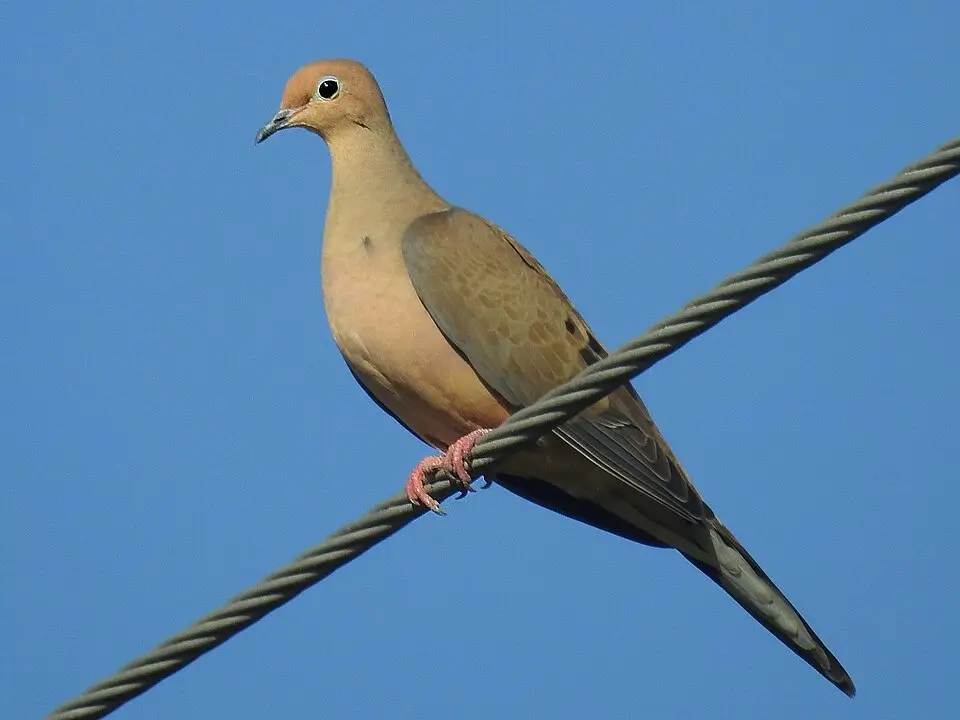
The Mourning Dove is a member of the family Columbidae, which includes all pigeons and doves. As a species, Zenaida macroura is slender and graceful in build, with a small rounded head, a tapered tail that is notably long compared to other dove species, and soft, buoyant wing beats that produce a distinctive whistling sound during flight. The wings' whistling is a natural acoustic feature caused by the shape of the flight feathers, and it serves as an alert signal among flocks when a bird takes off suddenly — a biological adaptation that can warn nearby birds of potential threats.
The plumage of the Mourning Dove is understated but beautiful. Adults display soft brownish-gray tones across their back and wings, with a pinkish blush visible on the breast and neck. Black spots are scattered across the wings, and the elongated tail feathers are tipped in white, creating a striking visual display during flight. A small black crescent-shaped mark appears below and behind each eye, adding a subtle but distinctive facial feature. Males and females are similar in appearance, though males often display a more iridescent sheen on the neck feathers and a slightly more vibrant pinkish tone on the breast.
One of the most remarkable aspects of Mourning Dove biology is its reproductive capacity. The species is among the most prolific breeders of any North American bird. A mated pair can raise multiple broods in a single year, and breeding activity can occur across virtually every month in warmer climates. The nest itself is a relatively simple, loosely constructed platform of twigs, typically placed in a tree, shrub, or even on the ground in some circumstances. Clutch size is almost universally two eggs per nesting attempt, and both parents share incubation duties. The young, called squabs, develop rapidly and fledge within a few weeks of hatching, allowing the parents to begin another nesting cycle quickly.
This high reproductive rate is a key biological feature that supports large and stable population numbers across North America. Even with natural predation and hunting pressure, the species maintains healthy population levels thanks to its ability to replace individuals at a consistent rate.
The Mourning Dove is also well known for its diet, which consists almost entirely of seeds. It is a granivorous bird, foraging primarily on the ground and consuming an impressive variety of wild and cultivated seeds. Grains such as corn, millet, sunflower seeds, and wheat are favorites, making agricultural areas particularly attractive foraging grounds. The dove swallows seeds whole and stores them in its crop — a specialized portion of the digestive tract — before grinding them in the muscular gizzard. This seed-heavy diet means that Mourning Doves are closely tied to open landscapes where seed-bearing grasses and crops are abundant.
Mourning Doves are also known to consume small amounts of grit — tiny particles of sand or gravel — which assist in the mechanical digestion of hard seeds. This behavior often brings them to roadsides, gravel areas, and open sandy patches, making those locations reliable spots for observation.
Habitat & Range
The Mourning Dove is among the most broadly distributed bird species on the continent. Its range extends across the entirety of the contiguous United States, into Canada during the warmer months, and southward through Mexico and into parts of Central America and the Caribbean. While some northern populations migrate seasonally to warmer climates, many populations — particularly those in the southern United States — are year-round residents.
Florida represents an ideal year-round habitat for the Mourning Dove. The state's geography, straddling the Gulf of Mexico to the west and the Atlantic Ocean to the east, creates a diversity of microclimates and landscapes that support dove activity throughout the year. Open fields, agricultural lands, forest edges, suburban neighborhoods, and brushy scrublands all provide suitable conditions. The dove's adaptability is one of its greatest strengths — it thrives equally well in rural farm country and in suburban settings where bird feeders are common.
The agricultural regions of Central and North Florida are particularly productive dove habitats. Fields planted in sunflowers, millet, corn, and other grains draw large concentrations of doves, especially during the early fall season. The availability of water is also an important habitat factor, as doves drink regularly and are often observed at ponds, stock tanks, and other water sources during the warmest parts of the day.
Florida's long coastline — spanning approximately 1,350 miles along the contiguous portions of the state — also means that migratory movements of dove populations from the north bring additional birds into Florida during the fall and winter months, supplementing the resident population and creating exciting opportunities for wildlife observation and hunting.
Hunting Information
The Mourning Dove is the most hunted migratory bird in North America, and it holds the title of the most popular game bird in the United States by harvest numbers. Its combination of challenging flight characteristics, widespread availability, and excellent table fare makes it a beloved target for hunters of all experience levels.
In Florida, dove hunting is regulated by the Florida Fish and Wildlife Conservation Commission (FWC), which works in coordination with the U.S. Fish and Wildlife Service to manage migratory bird populations. As a migratory species, the Mourning Dove falls under the Migratory Bird Treaty Act, meaning that federal regulations work alongside state guidelines to determine hunting seasons, bag limits, and licensing requirements.
Hunters interested in pursuing Mourning Doves in Florida should consult the FWC's official Hunting Handbook, which summarizes hunting regulations for both private and public lands. The FWC provides updated season dates and regulatory information on an annual basis, and hunters are encouraged to review the most current guidelines before taking to the field. The FWC's website also offers resources such as quota hunt dashboards and information about Wildlife Management Areas (WMAs), helping hunters plan their outings effectively.
Dove hunting in Florida typically involves field hunting, where hunters position themselves along field edges, near water sources, or along flight corridors used by birds moving between feeding and roosting areas. Dove hunting is often a social activity, with groups of hunters sharing a field and enjoying the camaraderie that comes with early season shooting. The fast, erratic flight of the Mourning Dove presents a genuine marksmanship challenge, rewarding practice and patience.
As with all hunting activities in Florida, proper licensing is required. Hunters are encouraged to contact the FWC directly or visit the official FWC website to obtain up-to-date information on required licenses, stamps, and any applicable permits for the current season.
Conservation
The Mourning Dove stands as a genuine conservation success story. Despite being the most heavily harvested game bird in North America, the species maintains robust and healthy population numbers, a testament to effective wildlife management and the bird's remarkable biological resilience. The combination of prolific breeding, adaptability to diverse habitats, and careful regulation by wildlife agencies has allowed the Mourning Dove to remain abundant across its range.
Conservation efforts for the Mourning Dove are supported by the collaborative framework established under the Migratory Bird Treaty Act, which has governed the management of migratory bird species in the United States since 1918. This legislation ensures that harvest levels are scientifically monitored and that hunting seasons are adjusted in response to population data, keeping the species on a sustainable trajectory.
Habitat conservation also plays an important role in supporting Mourning Dove populations. Agricultural practices that leave standing crops or post-harvest grain on the ground provide critical food resources, and conservation programs that encourage the establishment of native grasses, wildflowers, and seed-bearing plants create additional foraging opportunities. In Florida, land management practices on both public and private lands contribute to the maintenance of high-quality dove habitat.
Hunters themselves play a meaningful role in conservation through the purchase of licenses and federal Duck Stamps, funds from which flow directly into wildlife management programs and habitat preservation. The relationship between the hunting community and conservation science has been a powerful driver of wildlife population health across North America, and the Mourning Dove is a prime example of that partnership working effectively.
For those who simply enjoy watching wildlife, the Mourning Dove requires no special effort to appreciate. A simple bird feeder stocked with millet or sunflower seeds will reliably attract these gentle birds to virtually any backyard in Florida, providing an accessible window into the natural world and a daily reminder of the richness of the state's wildlife heritage.