The Mallard: North America's Most Recognized Waterfowl
A Complete Guide for Wildlife Enthusiasts and Hunters in Florida
Few birds are as universally recognized as the mallard (Anas platyrhynchos). Whether gliding across a quiet pond in a city park, navigating the vast wetlands of the American interior, or splashing down in the shallow marshes of Florida's diverse landscape, the mallard is a species that resonates with birdwatchers, hunters, and casual outdoor enthusiasts alike. It is widely considered the most abundant and most familiar duck in the Northern Hemisphere, and its presence across an extraordinary geographic range makes it one of the most studied and celebrated waterfowl species on Earth.
For Florida residents and visitors, the mallard holds a special place in the waterfowl calendar. The Sunshine State's unique geography — bordered by the Gulf of Mexico to the west and the Atlantic Ocean to the east, with an extensive peninsula stretching toward the tropics — creates a mosaic of wetland habitats that attract mallards during seasonal migrations as well as year-round. Understanding this bird, its biology, its behaviors, and the regulations that govern hunting and wildlife interaction in Florida, is essential for anyone who wants to appreciate or pursue this iconic species responsibly.
Biological Traits
The mallard (Anas platyrhynchos) belongs to the family Anatidae, the large and diverse family that encompasses ducks, geese, and swans. Within this family, mallards fall into the "dabbling duck" category — birds that feed primarily at or near the water's surface rather than diving deeply for their food. This feeding strategy, where the bird tips forward with its tail pointed skyward to reach submerged vegetation and invertebrates, is a familiar and charming sight on almost any freshwater body.
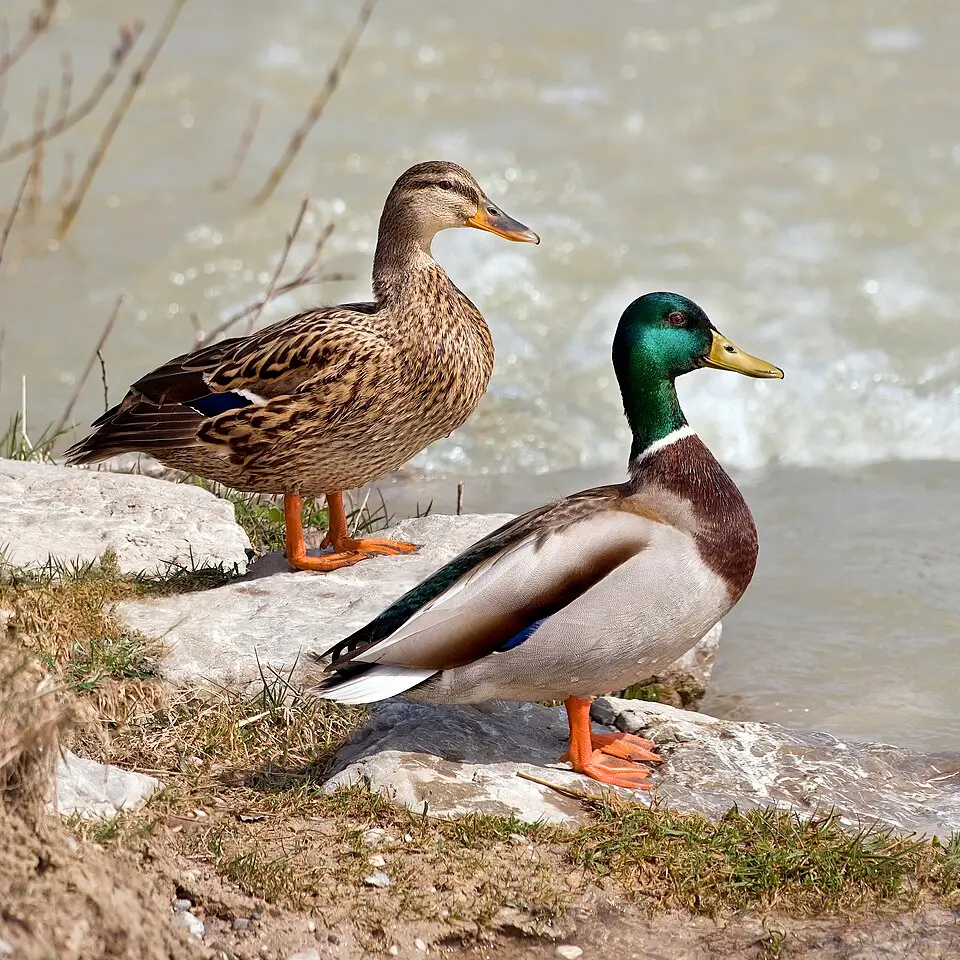
One of the most striking features of the mallard is the dramatic difference in appearance between males and females, a characteristic known as sexual dimorphism. The male, or drake, is adorned with one of nature's more spectacular color combinations: a gleaming, iridescent green head that shifts and shimmers in different light conditions, a white neck ring that separates the head from a rich chestnut-brown chest, and a pale gray body that contrasts elegantly with the darker tones of the upper plumage. The drake's bill is a distinctive yellow-orange, and a small curled feather at the base of the tail — known as the "drake feather" or "sex curl" — serves as an easy field identification marker.
The female mallard, by contrast, sports a more muted and cryptic plumage of mottled brown and buff tones that serve as excellent camouflage during nesting season. Her bill is orange with dark markings. Despite the difference in color, both sexes share a characteristic that makes field identification straightforward: a bright blue-purple speculum, a patch of iridescent feathers on the secondary wing feathers, bordered by white bars on both edges. This wing patch is visible both in flight and at rest and is one of the most reliable identification features for the species.
Mallards are medium to large-sized ducks, and while specific measurements can vary across their wide range, they are generally among the larger dabbling ducks encountered in North America. Their body shape is robust and well-adapted for life in the water, with waterproof feathers maintained through regular preening and the application of oils from a gland near the base of the tail.
Vocally, mallards are well known to most people even if the species itself is not immediately recognized. The classic, loud, resonant quack that most people associate with "a duck" is, in fact, the call of the female mallard. Males produce a softer, raspier sound. These vocalizations play important roles in pair bonding, flock communication, and signaling alarm.
Mallards are highly adaptable feeders. They consume a wide variety of plant material — including seeds, aquatic vegetation, and agricultural grains — as well as invertebrates, small fish, and other animal matter. This dietary flexibility is one of the key reasons the mallard has been so successful across such a broad range of environments, from remote wilderness wetlands to urban park ponds.
The species is also notable for its role as an ancestor. The domestic duck, found on farms and homesteads around the world, is descended from the mallard. This close relationship with human agricultural and domestic settings has further cemented the mallard's place in human culture across centuries and continents.
Habitat & Range
The mallard boasts one of the widest distributions of any waterfowl species in the world. It is found across North America, Europe, Asia, and parts of North Africa, and has been introduced to Australia, New Zealand, and numerous other regions where it has established thriving populations. In North America alone, the mallard's breeding range extends from Alaska and Canada southward through much of the continental United States.
The species thrives in virtually any wetland environment with sufficient food resources and appropriate cover. This includes freshwater marshes, rivers, lakes, ponds, flooded agricultural fields, coastal estuaries, and even constructed water features in urban and suburban areas. The mallard's ability to exploit man-made habitats — retention ponds, irrigation canals, golf course water features, and city parks — has allowed it to maintain strong population numbers even as natural wetland habitats have faced pressure from development and land-use changes.
In Florida, the mallard's presence is shaped by the state's unique geography and climate. Florida's extensive coastline — the longest in the contiguous United States at approximately 1,350 miles — combined with its vast interior wetlands, river systems, and lakes, creates excellent conditions for waterfowl. The state's location in the Southeastern United States means that it serves as an important wintering ground for many migratory bird species, including mallards that breed in northern latitudes and travel south as colder temperatures set in.
Florida's diverse wetland ecosystems, including the famous Everglades, the St. Johns River system, and countless lakes throughout the central and northern parts of the state, provide the shallow, vegetation-rich waters that mallards favor. During the winter months especially, waterfowl hunters and birdwatchers alike can expect to encounter mallards alongside other dabbling ducks in these productive habitats.
Hunting Information
The mallard is one of the most pursued game birds in North America and holds a place of particular significance in the traditions of waterfowl hunting. Its size, wariness, and the challenge of calling birds within range have made mallard hunting a skill-based pursuit that draws dedicated hunters season after season.
In Florida, waterfowl hunting — including duck hunting — is regulated by the Florida Fish and Wildlife Conservation Commission (FWC). The FWC oversees hunting regulations across the state, and hunters are encouraged to consult the official Hunting Handbook, which summarizes hunting regulations for both private and public lands. Florida also offers quota hunt opportunities on Wildlife Management Areas (WMAs), and hunters are advised to monitor WMA closures and updates through official FWC channels.
Because waterfowl are migratory species, hunting seasons and bag limits for mallards in Florida are set in coordination with federal regulations established by the U.S. Fish and Wildlife Service under the framework of the Migratory Bird Treaty Act. This means that specific season dates, bag limits, and licensing requirements can change from year to year and must be verified with the FWC before heading afield. Hunters should always carry appropriate state and federal licenses and stamps as required by current regulations.
For those new to waterfowl hunting in Florida, the FWC provides resources including public shooting ranges managed by the commission, helping hunters practice and develop the skills needed for safe and ethical hunting. The FWC website and the MyFWC.com platform serve as valuable resources for finding open hunting areas, understanding quota hunt systems, and staying current with any regulatory updates or WMA closures.
Mallard hunting traditionally involves decoys, calls, and concealment in blinds or natural cover near water. The species' social nature and responsiveness to calling make it a rewarding quarry for hunters willing to invest time in learning effective techniques.
Conservation
The mallard's conservation status is currently listed as Least Concern by major wildlife organizations, reflecting the species' robust global population and wide distribution. Nevertheless, conservation efforts remain important for ensuring that mallard populations continue to thrive across their range.
Wetland conservation is at the heart of mallard management. Organizations such as Ducks Unlimited have invested heavily in protecting, restoring, and enhancing wetland habitats across North America, recognizing that healthy wetlands benefit not only waterfowl but an enormous diversity of wildlife and ecological services. In Florida, the FWC plays an active role in managing wildlife habitats through its network of WMAs and through ongoing habitat restoration projects.
The Migratory Bird Treaty Act provides a critical legal framework for the protection of mallards and other migratory species in the United States, ensuring that hunting seasons and harvest levels are scientifically managed to maintain sustainable populations. Annual waterfowl surveys conducted by federal and state agencies provide the data needed to make informed management decisions each season.
Responsible hunters also contribute meaningfully to mallard conservation through the purchase of federal Duck Stamps, a portion of which funds the protection of wetland habitats critical to waterfowl and countless other species. This intersection of hunting tradition and conservation investment is one of the hallmarks of the North American Model of Wildlife Conservation, a system recognized globally for its effectiveness.
For observers and enthusiasts who encounter mallards in Florida's parks, waterways, and natural areas, simple actions — such as not feeding waterfowl bread or processed foods, keeping pets away from nesting areas, and supporting local wetland conservation initiatives — can make a meaningful difference in the health and wellbeing of local mallard populations.
Conclusion
The mallard (Anas platyrhynchos) is far more than just a familiar face on the local pond. It is a biologically fascinating species with a remarkable range, a cornerstone of waterfowl hunting tradition, and a meaningful indicator of wetland ecosystem health. In Florida, where diverse waterways and a strategic geographic position make the state a prime destination for migratory waterfowl, the mallard occupies a celebrated place in both the natural landscape and the outdoor sporting culture.
Whether you encounter this species from the seat of a duck blind in the pre-dawn darkness, through the lens of a spotting scope at a state wildlife area, or simply on a walk through a local park, the mallard rewards attention and appreciation. By understanding its biology, respecting its habitat, and engaging with the regulatory frameworks designed to protect it, Floridians and visitors alike can ensure that future generations will continue to enjoy this remarkable bird for years to come.