The Eastern Gray Squirrel: A Complete Guide for Wildlife Enthusiasts and Hunters in Florida
Few animals are as familiar, recognizable, and widely appreciated across North America as the Eastern gray squirrel (Sciurus carolinensis). Whether darting through a city park, bounding across a suburban backyard, or navigating the dense canopy of a Southern hardwood forest, this industrious little mammal has earned its place as one of the continent's most beloved and ecologically significant wildlife species. For hunters, naturalists, and outdoor enthusiasts alike, the Eastern gray squirrel represents an enduring connection to the natural world — one that is especially meaningful in a state as biologically rich as Florida.
From the shaded hammocks of the Florida Panhandle to the sprawling oak-studded flatwoods of Central Florida, the Eastern gray squirrel is a year-round resident and a cherished part of the state's wildlife heritage. It is one of the most commonly pursued small game animals in Florida and across its broader range, offering hunters of all ages and experience levels an accessible, rewarding, and deeply traditional outdoor experience. Understanding this species — its biology, behavior, habitat needs, and role in the ecosystem — enriches every encounter, whether you are watching one from your porch or heading into the woods with a .22 rifle at dawn.
Biological Traits
The Eastern gray squirrel, Sciurus carolinensis, belongs to the family Sciuridae, the broad and diverse family of squirrels that includes chipmunks, marmots, and prairie dogs. The genus name Sciurus is derived from the Greek words for "shadow" and "tail," a fitting description for an animal that frequently uses its large, bushy tail as a counterbalance, a communication device, and even a kind of umbrella during rain.
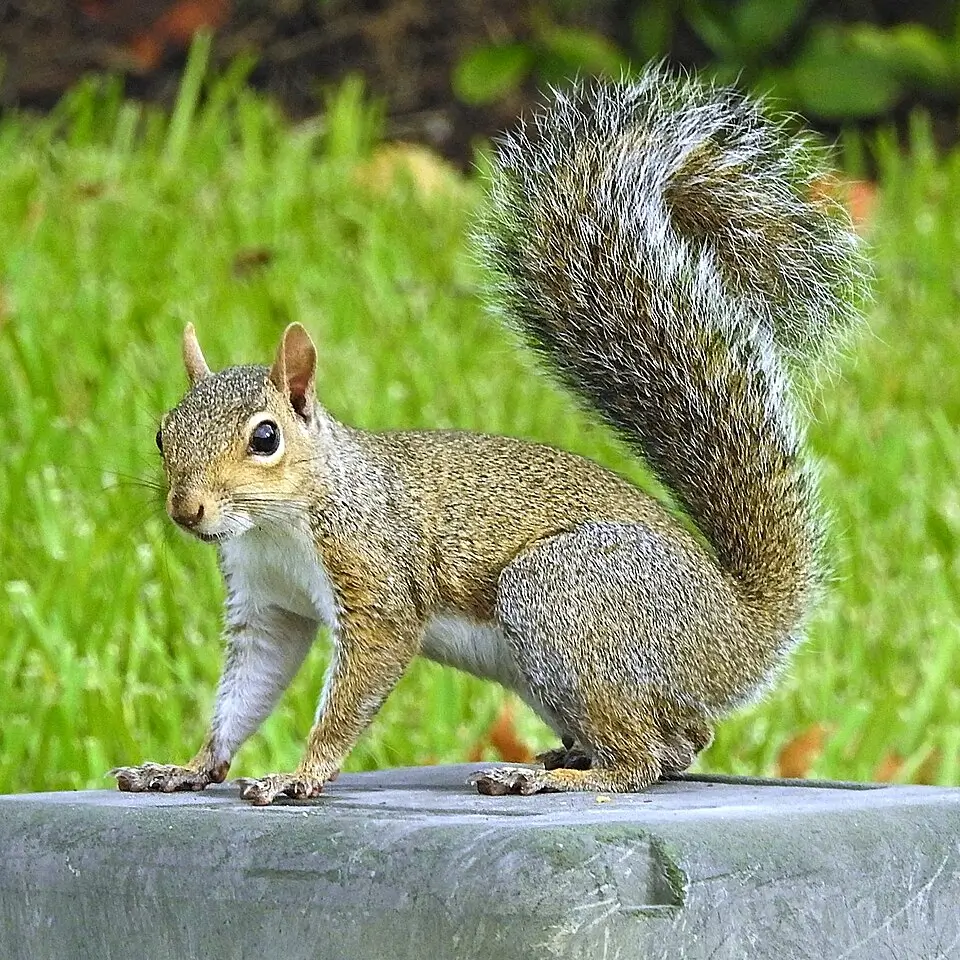
As the common name suggests, the Eastern gray squirrel is predominantly gray in coloration, typically displaying a salt-and-pepper pattern across its back and sides, with a pale white or cream-colored underside. The tail is long, full, and fringed with lighter-colored hairs that give it a silvery appearance. Some individuals exhibit melanistic (black) or albino (white) color morphs, which, while uncommon, do occur across the species' range. Adults generally weigh between 14 and 21 ounces, with body lengths ranging from about 9 to 12 inches, not including the tail, which can add another 7 to 10 inches.
One of the most remarkable behavioral traits of the Eastern gray squirrel is its relationship with food storage, specifically a strategy known as scatter hoarding. Rather than storing all food in a single location, gray squirrels bury individual nuts, seeds, and other food items in numerous separate caches spread across their home range. This behavior is crucial not only to the squirrel's winter survival strategy but also to forest ecology, as many of these buried caches — particularly acorns — are never retrieved and go on to germinate, making the Eastern gray squirrel an inadvertent but highly effective reforestation agent. Scientists have observed that gray squirrels rely on both spatial memory and scent to recover their cached food, though their recovery rates suggest that a meaningful percentage of buried nuts are simply forgotten, gifted by chance to the forest floor.
Gray squirrels are diurnal animals, meaning they are most active during daylight hours, with peak activity typically occurring in the early morning and late afternoon. They do not hibernate, which makes them visible year-round and active even during cooler months, provided conditions are not severely harsh. Their diet is broadly omnivorous, though heavily plant-based. Acorns, hickory nuts, walnuts, seeds, berries, mushrooms, and tree buds form the core of their diet, though they are also known to occasionally consume insects, bird eggs, and other animal matter.
Reproduction in Eastern gray squirrels typically occurs twice per year, with breeding seasons commonly falling in late winter and again in midsummer. Litters generally consist of two to four young, known as kittens or pups, which are born hairless and blind after a gestation period of approximately 44 days. Young squirrels develop rapidly and are typically weaned by 10 weeks of age. In Florida's mild climate, breeding activity may vary somewhat from patterns observed in more northern portions of the range, reflecting the more temperate year-round conditions.
Gray squirrels are vocal animals, communicating through a variety of chattering calls, barks, and tail-flicking signals. These vocalizations serve to warn of predators, establish territory, and coordinate social interactions. Common predators of the Eastern gray squirrel include hawks, owls, foxes, bobcats, raccoons, and various snake species.
Habitat & Range
The Eastern gray squirrel is native to the eastern half of North America, ranging broadly from southern Canada south through the eastern United States and into portions of Mexico. As indicated by its scientific name, carolinensis, the species was first formally described from specimens collected in the Carolinas, but its range extends well beyond that region.
In Florida, the Eastern gray squirrel is found throughout much of the state, making it one of the most widely distributed mammals in the region. Florida itself occupies a unique ecological position — a long peninsula bordered by the Gulf of Mexico to the west and the Atlantic Ocean to the east, with a diverse mosaic of habitats that support an extraordinary range of wildlife species.
Gray squirrels thrive in hardwood forests, mixed pine-hardwood woodlands, and areas where mast-producing trees — especially oaks — are abundant. In Florida, this includes mature upland hardwood hammocks, bottomland forest systems, river swamps dominated by water oaks and cypress, and the oak scrub habitats that are a defining feature of much of Central Florida. Suburban and urban environments with mature tree cover also support healthy gray squirrel populations, contributing to the species' high visibility even outside of natural wildlands.
Because their diet is closely tied to mast production — particularly the annual acorn crop — gray squirrel populations and movement patterns are significantly influenced by the timing and abundance of mast. In years of high acorn production, squirrel populations tend to be robust and well-distributed. In years of mast failure, squirrels may range more widely in search of food, making habitat connectivity an important consideration for land managers and conservationists.
Hunting Information
The Eastern gray squirrel is one of Florida's most popular small game species and has a long tradition as a quarry for hunters across the state. Squirrel hunting is widely regarded as an excellent introduction to hunting for new participants, offering accessible action, relatively low equipment costs, and the kind of woodsmanship skills — reading habitat, understanding animal behavior, moving quietly through the woods — that translate directly to pursuing larger game.
Florida's Fish and Wildlife Conservation Commission (FWC) oversees the regulation of squirrel hunting in the state. Hunters are encouraged to consult the FWC's official Hunting Handbook, which summarizes current hunting regulations for both private and public lands. The FWC also manages Wildlife Management Areas (WMAs) across the state, many of which offer squirrel hunting opportunities. Hunters should always check the open and closed status of FWC-managed areas, as closures and updates are posted regularly at the official FWC website.
For those planning to hunt on quota-managed lands or specific WMAs, FWC has developed quota hunt dashboards designed to help hunters plan their outings effectively. New season dates for the 2026–2027 hunting season have also been announced, and hunters are encouraged to review updated information directly through FWC's official channels.
Common methods for hunting gray squirrels include still hunting — sitting quietly near a productive mast tree and waiting for squirrels to reveal themselves — and still-walking, where hunters move slowly and quietly through the woods, pausing frequently to observe. Early morning and late afternoon, when squirrel activity peaks, are generally the most productive times to be in the field. Firearms commonly used include .22 caliber rimfire rifles and small-bore shotguns, both of which offer the precision and restraint appropriate for this type of hunting.
Always verify current license and regulation requirements through the Florida FWC before heading afield, as requirements, season dates, and bag limits are subject to change.
Conservation
The Eastern gray squirrel is currently classified as a species of least concern by wildlife conservation authorities, reflecting its wide distribution, high adaptability, and healthy overall population status across its native range. Unlike many wildlife species facing pressure from habitat loss and fragmentation, gray squirrels have demonstrated a remarkable ability to persist and even thrive in modified landscapes, including suburban and urban environments.
That said, maintaining healthy gray squirrel populations over the long term still depends on the preservation and management of quality hardwood habitat. Mature forests with abundant mast-producing trees are the foundation of sustainable squirrel populations, and land management practices that protect these habitats benefit not only squirrels but a wide range of other wildlife species that share these ecosystems.
In Florida, the FWC plays an active role in managing wildlife populations and the habitats they depend on. The agency's network of Wildlife Management Areas provides protected habitat for gray squirrels and countless other species, while its regulated hunting programs contribute to both population management and the funding of broader conservation efforts through license revenues and associated fees.
The Eastern gray squirrel also plays a notable ecological role as a seed disperser, contributing meaningfully to forest regeneration through its scatter-hoarding behavior. In this sense, every squirrel foraging through a Florida oak hammock is quietly doing its part to sustain the forests that future generations of wildlife — and hunters — will depend upon.
Conclusion
The Eastern gray squirrel is far more than a backyard visitor or a casual hunting quarry. It is a keystone member of the Eastern hardwood forest ecosystem, a species of remarkable behavioral sophistication, and a living thread in the long fabric of American outdoor tradition. In Florida, with its diverse habitats and rich wildlife heritage, the gray squirrel occupies a special place — accessible to all, important to many, and worthy of the attention and respect of anyone who spends time in the natural world.
Whether you encounter one chattering from a live oak branch on a cool November morning or simply watch one work its way through a pile of fallen acorns in a city park, the Eastern gray squirrel is always worth a second look.