The Coyote in Florida: A Complete Guide to Canis latrans
Few animals in North America embody the spirit of adaptability and resilience quite like the coyote. Known scientifically as Canis latrans — a Latin phrase meaning "barking dog" — the coyote is one of the most recognizable and widely distributed wild canids on the continent. From the open prairies of the American West to the dense subtropical landscapes of Florida, this remarkable animal has demonstrated an extraordinary capacity to thrive in virtually every environment it encounters.
In Florida, the coyote occupies a fascinating and increasingly prominent role in the state's wildlife story. As a relative newcomer to the Sunshine State compared to many native species, the coyote has steadily expanded its presence across Florida's diverse landscapes, from the panhandle's rolling pine forests to the subtropical marshes and suburban neighborhoods of the southern peninsula. Understanding this animal — its biology, its behaviors, and its place in the ecosystem — is essential for hunters, wildlife enthusiasts, and conservationists alike.
Whether you are a seasoned predator hunter looking to pursue coyotes across Florida's public and private lands, or simply a curious naturalist hoping to learn more about one of the state's most intriguing wild residents, this guide offers a comprehensive look at Canis latrans in the Florida context.
Biological Traits
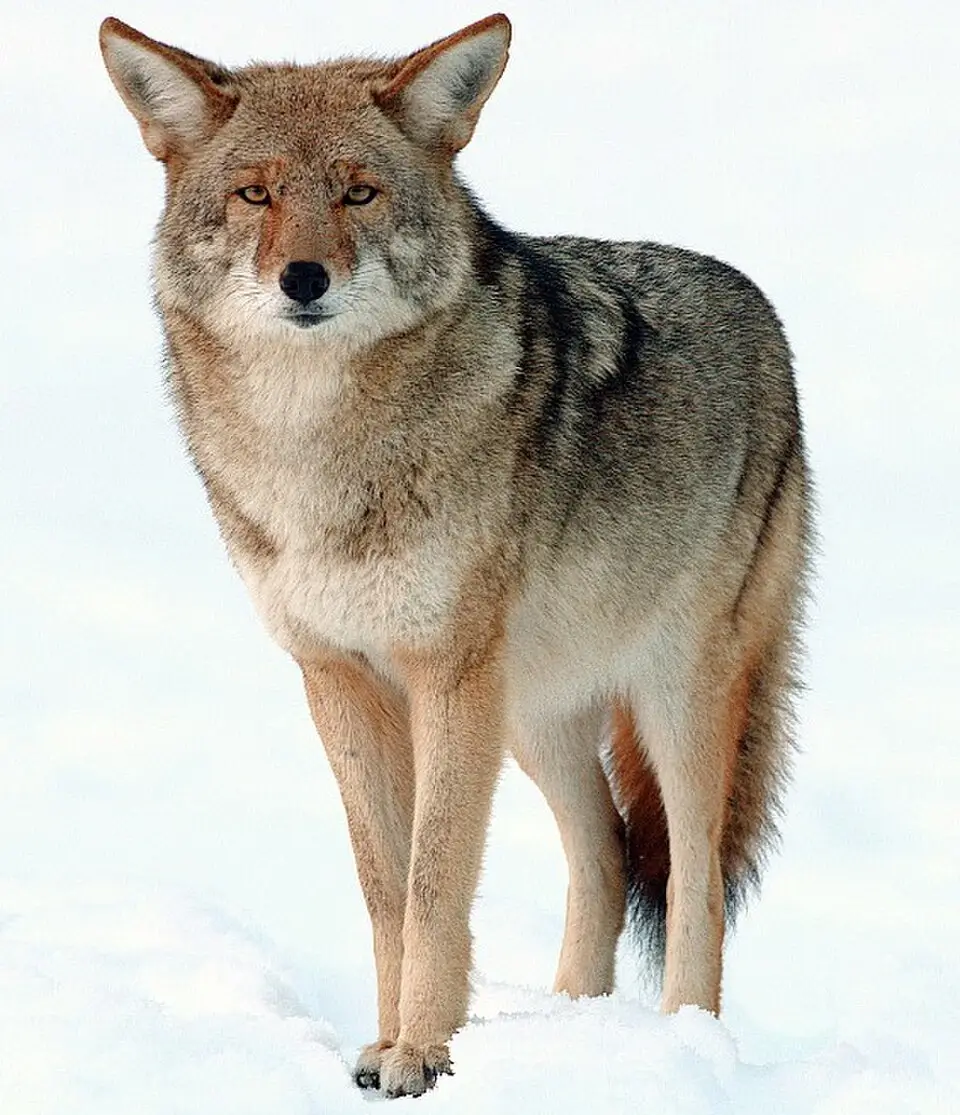
The coyote belongs to the family Canidae, placing it alongside wolves, foxes, and domestic dogs as members of one of nature's most successful groups of carnivores. As a mid-sized canid, the coyote typically presents a lean, athletic build well-suited for endurance travel and opportunistic hunting. Adults generally display a coat that ranges in color from grayish-brown to reddish-tan, often with lighter coloring on the undersides and throat. The bushy tail, typically held low while running — a distinguishing feature from wolves and domestic dogs, which tend to carry their tails higher — is one of the most reliable field identification markers.
Coyotes are equipped with sharp senses that make them effective hunters and survivors. Their hearing is particularly acute, allowing them to detect small prey moving beneath grass or snow, and their sense of smell is finely tuned for tracking, communication, and detecting potential threats. Their eyesight, while perhaps not their most dominant sense, is well-adapted for low-light conditions, making them effective hunters during dawn, dusk, and nighttime hours.
One of the most celebrated aspects of coyote biology is the species' vocal communication. Canis latrans produces an impressive repertoire of sounds, including howls, yips, barks, and combination calls that serve a variety of social functions. These vocalizations help establish territory, coordinate group activities, and maintain social bonds within family units. The coyote's haunting nighttime chorus is a defining sound of the American wilderness and has become increasingly familiar to Floridians across both rural and suburban areas.
Coyotes are omnivores, demonstrating remarkable dietary flexibility. Their diet can include small mammals such as rabbits, squirrels, and mice; birds and their eggs; reptiles; insects; fruits and berries; carrion; and occasionally larger prey when hunting cooperatively. This dietary breadth is a key factor in the coyote's success across diverse environments. In Florida's subtropical setting, prey availability shifts with the seasons and the landscape, and coyotes adapt accordingly.
Reproduction in coyotes follows a generally predictable annual cycle. Mating typically occurs in late winter, and after a gestation period of approximately 63 days, females give birth to litters that can range in size considerably. Pups are born in dens and are cared for by both parents, as coyotes form monogamous pair bonds that can persist across multiple breeding seasons. This biparental care system contributes to pup survival rates and reflects the species' sophisticated social structure.
An especially notable biological trait of coyotes is their ability to adjust reproductive output in response to population pressure. When coyote populations are reduced, the species tends to respond with larger litters and increased pup survival rates — a biological mechanism that has made traditional population control efforts particularly challenging and that underscores the coyote's evolutionary resilience.
Habitat & Range
The coyote's native range historically centered on the Great Plains and arid regions of western North America, but over the past century, Canis latrans has achieved one of the most dramatic range expansions of any North American mammal. Today, coyotes are found across virtually the entire continental United States, much of Canada, Central America, and into Panama. This expansion was facilitated by a combination of factors, including habitat changes resulting from human activity, the decline of larger predators such as wolves, and the coyote's own extraordinary behavioral adaptability.
In Florida specifically, coyotes are now considered established residents throughout the state. Florida's landscape offers a mosaic of habitat types that coyotes readily exploit. The piney flatwoods and mixed forests of the panhandle provide cover and prey-rich hunting grounds. The agricultural lands of central and north Florida offer open foraging opportunities alongside brushy edges that coyotes favor. Even the wetlands, prairies, and scrub habitats of south Florida — environments that might seem inhospitable to a canid — support coyote populations.
Florida's extensive coastline, sprawling suburban developments, and patchwork of natural areas also create the edge habitats that coyotes particularly favor. The transition zones between different habitat types — woodland edges meeting open fields, or natural areas bordering residential neighborhoods — concentrate prey species and provide coyotes with the combination of cover and open foraging ground they seek. This adaptability to human-altered landscapes is a hallmark of the species and is why coyote sightings in Florida's suburbs and even urban parks have become increasingly common.
The state's warm climate and year-round prey availability make Florida a hospitable environment for coyotes. Unlike their northern counterparts that must contend with harsh winters and reduced prey abundance, Florida coyotes benefit from relatively stable conditions throughout the year.
Hunting Information
In Florida, coyotes may be pursued by hunters, and the Florida Fish and Wildlife Conservation Commission (FWC) oversees the regulatory framework governing hunting activities in the state. The FWC provides a comprehensive Hunting Handbook that summarizes hunting regulations for both private and public lands, and hunters are always encouraged to consult the most current version of this handbook as well as the FWC's official website for the latest information.
Predator hunting, including coyote hunting, is a popular and growing pursuit among Florida sportsmen and sportswomen. Coyote hunting requires a unique combination of fieldcraft, patience, and knowledge of animal behavior. Because coyotes are highly intelligent and possess sharp senses, successful hunters invest significant time in understanding coyote movement patterns, communication, and daily routines.
Electronic and mouth-blown calls are among the most commonly used tools in coyote hunting, with distress calls mimicking injured rabbits or other small prey being particularly effective at drawing curious or territorial coyotes within range. Howls and challenge calls can also be used to locate or attract coyotes, particularly during the breeding season when territorial responses are heightened.
Coyote hunting in Florida is often conducted during early morning or evening hours when coyotes are most active. The state's varied terrain requires hunters to adapt their approach — open agricultural areas may call for longer-range setups, while forested environments demand closer-quarters tactics. Hunters pursuing coyotes on FWC-managed Wildlife Management Areas (WMAs) should consult current WMA-specific regulations, as rules can vary by location. The FWC's online resources, including quota hunt dashboards and facility status notices, are valuable tools for planning any hunting outing in the state.
For those new to predator hunting, Florida offers excellent opportunities to develop skills while contributing to wildlife management efforts. Responsible hunters who observe all applicable regulations, practice ethical shot placement, and respect private and public land boundaries represent the best tradition of wildlife stewardship.
Conservation
The coyote's conservation status reflects its status as one of North America's most resilient and adaptable wildlife species. Unlike many of its wild relatives that have faced population declines due to habitat loss and human pressure, Canis latrans has expanded its range and increased in numbers over the past century. The species is not considered threatened or endangered.
From a conservation standpoint, the coyote plays a meaningful role in the ecosystems it inhabits. As a mesopredator, the coyote helps regulate populations of small and medium-sized prey species, contributing to ecological balance. In Florida, where the historical presence of larger apex predators has been limited in many parts of the state, the coyote fills an important functional role in the food web.
The FWC continues to monitor wildlife populations across Florida, and coyotes are part of the broader management picture for the state's diverse fauna. Florida's commitment to conservation — reflected in its extensive system of Wildlife Management Areas, conservation lands, and the work of agencies like the FWC — ensures that all species, including adaptable newcomers like the coyote, are managed within a science-based framework.
For hunters, wildlife watchers, and land managers, the coyote represents both a management challenge and an opportunity. Thoughtful engagement with this species — whether through regulated hunting, habitat management, or simple observation — deepens our connection to Florida's rich and ever-evolving natural heritage.