Cottontail Rabbit: A Complete Guide for Florida Hunters and Wildlife Enthusiasts
Few animals are as iconic to the American outdoors experience as the cottontail rabbit. Whether you're a seasoned hunter walking the edges of a pine flatwood at dawn, a wildlife watcher scanning an open meadow, or simply someone who has noticed a small, fluffy-tailed creature darting across a backyard, the cottontail rabbit is a fixture of the natural landscape across much of North America — and Florida is no exception.
Belonging to the genus Sylvilagus, cottontail rabbits represent one of the most widespread and ecologically significant groups of small mammals on the continent. They are a cornerstone prey species, a popular game animal, and a fascinating subject of natural history study. In Florida, where diverse ecosystems range from coastal marshes and longleaf pine forests to scrubby flatwoods and agricultural fields, cottontail rabbits occupy an important and well-established role in the wild. Understanding this animal — its biology, behavior, habitat preferences, and relationship to hunters and conservationists — is a rewarding pursuit for anyone who spends time outdoors in the Sunshine State.
Biological Traits
Cottontail rabbits belong to the order Lagomorpha and the family Leporidae, which they share with hares and pikas. The genus Sylvilagus encompasses several distinct species found across North and South America, making it one of the most species-rich rabbit genera in the world. In North America alone, multiple recognized species fall under this genus, each adapted to slightly different environmental conditions and geographic ranges.
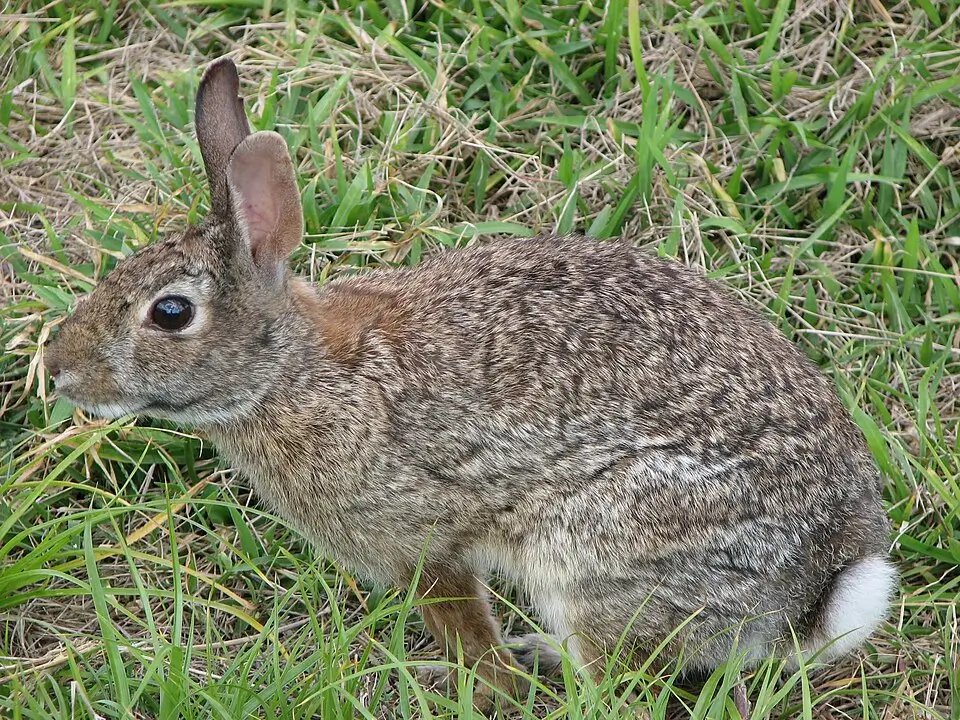
The name "cottontail" is immediately recognizable to anyone who has seen one of these animals: it comes from the distinctive short, fluffy tail that resembles a small puff or ball of white cotton. When a cottontail flees from a predator, this white tail bobs visibly, making it one of nature's most recognizable escape signals — though interestingly, researchers believe this display may serve multiple functions, including warning other rabbits of danger.
Physically, cottontails are compact, medium-sized rabbits with rounded bodies, large hind legs adapted for quick bursts of speed, long ears that provide excellent hearing, and large, wide-set eyes that give them a broad field of vision — a critical adaptation for detecting approaching predators. Their fur is typically a mixture of brown, gray, and buff tones, providing excellent camouflage against leaf litter, dry grass, and the sandy soils common in Florida's upland habitats. The underside of the body is typically paler or whitish.
One of the most remarkable biological traits of cottontail rabbits is their extraordinary reproductive capacity. Like most lagomorphs, cottontails are prolific breeders. Females, called does, are capable of producing multiple litters per year, with litter sizes typically ranging from a few to several young, known as kittens or kits. This high reproductive rate is an evolutionary response to intense predation pressure — cottontails are a primary food source for a wide range of predators including hawks, owls, foxes, bobcats, coyotes, snakes, and domestic dogs and cats. Their populations can fluctuate considerably from year to year depending on predation, habitat quality, and weather conditions.
Cottontail rabbits are primarily crepuscular and nocturnal, meaning they are most active during the twilight hours of dawn and dusk and sometimes into the night. During the heat of the day, they typically rest in forms — shallow depressions in dense vegetation or under brush piles — where they are well concealed from aerial and ground predators. Their diet is herbivorous, consisting of a wide variety of grasses, clovers, forbs, woody plant shoots, and agricultural crops when available. Like other lagomorphs, cottontails practice cecotrophy — the consumption of certain soft fecal pellets directly from the anus — which allows them to extract maximum nutritional value from their plant-based diet.
Communication among cottontails is largely non-vocal, relying instead on body language, foot thumping, and scent marking. However, they are capable of producing vocalizations, including a sharp squeal when frightened or captured, which can be startling to anyone who has not heard it before.
Habitat & Range
The genus Sylvilagus is remarkably adaptable, with individual species occupying habitats ranging from dense eastern forests to arid southwestern deserts and tropical environments. In Florida, cottontail rabbits thrive across a broad spectrum of habitat types that reflect the state's diverse ecological character.
Florida's landscape offers an impressive variety of potential cottontail habitat. Open pine flatwoods — particularly those managed with periodic prescribed fire that promotes a low, grassy understory — provide excellent foraging and escape cover. The brushy edges between forests and open fields, known as ecotones, are especially favored by cottontails, as they offer both food resources and proximity to dense cover for rapid escape. Scrubby uplands, old fields, fencerows, agricultural margins, and suburban green spaces also support healthy cottontail populations throughout the state.
Florida's unique geography plays a significant role in the ecology of its wildlife, including cottontail rabbits. Bordered by the Gulf of Mexico to the west and the Atlantic Ocean to the east, with a subtropical climate in the south and a more temperate climate in the northern reaches of the state, Florida encompasses a remarkable range of conditions. The warm, largely frost-free climate in much of the state is generally favorable for cottontail rabbits, supporting extended or year-round breeding seasons compared to populations in more northern states where harsh winters impose seasonal limitations on reproduction.
Dense shrubby vegetation, briar thickets, palmettos, and native grasses are particularly valuable habitat components for Florida cottontails. These provide not only food but also the protective cover that cottontails depend on for survival. Areas where habitat management practices — such as prescribed burning, timber harvesting, or agricultural practices — create a patchwork of open and brushy areas tend to support especially robust cottontail populations.
Hunting Information
Cottontail rabbit hunting is a beloved tradition in Florida and across the United States, representing an excellent entry point for new hunters while offering consistent enjoyment for experienced sportsmen and sportswomen. Rabbit hunting is often considered one of the most accessible and family-friendly forms of hunting, requiring relatively modest equipment and offering ample opportunities across a wide variety of public and private lands.
For those interested in hunting cottontail rabbits in Florida, the Florida Fish and Wildlife Conservation Commission (FWC) is the authoritative source for current regulations, season dates, and licensing requirements. The FWC publishes a comprehensive Hunting Handbook that summarizes hunting regulations for both private and public lands throughout the state, and hunters are strongly encouraged to consult this resource before heading afield. The FWC also manages Wildlife Management Areas (WMAs) across Florida, many of which provide excellent small game hunting opportunities. Updated information on the open and closed status of FWC-managed areas can be found through the FWC's official online resources.
Traditional methods for hunting cottontails include walking fields and brush with a shotgun, flushing rabbits from cover, and the time-honored practice of hunting with beagles. These small scent hounds are ideally suited to cottontail hunting — their medium energy, keen nose, and characteristic baying voice make following a running rabbit both productive and entertaining. Many hunters consider the sound of a beagle pack running a rabbit through the brush to be one of the great pleasures of the small game hunting experience.
For new hunters in Florida, small game hunting — including cottontail rabbit hunting — represents a welcoming avenue into the broader hunting tradition. The equipment demands are modest, the learning curve is manageable, and the experience of being afield in Florida's beautiful natural landscapes provides intrinsic rewards beyond the harvest itself. As with all hunting in Florida, appropriate licensing and adherence to FWC regulations are required, and prospective hunters should visit the FWC's official website or consult the current Hunting Handbook for the most accurate and up-to-date information on seasons, limits, and license requirements.
Conservation
The conservation status of cottontail rabbits in Florida and across their broader range reflects a species that is generally abundant but nonetheless dependent on healthy, well-managed habitat. Cottontails are not currently considered threatened or endangered across their primary range; however, their populations are sensitive to habitat loss and degradation, which represents the most significant long-term challenge to maintaining healthy numbers.
Habitat management is arguably the most important conservation tool available for cottontail rabbits. Practices that maintain or create brushy edge habitat, promote native grass and forb communities, and prevent the encroachment of mature closed-canopy forest into open areas all benefit cottontail populations. In Florida, prescribed fire plays a critical role in maintaining the open, grassy understory habitats that cottontails favor in longleaf pine and flatwood ecosystems. The FWC and various conservation partners actively engage in habitat management on public lands throughout the state, benefiting cottontails along with a wide array of other wildlife species.
Hunters themselves have historically played an important role in cottontail conservation. License fees, excise taxes on firearms and ammunition collected through programs like the Federal Aid in Wildlife Restoration Act (commonly known as the Pittman-Robertson Act), and contributions to conservation organizations all channel funding into habitat restoration, wildlife research, and management programs that benefit game and non-game species alike. This hunter-supported conservation model has been a cornerstone of American wildlife management for decades and continues to support cottontail rabbit populations and their habitats across the country.
Predator communities also play a natural regulatory role in cottontail population dynamics. The presence of healthy populations of hawks, owls, foxes, bobcats, and other predators in Florida's ecosystems reflects a functioning food web in which cottontails serve as a vital energy source, transferring the productivity of plant communities up through the food chain. Maintaining balanced predator-prey dynamics is a fundamental goal of sound wildlife management.
Conclusion
The cottontail rabbit — a small animal with a distinctive white tail and an outsized role in North American ecosystems — is a fascinating and rewarding subject for hunters, wildlife enthusiasts, and naturalists alike. In Florida, with its diverse habitats and rich wildlife heritage, the cottontail rabbit remains an enduring symbol of the outdoor experience. Whether you pursue them with beagles and a shotgun on a crisp winter morning or simply enjoy watching them forage at the edge of a field at dusk, cottontail rabbits offer a connection to the natural world that is both accessible and deeply satisfying.
For the most current and accurate information on cottontail rabbit hunting regulations, seasons, and licensing requirements in Florida, always consult the Florida Fish and Wildlife Conservation Commission (FWC) directly.