The Common Pheasant: A Timeless Game Bird With Global Appeal
Few birds in the world have captured the imagination of hunters, wildlife enthusiasts, and naturalists quite like the Common pheasant (Phasianus colchicus). With its stunning plumage, explosive flush, and challenging behavior in the field, this species has earned a celebrated reputation across continents. Originally native to Asia, the Common pheasant has been introduced to countless regions around the globe, becoming one of the most widely recognized and pursued upland game birds in existence. Whether you encounter it on the rolling plains of the American Midwest, the hedgerows of the English countryside, or the agricultural fields of New Zealand, the Common pheasant is a bird that commands attention and respect.
For hunters and wildlife observers alike, the Common pheasant represents a unique intersection of natural beauty and sporting tradition. Its long, sweeping tail feathers, iridescent body coloring, and characteristically loud, rattling call make it an unmistakable presence in the landscapes it inhabits. Beyond its aesthetic appeal, the Common pheasant is a biologically fascinating creature with a rich natural history that stretches back thousands of years. Understanding this bird — its biology, its habitat requirements, its behavior, and its relationship with human culture — is rewarding for anyone who spends time in the outdoors.
This article takes a comprehensive look at the Common pheasant, exploring what makes this bird such an enduring icon of the upland hunting world and why it continues to thrive across so many different environments.
Biological Traits
The Common pheasant, classified under the order Galliformes and the family Phasianidae, is one of the most visually striking birds in the natural world. The species exhibits strong sexual dimorphism, meaning males and females differ dramatically in appearance — a trait common among members of the pheasant family.
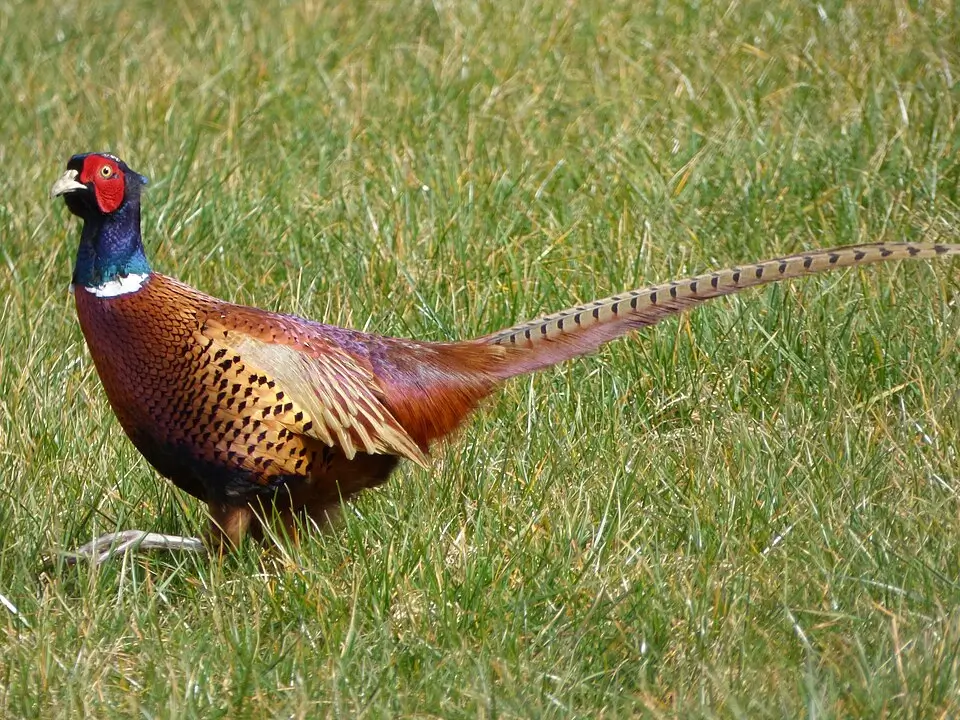
Male Common pheasants, often referred to as roosters or cocks, are renowned for their elaborate and colorful plumage. They typically display rich chestnut and golden-brown body feathers accented with iridescent green and purple tones on the head and neck. A distinctive red facial wattle surrounds the eye, and many males feature a white neck ring — a characteristic particularly associated with the subspecies that was introduced widely throughout North America and Europe. The male's most iconic feature is undoubtedly its long, barred tail, which can comprise a significant portion of the bird's total body length and contributes to its dramatic silhouette in flight.
Female pheasants, known as hens, present a far more subdued appearance. Their mottled brown and buff plumage serves as effective camouflage in grassy and agricultural habitats, providing critical protection during nesting season. While less visually striking than their male counterparts, hens are equally fascinating from a behavioral and ecological standpoint.
Common pheasants are ground-dwelling birds that prefer to walk and run rather than fly whenever possible. However, when flushed by a predator or a hunting dog, they are capable of explosive, nearly vertical takeoffs followed by rapid, low-level flight. This sudden burst of wings and sound is one of the hallmarks of pheasant hunting and a key reason the species is so highly regarded as a game bird.
The Common pheasant is an omnivore, feeding on a wide variety of plant and animal matter. Its diet includes seeds, grains, berries, insects, earthworms, and small vertebrates depending on the season and availability of food sources. This dietary flexibility is one of the reasons the species has adapted so successfully to agricultural landscapes around the world.
Breeding behavior in Common pheasants is polygynous, meaning a single dominant male will typically mate with multiple hens within his territory. Males establish and defend territories through vocalizations and physical displays during the spring breeding season. Hens are solely responsible for incubation and early chick-rearing. A typical clutch consists of several eggs, and chicks are precocial — meaning they are mobile and capable of feeding themselves shortly after hatching, though they remain under the hen's protection for several weeks.
Habitat & Range
The Common pheasant's native range spans a broad swath of Asia, from the Caucasus region — reflected in the species' scientific name, Phasianus colchicus, which references Colchis, an ancient region near the Black Sea — eastward through Central Asia, China, and into the Korean Peninsula and parts of eastern Russia. This geographic origin speaks to the species' long association with diverse landscapes and climates.
Over centuries of intentional introduction for hunting purposes, the Common pheasant has established feral populations on virtually every habitable continent. Europe, North America, Australia, New Zealand, and parts of South America all host introduced populations that have, in many areas, become firmly naturalized components of local ecosystems.
In terms of preferred habitat, Common pheasants are highly adaptable birds. They thrive in areas that offer a mosaic of cover types — a combination of open agricultural fields for foraging, brushy hedgerows or shrubby thickets for escape cover, and grasslands or wetland edges for nesting. This affinity for agricultural landscapes has made the species well-suited to life alongside human land use, and pheasant populations often perform best in areas where farmland is interspersed with natural vegetation.
Dense grasslands, wetland margins, forest edges, and overgrown field margins all provide the kinds of structural diversity that Common pheasants need to meet their year-round habitat requirements. Availability of food — particularly waste grain in agricultural areas — is a major factor influencing where pheasants concentrate, especially during winter months in colder climates.
Hunting Information
The Common pheasant holds a storied and distinguished place in the history of upland hunting. It is widely regarded as one of the premier game birds in the world, celebrated not only for the challenge it presents to hunters and their dogs but also for its outstanding table qualities. Pheasant meat is lean, flavorful, and versatile, making it a prized result of a successful hunt.
Pheasant hunting traditionally involves hunters working through fields and cover in a line, often accompanied by flushing or pointing dogs. Breeds such as Labrador Retrievers, English Springer Spaniels, German Shorthaired Pointers, and Brittany Spaniels have long been favored companions in the pheasant field, using their keen noses to locate birds holding tight in cover before sending them skyward.
The bird's tendency to run ahead of hunters and dogs before flushing — combined with its fast, twisting flight once airborne — makes it a genuinely challenging target and a respected quarry among wingshooters. Successful pheasant hunting demands patience, good shooting skills, and an understanding of the bird's behavior and movement patterns.
Regarding pheasant hunting in Florida specifically, hunters and outdoor enthusiasts should consult the Florida Fish and Wildlife Conservation Commission (FWC) for the most current and accurate regulations. The FWC's Hunting Handbook is the authoritative resource for understanding season dates, licensing requirements, bag limits, and any special rules that apply to upland game birds in the state. Florida's diverse landscape and climate create unique considerations for wildlife management, and the FWC works diligently to provide updated guidance through resources available at MyFWC.com. Prospective hunters are always encouraged to review current regulations prior to any hunting activity, as rules can change from season to season.
Conservation
From a global perspective, the Common pheasant is classified as a species of Least Concern by conservation authorities, reflecting its wide distribution and stable or expanding populations across much of its introduced range. The species' remarkable adaptability to human-modified landscapes has allowed it to thrive even as natural habitats have changed.
Conservation and management of pheasant populations often go hand in hand with broader agricultural and land stewardship practices. Maintaining field margins, hedgerows, cover strips, and brushy areas on and around farmland provides critical habitat not only for pheasants but for a wide range of other wildlife species. Many hunting organizations and conservation groups actively promote habitat improvement projects that benefit pheasants and simultaneously enhance biodiversity across rural landscapes.
Hunting itself plays a meaningful role in pheasant conservation efforts. License fees, excise taxes on hunting equipment under programs like the Federal Aid in Wildlife Restoration Act (Pittman-Robertson Act in the United States), and contributions from sporting organizations fund wildlife research, habitat acquisition, and management programs that benefit both game and non-game species alike.
In regions where pheasant populations are less robust due to habitat loss or land use changes, supplemental stocking programs — in which pen-raised birds are released to supplement wild populations or provide hunting opportunities — are commonly employed. While wild-bred birds are generally considered the gold standard for sustainable hunting, stocking programs continue to provide valuable recreational opportunities for hunters and generate conservation funding that supports broader wildlife management goals.
Conclusion
The Common pheasant is far more than just a game bird. It is a living symbol of the outdoor tradition, a testament to wildlife adaptability, and a compelling subject for anyone with an interest in natural history. From its brilliant colors and dramatic behavior to its global reach and enduring popularity among hunters, Phasianus colchicus occupies a unique and cherished place in the world of wildlife and hunting culture.
Whether you are an experienced wingshooter who has spent decades in the field pursuing roosters, or a newcomer just beginning to explore the world of upland hunting, the Common pheasant offers experiences and memories that few other game birds can match. With responsible management, thoughtful conservation practices, and continued appreciation for the landscapes these birds call home, the Common pheasant will remain a treasured part of the outdoor world for generations to come.