The Canada Goose: A Remarkable Icon of North American Waterfowl
Few birds are as instantly recognizable across North America as the Canada goose (Branta canadensis). With its distinctive black head and neck, bold white cheek patch, and resonant honking call, this waterfowl species has become one of the most widely observed and celebrated birds on the continent. Whether gliding gracefully across a still lake at dawn, flying in precise V-formations overhead, or grazing contentedly on open grasslands, the Canada goose commands attention and respect from wildlife enthusiasts, hunters, and casual observers alike.
The Canada goose holds a special place in the cultural and ecological fabric of North America. It serves as a symbol of the changing seasons — its northward migration heralding the arrival of spring, and its southward journey signaling the onset of autumn. For waterfowl hunters, the Canada goose represents one of the most prized and challenging quarry available, demanding skill, patience, and intimate knowledge of the bird's behavior and habitat preferences. For conservationists, the species offers an extraordinary success story of wildlife management and population recovery that spans several decades.
Understanding the Canada goose — its biology, behavior, habitat requirements, and relationship with human beings — offers a window into the broader world of North American wildlife and the ongoing effort to balance ecological health with the traditions of hunting and outdoor recreation.
Biological Traits
The Canada goose, scientifically classified as Branta canadensis, belongs to the family Anatidae, which encompasses ducks, geese, and swans. It is one of the most widely recognized members of the genus Branta, a group of geese commonly referred to as "black geese" due to the dark coloration prominent on their heads and necks.
One of the most notable biological features of the Canada goose is the considerable variation in size across its recognized subspecies. Taxonomists have historically recognized numerous subspecies of Branta canadensis, ranging from the relatively small cackling goose — which was eventually reclassified as its own separate species, Branta hutchinsii — to the large interior Canada goose. This size variation can be striking: the largest subspecies may weigh several times more than the smallest. Adult Canada geese in the larger subspecies typically display an impressive wingspan and substantial body weight, making them formidable birds by any measure.
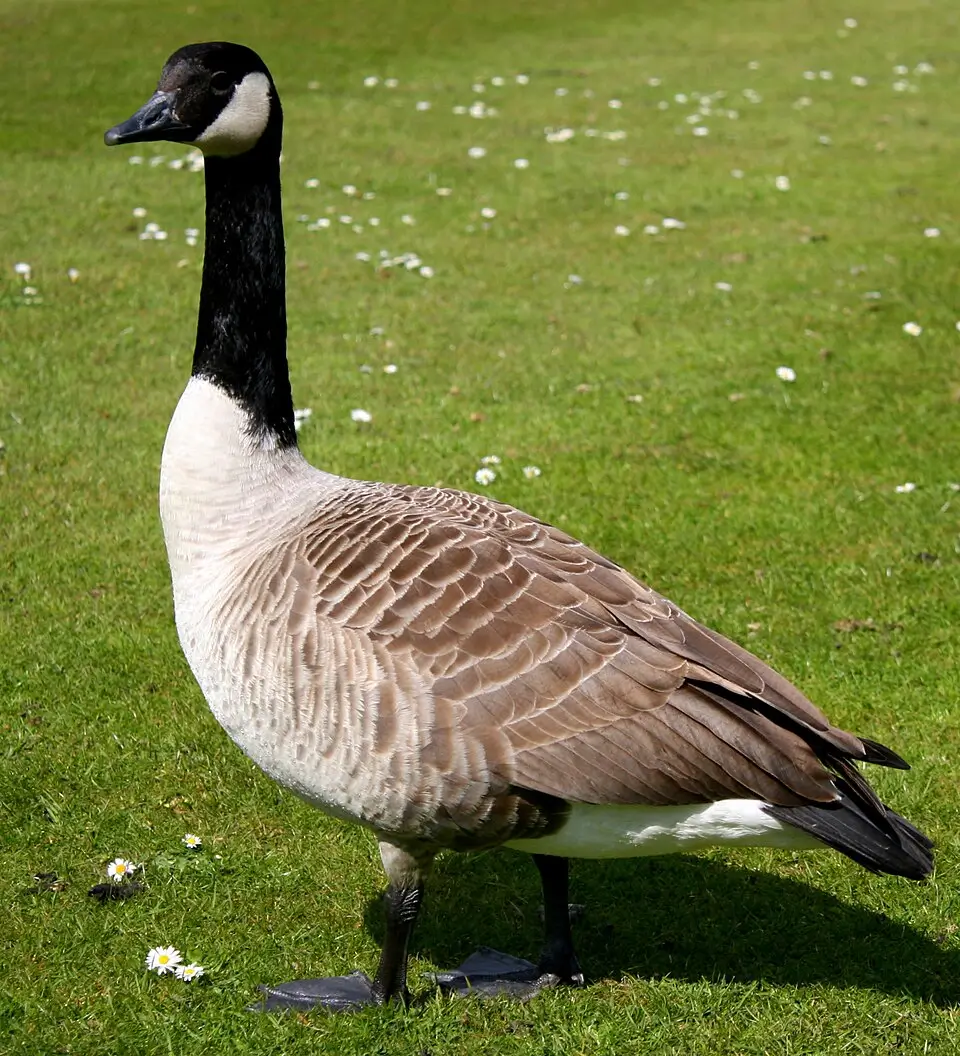
The plumage of the Canada goose is both elegant and distinctive. The head and neck are black, contrasting sharply with a broad white patch that runs from the chin to the cheek — a marking so characteristic that it serves as the primary field identification feature for the species. The body is generally brownish-gray on the back and sides, with a lighter, often creamy or buff-colored breast and underbelly. The tail and rump are black, and the undertail coverts are white, creating a striking pattern visible in flight.
Canada geese are monogamous birds, forming pair bonds that often last for the lifetime of both individuals. This strong pair fidelity is a well-documented behavioral trait that contributes to their social cohesion. Pairs typically reunite each breeding season and cooperate closely in nesting, incubation, and the rearing of young. Females are primarily responsible for incubation, while males stand guard nearby, often aggressively defending the nest site from perceived threats.
Nesting typically occurs in spring, with females laying a clutch of eggs that she incubates for approximately a month. Goslings are precocial — meaning they are born in a relatively advanced state of development — and are capable of walking, swimming, and feeding themselves within hours of hatching. The family unit remains tightly bonded throughout the summer as the goslings grow, and juveniles often remain with their parents through their first migration and winter season.
Canada geese are highly vocal birds. Their calls range from the deep, resonant honk associated with flight and alarm to softer clucking and murmuring sounds used for communication within family groups and flocks. Vocalization plays an important role in flock coordination, especially during migration.
The species is also remarkably long-lived. Wild Canada geese have been documented reaching ages of over 20 years, though average lifespan in the wild is generally shorter due to natural predation, hunting, and environmental hazards.
Habitat & Range
The Canada goose is among the most adaptable and widespread waterfowl species in North America. Its range extends from the Arctic tundra of northern Canada and Alaska — where many populations breed during the summer months — southward through the continental United States, with wintering populations reaching as far south as the Gulf Coast and, increasingly, remaining year-round in many temperate regions.
The species thrives in a remarkable diversity of habitats. During the breeding season, Canada geese favor wetland environments such as lakes, ponds, rivers, marshes, and bogs, where they nest close to water on elevated ground, small islands, or elevated platforms. Proximity to water is a key nesting requirement, as it provides both food resources and an escape route for the vulnerable goslings.
Outside the breeding season, Canada geese exploit a wide range of open habitats for foraging. They are highly effective grazers, feeding extensively on grasses, sedges, aquatic vegetation, and agricultural crops such as corn, wheat, and soybeans. This dietary flexibility has enabled the species to thrive in human-altered landscapes, including parks, golf courses, suburban ponds, and agricultural fields, in addition to more natural environments.
In the context of Florida and the broader Southeastern United States, Canada geese are present primarily during the winter months as migratory visitors, though resident populations have become established in various parts of the country, including some areas of the Southeast. Florida's extensive network of lakes, wetlands, rivers, and coastal areas — along with its abundant agricultural landscapes — provides suitable wintering habitat for geese making the southward journey from more northern breeding grounds. The state's unique position at the southeastern corner of the continent, bordered by the Gulf of Mexico, the Atlantic Ocean, and neighboring states of Georgia and Alabama to the north, places it within reach of waterfowl migrating along the Atlantic and Mississippi flyways.
Hunting Information
The Canada goose is one of the most popular and sought-after waterfowl species among hunters throughout North America, and Florida is no exception to this tradition. Waterfowl hunting, including the pursuit of Canada geese, is a time-honored outdoor activity that requires careful preparation, knowledge of bird behavior, and adherence to applicable regulations.
In Florida, waterfowl hunting is overseen by the Florida Fish and Wildlife Conservation Commission (FWC). The FWC publishes comprehensive hunting regulations through the Florida Hunting Handbook, which provides summaries of regulations applicable to both private and public lands. Hunters interested in pursuing Canada geese in Florida are encouraged to consult the most current edition of the Hunting Handbook and visit the official FWC website (MyFWC.com) for up-to-date information on season dates, bag limits, licensing requirements, and any applicable quota hunts.
The FWC also manages a system of Wildlife Management Areas (WMAs) across the state, providing public hunting opportunities in diverse habitats. Hunters can check the open and closed status of FWC-managed areas through the MyFWC.com/Notices portal, ensuring they have current information before heading afield.
Because waterfowl hunting regulations — including those for Canada geese — are established cooperatively between federal wildlife agencies and state wildlife commissions, and because season dates and limits can vary from year to year based on population data and management objectives, it is essential that every hunter obtain the appropriate federal and state licenses and stamps, and carefully review current regulations before each season. This commitment to regulatory compliance is both a legal obligation and an expression of the ethical hunting traditions that have long supported wildlife conservation across North America.
Conservation
The conservation story of the Canada goose is one of the most compelling in the history of North American wildlife management. By the mid-20th century, several subspecies of Canada goose had experienced significant population declines due to habitat loss, overhunting, and other pressures. Dedicated conservation efforts — including habitat protection, regulated hunting, and active management programs — helped reverse these declines and restore populations across much of the species' range.
Today, Canada goose populations are generally robust across much of North America, a testament to the effectiveness of science-based wildlife management. Collaborative frameworks between federal agencies such as the U.S. Fish and Wildlife Service, state wildlife agencies, and conservation organizations have been instrumental in achieving this success. The North American Waterfowl Management Plan, first signed in 1986, has served as a guiding framework for waterfowl conservation across the continent, emphasizing habitat conservation and population monitoring.
Hunters themselves have played a meaningful role in Canada goose conservation. Through the purchase of hunting licenses, federal duck stamps, and support for habitat conservation programs, the hunting community contributes significant financial resources to the protection and restoration of wetland habitats that benefit geese and countless other wildlife species.
In Florida, the FWC continues its work to manage wildlife resources responsibly, balancing the needs of wildlife populations with the interests of hunters, anglers, and outdoor enthusiasts. The agency's commitment to science-based management and public access to hunting opportunities reflects a broader conservation ethic shared by wildlife professionals and hunters across the state.
Conclusion
The Canada goose stands as an enduring emblem of North American wildlife — resilient, adaptable, and deeply woven into the outdoor traditions of hunters and nature lovers alike. From its striking black-and-white plumage and resonant calls to its remarkable migrations and strong family bonds, Branta canadensis is a species that rewards careful observation and respectful pursuit. In Florida and throughout its vast range, the Canada goose continues to inspire those who venture outdoors, reminding us of the richness of the natural world and the importance of thoughtful stewardship.