The Wild Turkey (Meleagris gallopavo): America's Most Iconic Game Bird
Few animals are as deeply woven into the cultural and natural fabric of North America as the wild turkey. Long before it became a symbol of Thanksgiving feasts, the wild turkey — known scientifically as Meleagris gallopavo — roamed forests, grasslands, and open woodlands across the continent in remarkable abundance. Today, this magnificent bird stands as one of the great conservation success stories of modern wildlife management, having rebounded from dangerously low numbers in the early twentieth century to thriving populations across much of the United States, including the Mid-Atlantic state of Delaware.
Whether you are an experienced turkey hunter, a wildlife enthusiast, or simply someone who appreciates the natural world, the wild turkey offers something extraordinary to observe and admire. It is a bird of bold character — wary, intelligent, and surprisingly agile — and it plays a meaningful ecological role in the habitats it calls home. This article explores the biology, habitat preferences, hunting traditions, and conservation story of Meleagris gallopavo, with particular attention to its presence in the First State of Delaware.
Biological Traits
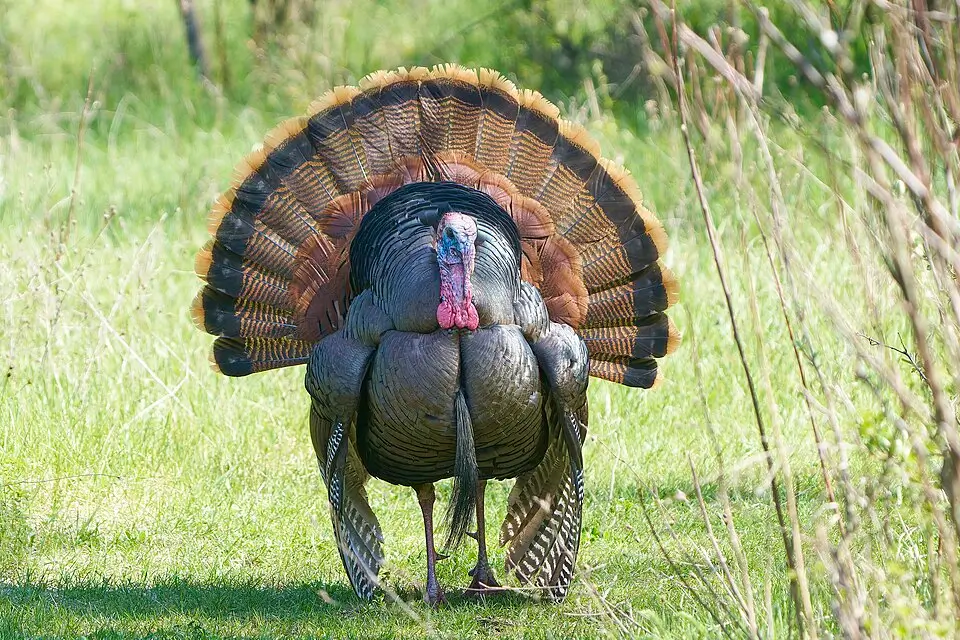
The wild turkey is the largest game bird native to North America, and it carries an unmistakable presence wherever it is found. Adult males, known as toms or gobblers, are celebrated for their dramatic physical features. They display iridescent plumage that shifts between shades of bronze, copper, green, and black depending on the angle of light, giving them a jewel-like quality that can catch even the most casual observer off guard. The tom's bare head and neck are adorned with red, white, and blue coloration that intensifies during displays of courtship or agitation. Hanging from the chest of a mature male is a distinctive tuft of coarse, bristle-like feathers known as a beard — a feature prized by hunters and wildlife observers alike as a mark of age and maturity. Males also possess sharp, bony spurs on the back of their legs, which they use in competition with rival males during the breeding season.
Female turkeys, called hens, are considerably more subdued in appearance. Their plumage tends toward brown and buff tones, providing excellent camouflage in the leaf litter and undergrowth of forest floors. This cryptic coloration is not merely decorative — it plays a critical survival role during the nesting season, when hens must remain inconspicuous while incubating their clutches of eggs.
One of the most recognizable behaviors of the wild turkey is the gobble, a loud, resonant call produced by male birds, particularly in spring. This vocalization travels remarkably long distances through woodlands and serves to attract hens and assert dominance over competing males. Beyond the gobble, wild turkeys communicate through a diverse vocabulary of clucks, putts, purrs, yelps, and cackles, each conveying specific social information within the flock.
Wild turkeys are also capable fliers despite their substantial size, often roosting in trees at night to avoid ground-based predators. During the day, they forage on foot, moving through their home range in search of food. Their diet is impressively varied and includes acorns, nuts, seeds, berries, insects, and small reptiles or amphibians. This dietary flexibility is one reason wild turkeys thrive across such a wide range of habitats and geographic regions.
The breeding season, commonly referred to as the spring gobbler season among hunters, is a spectacular time of year. Dominant toms fan their tail feathers into a broad, sweeping display, puff out their body feathers, drag their wing tips along the ground, and strut in the classic posture that has made the wild turkey one of the most recognized birds in North America. After mating, hens nest on the ground, typically in a shallow depression lined with leaves, where they incubate a clutch of eggs for approximately four weeks. The young poults are precocial, meaning they are mobile and capable of following their mother within hours of hatching — an important trait for ground-nesting birds in predator-rich environments.
Habitat & Range
The wild turkey is a highly adaptable species capable of thriving in a diverse array of environments. Broadly speaking, Meleagris gallopavo favors a mosaic of habitats — a patchwork of mature forest, open woodland, agricultural fields, meadows, and brushy edges that together provide the food, cover, and roosting opportunities the species requires.
Hardwood forests rich in mast-producing trees, particularly oaks, are especially important to wild turkeys. Acorns are a cornerstone of the turkey's diet during fall and winter, providing high-calorie fuel when other food sources are scarce. Riparian corridors, wetland edges, and agricultural landscapes also contribute to the turkey's year-round nutritional needs, offering insects, grain, and a variety of plant foods.
In terms of overall range, the wild turkey has been successfully reintroduced across much of the United States following dramatic population declines in the nineteenth and early twentieth centuries. Today, populations can be found from the dense forests of New England southward through the Appalachians, across the Gulf Coast states, throughout the Midwest and Great Plains, and into the Pacific Coast states.
Delaware, nestled in the Mid-Atlantic region and bordered by Maryland, Pennsylvania, New Jersey, and the Atlantic Ocean, provides a variety of habitats suitable for wild turkey populations. The state's mixture of agricultural land, forested tracts, and transitional edge habitats offers the kind of diverse landscape that wild turkeys need to flourish. Delaware's geography — spanning from the Piedmont region in the north to the coastal plain in the south — encompasses the wooded areas and open fields that support healthy turkey populations across both the spring and fall seasons.
Hunting Information
The wild turkey is one of the most pursued game birds in the United States, and turkey hunting carries a rich tradition that spans generations of American outdoor culture. Spring turkey hunting, in particular, is a beloved seasonal pursuit in which hunters use calls to mimic the sounds of receptive hens in order to attract lovesick toms within range. The challenge of fooling a wild turkey's keen eyesight and sharp hearing makes spring turkey hunting one of the most demanding and rewarding forms of bird hunting available.
Fall turkey hunting, while less universally practiced, has its own devoted following. Rather than relying primarily on breeding instincts, fall turkey hunters often scatter flocks and then call scattered birds back together using assembly calls and kee-kee runs.
For hunters interested in pursuing wild turkeys in Delaware, the state's hunting activities are overseen by the Delaware Department of Natural Resources and Environmental Control (DNREC), specifically through the Division of Fish and Wildlife. Hunters are encouraged to consult the official DNREC resources for the most current and accurate information regarding season dates, licensing requirements, bag limits, and any special regulations that may apply to specific wildlife management areas across the state.
Because hunting regulations are subject to change from year to year, it is essential that hunters check directly with the DNREC Division of Fish and Wildlife prior to each season. Doing so ensures full legal compliance and also keeps hunters informed of any updates to management strategies designed to maintain healthy and sustainable turkey populations throughout Delaware.
Ethical, law-abiding hunters play a meaningful role in the broader conservation of wild turkeys, as license fees and excise taxes on hunting equipment fund wildlife management programs that benefit not only game species but entire ecosystems.
Conservation
The conservation story of the wild turkey is one of the most inspiring chapters in North American wildlife history. By the early decades of the twentieth century, unregulated hunting and widespread habitat loss had reduced wild turkey populations to critically low levels across much of their historic range. Entire regions that had once supported robust flocks were left without turkeys entirely.
The recovery of the species was achieved through the concerted efforts of wildlife managers, state and federal agencies, and conservation organizations — most notably the National Wild Turkey Federation, which has played a pivotal role in funding research, habitat restoration, and trap-and-transfer reintroduction programs. By capturing wild turkeys from established populations and releasing them into suitable but depopulated habitats, wildlife managers achieved one of the most successful large-scale game bird restoration efforts ever undertaken in North America.
Today, the wild turkey is no longer a species in jeopardy — it is a thriving symbol of what thoughtful wildlife management and conservation investment can accomplish. Populations are monitored carefully by state wildlife agencies, including Delaware's Division of Fish and Wildlife under DNREC, to ensure that harvest levels remain sustainable and that habitat quality continues to support healthy flocks.
Ongoing habitat conservation efforts — including the protection and restoration of hardwood forests, the promotion of wildlife-friendly agricultural practices, and the preservation of riparian corridors — continue to benefit wild turkey populations alongside countless other species that share their habitat.
For anyone fortunate enough to encounter a wild turkey in the field, whether as a hunter, birder, or hiker, the experience is a powerful reminder of the richness of North America's wildlife heritage and the importance of safeguarding it for generations to come.