The American Mink: A Sleek and Resourceful Predator of Delaware's Waterways
Few animals embody the wild spirit of North America's wetlands quite like the American mink. Lithe, determined, and perpetually on the move, this semi-aquatic mustelid has fascinated naturalists, trappers, and wildlife enthusiasts for centuries. Known scientifically as Neogale vison, the American mink is one of the continent's most adaptable and capable small predators, equally at home slipping beneath the surface of a slow-moving creek or darting through dense riverside vegetation in pursuit of prey. In a state like Delaware — with its rich network of tidal marshes, freshwater streams, and coastal wetlands — the American mink finds an ideal home, threading through some of the Mid-Atlantic's most ecologically productive landscapes.
Whether you are a wildlife observer hoping to catch a fleeting glimpse of this secretive creature along a marshy bank, a trapper with a deep respect for the traditions of the trade, or simply a curious reader who wants to understand the natural world a little better, the story of the American mink is one well worth knowing. This article explores the biology, behavior, habitat, and conservation status of Neogale vison, with particular attention to its presence in the First State.
Biological Traits
The American mink is a member of the family Mustelidae, a diverse and successful group of carnivorous mammals that also includes otters, weasels, badgers, and wolverines. Within this family, mink are closely related to weasels and share many of their physical and behavioral characteristics — though the mink is notably larger and more closely tied to aquatic environments.
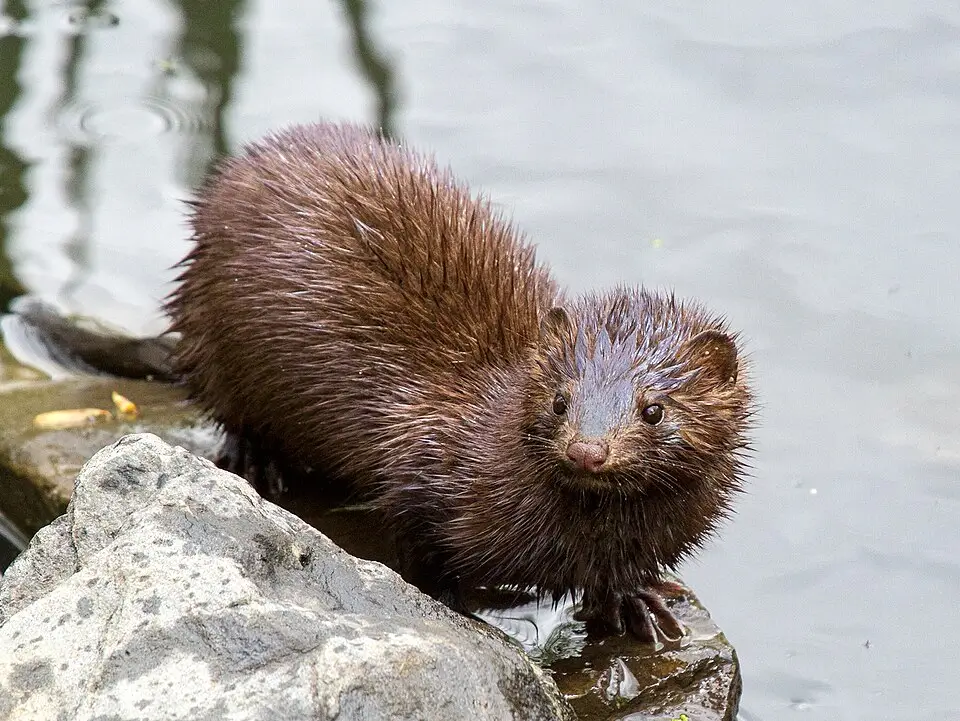
In terms of appearance, the American mink is a striking animal. Its fur is dense, lustrous, and typically a rich chocolate brown, often slightly darker along the back and tail, with occasional white patches on the chin or throat. This coat is famously soft and water-resistant, a quality that made wild mink one of the most sought-after animals in the North American fur trade for hundreds of years. The underfur is thick and fine, providing exceptional insulation in cold water, while the outer guard hairs repel moisture with remarkable efficiency.
The mink's body is long and slender — a classic mustelid build designed for agility in tight spaces and underwater pursuit. Males are noticeably larger than females, a degree of sexual dimorphism common across the weasel family. Males can weigh anywhere from roughly one to nearly two kilograms, while females are considerably lighter. Both sexes have short, sturdy legs, partially webbed feet that aid in swimming, and a relatively long, bushy tail.
Like many mustelids, the American mink possesses well-developed anal scent glands, which it uses for territorial marking and communication. The scent produced by these glands is strong and musky — familiar to anyone who has spent time trapping or handling live wildlife along watercourses.
Mink are obligate carnivores with a broad and opportunistic diet. They are fearless and aggressive hunters for their size, regularly taking prey larger than themselves. Their diet typically includes small mammals such as muskrats, mice, and voles; a variety of birds and bird eggs; fish; frogs and other amphibians; crayfish; and various invertebrates. This dietary flexibility makes them highly successful across a wide range of environments.
Reproduction in the American mink follows a seasonal pattern typical of the mustelid family. Mating generally occurs in late winter or early spring, and like several of its relatives, the mink is capable of delayed implantation — a reproductive strategy in which the fertilized egg does not immediately implant in the uterus but is held in a state of developmental pause before gestation proceeds. This adaptation allows the timing of birth to be aligned with favorable environmental conditions. Kits are born in late spring, typically in litters of several young, and are raised in dens located in riverbanks, among tree roots, or in the abandoned burrows of other animals.
The young are born blind and helpless but develop quickly. By late summer, juveniles are largely independent and begin to disperse to establish their own territories. Adult mink are generally solitary animals outside of the breeding season and maintain defined home ranges along waterways, which they patrol and defend against rivals of the same sex.
Habitat & Range
The American mink is native to North America and enjoys one of the broadest natural distributions of any semi-aquatic mammal on the continent. Its range extends from Alaska and Canada southward through much of the contiguous United States, encompassing a vast array of freshwater and coastal habitats. The species is absent only from the driest desert regions and certain high-elevation zones where suitable water habitats are lacking.
In terms of preferred habitat, the American mink is intimately linked to water. Rivers, streams, lakes, ponds, marshes, swamps, and coastal estuaries all provide suitable habitat, provided they support adequate prey populations and offer den sites along their margins. Riparian zones — the vegetated corridors along waterways — are especially important to mink, as the dense cover of shrubs, grasses, and woody debris offers both protection from predators and excellent hunting opportunities.
Delaware, despite being one of the smallest states in the nation, offers a surprisingly diverse range of mink habitat. The state's geography encompasses tidal wetlands along the Delaware Bay and the Atlantic coast, inland freshwater marshes and pond systems, and the wooded streams and creek bottoms of the Piedmont region in the north. The southern portions of Delaware, particularly around the extensive wetland complexes of the Delmarva Peninsula, provide some of the richest mink habitat in the Mid-Atlantic region. These areas, managed in part through the Delaware Department of Natural Resources and Environmental Control (DNREC) Division of Fish and Wildlife, support robust communities of wetland wildlife, with the American mink as one of the resident apex predators at the smaller end of the size spectrum.
The mink's semi-aquatic lifestyle also means that water quality and wetland health are directly tied to the health of local mink populations. Healthy streams and marshes support the fish, amphibians, and small mammals that mink depend upon, making the species an informal indicator of broader ecosystem vitality.
Hunting and Trapping Information
The American mink has a long and storied history in the context of North American trapping culture. For generations, trappers have pursued mink along streams and wetland edges, valuing the animal's exceptional pelt for the fur trade. Mink trapping, in particular, is considered a skilled and tradition-rich pursuit that requires detailed knowledge of the animal's movements, habits, and habitat preferences.
In Delaware, hunting and trapping activities, including those related to furbearers like the American mink, fall under the regulatory authority of the DNREC Division of Fish and Wildlife. Anyone interested in pursuing mink through trapping or other legal means in Delaware is strongly encouraged to consult the most current regulations published directly by the DNREC, as season dates, licensing requirements, and any specific rules governing furbearer harvest are subject to change and must be verified through official state sources.
Because the source data available for this article does not include specific season dates or current license requirements for mink in Delaware, we are unable to provide those details here. Hunters and trappers should always refer to the official DNREC website or contact the Division of Fish and Wildlife directly to ensure they have the most accurate and up-to-date regulatory information before taking to the field.
What can be said generally is that mink trapping in the Mid-Atlantic region is traditionally a late-autumn and winter activity, timed to coincide with the period when mink fur is at its prime condition — thick, glossy, and fully developed following the seasonal growth cycle. Successful mink trappers typically set their traps near water's edge, focusing on sites where mink activity is evident through tracks, slides, or scat. Common trap sets include pocket sets near the water's margin and box-style traps positioned along well-traveled mink runs in dense cover.
Responsible harvest of furbearers like the American mink represents an important element of North American wildlife management. Regulated trapping, when conducted within the bounds of state law and ethical practice, contributes meaningfully to wildlife population monitoring and can support conservation funding through licensing revenues.
Conservation
The American mink is currently listed as a species of least concern on the International Union for Conservation of Nature (IUCN) Red List, reflecting its wide distribution and generally stable populations across much of its native range. The species has shown a commendable ability to adapt to human-altered landscapes, persisting in agricultural stream corridors, suburban wetlands, and managed wildlife areas where food and water are available.
That said, the American mink is not entirely without conservation concerns. Wetland loss and degradation remain significant pressures across the United States, and as a species so closely tied to aquatic habitats, the mink is naturally affected by the health and extent of riparian and wetland ecosystems. Pollution, particularly from agricultural runoff and industrial contaminants, can impact prey availability and accumulate in the tissues of top predators like mink through bioaccumulation.
In Delaware, the conservation of mink and other wetland-dependent species is supported by the work of the DNREC Division of Fish and Wildlife, which oversees habitat management, species monitoring, and regulated harvest programs throughout the state. Delaware's relatively small land area belies the ecological importance of its wetland systems, which provide critical habitat not only for resident species like the American mink but also for migratory birds and a host of other wildlife that depend on the Mid-Atlantic's coastal and inland wetlands as part of larger landscape-scale systems.
The American mink also plays an important ecological role as a predator, helping to regulate populations of small mammals, fish, and amphibians within its territory. Maintaining healthy mink populations is therefore not only a matter of species-level conservation but also contributes to the overall balance and function of the wetland ecosystems they inhabit.
For wildlife enthusiasts visiting Delaware's extensive network of wildlife management areas, state parks, and natural areas, the American mink remains one of the more exciting and rewarding — if elusive — species to observe. Early morning and late evening hours near quiet waterways offer the best chances of a sighting, particularly in areas with abundant emergent vegetation and clear signs of aquatic prey activity.
Conclusion
The American mink, Neogale vison, is a remarkable animal — a compact but formidable predator perfectly engineered for life along the water's edge. From its dense, water-repellent fur to its quick, inquisitive temperament and wide-ranging diet, the mink stands as one of North America's most successful small carnivores. In Delaware, it finds a landscape rich in the wetland habitats it calls home, contributing to the ecological fabric of a state that, despite its modest size, carries outsized natural value.
Whether viewed through the lens of natural history, hunting tradition, or conservation biology, the American mink deserves recognition and respect as one of the defining wildlife species of the eastern United States waterscape.