The American Black Duck: A Compelling Waterfowl of the Eastern Wetlands
Few waterfowl species carry the same mystique and appeal among hunters and wildlife enthusiasts as the American black duck (Anas rubripes). This robust, darkly plumaged dabbling duck has long been considered one of the premier game birds along the Atlantic Flyway, drawing passionate interest from waterfowlers who respect its wariness, its beauty, and the rich wetland habitats it calls home. From the tidal marshes of the Mid-Atlantic coast to the boreal forests of eastern Canada, the American black duck occupies a special place in both the natural world and the traditions of North American hunting culture.
Often mistaken at a glance for a dark hen mallard, the American black duck is in fact a distinct and fascinating species in its own right. It is one of the most recognizable waterfowl found along the eastern seaboard of North America, and its presence in coastal states like Delaware speaks to the critical importance of protecting and managing the wetland ecosystems that support it. Whether you are a seasoned waterfowl hunter, a dedicated birder, or simply someone who appreciates the remarkable biodiversity of North American wildlife, the American black duck is a species worthy of your attention and admiration.
Biological Traits
The American black duck (Anas rubripes) belongs to the family Anatidae, the large and diverse family that includes all ducks, geese, and swans. It is classified within the genus Anas, which groups it alongside familiar dabbling ducks such as the mallard (Anas platyrhynchos), the northern pintail, and the gadwall. Dabbling ducks are surface feeders — they tip forward in shallow water to reach submerged vegetation and invertebrates rather than diving deeply like sea ducks.
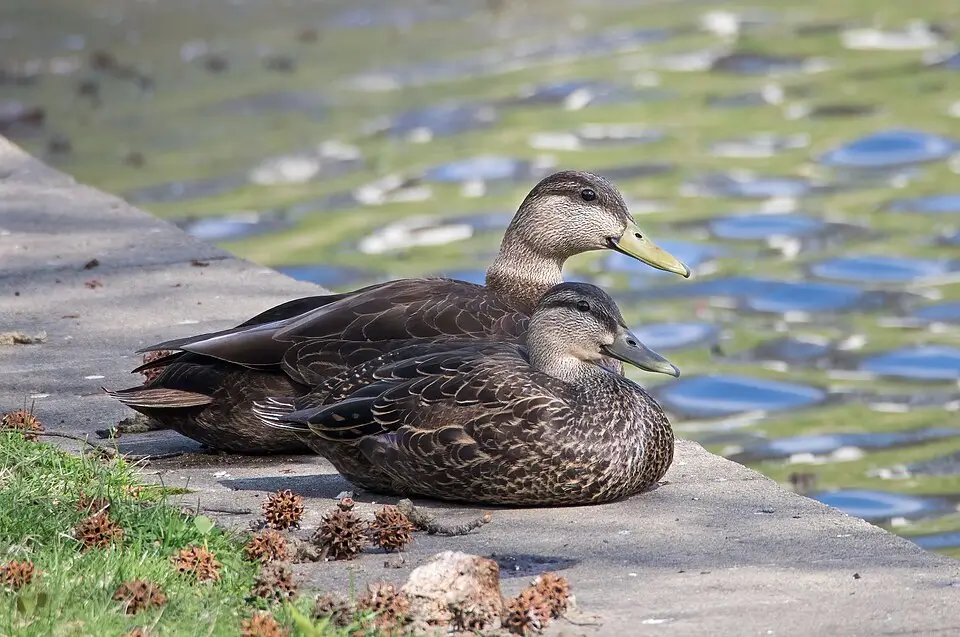
One of the American black duck's most immediately striking features is its plumage. Both males and females display a rich, sooty brown to blackish-brown body coloration, which provides excellent camouflage in the dark, tangled vegetation of marsh edges and wooded swamps. The head and neck are slightly paler, often appearing a warm buffy brown that contrasts subtly against the darker body. In flight, the white underwings flash brilliantly against the dark body, creating a distinctive visual pattern that experienced hunters and birders quickly learn to recognize.
Perhaps the most vivid field mark is the iridescent violet-blue speculum — the patch of distinctive coloring on the secondary wing feathers — which is bordered by black rather than the white borders seen on the very similar mallard. This detail, along with the overall dark coloration, is one of the key distinguishing features separating the American black duck from its close relative.
Male and female American black ducks are notably similar in appearance, which sets them apart from many other duck species where males display dramatically different breeding plumage. Males, however, typically have a yellow-olive bill, while females tend to show a duller, more greenish or olive-colored bill that may be marked with dark mottling. Both sexes have orange-red legs and feet, a feature that adds a vivid splash of color to an otherwise dark bird.
The American black duck is a medium to large dabbling duck, comparable in size to the mallard. Its calls are similar to those of the mallard as well, with females producing the classic, resonant descending quack familiar to most people, while males give a quieter, raspier call.
Like many dabbling ducks, the American black duck is an omnivore. Its diet varies with the seasons and the availability of food sources, encompassing aquatic plants, seeds, grasses, berries, mollusks, crustaceans, aquatic insects, and small fish. This dietary flexibility makes it well-suited to a wide range of wetland environments across its range.
Habitat & Range
The American black duck is fundamentally a bird of eastern North America, and its range reflects a strong association with the diverse wetland habitats found throughout this region. Its breeding range extends from the boreal forests and tundra edges of Labrador and northern Quebec southward through the Great Lakes region and into the northeastern United States. It is strongly associated with forested wetlands during the breeding season, nesting near lakes, ponds, rivers, bogs, and marshes across this vast northern landscape.
During migration and winter, American black ducks move southward along the Atlantic Flyway, one of North America's four major migratory bird corridors. Wintering birds spread across the coastal and inland wetlands of the eastern United States, from New England south through the Mid-Atlantic states and into the Southeast. Coastal marshes, estuaries, tidal flats, freshwater impoundments, and agricultural fields all serve as important wintering habitat.
The state of Delaware, situated squarely in the Mid-Atlantic region and bordering both the Delaware Bay and the Atlantic Ocean, represents prime wintering and stopover habitat for the American black duck. Delaware's diverse wetland landscape — encompassing tidal marshes, freshwater wetlands, agricultural areas, and the expansive shallows of the Delaware Bay — provides ideal conditions for black ducks to rest and feed during migration and through the winter months. The Delaware Bay in particular is recognized as one of the most ecologically significant estuaries on the East Coast, supporting enormous concentrations of migratory waterbirds.
American black ducks tend to favor more secluded, vegetated wetlands over open water, a behavioral tendency that reflects both their need for cover and their well-documented wariness. They are frequently found along marsh edges, in wooded swamps, and in the shallow, vegetation-choked borders of tidal creeks and ponds where they can feed and rest with a measure of security.
Hunting Information
The American black duck has a long and storied history as a game bird in North America, particularly among hunters who pursue waterfowl along the Atlantic Flyway. It is widely regarded as one of the wariest and most challenging ducks to hunt, earning it a devoted following among serious waterfowlers who relish the difficulty of consistently bringing this bird to the decoys.
Its reputation for wariness is well earned. American black ducks are notoriously sharp-eyed and cautious, often circling decoy spreads from a distance before committing — or refusing to commit at all. Successful black duck hunting typically demands meticulous attention to concealment, realistic decoy spreads, and calling restraint. Many experienced hunters note that over-calling will push black ducks away rather than draw them in. This challenge is a significant part of what makes the black duck such a prized target among dedicated waterfowlers.
Hunting for American black ducks in Delaware falls under the jurisdiction of the Delaware Department of Natural Resources and Environmental Control (DNREC), Division of Fish and Wildlife. Delaware's position along the Atlantic Flyway makes it an excellent destination for waterfowl hunters, and the state's tidal marshes, freshwater wetlands, and coastal areas provide productive habitat for black ducks during the hunting season. Hunters pursuing black ducks in Delaware should consult the current DNREC hunting regulations for specific season dates, bag limits, licensing requirements, and any applicable special regulations, as these details are subject to change annually and are carefully managed to support sustainable populations.
It is worth noting that the American black duck is subject to specific and carefully considered harvest regulations throughout its range, reflecting the attention that wildlife managers devote to ensuring the long-term health of the population. Hunters are encouraged to stay current with all applicable federal and state regulations, obtain all required licenses and stamps, and practice ethical, responsible hunting that honors both the resource and the tradition.
Conservation
The conservation status and management of the American black duck has been a topic of considerable attention among wildlife biologists, conservation organizations, and waterfowl managers over the decades. The species faces a range of challenges that make thoughtful management and habitat protection critically important.
One of the significant conservation concerns surrounding the American black duck is its tendency to hybridize with the closely related mallard. As mallard populations have expanded eastward — in part due to habitat changes, land use patterns, and deliberate introductions — encounters between the two species have increased, leading to hybridization that some researchers believe poses a genetic conservation challenge for the pure black duck population. This interbreeding is an ongoing area of scientific study and management interest.
Habitat loss and degradation represent additional pressures on American black duck populations. The tidal marshes, coastal wetlands, forested swamps, and boreal bogs that this species depends upon are vulnerable to drainage, development, sea level rise, and other forms of environmental change. Protecting and restoring these habitats is essential not only for the black duck but for the entire suite of species — from shorebirds and wading birds to fish and invertebrates — that depend on healthy wetland ecosystems.
In Delaware, state and federal agencies, along with conservation organizations, work actively to protect and manage wetland habitats that benefit black ducks and other migratory waterfowl. The Delaware Division of Fish and Wildlife, operating under DNREC, plays a central role in these efforts, overseeing wildlife management areas, coordinating with federal partners, and setting hunting regulations that reflect the best available science.
Conservation-minded hunters also play an important role in black duck stewardship. The purchase of federal duck stamps, state waterfowl licenses, and contributions to habitat-focused conservation organizations translate directly into wetland protection and restoration projects that benefit American black ducks and countless other species. Waterfowl hunters have a proud tradition of supporting conservation, and the black duck is a prime example of a species whose future depends on that continued commitment.
Conclusion
The American black duck is a remarkable bird — bold in appearance, sharp in temperament, and deeply woven into the ecological fabric of eastern North America's wetlands. For wildlife enthusiasts and hunters alike, it represents the best of what the Atlantic Flyway has to offer. In Delaware, the black duck finds productive wintering habitat along the Delaware Bay and the state's rich network of coastal and freshwater wetlands, making it a signature species of the region's waterfowl community. By supporting habitat conservation, following all applicable regulations, and approaching this wary bird with the respect it deserves, hunters and wildlife lovers can help ensure that the American black duck continues to grace the marshes and estuaries of the East Coast for generations to come.