White-Tailed Deer: A Complete Guide to Odocoileus virginianus
Few animals capture the spirit of the American wilderness quite like the white-tailed deer. Graceful, adaptable, and endlessly fascinating, the white-tailed deer (Odocoileus virginianus) is one of the most widely recognized and beloved wildlife species on the North American continent. From the dense hardwood forests of the Mid-Atlantic coast to the sweeping plains of the Midwest, these elegant animals have carved out a remarkable place in both the natural world and in the hearts of wildlife enthusiasts, conservationists, and hunters alike.
In a state like Delaware — a compact but ecologically diverse Mid-Atlantic gem bordered by Maryland, Pennsylvania, New Jersey, and the Atlantic Ocean — the white-tailed deer is a cornerstone of local wildlife culture. Whether spotted at dawn along a tidal creek, bounding through a soybean field at dusk, or spotted quietly browsing at the edge of a suburban woodlot, the white-tailed deer is a constant and cherished presence in the Delaware landscape.
This article explores the biology, habitat, behavior, and hunting traditions surrounding this iconic species, offering a comprehensive look at why the white-tailed deer continues to inspire admiration and pursuit across generations of outdoor enthusiasts.
Biological Traits
The white-tailed deer, Odocoileus virginianus, belongs to the family Cervidae — the same family that includes elk, moose, caribou, and other members of the deer family. The species name virginianus references Virginia, the region where the species was first formally described by Western science, a fitting nod given Delaware's own deep colonial history and its geographic proximity to the Chesapeake and Mid-Atlantic region.
One of the most distinctive features of this species is, of course, the namesake white tail. When alarmed or fleeing from danger, white-tailed deer raise their tail to reveal a brilliant flash of white, a behavior believed to serve as both a warning signal to other deer and a means of communication within a group. This raised tail, sometimes called "flagging," is one of the most recognizable sights in North American wildlife.
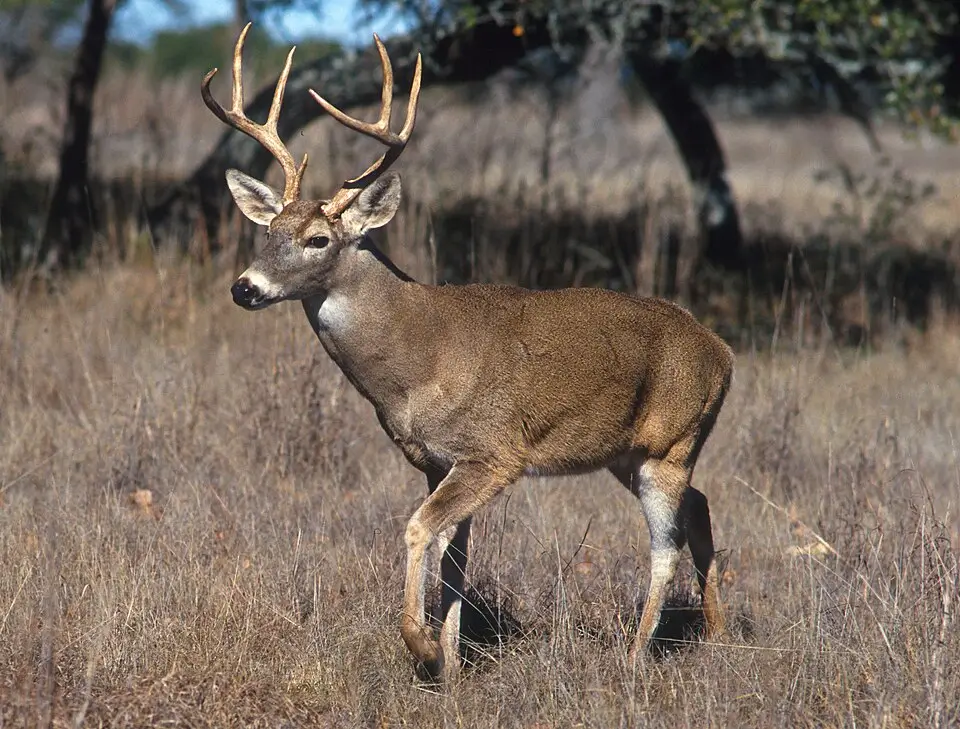
White-tailed deer are sexually dimorphic, meaning males and females differ noticeably in size and physical characteristics. Male deer, known as bucks, are generally larger than females, known as does. Bucks are most readily identified by their antlers, which are grown and shed on an annual cycle. Antler growth begins in spring, stimulated by increasing daylight and rising testosterone levels, and the growing antlers are covered in a soft, blood-rich tissue called velvet. As summer transitions into fall, velvet dries and is shed, leaving behind the hardened bone-like antlers that bucks carry through the breeding season. After the rut — the white-tailed deer's breeding season — antlers are shed, typically in winter, and the cycle begins again.
Does, by contrast, are typically smaller and more slender in build. They are the primary caregivers for fawns, which are born in late spring and early summer. Fawns are famous for their spotted coats, a form of natural camouflage that helps them blend into the dappled light of forest floors and tall grass. These spots fade as the fawn matures into its adult coat.
The coat of an adult white-tailed deer changes with the seasons. In summer, the coat takes on a reddish-brown hue, while in fall and winter, it transitions to a cooler, grayish-brown that helps the animal blend into the subdued tones of the dormant landscape. This seasonal coat change is driven by hormonal shifts and changing photoperiod.
White-tailed deer are ruminants, meaning they have a four-chambered stomach and chew cud. Their diet is extraordinarily varied and opportunistic, encompassing grasses, leaves, agricultural crops, fruits, nuts (particularly acorns), and woody browse. This dietary flexibility is one of the key reasons white-tailed deer have thrived across such a wide range of environments.
The sense of smell in white-tailed deer is extraordinary — widely regarded as their most powerful defensive tool. Their olfactory system is many times more sensitive than that of humans, allowing them to detect predators, other deer, and even human scent from impressive distances. Their hearing is similarly acute, with large, mobile ears that can rotate independently to pinpoint sounds. Their eyesight, while not as refined for color as human vision, is highly sensitive to motion, making them exceptionally alert animals in the wild.
Habitat & Range
The white-tailed deer is one of the most widely distributed large mammals in the Western Hemisphere. Its range extends from southern Canada through the entire continental United States, continuing south through Central America and into parts of South America. Within the United States, the species is found in virtually every state, thriving in an extraordinary array of environments.
White-tailed deer are considered an edge species, meaning they tend to favor transitional zones between different habitat types — places where forest meets field, where woodlands border wetlands, or where agricultural land edges up against brushy cover. These edge habitats provide the ideal combination of food, water, and shelter that white-tailed deer require.
In Delaware, the landscape is particularly well-suited to support healthy deer populations. Delaware's geography, tucked between the Chesapeake Bay watershed to the west and the Atlantic coast to the east, offers a mosaic of habitats including tidal marshes, mixed hardwood forests, agricultural fields, and suburban green spaces. This variety of terrain creates abundant edge habitat that white-tailed deer find highly attractive.
Delaware's relatively mild Mid-Atlantic climate, with warm summers and moderate winters, means that deer in this region generally do not face the extreme cold or deep snow conditions that can stress northern deer populations. The agricultural richness of Delaware's farmland also provides supplemental food sources that support robust deer populations throughout the year.
Hunting Information
Hunting white-tailed deer is one of the most popular outdoor traditions in North America, and Delaware is no exception to that enduring heritage. The Delaware Department of Natural Resources and Environmental Control (DNREC), through its Division of Fish and Wildlife, oversees hunting regulations and wildlife management in the First State.
Deer hunting in Delaware is managed to balance sustainable population levels with the needs of agriculture, road safety, habitat health, and hunter opportunity. Delaware offers multiple methods of harvest for white-tailed deer, which can include archery, muzzleloader, and firearms seasons, though hunters should always consult the current Delaware DNREC regulations for the most up-to-date season dates, bag limits, licensing requirements, and any special zone restrictions.
The traditions of deer hunting in Delaware are deeply rooted in the culture of the Mid-Atlantic region. Early mornings in a tree stand overlooking a hardwood hollow, still-hunting through stands of loblolly pine, or sitting at the edge of a picked cornfield on a crisp November evening are experiences that connect Delaware hunters to generations of outdoor heritage.
For those looking to pursue white-tailed deer in Delaware, the DNREC's Division of Fish and Wildlife is the authoritative source for all current regulations, licenses, and season structures. Hunters are encouraged to visit the official DNREC website or contact the Division of Fish and Wildlife directly to ensure they are hunting legally and in full compliance with current rules.
Responsible, ethical hunting remains one of the most powerful tools for wildlife management and conservation, and Delaware's regulated deer hunting program reflects a science-based approach to maintaining healthy, sustainable deer populations across the state.
Conservation
The conservation story of the white-tailed deer in North America is one of the great success stories of modern wildlife management. By the late 19th and early 20th centuries, unregulated market hunting and habitat destruction had caused dramatic declines in deer populations across much of the continent. Thanks to the implementation of science-based wildlife management, regulated hunting seasons, habitat restoration efforts, and the funding generated through programs like the Federal Aid in Wildlife Restoration Act (Pittman-Robertson Act), white-tailed deer populations rebounded dramatically throughout the 20th century.
Today, the white-tailed deer is abundant across its range and is not considered a threatened or endangered species. In many areas, carefully managed hunting seasons serve as the primary tool for keeping deer populations in balance with available habitat — preventing overgrazing, crop damage, and the spread of disease that can accompany unchecked population growth.
In Delaware, wildlife managers at the DNREC Division of Fish and Wildlife work diligently to monitor deer populations, assess habitat conditions, and adjust hunting regulations as needed to maintain healthy herds. This ongoing, science-driven management ensures that white-tailed deer will remain a thriving part of Delaware's natural heritage for generations to come.
The white-tailed deer also holds significant value beyond hunting. Wildlife watchers, photographers, and nature lovers across Delaware and the broader Mid-Atlantic region cherish the opportunity to observe these beautiful animals in their natural setting. The economic value of deer-related recreation — from hunting equipment and license fees to wildlife tourism — contributes meaningfully to conservation funding and local economies.
Landowners, hunters, and wildlife managers all play a role in the ongoing conservation of the white-tailed deer. Practices such as maintaining diverse habitat, protecting native vegetation, supporting local wildlife agencies, and adhering to ethical hunting standards all contribute to the long-term health of this iconic species.
Conclusion
The white-tailed deer, Odocoileus virginianus, is far more than a game animal — it is a symbol of the living landscape of North America. In Delaware, a state with a rich natural and cultural heritage stretching back to the earliest days of European settlement, the white-tailed deer occupies a special place in the outdoor traditions and natural identity of the First State. From its remarkable biological adaptations to its importance as a managed wildlife resource, the white-tailed deer continues to inspire wonder, respect, and passionate pursuit among all who spend time in the outdoors.
Whether you are a seasoned Delaware deer hunter, a wildlife enthusiast scanning the edges of a tidal marsh at sunrise, or simply a nature lover who pauses to admire a doe and her fawn in a summer meadow, the white-tailed deer offers a reminder of the enduring richness of the natural world — and the importance of protecting it for future generations.