Tundra Swan (Cygnus columbianus): A Majestic Migratory Wonder of North America
Few sights in the natural world rival the breathtaking spectacle of a flock of Tundra Swans in full flight — their brilliant white plumage catching the winter sun as they pass overhead in graceful, organized formations, filling the air with their distinctive, resonant calls. The Tundra Swan (Cygnus columbianus) is one of North America's most iconic migratory waterfowl species, a bird that has captivated hunters, birdwatchers, naturalists, and casual observers for generations. Whether encountered on a misty coastal marsh at dawn or observed from a distance as part of a massive staging flock, the Tundra Swan commands attention and respect in equal measure.
This large, elegant waterfowl undertakes one of the most remarkable seasonal migrations on the continent, traveling thousands of miles between its summer Arctic breeding grounds and its winter coastal habitats. For residents and visitors in states like Delaware — situated squarely along the Atlantic Flyway — the annual arrival of Tundra Swans represents one of the most anticipated wildlife events of the year. These birds are not merely beautiful; they are a living symbol of the power of migration, the health of wetland ecosystems, and the enduring importance of conservation efforts that span entire continents.
In this article, we will explore the biology, range, habitat preferences, and broader significance of the Tundra Swan, while also discussing how states like Delaware engage with this remarkable species from both a wildlife management and outdoor recreation perspective.
Biological Traits
The Tundra Swan is a member of the family Anatidae — the large and diverse group that includes ducks, geese, and swans — and belongs to the genus Cygnus, which encompasses the world's true swans. As a species, Cygnus columbianus is divided into two recognized subspecies: the Whistling Swan (C. c. columbianus), which breeds across North America, and Bewick's Swan (C. c. bewickii), which breeds across northern Eurasia. In North America, when people refer to the Tundra Swan, they are almost exclusively speaking of the Whistling Swan subspecies.
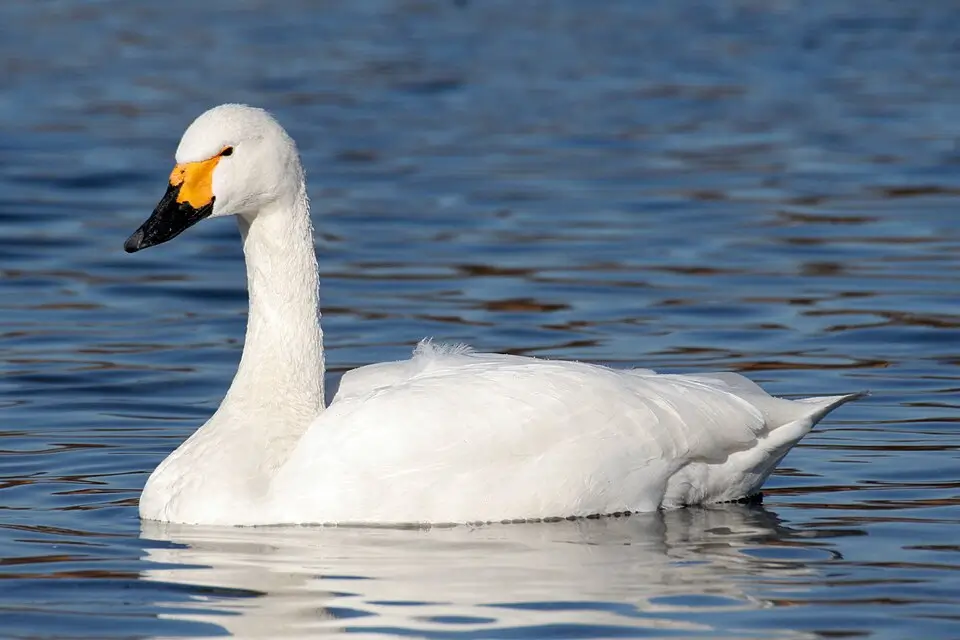
The Tundra Swan is a large bird by any measure. Adults are covered in pure white plumage from head to tail, a coloration that becomes fully established as the bird matures from its initially grayish-brown juvenile plumage. The bill is predominantly black, and many — though not all — individuals display a small but distinctive yellow spot at the base of the bill near the eye, a feature that can help distinguish this species from the similar-looking Trumpeter Swan (Cygnus buccinator), which typically lacks this yellow marking. The legs and feet are also black.
Like all swans, the Tundra Swan has a notably long neck, which it uses with great effectiveness when feeding. The bird is well adapted to dabbling in shallow water, tipping forward to reach aquatic vegetation on the bottom of ponds, lakes, and marshes. Their diet consists primarily of aquatic plants, tubers, roots, and invertebrates, though they will also feed in agricultural fields, consuming waste grain, corn, and other crops — a behavior that makes them a familiar sight in harvested farm fields during migration and winter.
Tundra Swans are powerful fliers despite their considerable size. They typically travel in family groups or larger flocks, and their flight calls — a melodious, bugling sound often described as high-pitched and musical — are frequently the first indication that a group of swans is approaching. These vocalizations, which inspired the older common name "Whistling Swan," carry over long distances and are a beloved feature of the autumn and winter soundscape in many parts of the eastern United States.
Swans are known for their long-term pair bonds, and Tundra Swans are no exception. Pairs typically form before the birds reach their breeding grounds and often remain together for many years, potentially for life. They are highly attentive parents, defending their nest and cygnets vigorously against potential predators. The young swans, called cygnets, hatch with a soft, gray down and grow rapidly during the brief Arctic summer, needing to reach sufficient size and flight capability before the onset of the harsh northern winter.
Habitat & Range
The Tundra Swan's name is entirely descriptive of its summer home. Breeding populations of the Whistling Swan subspecies nest across the vast Arctic and subarctic tundra regions of North America, from Alaska eastward across northern Canada to the Hudson Bay region. They favor shallow lakes, ponds, and wetlands surrounded by low tundra vegetation — landscapes that, while remote and extreme, provide the abundant aquatic food resources and relative isolation from predators that these birds require to raise their young successfully.
As autumn arrives and daylight diminishes in the Arctic, Tundra Swans begin their long southward migration. The North American population is broadly split into two groups based on their wintering destinations. The western population migrates to the Pacific Coast, wintering primarily in California's Central Valley and surrounding wetland areas. The eastern population, which uses the Atlantic Flyway, migrates to the mid-Atlantic coast of the United States, with key wintering areas concentrated along the shores of the Chesapeake Bay, the Delmarva Peninsula, and associated coastal wetlands.
Delaware, situated at the heart of this Atlantic Flyway corridor, is therefore a critically important state for Tundra Swans during both migration and winter. The state's extensive tidal wetlands, coastal bays, freshwater impoundments, and agricultural fields provide exactly the mix of habitats these birds seek during the colder months. The Delaware Bay and its surrounding marshes, in particular, offer outstanding habitat for wintering waterfowl of all species, with Tundra Swans being among the most visually striking visitors. Observers across Delaware commonly report large flocks of these birds in suitable wetland areas from late autumn through early spring, making the state a premier destination for swan watching in the eastern United States.
Hunting Information
The Tundra Swan occupies a unique and somewhat specialized place in North American waterfowl hunting culture. Unlike more commonly pursued species such as Canada Geese or Mallards, swan hunting is a carefully managed and limited activity that is only permitted in a select number of states and provinces across the continent. Where it is allowed, it is typically subject to strict permit requirements, quota systems, and season structures designed to ensure that harvest levels remain well within sustainable limits relative to the overall population.
For hunters interested in pursuing Tundra Swans in Delaware, it is strongly recommended to consult directly with the Delaware Department of Natural Resources and Environmental Control (DNREC), specifically the Division of Fish and Wildlife, which serves as the state's official authority on all hunting regulations, license requirements, and season information. Delaware's DNREC oversees hunting regulations in the state and provides up-to-date guidance for all waterfowl species, including swans.
Because regulations governing swan hunting can change from season to season — and because permit-based systems often involve application deadlines and specific requirements — prospective hunters should visit the official DNREC website or contact the Division of Fish and Wildlife directly to obtain the most current and accurate information before making any plans. Staying informed through official state channels ensures both legal compliance and responsible wildlife stewardship.
For those who pursue waterfowl hunting in the Delaware region, the presence of Tundra Swans during winter adds an undeniable element of majesty to the outdoor experience, even for hunters who may not be specifically targeting the species. Sharing the marsh with these large, elegant birds on a cold winter morning is a memory that stays with any outdoorsman or outdoorswoman for a lifetime.
Conservation
The conservation story of the Tundra Swan in North America is, broadly speaking, a positive one. Unlike some waterfowl species that have faced severe population declines, Tundra Swan populations have remained relatively stable, a testament to the effectiveness of the coordinated conservation efforts that have been applied to North American migratory birds over the past century.
The legal framework underpinning this success is substantial. Tundra Swans, like all migratory birds in the United States, are protected under the Migratory Bird Treaty Act, a landmark piece of federal legislation that has provided the foundational legal protection for migratory birds since 1918. This law governs the taking, possession, import, export, and transport of migratory birds and has been central to the recovery and maintenance of waterfowl populations across the continent.
Beyond legal protections, the long-term health of Tundra Swan populations depends heavily on the preservation and restoration of wetland habitats at every point along the migratory route — from Arctic breeding grounds to mid-Atlantic wintering areas. Wetland conservation efforts in states like Delaware, supported by both governmental agencies and non-governmental organizations, play a direct and meaningful role in sustaining the conditions that these birds need to thrive.
Delaware's coastal marshes and bay habitats, managed in part through programs administered by the DNREC and partner conservation organizations, provide vital stopover and wintering resources for Tundra Swans and a host of other migratory species. The state's commitment to preserving these landscapes ensures that future generations of Delawareans — whether they are hunters, birdwatchers, or simply residents who enjoy the wonder of wildlife — will continue to enjoy the sight and sound of Tundra Swans passing through each year.
Public awareness and appreciation for the Tundra Swan also play a meaningful role in conservation. When people understand the remarkable journeys these birds undertake and the complex web of habitats they depend upon, they become natural advocates for the landscapes and policies that protect them. In this sense, every birder who spots a swan on a Delaware marsh and every hunter who applies for a permit through the proper channels contributes to a broader culture of conservation that benefits this species and many others.
Conclusion
The Tundra Swan is far more than a beautiful bird — it is a symbol of the vast, interconnected natural systems that sustain life across an entire continent. From its nesting grounds on the Arctic tundra to the coastal marshes of Delaware and the mid-Atlantic, this species traces a path that links some of North America's most important and irreplaceable ecosystems. Understanding, appreciating, and protecting the Tundra Swan and its habitats is a responsibility shared by scientists, managers, hunters, and nature lovers alike, and it is one that the outdoor community in Delaware and across the flyway has embraced with genuine commitment.