The Striped Skunk: North America's Most Recognizable Nocturnal Mammal
A Complete Guide to Mephitis mephitis — With Notes for Delaware Outdoorsmen
Few animals in North America are as instantly recognizable — or as universally respected — as the striped skunk. With its bold black-and-white coloration and legendary chemical defense system, Mephitis mephitis has earned a prominent place in the cultural consciousness of the continent, appearing in folklore, children's stories, and wildlife documentaries alike. Yet beyond its famous reputation, the striped skunk is a fascinating, ecologically important mammal that plays a meaningful role in the ecosystems it inhabits.
For hunters, trappers, wildlife enthusiasts, and naturalists across the United States — including those living and working in the Mid-Atlantic state of Delaware — the striped skunk represents an intriguing subject of study and, in many jurisdictions, a legal furbearer species. Understanding the biology, behavior, habitat preferences, and management of this animal enriches one's appreciation of the natural world and supports responsible stewardship of wildlife resources.
This article offers a comprehensive look at the striped skunk, drawing on well-established biological knowledge and available wildlife management information to paint a complete picture of one of North America's most distinctive mammals.
Biological Traits
The striped skunk, Mephitis mephitis, belongs to the family Mephitidae — a group of mustelid-like carnivores commonly known as skunks. The genus name Mephitis is derived from Latin, meaning "noxious exhalation" or "bad smell," a fitting tribute to the animal's most well-known defense mechanism.
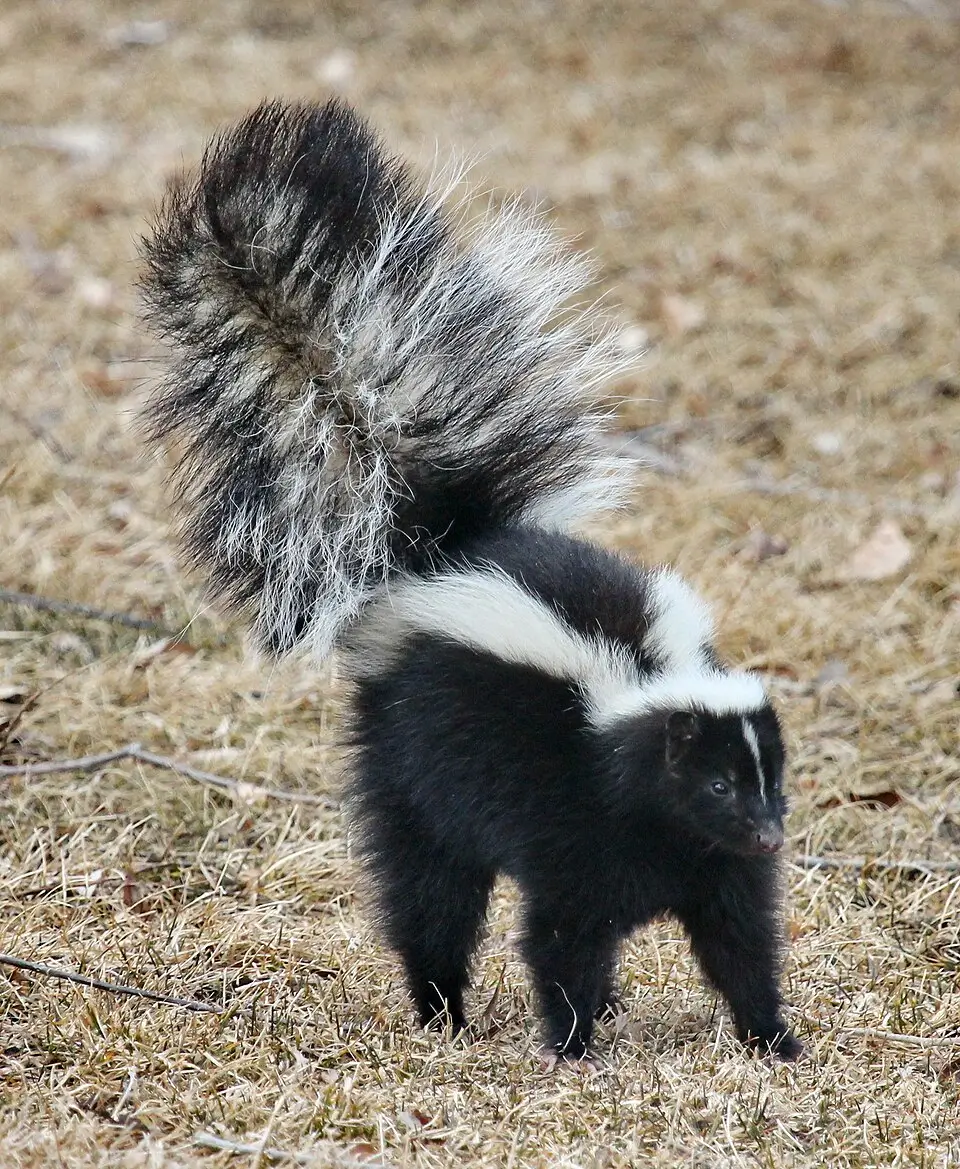
In terms of physical appearance, the striped skunk is a medium-sized mammal, generally comparable in size to a domestic cat. It features a predominantly glossy black coat broken by two broad white stripes that run along the back from the nape of the neck toward the tail. A single white stripe typically runs from the forehead down the center of the face, giving the animal its characteristic "painted" appearance. The tail is large, bushy, and often displays a mix of black and white coloration. The body is robust and stocky, with relatively short legs, small rounded ears, and a pointed snout adapted for rooting through soil and leaf litter.
One of the most iconic features of the striped skunk is its scent glands, located on either side of the anus. These glands produce a sulfur-containing chemical compound — primarily consisting of thiols such as (E)-2-butene-1-thiol and 3-methyl-1-butanethiol — that can be sprayed with considerable accuracy at perceived threats. The skunk can direct its spray up to ten feet or more with remarkable precision, and the odor can be detected by humans from distances of over a mile under favorable wind conditions. Interestingly, skunks are reluctant to use this defense unnecessarily, as it takes several days for the glands to replenish their supply. Before spraying, a skunk will typically go through a series of warning behaviors — stamping its front feet, raising its tail, and even performing a handstand in some cases — giving potential threats ample opportunity to retreat.
Striped skunks are omnivores with a broad and opportunistic diet. They consume a wide variety of foods depending on season and availability, including insects (particularly beetles, grasshoppers, and larvae), small mammals, bird eggs, fruits, berries, nuts, and various plant matter. Their diet shifts throughout the year, with insects and other invertebrates making up a larger proportion in warmer months, while plant-based foods and small vertebrates become more important during autumn and winter.
These animals are largely nocturnal, spending the daylight hours resting in burrows, hollow logs, rock piles, or other sheltered locations. They are not true hibernators, but they do enter a state of torpor during cold winter periods, remaining largely inactive while living off fat reserves accumulated during autumn. During mild winter spells, they may become temporarily active again.
Striped skunks are generally solitary animals outside of the breeding season. Mating typically occurs in late winter, often from February through March. After a gestation period of approximately 60 to 75 days, females give birth to litters of typically four to seven young, known as kits. The kits are born blind and helpless but develop rapidly. Their eyes open at around three weeks of age, and they begin accompanying their mother on foraging trips by approximately two months. By late summer or early autumn of their birth year, young skunks disperse to establish their own home ranges.
Striped skunks have a relatively short lifespan in the wild, with most individuals surviving only two to three years. Predators include great horned owls — one of the few predators with a poorly developed sense of smell — as well as coyotes, foxes, bobcats, and occasionally larger raptors. Disease, particularly rabies, is also a significant mortality factor. The striped skunk is among the most common wildlife vectors for rabies in North America, a fact that underscores the importance of maintaining healthy, stable wildlife populations through sound management practices.
Habitat & Range
The striped skunk is one of the most widely distributed mammals in North America. Its range extends from southern Canada southward through most of the contiguous United States and into northern Mexico. Within this vast range, the species demonstrates remarkable habitat adaptability, occupying a diverse array of environments.
Striped skunks are most commonly associated with open and semi-open habitats, including meadows, grasslands, agricultural fields, forest edges, and brushy areas. They tend to avoid deep, dense forested interiors, preferring instead the transitional zones between habitat types — what ecologists refer to as "edge habitat." This preference makes suburban and semi-rural landscapes particularly favorable, and skunks are well-known inhabitants of the fringes of human settlements, where they forage in gardens, under porches, and along fence lines.
In the Mid-Atlantic region, including the state of Delaware, striped skunks are a familiar presence across a variety of landscape types. Delaware's geography — characterized by coastal plains, tidal wetlands, agricultural land, and pockets of woodland — provides diverse habitat well-suited to skunk populations. The state's position in the Mid-Atlantic corridor, bordered by Maryland, Pennsylvania, New Jersey, and the Atlantic Ocean, places it within the heart of the striped skunk's eastern range.
Skunks do not require large, contiguous parcels of wilderness. They are equally at home in rural farmland and suburban neighborhoods, which contributes to their stable population status across much of the eastern United States. Their ability to exploit human-modified landscapes has allowed them to thrive even as natural habitats have been altered over centuries of development.
Hunting and Trapping Information
The striped skunk has historically been valued as a furbearer species, and trapping has long been a legal and regulated method of harvest in many states throughout the skunk's range. Trappers have pursued skunks primarily for their pelts, which have been used in the fur trade for generations, as well as for wildlife management purposes in areas where skunk populations may come into conflict with human activities or agricultural interests.
For those interested in pursuing striped skunks as a furbearer species in Delaware, it is important to consult the Delaware Department of Natural Resources and Environmental Control (DNREC), specifically the Division of Fish and Wildlife, for the most current and authoritative regulations. The DNREC's Division of Fish and Wildlife is the official state agency responsible for managing wildlife resources in Delaware, and it provides hunters and trappers with official guidance on licensing requirements, season dates, legal methods of take, and any species-specific regulations that may apply.
Because specific season dates, license requirements, and regulatory details can change from year to year and were not available in the source data used for this article, readers are strongly encouraged to visit the DNREC website directly or contact the agency before engaging in any hunting or trapping activity. Regulations are established to ensure sustainable wildlife management, and compliance is both a legal obligation and a mark of responsible sportsmanship.
General best practices for skunk trapping, widely recognized in the furbearer management community, include using appropriately sized cage or body-grip traps, checking traps frequently in accordance with state regulations, and following proper handling techniques to minimize risk of exposure to rabies or other zoonotic diseases. Personal protective equipment, including gloves and eye protection, is advisable when handling or approaching live skunks.
Conservation
From a conservation standpoint, the striped skunk is currently classified as a species of Least Concern by the International Union for Conservation of Nature (IUCN). Its broad geographic range, high reproductive rate, and adaptability to human-modified environments have allowed it to maintain stable populations across most of its native range. Unlike many wildlife species that have declined significantly in the face of habitat loss and urbanization, the striped skunk has shown a notable capacity to coexist with human activity.
That said, responsible wildlife management remains important. As a known rabies vector, skunk populations are monitored in many regions as part of broader public health surveillance efforts. Oral rabies vaccination programs, particularly in parts of the eastern United States, have been implemented to help manage the spread of rabies through wildlife populations, including skunks.
Habitat conservation efforts that preserve grasslands, meadow edges, and agricultural buffer zones also benefit skunk populations indirectly, as these are among the preferred habitat types for the species. In Delaware and across the Mid-Atlantic region, initiatives by the DNREC and partner conservation organizations work to maintain healthy, balanced ecosystems that support the full diversity of native wildlife species, including furbearers like the striped skunk.
The skunk also plays a valuable ecological role that deserves recognition. As a consumer of insects, particularly agricultural pest species such as grubs and beetles, the striped skunk provides a natural form of pest control that benefits farmers and gardeners. Its role as both predator and prey within food webs contributes to ecosystem balance, and its activities — including burrowing and rooting — help aerate soils and recycle nutrients.
Educating the public about the ecological value of skunks, while also providing practical guidance on minimizing human-wildlife conflict, is an important part of modern wildlife management. Understanding that skunks are generally non-aggressive animals that prefer avoidance over confrontation goes a long way toward fostering coexistence between people and these remarkable mammals.
Conclusion
The striped skunk is far more than a punchline or a cautionary tale about getting too close to wildlife. It is a resilient, ecologically valuable, and biologically fascinating mammal that has thrived across North America for millennia. Whether you encounter one on a quiet evening walk along a Delaware hedgerow, observe one foraging at the edge of a farm field, or pursue one as a furbearer species during a regulated trapping season, the striped skunk commands respect and curiosity in equal measure.
For Delaware residents and outdoor enthusiasts, the skunk serves as a reminder of the rich wildlife heritage of the Mid-Atlantic region — a heritage that the DNREC's Division of Fish and Wildlife works diligently to protect, manage, and celebrate for current and future generations.