Snowshoe Hare (Lepus americanus): A Complete Guide to North America's Iconic Winter Survivor
Few animals embody the spirit of the northern wilderness quite like the snowshoe hare. Known scientifically as Lepus americanus, this remarkable mammal has captured the imagination of wildlife enthusiasts, hunters, and naturalists for generations. With its oversized hind feet, dramatic seasonal coat changes, and starring role in one of the most well-documented predator-prey cycles in the natural world, the snowshoe hare stands as one of North America's most fascinating and ecologically significant small mammals.
Whether you encounter one bounding silently through a boreal forest in midwinter — its white coat nearly invisible against a backdrop of snow — or spot one in its rusty-brown summer camouflage foraging at the forest edge at dusk, the snowshoe hare never fails to impress. This guide explores the biology, habitat, range, hunting traditions, and conservation status of this beloved species, offering a comprehensive look at an animal that plays a critical role in the health of North American ecosystems.
Biological Traits
Classification and Basic Biology
The snowshoe hare belongs to the family Leporidae, which includes all rabbits and hares, and the order Lagomorpha. While it is closely related to rabbits, hares are distinct animals — they are generally larger, have longer ears and hind legs, and are born fully furred with their eyes open, a condition known as precocial development. Rabbits, by contrast, are born blind and hairless (altricial). Lepus americanus is one of approximately 30 species in the genus Lepus, which includes jackrabbits, the European hare, and the Arctic hare.
The Famous Snowshoe Feet
The snowshoe hare gets its common name from its exceptionally large hind feet, which are specially adapted for life in snowy environments. These oversized feet function much like natural snowshoes, distributing the animal's weight across a broader surface area and allowing it to move swiftly and efficiently across deep snow — terrain that would slow down or trap many of its predators. The fur on the soles of the feet provides additional traction and insulation in freezing conditions, making the snowshoe hare one of the most elegantly adapted cold-weather mammals on the continent.
Seasonal Coat Change
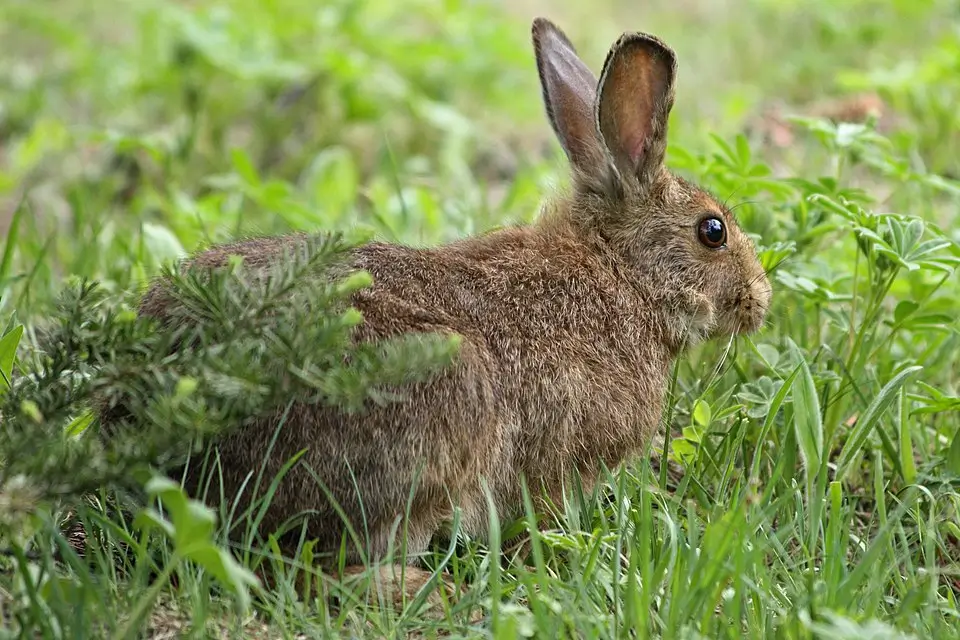
One of the snowshoe hare's most striking biological features is its seasonal change in coat color, a process known as molting. During the warmer months of spring and summer, the hare wears a coat of rusty brown or grayish-brown fur that blends seamlessly with the forest floor, leaf litter, and vegetation. As winter approaches and daylight hours shorten, the hare undergoes a remarkable transformation — its fur gradually shifts to a brilliant white, providing exceptional camouflage against snowy backgrounds. This color change is triggered by photoperiod, meaning it is regulated by the length of daylight rather than temperature alone. In spring, the process reverses, and the animal transitions back to its brown summer coat. This dual camouflage system is a critical survival tool in a world full of predators.
Diet and Feeding Behavior
Snowshoe hares are strict herbivores. Their diet shifts seasonally to match what is available in their environment. During spring and summer, they feed on a wide variety of grasses, forbs, and leafy plants. As winter sets in and fresh vegetation disappears, they switch primarily to woody browse — the twigs, buds, and bark of shrubs and small trees. Like all lagomorphs, snowshoe hares practice cecotrophy, a behavior in which they re-ingest special soft fecal pellets to extract maximum nutrition from their plant-based diet. This adaptation allows them to process tough, fibrous plant material efficiently.
The Lynx-Hare Population Cycle
Perhaps the most famous aspect of snowshoe hare biology is its role in one of the best-documented predator-prey population cycles in all of ecology. Snowshoe hare populations are known to undergo dramatic boom-and-bust cycles, typically peaking and crashing roughly every eight to eleven years. During population peaks, hare numbers can be extraordinarily high, providing an abundant food source for a wide range of predators. The Canada lynx (Lynx canadensis) is perhaps the most closely tied to this cycle — lynx populations rise and fall in near-perfect synchrony with hare numbers, following the hares by approximately one to two years. But the cycle also affects populations of great horned owls, red foxes, coyotes, wolves, and many other predators across the boreal landscape. This interconnected dynamic makes the snowshoe hare a keystone species in northern ecosystems.
Reproduction
Snowshoe hares are prolific breeders, a trait common among prey species with high rates of predation. Females (does) typically produce multiple litters per year during the warmer months, with each litter containing several young, called leverets. Leverets are precocial — they are born fully furred, with open eyes, and are capable of moving around within hours of birth. This gives them a survival advantage compared to altricial young. Despite high reproductive rates, snowshoe hare populations are heavily regulated by predation, food availability, and disease, which accounts for the dramatic cyclical swings observed in their numbers.
Habitat & Range
Geographic Range
The snowshoe hare has a broad distribution across North America, ranging from the boreal and mixed forests of Canada and Alaska southward through the Rocky Mountains and into the Appalachian Mountains in the eastern United States. Their range extends through much of the northern United States and into higher elevations further south, wherever appropriate forest cover and cold winters prevail. They are fundamentally a species of cold climates and dense forest habitats.
Preferred Habitat
Snowshoe hares thrive in dense coniferous and mixed forests, particularly areas with abundant undergrowth that provides both food and shelter from predators. They favor habitats with dense shrub layers, young forest growth, and areas near wetlands or riparian corridors. Boreal forests dominated by spruce, fir, and aspen are classic snowshoe hare country. The availability of dense cover for hiding — called "escape cover" — is especially important, as hares rely on their ability to quickly conceal themselves from the many predators that hunt them. Thickets, brushy forest edges, and areas of regenerating timber following logging or fire are particularly attractive habitat features.
Hunting Information
A Proud Hunting Tradition
The snowshoe hare has a long and proud history as a game animal across North America. Hunting snowshoe hares is a time-honored tradition, particularly in the northern United States and Canada, where these animals are both abundant and accessible. Hare hunting is often considered an excellent entry point for new hunters due to its relatively low equipment requirements and the engaging, active nature of the pursuit. It is also a popular activity for rabbit hunters looking to use their beagles or other trailing hounds, as hares will typically circle back when pursued, offering exciting and classic dog work.
Hunting in Delaware
Delaware is a Mid-Atlantic state managed by the Delaware Department of Natural Resources and Environmental Control (DNREC), specifically through its Division of Fish and Wildlife. While DNREC oversees a wide range of hunting opportunities across the state, hunters in Delaware should consult the official DNREC resources directly for the most current and accurate information regarding snowshoe hare regulations, seasons, and licensing requirements. The source data available at the time of this writing does not specify current season dates or licensing details for snowshoe hare in Delaware, and regulations are subject to change from year to year. Always verify the latest information through the official DNREC Division of Fish and Wildlife before heading afield.
General Hunting Tips
Hunters pursuing snowshoe hares typically employ a few key strategies. Still-hunting along forest edges and brushy thickets early in the morning or evening can be productive. Using trained beagles or basset hounds to trail and push hares is a beloved traditional method that results in exciting circular chases as hares loop back toward the hunter. Snowshoe hares are most active at dawn, dusk, and throughout the night, so timing your outing accordingly can significantly improve your odds of success.
Conservation
Current Status
The snowshoe hare is currently listed as a species of Least Concern by the International Union for Conservation of Nature (IUCN), reflecting its broad range and generally stable populations across much of its North American habitat. While local and regional population fluctuations are dramatic due to the natural boom-and-bust cycle, the species as a whole is not considered threatened at this time.
Climate and Habitat Considerations
Scientists have noted with interest the potential challenges that climate change may pose for snowshoe hares. The species' survival depends significantly on the synchrony between its coat color change — triggered by photoperiod — and the actual presence of snow on the ground. As winters become shorter and less predictable in some parts of the hare's range, there is concern that hares may increasingly find themselves wearing white coats against snowless brown landscapes, making them far more visible to predators. This "coat-climate mismatch" is an area of active scientific research. Continued habitat stewardship, including the maintenance of healthy boreal and mixed forest ecosystems, remains important for the long-term wellbeing of snowshoe hare populations across North America.