Snow Goose (Anser caerulescens): A Comprehensive Guide for Hunters and Wildlife Enthusiasts in Delaware and Beyond
Few sights in the natural world are as awe-inspiring as a massive flock of Snow Geese descending on a winter marsh or agricultural field. These striking white birds — with their distinctive black wingtips and bold, gregarious personalities — are among the most recognizable migratory waterfowl in North America. Whether you're a seasoned waterfowl hunter, a dedicated birdwatcher, or simply someone who appreciates the rhythms of the natural world, the Snow Goose (Anser caerulescens) offers a fascinating subject for study and pursuit.
In the Mid-Atlantic region, and particularly in Delaware, Snow Geese are a well-known seasonal presence. Their arrival signals the turning of seasons, and their sheer numbers can be nothing short of spectacular. Delaware's unique geographic position — nestled between the Atlantic Ocean to the east, Maryland to the south and west, Pennsylvania to the north, and New Jersey to the northeast — places it squarely along one of North America's most important migratory corridors. This makes the First State an exceptional location for observing and hunting this remarkable species.
This guide explores the biology, habitat, range, hunting traditions, and conservation status of the Snow Goose, with particular attention to what hunters and outdoor enthusiasts in Delaware can expect when this iconic bird passes through the region.
Biological Traits
The Snow Goose (Anser caerulescens) belongs to the family Anatidae, which encompasses all ducks, geese, and swans. It is classified within the genus Anser, grouping it alongside other "true geese" such as the Greylag Goose and the Greater White-fronted Goose.
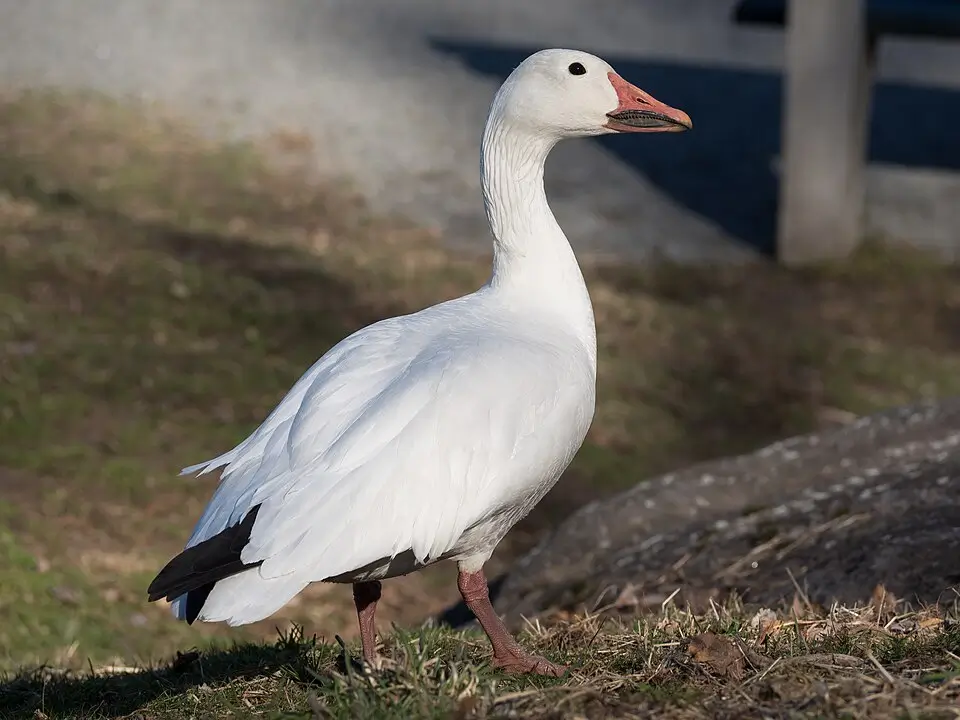
One of the most fascinating aspects of Snow Goose biology is the existence of two distinct color morphs — a feature that has historically caused taxonomic confusion. The white morph, the bird most people picture when they think of a Snow Goose, is almost entirely white with black primary feathers that are clearly visible in flight. The dark morph, commonly known as the "Blue Goose," features a dark bluish-gray body with a white head and neck. Both morphs are the same species, Anser caerulescens, and they frequently interbreed, producing offspring that can display a range of intermediate plumage patterns.
Snow Geese are further divided into two subspecies: the Lesser Snow Goose (Anser caerulescens caerulescens) and the Greater Snow Goose (Anser caerulescens atlanticus). The Greater Snow Goose is notably larger and is the subspecies most commonly encountered along the Atlantic Flyway, including in Delaware and other Mid-Atlantic states. The Lesser Snow Goose is more prevalent in the interior of North America and along the Gulf Coast.
In terms of physical characteristics, Snow Geese are medium to large-sized waterfowl. They possess a distinctive "grinning patch" or "black lips" along the sides of their bills — a dark line of tissue along the bill's edge that gives the impression of a smile and helps distinguish them from other white geese such as Ross's Goose, which lacks this feature. Their legs and feet are pink to reddish-pink in coloration, and their bills are also pinkish-red.
Snow Geese are highly social birds. They nest in large, dense colonies on the Arctic tundra, and they migrate in enormous flocks that can number in the tens of thousands or even hundreds of thousands of individuals. This gregarious behavior persists throughout the year, and it is one of the most defining characteristics of the species. Their loud, cackling calls — often described as a high-pitched "honking" or "barking" — fill the air wherever large flocks congregate, creating an unmistakable soundscape that is instantly recognizable to anyone familiar with these birds.
Like other geese, Snow Geese are primarily herbivorous. They feed on a wide variety of plant materials, including grasses, sedges, agricultural grains such as corn and wheat, and the roots and rhizomes of marsh plants. Their feeding style can be quite intensive; large flocks can strip vegetation from wetland areas and agricultural fields with remarkable efficiency.
Snow Geese are also long-lived birds. In the wild, individuals can live for more than 15 years, and some banded birds have been documented living considerably longer. They typically begin breeding at two to three years of age, and they demonstrate strong fidelity to their nesting colonies and wintering areas, often returning to the same locations year after year.
Habitat & Range
The Snow Goose has one of the most extensive migratory ranges of any North American waterfowl species. Their annual journey takes them from remote Arctic and subarctic nesting grounds all the way to wintering areas in the southern United States and northern Mexico — a round trip that can cover thousands of miles.
During the breeding season, Snow Geese nest on the Arctic tundra, primarily in Canada, Alaska, and Greenland. Greater Snow Geese nest primarily on Baffin Island, Bylot Island, and other islands and coastal areas of the eastern Canadian Arctic. Nesting colonies can be extraordinarily dense, with hundreds or even thousands of pairs nesting in close proximity. Nests are typically built in low-lying tundra vegetation, often near water, and are constructed from grasses, mosses, and other plant materials, lined with down feathers.
As summer draws to a close and the Arctic tundra begins to freeze, Snow Geese begin their southward migration. The Greater Snow Goose migrates primarily along the Atlantic Flyway, one of the four major North American flyways. This migration route takes them directly through the Mid-Atlantic region, including Delaware, making this state an important stopover and wintering location for the subspecies.
In Delaware and surrounding states, Snow Geese make extensive use of coastal marshes, tidal wetlands, agricultural fields, and freshwater impoundments. Delaware's geography — with its extensive coastline along Delaware Bay, its productive agricultural interior, and its numerous wildlife management areas and refuges — provides ideal habitat for wintering and migrating Snow Geese. Areas along the Delaware Bay and the state's inland agricultural regions are particularly productive locations for observing large concentrations of these birds.
The wintering range of the Greater Snow Goose extends from Delaware and New Jersey southward through Maryland, Virginia, North Carolina, and South Carolina, with the largest concentrations historically found along the Atlantic Coast.
Hunting Information
Snow Goose hunting is a beloved tradition among waterfowl hunters in Delaware and throughout the Mid-Atlantic. The species' large size, abundance, and challenging nature make it a prized quarry for dedicated goose hunters.
Delaware falls under the jurisdiction of the Atlantic Flyway for migratory bird management, with regulations governed by both federal frameworks established by the U.S. Fish and Wildlife Service and state-level regulations administered by the Delaware Department of Natural Resources and Environmental Control (DNREC), specifically its Division of Fish and Wildlife.
Because Snow Goose hunting regulations — including season dates, bag limits, and licensing requirements — are subject to annual revision and can change from year to year, hunters are strongly encouraged to consult the DNREC Division of Fish and Wildlife directly for the most current and accurate information before heading afield. Delaware's DNREC provides official hunting guidance through its online resources and published hunting guides, and compliance with all applicable federal and state regulations is essential.
It is worth noting that Snow Geese — particularly the Greater Snow Goose population along the Atlantic Flyway — have experienced significant population growth in recent decades. In response, wildlife managers have implemented special conservation order provisions in many states during the spring migration period, often allowing for extended seasons and the use of electronic calls to help manage population levels. Hunters interested in participating in these special conservation order hunts should verify current rules with DNREC and the U.S. Fish and Wildlife Service.
Typical Snow Goose hunting methods include the use of large decoy spreads — sometimes featuring hundreds or even thousands of decoys — combined with calling and flagging to attract birds to within range. Jump shooting along flyways and field hunting over harvested agricultural fields are also productive approaches. Given the wariness and intelligence of mature Snow Geese, successful hunting often requires careful scouting, precise decoy placement, and patient fieldcraft.
Delaware's position along the Atlantic Flyway means that hunters in the state have opportunities to encounter migrating and wintering Snow Geese throughout the late fall and winter months, with the greatest concentrations typically present during the peak of migration.
Conservation
The Snow Goose presents an interesting and nuanced conservation story. Unlike many waterfowl species that have faced population declines due to habitat loss and hunting pressure, Snow Goose populations — particularly the Mid-Continent population of Lesser Snow Geese — have grown dramatically over the past several decades. This population growth has been attributed to a combination of factors, including increased food availability on agricultural lands during migration and winter, reduced hunting pressure in some areas, and the expansion and protection of nesting habitat.
This population boom has led to significant ecological concerns in Arctic and subarctic nesting areas, where overgrazing by dense nesting colonies has caused widespread degradation of tundra vegetation. Wildlife managers at both the federal and state levels have worked collaboratively to address these challenges, implementing management strategies designed to bring population levels into better balance with the carrying capacity of breeding and wintering habitats.
The Greater Snow Goose, the subspecies most relevant to Delaware and the Atlantic Flyway, has also experienced significant population growth, and similar management considerations apply. Conservation organizations, wildlife agencies, and the hunting community have worked together to develop responsible management approaches that protect both the species and the ecosystems it depends upon.
Delaware's coastal marshes, wetlands, and wildlife management areas play an important role in supporting Snow Geese throughout their annual cycle, and conservation of these habitats remains a priority for DNREC and its partners. Hunters in Delaware contribute meaningfully to conservation efforts through the purchase of licenses, stamps, and equipment, all of which help fund habitat protection and wildlife management programs.
Conclusion
The Snow Goose is a truly remarkable bird — biologically fascinating, ecologically significant, and deeply woven into the outdoor traditions of Delaware and the broader Mid-Atlantic region. From its spectacular Arctic nesting colonies to its impressive winter gatherings along Delaware Bay and the surrounding coastal plain, Anser caerulescens represents one of North America's great wildlife spectacles. Whether you encounter these birds as a hunter, a wildlife watcher, or simply an admirer of nature's grandeur, the Snow Goose is a species that leaves a lasting impression on all who experience it in the field.